
France continues to be one of the most attractive options for UK professionals looking for a new start abroad, and the prospect of moving to work in France from the UK is something that a lot of people are seriously considering for 2026. Moving for work is more than just getting a job – it’s about understanding work requirements, sorting accommodation and planning how you’re going to get there.
For anyone travelling with a car, extra luggage, or a pet, a ferry crossing with an operator like Brittany Ferries is often the most practical way to travel. This guide covers jobs, relocation steps, and the ferry side of the move.
Can UK Citizens Work in France in 2026?
Brexit changed things, and UK citizens working in France no longer have the automatic right to live and work there that EU membership once gave. If you are serious about working in France from the UK need to check what applies to your situation first.
Most people relocating for work now need a France work visa or the appropriate residence permit, depending on their job, employer, and circumstances. Requirements can shift, so check the latest French government guidance before accepting an offer or booking your move.
Best Jobs in France for UK Citizens
Some sectors are consistently more open to English-speaking applicants than others, which makes them a good starting point when scouting jobs in France for UK citizens and planning to work in France from the UK for a specific industry.
- Teaching and Education — English teaching and language-related roles are widely available, though most require a recognised qualification and conversational French.
- Hospitality and Tourism — Hotels, restaurants, resorts, and tourism operators regularly hire, with seasonal and permanent positions on offer.
- Technology and IT — Software, digital, data, and cybersecurity roles are growing, particularly in larger cities like Paris and Lyon.
- Finance, Business and Consulting — International companies based in France sometimes hire English-speaking professionals, though relevant qualifications and experience carry real weight.
How to Find a Job in France From the UK
Start by searching French and international job websites, and check whether employers are willing to sponsor work permits before you get too far. This matters more for working in France from the UK than for a domestic move, since sponsorship isn’t guaranteed.
Prepare a CV suited to the French market, and highlight any French-language skills or international experience you bring. It also pays to research salary, tax obligations, and working conditions, nd to double-check whether the role qualifies for a France work visa before you get attached to it. Apply and secure something before relocating wherever possible.
Moving to France From the UK: What to Prepare
- Accommodation — Research rental prices in your target area and consider temporary accommodation for your first few weeks while you house-hunt.
- Finances — Budget for rent, deposits, transport, and relocation costs, and get familiar with French tax and banking requirements early.
- Healthcare — Look into healthcare registration and insurance requirements before you move, since coverage doesn’t kick in automatically.
- Driving — If you’re bringing a UK-registered car, check the rules around insurance and vehicle registration in France, since this is one detail that catches people planning to work in France from the UK off guard.
Travelling From the UK to France by Ferry
Once the job and paperwork side are sorted, getting yourself — and everything you own — across the Channel is the next practical step for anyone working in France from the UK. A UK to France ferry crossing is one of the simplest ways to do it, and here’s why so many people choose it over flying:
- Bring your own car — no need to rent or buy one once you land
- Pack more luggage — genuinely useful when you’re moving your life, not just visiting
- Travel with pets — far simpler than most airline pet policies
- Better for longer-term relocations — you’re not boxed in by cabin baggage limits
- Handy for repeat trips — useful once you’re settled and heading back and forth
Brittany Ferries operates several well-established routes worth knowing:
- Portsmouth–Caen
- Portsmouth–Cherbourg
- Portsmouth–Le Havre
- Portsmouth–St Malo
- Poole–Cherbourg
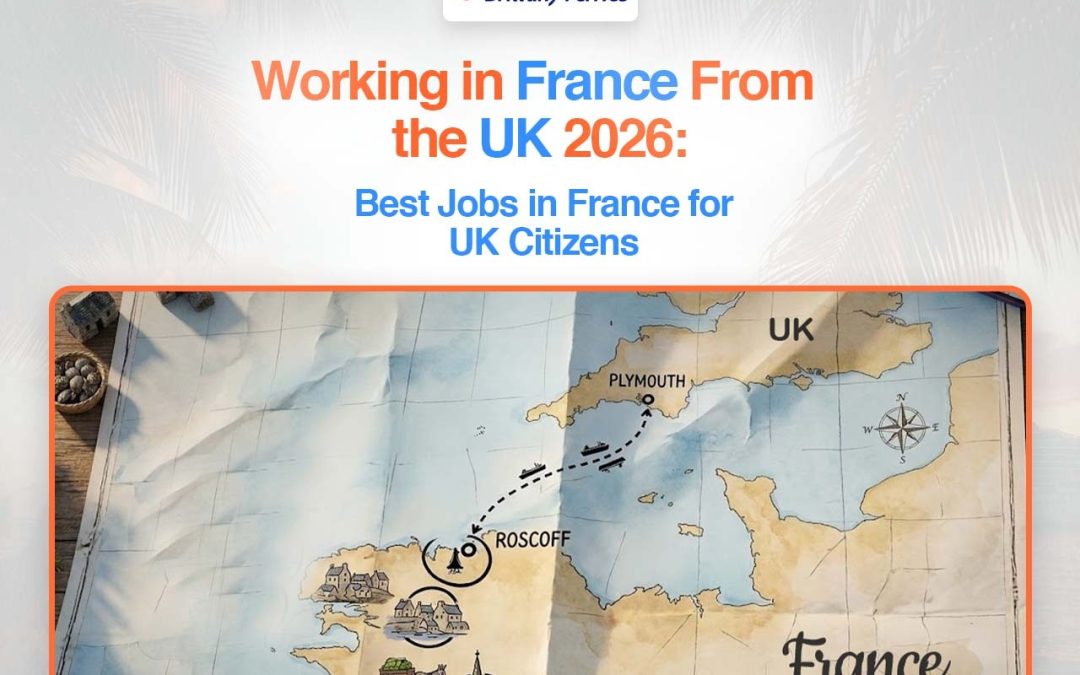
- Plymouth–Roscoff
Booking early with an operator like Brittany Ferries also tends to secure better fares. All told, a ferry from the UK to France is far more relaxed than wrestling with airport luggage restrictions and a car full of belongings.
Choosing the Right Ferry Route for Your Destination
The right crossing really depends on where you’re heading once you start working in France from the UK:
- Normandy — Caen or Cherbourg
- Paris or eastern France — Le Havre
- Brittany — St Malo or Roscoff
A ferry from the UK to France isn’t one-size-fits-all, so weigh up your UK departure point alongside your French destination. Comparing routes on a site like Brittany Ferries makes it easy to line up a crossing that works for both ends of the journey.
Ferry Travel Tips for Relocating to France
A few things worth doing before you set off:
- Book ahead, especially in busier seasons
- Double-check sailing times before you leave
- Confirm vehicle requirements in advance
- Keep passports and relocation paperwork with you, not packed away
- Check pet requirements if you’re travelling with an animal
- Keep valuables and essential documents close at hand
Checking the Brittany Ferries schedule early helps avoid last-minute surprises if you plan to relocate to France from the UK with a car in tow, and a UK to France ferry booking is also worth making refundable if your moving dates are still shifting.
Pros and Cons of Working in France as a UK Citizen
Pros:
- International experience
- A genuine new cultural experience
- The chance to improve your French
- Easy access to European travel
- Real potential for career development
All part of what makes working in France from the UK appealing in the first place.
Cons:
- Visa and paperwork requirements
- Language barriers
- Relocation expenses
- Unfamiliar employment systems
- Time spent away from family
FAQs About Working in France From the UK
- Can UK citizens work in France in 2026?
Yes, UK citizens can work in France in 2026, but most people need to meet French immigration and work authorization requirements. The rules depend on the length of stay, type of job, and individual circumstances.
- Do I need a visa to work in France?
In most cases, UK citizens need the appropriate visa or work permit to work in France. Requirements can vary depending on the job, contract, duration of stay, and personal circumstances.
- What jobs can UK citizens get in France?
UK citizens can find jobs in France across teaching, tourism, technology, finance, hospitality and other skilled professions. Speaking French and having relevant qualifications can improve employment opportunities.
- Can I take my car from the UK to France?
Yes, you can take your car from the UK to France, including by ferry. Before travelling, check your driving documents, insurance, vehicle requirements and French road rules.
- What is the easiest way to travel from the UK to France?
The easiest option depends on your destination, luggage and whether you are taking a car. Ferries are convenient for travellers with vehicles or more luggage, while flights can be quicker for many city-to-city journeys.
Final words
Working in France from the UK in 2026 takes real planning, sorting work authorization, securing employment, arranging accommodation, and getting your finances in order before you go. For anyone who’d rather relocate to France from UK shores with a car, extra luggage, or a pet in tow, ferry travel is often the most practical way to make the crossing.
Whether you’re moving to France from the UK for a permanent role or testing the waters first, booking your journey with Brittany Ferries and comparing sailings onthe Brittany Ferries site before you commit is a solid place to start turning the plan into a reality.