by Jobuza Team | Apr 28, 2026 | BLOG, Trending News
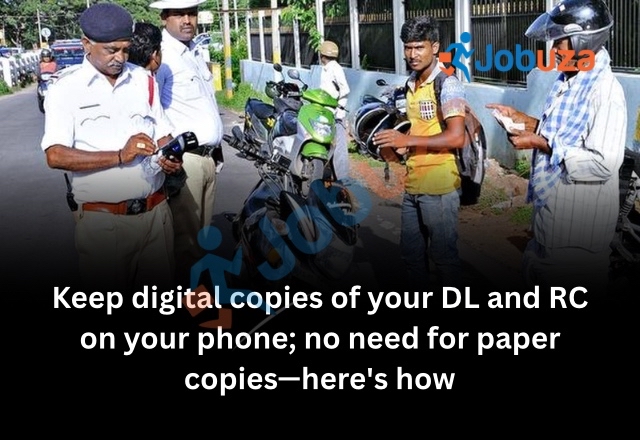
Carrying physical copies of your Driving Licence (DL) and Registration Certificate (RC) is no longer necessary. With the growing adoption of digital services in India, you can now store and access these important documents directly on your smartphone. This not only makes life easier but also ensures that your documents are always safe and available when needed.
Earlier, many people relied on paper copies of their RC and DL, which often led to problems. Documents could get lost, damaged, or simply forgotten at home. Today, government-approved apps like DigiLocker and mParivahan have made it possible to keep everything in digital format.
Why Digital DL and RC Are a Better Choice
One of the biggest advantages of storing your documents digitally is convenience. You no longer need to carry physical copies or worry about misplacing them. Your DL and RC remain securely stored on your phone and can be accessed anytime.
Another important benefit is legal validity. Digital documents issued through official platforms are fully recognized by authorities. During a traffic check, you can simply show your DL or RC from your phone, and it will be accepted without any issues.
Additionally, digital documents are always updated and verified directly from official databases. This reduces the chances of errors and ensures that the information you present is accurate.
Step-by-Step Guide to Save DL and RC on Your Phone
To get started, download either DigiLocker or mParivahan from your app store. Once installed, sign in using your registered mobile number and complete the OTP verification process.
After logging in, navigate to the section where you can add documents. Enter your Driving Licence number and your vehicle’s registration number. The app will automatically fetch your documents from the official government database.
Once the documents appear, save them within the app. This allows you to access them instantly whenever required, even during a traffic inspection.
Important Things You Should Keep in Mind
While using digital documents, make sure they are fetched directly from official sources within the app. Documents that are manually scanned and uploaded may not always be considered valid.
Officially issued digital copies are more reliable and carry higher authenticity. This is why it is always recommended to use trusted government apps rather than storing simple images or PDFs.
Final Thoughts
Switching to digital DL and RC is a smart and practical step for every vehicle owner. It saves time, reduces stress, and ensures that your documents are always safe and accessible. With legal acceptance and easy access, digital storage is quickly becoming the preferred way to manage important vehicle documents.
by Jobuza Team | Apr 27, 2026 | BLOG, Exam, Highlights
Studying abroad is a dream for many students, but high costs often become a major barrier. To address this, the Government of Japan has introduced the highly prestigious MEXT Scholarship 2027, a fully funded opportunity for international students who wish to pursue postgraduate studies in Japan.
Offered by the Japanese Ministry of Education, this scholarship covers almost every expense, including tuition fees, living costs, and even travel. It is one of the most sought-after international scholarships for students aiming to build a global academic career.
Application Deadline and Key Details
Students applying under the Research Student category must submit their applications before May 15, 2026. Selected candidates will be able to begin their studies in Japan from April, September, or October 2027, depending on the academic schedule of their chosen university.
Courses Covered Under MEXT Scholarship
The scholarship is primarily designed for postgraduate studies and includes the following programs.
The Master’s course is a full-time program with a duration of two years. It is suitable for students who want to specialize in their chosen field after graduation.
The Doctoral or PhD course is a three-year program focused on advanced research and academic development.
For students who are not familiar with the Japanese language, the program also includes a six-month preparatory language course before the start of the academic session.
Financial Benefits of MEXT Scholarship
One of the biggest advantages of the MEXT Scholarship is its comprehensive financial support. Selected candidates receive a monthly stipend of around 145,000 Japanese Yen, which is approximately ₹85,000. This amount helps cover daily living expenses in Japan.
In addition to this, the scholarship offers a complete fee waiver. This means students do not have to pay any admission, tuition, or examination fees throughout their course duration.
The Japanese government also covers airfare expenses. This includes both the cost of traveling from India to Japan and the return journey after completing the course.
Selection Process and Competition Level
The MEXT Scholarship is known for its highly competitive selection process. Thousands of students apply every year, but only a limited number of candidates are selected.
Based on previous data, more than 3,000 applications were received for around 50 seats, which highlights the level of competition. Candidates are shortlisted based on academic performance, research potential, and overall profile.
How to Apply for MEXT Scholarship
To apply for the scholarship, candidates must first prepare a detailed research plan. This is one of the most important parts of the application and should clearly explain the research topic, objectives, and expected outcomes.
Applicants are also required to identify a suitable academic supervisor or advisor at a Japanese university whose research aligns with their proposal.
Once the research plan is ready, candidates can visit the official website of the Embassy of Japan in India to access the application form and complete the process. It is important to carefully follow all guidelines and submit the required documents within the deadline.
Final Words
The MEXT Scholarship 2027 is an excellent opportunity for students who want to pursue higher education in Japan without financial stress. With full funding, global exposure, and high-quality education, it opens the door to a promising future.
Students who meet the eligibility criteria should start preparing early, especially their research proposal, as it plays a crucial role in selection. Applying with a strong profile can significantly improve the chances of securing this prestigious scholarship.
by Jobuza Team | Apr 27, 2026 | BLOG, Trending News
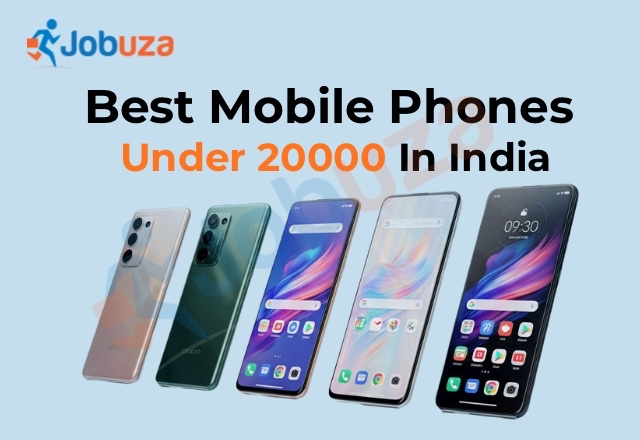
If you are planning to buy a new smartphone under ₹20,000, this price segment now offers some of the best value-for-money devices in the market. From powerful processors and large batteries to AMOLED displays and capable cameras, brands are packing premium features into budget-friendly smartphones.
This list includes some of the latest and most reliable options launched recently, making them ideal for everyday use, gaming, photography, and long battery life.
OPPO K14 5G: Big Battery with Balanced Performance
The OPPO K14 5G is designed for users who want long battery life and smooth daily performance. With a massive 7000mAh battery and fast charging support, it easily lasts more than a day on heavy usage.
It comes with a 120Hz display, making scrolling and general usage smooth. The MediaTek Dimensity 6300 processor handles day-to-day tasks well, although the display resolution is slightly lower compared to competitors.
Key Specifications
| Feature |
Details |
| Display |
6.75-inch, 120Hz |
| Processor |
MediaTek Dimensity 6300 |
| RAM |
6GB |
| Storage |
128GB |
| Battery |
7000mAh |
| Rear Camera |
50MP + 2MP |
| Front Camera |
8MP |
| OS |
Android 15 |
| Charging |
45W Fast Charging |
Poco M8 5G: Stylish Design with AMOLED Display
The Poco M8 5G offers a good balance of design, display, and performance. It features a large AMOLED display, which is rare in this price range and enhances the viewing experience.
Performance is handled by the Snapdragon 6 Gen 3 processor, making it suitable for regular usage and moderate gaming. However, the camera performance is average, and the UI includes some unwanted apps.
Key Specifications
| Feature |
Details |
| Display |
6.77-inch AMOLED |
| Processor |
Snapdragon 6 Gen 3 |
| RAM |
6GB |
| Storage |
128GB |
| Battery |
5520mAh |
| Rear Camera |
50MP + 2MP |
| Front Camera |
20MP |
| OS |
Android 15 |
Realme P4x 5G: Strong Performance with Long Battery Life
The Realme P4x 5G focuses on performance and battery. It delivers smooth daily usage and handles gaming efficiently. The 7000mAh battery is a major highlight, offering up to two days of usage.
While it claims a high refresh rate, the performance is not always consistent, and the camera quality is average.
Key Specifications
| Feature |
Details |
| Display |
6.72-inch |
| RAM |
6GB |
| Storage |
128GB |
| Battery |
7000mAh |
| Rear Camera |
50MP + 2MP |
| Front Camera |
8MP |
| OS |
Android |
Motorola Moto G67 Power 5G: Premium Feel on a Budget
The Motorola Moto G67 Power 5G stands out with its premium design and vegan leather finish. It also comes with IP64 protection, making it more durable than many competitors.
Performance is smooth, and battery life is excellent. However, the display brightness could be better, and software updates are limited.
Key Specifications
| Feature |
Details |
| Display |
6.70-inch |
| Processor |
Snapdragon 7s Gen 2 |
| RAM |
8GB |
| Storage |
128GB |
| Battery |
7000mAh |
| Rear Camera |
50MP + 8MP |
| Front Camera |
32MP |
| OS |
Android 15 |
Moto G96 5G: Reliable Performance with Premium Design
The Moto G96 5G offers a premium design with IP68 rating and curved edges. It delivers reliable performance for multitasking and gaming without heating issues.
Camera quality is good, especially in daylight, and battery life comfortably lasts a full day.
Key Specifications
| Feature |
Details |
| Display |
6.67-inch |
| Processor |
Snapdragon 7s Gen 2 |
| RAM |
8GB |
| Storage |
128GB |
| Battery |
5500mAh |
| Rear Camera |
50MP + 8MP |
| Front Camera |
32MP |
| OS |
Android 15 |
CMF by Nothing Phone 2 Pro: Clean UI and Balanced Performance
The CMF by Nothing Phone 2 Pro is ideal for users who prefer a clean and minimal software experience. It offers decent performance, good camera output, and a sleek design.
Battery life is reliable, lasting more than a day with regular usage, making it a solid all-rounder in this segment.
Key Specifications
| Feature |
Details |
| Display |
6.77-inch |
| Processor |
Dimensity 7300 Pro |
| RAM |
8GB |
| Storage |
128GB |
| Battery |
5000mAh |
| Rear Camera |
50MP + 50MP + 8MP |
| Front Camera |
16MP |
| OS |
Android 15 |
Realme P3 Pro 5G: Youth-Focused Design with Solid Performance
The Realme P3 Pro 5G targets younger users with its bold design and curved display. It offers strong performance for daily tasks and casual gaming.
While the camera performs well in daylight, low-light performance is not impressive. Battery life is decent, but expectations are slightly higher given the capacity.
Key Specifications
| Feature |
Details |
| Processor |
Snapdragon 7s Gen 3 |
| RAM |
8GB |
| Storage |
128GB |
| Battery |
6000mAh |
| Rear Camera |
50MP + 2MP |
| Front Camera |
16MP |
| OS |
Android 15 |
Final Verdict
Smartphones under ₹20,000 have become more competitive than ever. Whether you want long battery life, strong performance, or a clean software experience, there are multiple options to choose from.
If battery is your priority, models like OPPO K14 5G and Moto G67 Power stand out. For a clean UI, CMF Phone 2 Pro is a great pick. Performance-focused users can consider Realme P3 Pro or Moto G96.
Before making a final decision, always consider your usage needs such as gaming, camera, or battery life, and choose accordingly.

by Jobuza Team | Apr 24, 2026 | BLOG, IT/Tech Jobs, Latest Jobs, Technical/IT Jobs
The NTPC Limited has officially announced the NTPC Assistant Executive Recruitment 2026, offering a strong career opportunity for engineering graduates. A total of 250 vacancies have been released for the post of Assistant Executive (Operations) on a fixed-term basis. Candidates with relevant qualifications and experience can apply online through the official website before the last date.
The application window is open from April 23, 2026, to May 7, 2026. Interested applicants are advised to carefully check all eligibility conditions before submitting their forms.
NTPC Assistant Executive Vacancy 2026: Key Details
This recruitment drive is aimed at hiring skilled professionals for operations roles in NTPC’s power plants. The position is initially offered for a period of three years, which may be extended up to two more years based on performance and requirements.
Overview of NTPC Recruitment 2026
| Feature |
Details |
| Organisation |
National Thermal Power Corporation (NTPC) Limited |
| Post Name |
Assistant Executive (Operations) |
| Total Vacancies |
250 |
| Application Start Date |
April 23, 2026 |
| Last Date to Apply |
May 7, 2026 |
| Job Type |
Fixed-Term (3 Years, extendable) |
| Salary |
₹55,000 per month |
| Official Website |
careers.ntpc.co.in |
Eligibility Criteria for NTPC Assistant Executive 2026
Candidates must meet the required educational qualification and experience criteria to be eligible for this recruitment.
Educational Qualification
Applicants should have completed a B.E. or B.Tech degree in Mechanical or Electrical Engineering from a recognised university or institution.
Work Experience
A minimum of one year of post-qualification experience is required in the operation or maintenance of a power plant with a capacity of 40 MW or more.
Age Limit
The upper age limit is 35 years as of May 7, 2026. Age relaxation will be provided to candidates belonging to reserved categories as per government norms.
Selection Process for NTPC Assistant Executive Recruitment
The selection process is designed to assess both technical knowledge and overall suitability for the role.
- Online Written Test or Screening Test
- Personal Interview
- Document Verification
- Medical Examination
The written test may include sections such as technical knowledge, general awareness, and reasoning ability.
Salary and Job Benefits
Selected candidates will receive a consolidated monthly salary of ₹55,000. Along with this, working with NTPC Limited offers valuable industry exposure, stable career growth, and the opportunity to work in one of India’s leading power sector companies.
How to Apply for NTPC Assistant Executive Recruitment 2026
Candidates can apply online by following these steps:
- Visit the official website careers.ntpc.co.in
- Click on the “Current Openings” section
- Select the Assistant Executive (Operations) recruitment link
- Complete the registration process
- Fill in the application form with accurate details
- Upload required documents such as educational certificates and experience proof
- Pay the application fee, if applicable
- Submit the form and download the confirmation page
Important Note for Candidates
Applicants should read the official notification carefully before applying to ensure they meet all criteria. It is also recommended to complete the application process well before the deadline to avoid last-minute technical issues.
Final Words
The NTPC Assistant Executive Recruitment 2026 is an excellent opportunity for engineering graduates looking to build a career in the power sector. With a competitive salary and exposure to large-scale operations, this role can be a strong stepping stone for long-term professional growth. Candidates who meet the eligibility criteria should not miss this chance and apply within the given timeline.
by Jobuza Team | Apr 23, 2026 | BLOG, Trending News
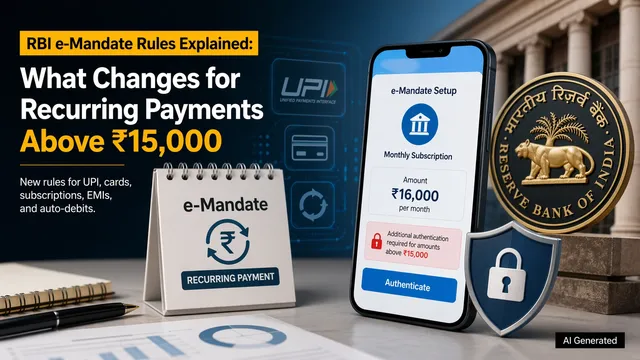
The Reserve Bank of India has introduced updated guidelines for e-mandates, bringing more clarity and control to recurring digital payments. These changes are aimed at making auto-debit transactions smoother while strengthening user protection across platforms like UPI, debit cards, credit cards, and prepaid instruments.
What Is the New Rs 15,000 Rule?
Under the revised framework, recurring payments up to Rs 15,000 can now be processed without requiring an OTP. This makes smaller payments like OTT subscriptions, mobile recharges, and utility bills faster and hassle-free.
However, for transactions above Rs 15,000, an additional authentication step such as OTP will be mandatory. This ensures better security for higher-value payments and reduces the risk of unauthorized deductions.
Important Exception You Should Know
There is a notable exception to this rule. Payments such as insurance premiums, mutual fund investments, and credit card bill payments between Rs 15,000 and Rs 1 lakh may still be processed without OTP, provided certain conditions are met. This flexibility ensures that essential financial commitments are not disrupted.
Mandatory Alerts Before and After Payment
To improve transparency and user control, RBI has made it compulsory for banks and payment platforms to send alerts:
- A pre-debit notification must be sent at least 24 hours before the payment
- This alert will include details like merchant name, transaction amount, and debit date
- Users will have the option to cancel or opt out before the payment is processed
Additionally, post-debit alerts will also be sent after every transaction, along with details on grievance redressal. This ensures users are always informed about their payments.
No Charges for Using e-Mandate
The RBI has clearly stated that no charges can be imposed on customers for setting up or using e-mandates. This makes automated payments more accessible and cost-effective for users.
Better Protection Against Fraud
The updated rules also extend RBI’s existing customer protection guidelines to recurring payments. In case of any unauthorized auto-debit, users will have limited liability, provided they report the issue within the specified time.
What This Means for Users
These changes strike a balance between convenience and security. Smaller transactions will now happen seamlessly without OTP interruptions, while larger payments will have added safeguards.
The 24-hour alert system gives users enough time to review and stop unwanted transactions, addressing one of the biggest concerns around auto-debits.
Overall, the updated e-mandate rules are a step towards a safer and more user-friendly digital payment ecosystem.
by Jobuza Team | Apr 22, 2026 | BLOG, Latest Jobs
PwC, one of the world’s leading professional services networks, has announced its hiring drive for 2026. Known as part of the Big Four alongside Deloitte, EY, and KPMG, PwC continues to offer strong career opportunities for graduates, freshers, and experienced professionals across multiple domains.
About PwC and Its Global Presence
PwC operates as a global network of firms providing services in audit, consulting, tax, and advisory. With a presence in over 150 countries, the company has built a reputation for delivering high-quality professional services and innovative business solutions. It is widely recognized for its work culture, learning opportunities, and exposure to global projects.
PwC Hiring 2026: Roles and Opportunities
The PwC Hiring Drive 2026 opens doors for candidates across various domains, including technology, engineering, finance, operations, management, cybersecurity, artificial intelligence, data management, and customer services.
One of the key roles currently open is:
Data Analytics – Associate
This role offers candidates the opportunity to work on real-world business problems using advanced analytics tools and technologies. Employees will be involved in developing solutions that help organizations detect risks, monitor performance, and make data-driven decisions.
Job Location and Work Environment
The Data Analytics Associate role is available in major cities such as Bangalore, Hyderabad, Kolkata, and Mumbai. These locations are key hubs for PwC’s operations in India, offering exposure to large-scale projects and diverse teams.
Eligibility Criteria
Candidates applying for this role must meet the following requirements:
A degree in B.Tech, B.E, or MCA from a recognized college or university
Strong understanding of data analytics concepts and tools
Basic knowledge of programming, data handling, and problem-solving skills
Freshers are eligible to apply, making this a great opportunity for recent graduates to start their careers with a reputed global firm.
Skills and Responsibilities
Selected candidates will work closely with clients and internal teams to build analytics-driven solutions. The role involves identifying patterns in data, creating predictive models, and supporting decision-making processes.
It also provides exposure to modern tools and technologies used in data analytics, artificial intelligence, and risk management.
Why Choose PwC
Working at PwC offers several advantages, including professional growth, global exposure, and access to cutting-edge technologies. The company emphasizes continuous learning and provides employees with opportunities to upskill through training programs and real-world project experience.
How to Apply
Interested candidates can apply online through PwC’s official careers portal.
Applicants should ensure that they meet the eligibility criteria and have all required documents ready before submitting their application.
Final Overview
The PwC Hiring Drive 2026 is a valuable opportunity for freshers and entry-level candidates looking to build a strong career in data analytics and consulting. With roles across major cities and exposure to global projects, PwC remains one of the top choices for graduates entering the professional world.