AI models are moving well past simple Q&A. The latest example is GPT-6 Astra, OpenAI’s newest model, built to carry complicated tasks from start to finish rather than answering one prompt at a time. Reasoning, coding, computer use, research, and document creation: it does far more than generate text.
The GPT-6 Astra features are worth knowing about whether you’re a developer, a business, a researcher, or simply someone who wants AI to handle longer workflows. Here’s a rundown of the model: its release, what it can do, and where its limits show up.
What Is GPT-6 Astra?
GPT-6 Astra is OpenAI’s latest flagship model, built for demanding, end-to-end work. Rather than sticking to individual prompts, it combines reasoning with tools and computer interaction to work through multi-step tasks on its own.
The GPT-6 Astra AI model is aimed at software engineering, browsing, computer use, science, research, and professional tasks. It can also create documents, spreadsheets, and presentations while following templates, taking you from “here’s what I need” to a finished result.
GPT-6 Astra Release and Availability
The GPT-6 Astra release began on September 3, 2026, with access first rolling out to a limited group of organizations. Broader availability is following in phases.
Astra is available through ChatGPT Plus, Pro, Business, and Enterprise, as well as the OpenAI API using the model ID gpt-6-astra. It’s also accessible through Microsoft Azure and AWS Bedrock. Availability and usage limits vary by plan and platform.
Top GPT-6 Astra Features
Advanced Reasoning
One standout GPT-6 Astra feature is noticeably stronger reasoning for complex, multi-step tasks. Instead of rushing toward an answer, Astra works through detailed instructions, weighs information, and adjusts its approach as requirements shift, which is useful for research, planning, and professional decision-making.
Computer Use and Automation
Astra can interact directly with websites, desktop apps, and other digital environments, filling out forms, updating records, researching online, and working across software. That makes computer use one of the most practical GPT-6 Astra capabilities for anyone dealing with repetitive digital work.
Coding and Development
For developers, Astra can write, understand, debug, and improve code, and it can work through software problems and help test applications. OpenAI built it specifically for software engineering, pairing coding with computer use so it can move from spotting a problem to implementing and checking a fix.
Research and Data Analysis
Astra is also built with research-heavy work in mind: browsing, analyzing information, working with data, and helping put together documents and presentations. Combining reasoning with computer interaction makes it especially useful when a task spans several tools rather than needing just one written response.
GPT-6 Astra Capabilities for Everyday Users
You don’t need to be a programmer to get value here. The GPT-6 Astra capabilities cover creating documents, preparing presentations, organizing research, analyzing spreadsheets, planning projects, and untangling complicated information, along with writing, learning, and repetitive computer tasks. Instead of asking it to simply explain a topic, you can hand it a larger project and let it work through the stages itself.
GPT-6 Astra vs Previous GPT Models
Compared with earlier GPT generations, Astra leans much harder into completing complex work from start to finish, with upgrades to reasoning, computer interaction, coding, research, and its ability to hold context as a task evolves. For users, that mostly means less time spent breaking a project into dozens of small prompts.
GPT-6 Astra Pricing and Access
GPT-6 Astra availability depends on the platform and subscription. ChatGPT users reach it through supported paid plans, and developers use it via the API.
For API users, OpenAI currently prices Astra at $10 per million input tokens and $50 per million output tokens, with a context window of about 1.05 million tokens. Business and enterprise users may get additional controls on top of that.
Limitations and Safety
More capability comes with more responsibility. A few things worth keeping in mind:
Astra can still get things wrong, misread information, or produce an inaccurate result.
Its computer-use features can take real actions, so review important tasks before letting them run unsupervised.
OpenAI has added extra monitoring given Astra’s stronger cybersecurity and computer-use capabilities.
For financial, legal, or medical decisions, human review still matters.
Final words
The GPT-6 Astra features point to where AI is heading: more complete, task-focused workflows. Stronger reasoning, coding, research, computer use, and document creation make it far more than a traditional chatbot.
Its biggest strength may be how well it connects these capabilities, working through complicated tasks with less step-by-step guidance. For developers, businesses, and everyday users alike, that could make AI a genuinely more practical part of daily work.
FAQs
What is GPT-6 Astra?
OpenAI’s latest flagship model, built for complex reasoning, coding, research, and computer use.
When was GPT-6 Astra released?
September 3, 2026, with availability rolling out in phases.
What are the main GPT-6 Astra features?
Advanced reasoning, computer use, coding, research, data analysis, and document creation.
Is GPT-6 Astra available in ChatGPT?
Yes, through supported Plus, Pro, Business, and Enterprise plans as access rolls out.
What can GPT-6 Astra do?
Coding, research, computer tasks, data analysis, writing, presentations, and multi-step workflows.
Paying for your chai at the local stall might soon get a whole lot faster. The National Payments Corporation of India (NPCI) has rolled out a new UPI Tap and Pay feature, letting users make contactless UPI payments simply by tapping their phone on a compatible terminal; no app-opening required.
That’s really the headline change here: you won’t need to unlock your phone and dig through your UPI app every single time you want to pay. The whole thing runs on Near Field Communication (NFC); the same tech behind the tap-to-pay contactless cards most of us already carry. NPCI announced the feature at the Global Fintech Fest 2026 in Mumbai, and it’s already generating buzz as the next big leap for India’s digital payments ecosystem.
What Is UPI Tap and Pay?
In simple terms, UPI Tap and Pay is a contactless payment method that connects your smartphone to a compatible merchant device using NFC; no QR code scanning involved.
So instead of pulling up your UPI app, scanning a QR code, and clicking through the usual steps, you just tap your NFC-enabled phone against a supported terminal, and you’re done.
NPCI built this feature to make routine, everyday payments faster and smoother. It’s also designed to keep working in spots where mobile connectivity is patchy or missing altogether, depending on which payment method you’re using.
How Does UPI Tap and Pay Work?
Think of it like tapping a contactless debit or credit card, because that’s essentially the experience NPCI is going for. To get started, your phone needs NFC support, and that setting has to be switched on. You’ll also need an active UPI payment method linked through a supported payment app.
Once you’re at a compatible merchant counter, just unlock your phone and hold it near the NFC-enabled payment point. From there, your phone and the terminal handle the rest of the transaction between themselves.
The exact flow can differ slightly depending on which app you use. On Google Pay, for instance, the current UPI Tap & Pay steps ask you to select the feature, key in the amount, and then tap your phone against the merchant’s NFC reader.
Can You Pay Without Opening the UPI App?
Yes; with one important catch. The whole point of this feature is to let you make a UPI payment without opening the app at the exact moment of paying. But you do still need to set everything up -payment method, permissions, NFC- aheadof time.
Google Pay, for example, says that users with a compatible NFC-enabled Android phone can use UPI Tap & Pay, as long as the phone has an active UPI payment method already linked. In other words, you can’t just grab any random phone and tap away at a shop counter. Your device, your payment app, and the merchant’s terminal all need to be on the same page, technology-wise.
What Do You Need to Use UPI Tap and Pay?
Here’s the quick checklist before you try it out:
An NFC-enabled smartphone
A supported UPI payment app
An active UPI payment method
NFC turned on
A merchant terminal that accepts UPI NFC payments
Enough balance or available credit, depending on your payment method
Merchants who support this will usually display a contactless symbol along with a “Tap to Pay” sign. NPCI’s 2026 guidelines have also introduced a “Scan or Tap to Pay with any UPI app” instruction for merchant QR code designs going forward.
Will You Need a UPI PIN?
That depends on how much you’re paying and which payment method you’re using. According to Google Pay’s current UPI Tap & Pay guidance, UPI Lite can be used PIN-free for eligible payments up to ₹500. Beyond that, with other UPI payment methods, you’ll likely still need to enter your UPI PIN.
NPCI has also been expanding authentication options across UPI more broadly, including on-device biometric authentication as an alternative for eligible transactions.
Can UPI Tap and Pay Work Without Internet?
Here’s one of the more interesting parts of this rollout: the feature is built to support payments even in low- or no-connectivity areas. NPCI says the NFC-based technology is designed to keep contactless transactions working in patchy network zones through supported payment mechanisms.
That said, offline functionality isn’t guaranteed across the board; it comes down to your specific app and payment method. Worth double-checking whether your UPI app actually supports offline Tap & Pay before you count on it in a no-signal situation.
Why Is NPCI Launching Tap and Pay Now?
UPI is already one of the most heavily used digital payment systems in India, and this launch builds on that momentum. In August 2026 alone, UPI processed 24.51 billion transactions worth roughly ₹29.82 trillion, per the latest figures reported by Reuters.
Tap and Pay pushes UPI past its QR-code roots and into territory that feels a lot closer to standard contactless card payments. It could turn out to be especially handy at cafes, supermarkets, petrol pumps, public transport counters, and anywhere else where speed at the counter really matters.
UPI Payments Are Moving Beyond QR Codes
QR code scanning has been the backbone of UPI payments for years, and it isn’t going anywhere anytime soon. But Tap and Pay gives people who want a faster, more contactless experience another option to reach for.
Meanwhile, NPCI isn’t stopping here; it’s also working on next-generation payment features, including systems that would let AI agents make authorised UPI payments on a user’s behalf. It’s a sign of just how quickly India’s digital payments infrastructure is evolving toward automation.
FAQs
What is UPI Tap and Pay?
It’s a contactless UPI payment feature that lets you tap an NFC-enabled smartphone on a compatible merchant terminal to pay instantly.
Can I use UPI Tap and Pay without opening the app?
Yes, in supported setups, though you’ll need to configure the feature and your payment method ahead of time.
Does UPI Tap and Pay require NFC?
Yes, your smartphone needs NFC support to use contactless UPI Tap and Pay.
Can UPI Tap and Pay work without internet?
It can, in supported setups with limited or no connectivity, but this depends on your specific payment method and app.
Will every UPI payment be PIN-free?
No. Whether a PIN is needed depends on the payment method, transaction amount, and the features your app supports.
Final Takeaway
UPI Tap and Pay could make small, everyday transactions noticeably quicker. Instead of opening an app and scanning a QR code, anyone with a compatible phone can simply tap it against a supported NFC terminal and move on with their day.
That said, it’s still dependent on your device, app, and the merchant’s setup all lining up, so QR-based UPI payments aren’t going anywhere just yet. But as more merchants adopt NFC-enabled terminals, tapping your phone to pay could soon feel just as normal as scanning a code.
Aadhaar has become an important identity document for people across India. It contains a unique 12-digit identification number along with personal and demographic information. Depending on the age of the Aadhaar holder, the enrolment and biometric requirements can be different.
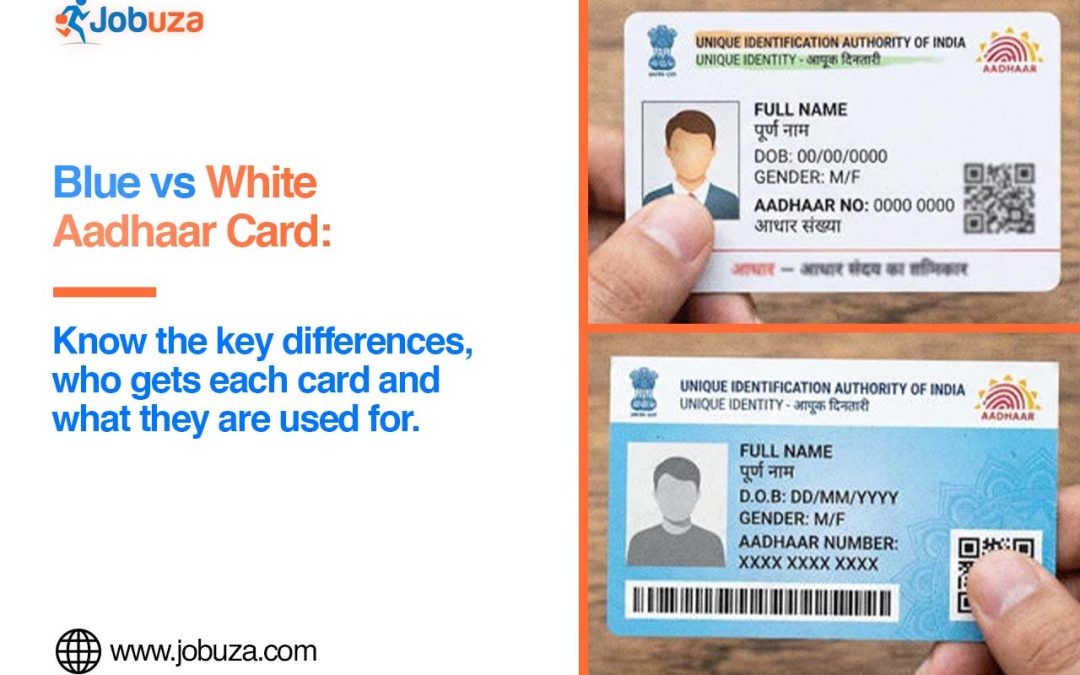
UIDAI issues a blue Aadhaar card, commonly known as Baal Aadhaar, for children below five years of age. The blue colour helps distinguish it from the regular Aadhaar issued to older individuals.
However, the difference is not limited to the colour. The enrolment process, biometric requirements and subsequent updates are also different. Parents should understand these requirements to ensure that their child’s Aadhaar remains updated.
Blue Aadhaar vs Regular Aadhaar: What Is the Difference?
The most important difference between Baal Aadhaar and regular Aadhaar is related to biometric information.
For children below five years, biometric information such as fingerprints and iris scans is not captured during Aadhaar enrolment. Instead, the child’s photograph and demographic details are recorded, and the Aadhaar is linked to the Aadhaar number of a parent or legal guardian.
For individuals aged five years and above, biometric information is captured as part of the Aadhaar enrolment/update process as applicable.
Feature
Blue Aadhaar (Baal Aadhaar)
Regular Aadhaar
Age
Children below 5 years
Individuals aged 5 years and above
Colour
Blue
White
Fingerprints
Not collected at initial enrolment
Collected as applicable
Iris scan
Not collected at initial enrolment
Collected as applicable
Photograph
Required
Required
Parent’s Aadhaar
Linked for the child
Individual Aadhaar
Biometric update
Required after turning 5
Further mandatory biometric update at age 15
Why Does a Child’s Aadhaar Not Include Biometrics?
Young children’s fingerprints and iris patterns are still developing. Therefore, biometric information is not captured when Aadhaar is initially enrolled for a child below five years of age.
Instead, the child’s Aadhaar is created using demographic information and a photograph, along with the Aadhaar details of a parent or legal guardian as prescribed.
Once the child reaches the applicable age, biometric details need to be updated.
When Should Baal Aadhaar Be Updated?
A child’s Aadhaar requires a biometric update after the child turns five years old. At this stage, the required biometric information is captured and updated in the Aadhaar record.
Another mandatory biometric update is required when the child reaches 15 years of age.
Parents should ensure that these updates are completed within the prescribed timelines so that the Aadhaar information remains current.
Is Baal Aadhaar a Separate Aadhaar Number?
No. Baal Aadhaar is not a different type of identification number. It is an Aadhaar issued to a child, with the enrolment process and biometric requirements differing because of the child’s age.
The child’s Aadhaar can initially be linked to a parent’s Aadhaar as part of the enrolment process. After the required biometric update, the Aadhaar record is updated with the child’s biometric information.
How to Apply for Baal Aadhaar?
Parents or guardians can enrol their child for Aadhaar by visiting an Aadhaar enrolment centre.
The basic process includes:
Visit an Aadhaar enrolment centre or use the UIDAI appointment facility where available.
Carry the child’s required birth or identity document.
Carry the Aadhaar details of the parent or legal guardian, as applicable.
Submit the child’s demographic details during enrolment.
The child’s photograph will be captured at the enrolment centre.
Complete the verification and enrolment process.
Keep the acknowledgement slip safely to track the enrolment status.
Parents should check the latest UIDAI requirements before visiting the enrolment centre, as the documents required can depend on the child’s circumstances.
Is Baal Aadhaar Enrolment Free?
Yes, UIDAI provides Aadhaar enrolment for children and the mandatory biometric updates at the specified ages without an enrolment/update fee under the applicable rules.
Parents should nevertheless verify the latest fee and service requirements on the official UIDAI website before visiting an Aadhaar centre.
Why Is the Biometric Update Important?
The biometric update is important because a child’s biometric characteristics develop as they grow. Updating the Aadhaar record ensures that the biometric information associated with the Aadhaar reflects the child’s current details.
Parents should therefore keep track of the child’s age and complete the required biometric updates at the prescribed stages.
Key Points Parents Should Remember
Blue Aadhaar is commonly known as Baal Aadhaar.
It is issued for children below five years of age.
Biometrics are not collected during the initial enrolment of a child below five.
The child’s Aadhaar can be linked with a parent’s Aadhaar as prescribed.
Biometric information needs to be updated after the child turns five.
Another mandatory biometric update is required at the age of 15.
Parents should keep the child’s Aadhaar details updated and follow the latest UIDAI instructions.
Understanding these differences can help parents complete their child’s Aadhaar enrolment and biometric updates at the right time and avoid problems caused by outdated information.
Let’s be honest, you’ve probably typed some version of “will AI replace jobs in 2026” into Google at least once this year. Maybe after a stressful week, maybe after seeing yet another headline about layoffs and automation. It’s a fair thing to wonder. AI has come a long way from the days of clunky chatbots that could barely answer a simple question. Now it can research a topic, draft an email, schedule your day, handle customer questions, and quietly chew through repetitive workflows in the background. That leap is exactly why the conversation feels so loaded right now.
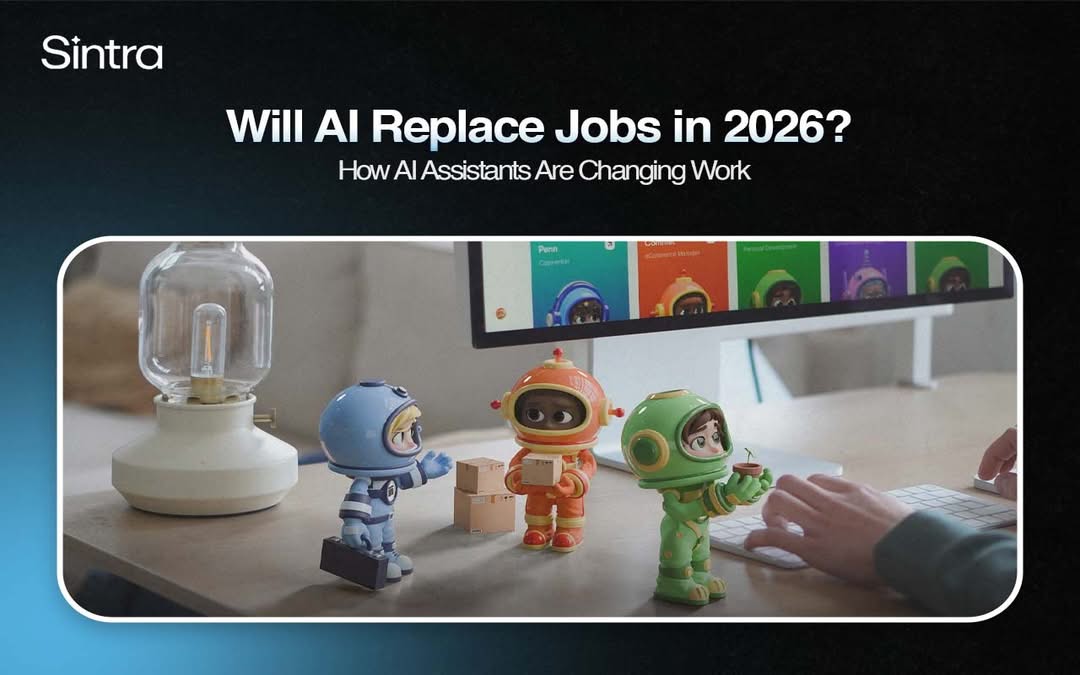
But here’s the thing: spend enough time actually watching how people use these tools, and the story looks less like “robots taking over” and more like job transformation. People aren’t disappearing from the workplace; they’re just handing off the boring stuff. TakeSintra AI as an example: it’s built as an AI assistant meant to help with everyday business tasks, not to sit in someone’s chair and replace them.
What Are AI Employees and AI Assistants?
Strip away the buzzwords, and it’s pretty simple, and honestly, this is where a lot of the will AI replace jobs anxiety actually starts. AI assistants are tools that handle specific tasks with minimal hand-holding: drafting content, summarizing a messy report, answering a routine customer email. AI employees take it a notch further, often running an entire workflow start to finish, like managing a whole support inbox or keeping a content calendar moving on its own.
The real difference comes down to scope: one tool helps a person do their job, and the other can basically run a slice of the business by itself.Sintra fits into that second bucket; it’s positioned as an AI-powered assistant that can juggle research, content creation, data processing, and admin work all at the same time, which is honestly more than most humans want to juggle in one afternoon.
Which Jobs Are Most Likely to Change Because of AI?
Some jobs lean heavily on repetitive, predictable digital work, and those are the ones feeling the most pressure right now:
Data entry
Customer support
Administrative work
Basic content creation
Bookkeeping
Marketing assistance
Research and reporting
Here’s the nuance nobody puts in the headline, though: these are jobs AI will replace in pieces, not all at once. If you’re wondering whether AI will replace jobs like these completely, the honest answer is rarely. AI replacing jobs, in practice, usually looks more like AI replacing a handful of tasks inside a job. The person is still there; they’re just spending less time copy-pasting data and more time doing the parts of the work that actually need a brain behind them.
How AI Assistants Are Changing Everyday Work
Instead of drowning in the same repetitive tasks every single day, people can now offload a good chunk of that to AI, which is arguably a more useful answer to will AI replace jobs than any prediction: it’s already reshaping how the workday looks. It can organize information, knock out a first draft, summarize a long document nobody wants to read in full, and keep routine workflows moving in the background. That frees people up for the stuff that actually needs a human touch, creativity, strategy, real conversations with real customers.
This is where AI productivity tools are quietly making the biggest dent, and it’s also where an assistant likeSintra AI tends to come in, supporting several workplace tasks at once: inbox triage in the morning, social content planning in the afternoon.
Will AI Replace Human Employees Completely?
This is the question underneath the question: will AI replace human jobs entirely? For most roles, honestly, no. Not completely. Skills like empathy, leadership, judgment, negotiation, and just plain accountability are stubbornly hard to automate. AI can hand you information fast, options, numbers, drafts, but someone still has to decide what to actually do with all of it. That “so what now” part is still very much a human job, and it’s a big reason why AI replacing jobs remains more of an open question than a settled fact.
AI vs Human Employees: Who Does What Better?
AI is better at:
Repetitive, rules-based tasks
Processing large amounts of information quickly
Speed and consistency
Working continuously, without breaks or downtime
Automating predictable workflows
Spotting patterns across large datasets
Humans are better at:
Creativity and original thinking
Emotional intelligence and empathy
Leadership and motivating a team
Complex judgment and weighing trade-offs
Building relationships and trust
Navigating ambiguity and unwritten context
Put those two lists side by side, and you get a much clearer answer to whether AI will replace jobs than any headline gives you; it’s pretty clear why human-AI collaboration, not competition, is shaping up to be the actual workplace model going forward.
What Jobs Are Less Likely to Be Replaced by AI?
Jobs that lean on real human interaction or physical presence tend to hold up better against automation, which is part of why whether AI will replace jobs isn’t a yes-or-no question; it depends heavily on the role. Think healthcare professionals, teachers, skilled trades, managers, therapists and care workers, creative leadership roles, the kind of work where showing up in person, reading a room, or making a judgment call actually matters. These are largely jobs AI cannot replace on its own, even though the people in them are increasingly using AI tools to work more efficiently without being replaced by them.
How Workers Can Prepare for AI in 2026
A few habits go a long way here:
Get genuinely comfortable using AI tools instead of just poking at them occasionally
Sharpen your critical-thinking and problem-solving skills
Keep working on communication and creativity, the things AI still can’t fake convincingly
Build the habit of checking and verifying AI-generated work instead of taking it at face value
Focus on skills that complement AI rather than compete head-on with automation
Learn to actually manage an assistant likeSintra; it’s quickly turning into a real career advantage as more workplaces adopt tools like it.
The Future of Work Will Be Human + AI.
Realistically, the workplace ahead is going to blend AI capability with human expertise, not pick one over the other, which is really the fullest answer to whether AI will replace jobs that anyone can do right now. AI handles the execution and the repetitive grind; humans provide the direction, the judgment, the accountability when something goes wrong. Tools likeSintra are a good early glimpse of what that blend looks like in practice: AI doing the heavy lifting on tasks, humans steering the outcome. That’s the real shape of AI workplace automation, not people getting eliminated, but people spending their time differently.
Bottom line
So, will AI replace jobs? Some tasks and some roles, yes, they’ll get automated. But far more will simply evolve into something a little different. The workers who take the time to actually learn how to collaborate with AI, using tools likeSintra AI alongside their own judgment, not instead of it, are the ones who’ll be best prepared for what’s coming. The future of work isn’t humans versus AI. It’s humans working with AI.
The 8th Pay Commission has become a major point of interest for central government employees and pensioners across India. Discussions around the proposed salary revision, pension increase, fitment factor and new pay matrix are continuing as the commission moves ahead with its consultation process.
Although the final recommendations are yet to be submitted, employee organisations and other stakeholders have already presented their demands. The key questions include the expected fitment factor, revised minimum salary, pension increase and the possible implementation timeline.
Here are the five major updates employees and pensioners should know about the 8th Pay Commission.
1. 8th Pay Commission Work Progresses Through Consultations
The government has provided the 8th Pay Commission with an 18-month timeframe to complete its work and submit its recommendations.
The commission has already completed its initial groundwork, including gathering relevant information and receiving representations from ministries, departments and employee organisations. It is now conducting consultations with various stakeholders.
Inputs from government departments, state representatives, employees and other groups will help the commission assess factors such as inflation, cost of living, working conditions and existing pay structures before preparing its recommendations.
2. Salary Revision Could Be Effective From January 1, 2026
The effective date of January 1, 2026 is one of the most important aspects of the 8th Pay Commission.
If the revised pay structure is implemented at a later date, employees and pensioners could become eligible for arrears from the effective date, subject to the government’s final decision and implementation rules.
This could result in arrears for the period between January 2026 and the actual date on which the revised salary and pension structure is implemented.
3. Fitment Factor Could Determine the Salary Increase
The fitment factor is a key component of the proposed salary revision. It is used to calculate revised basic pay based on the existing basic salary.
Under the 7th Pay Commission, the fitment factor was fixed at 2.57. For the 8th Pay Commission, employee organisations have demanded higher fitment factors, with some demands ranging from 2.86 to 3.68.
However, these figures are demands and should not be considered confirmed recommendations. Various estimates have suggested a possible fitment factor in the range of 2.25 to 2.57, but the final figure will depend on the commission’s recommendations and the government’s decision.
4. How Much Could Minimum Salary and Pension Increase?
The current minimum basic salary under the 7th Pay Commission is ₹18,000 per month. Depending on the fitment factor eventually approved, the revised minimum basic salary could increase substantially.
For example, an indicative calculation would look like this:
Fitment Factor
Estimated Minimum Basic Pay
Current
₹18,000
2.25
₹40,500
2.40
₹43,200
2.57
₹46,260
2.86*
₹51,480
3.68*
₹66,240
Similarly, the current minimum pension of ₹9,000 per month could potentially increase depending on the final fitment factor and pension revision formula.
These calculations are only estimates and do not represent an officially approved salary or pension structure.
5. 8th Pay Commission Consultations Continue Across India
The commission is consulting various employee groups and other stakeholders to understand their expectations and concerns.
Representations have been received from groups associated with:
Defence services
Railways
Postal departments
Civil services
Pensioners
Employee organisations
The consultation process is expected to provide the commission with information about inflation, living expenses, working conditions and other factors affecting government employees and pensioners.
8th Pay Commission Salary Hike: What Different Fitment Factors Mean
The possible impact of different fitment factors can be understood by applying them to the current minimum basic pay of ₹18,000.
Scenario
Fitment Factor
Indicative Basic Salary
Existing Basic Pay
—
₹18,000
Estimated Scenario
2.25
₹40,500
Estimated Scenario
2.40
₹43,200
7th CPC Fitment Factor
2.57
₹46,260
Employee Demand*
2.86
₹51,480
Employee Demand*
3.68
₹66,240
Note: The figures for 2.86 and 3.68 are based on employee demands and are not confirmed government proposals.
When Will the 8th Pay Commission Salary Increase Be Implemented?
The exact implementation date of the revised pay structure has not been finalised. The commission must first complete its consultations and submit its recommendations.
After the report is submitted, the government will examine the recommendations before taking a final decision on the revised pay matrix, salary structure, pension and allowances.
Therefore, employees should not consider any projected salary figure as final until an official decision is announced.
What Should Central Government Employees Expect Next?
The next major developments are expected to include the completion of stakeholder consultations, preparation of the commission’s recommendations and submission of its final report.
The major points employees and pensioners will be watching include:
Final fitment factor
Revised pay matrix
Minimum basic salary
Minimum pension
Allowance revisions
Implementation date
Arrears from January 1, 2026
Until the government officially approves the recommendations, all salary and pension projections should be treated as indicative estimates.
8th Pay Commission: Key Takeaway
The 8th Pay Commission is currently progressing through its consultation and review process. The proposed fitment factor, revised pay matrix and pension formula will ultimately determine the actual increase in salary and pension.
While employees are expecting a significant revision and possible arrears from January 1, 2026, the final benefits can only be confirmed after the commission submits its recommendations and the government takes a decision.
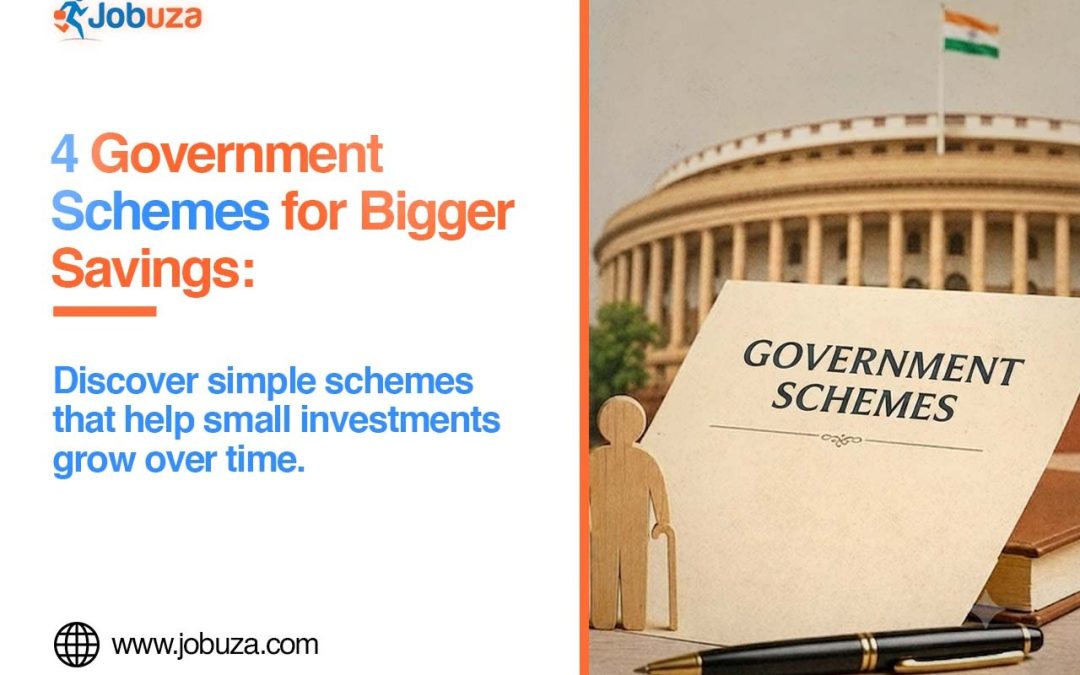
When it comes to saving money for long-term financial goals, many people prefer investment options that offer stability along with reasonable returns. Post Office savings schemes are among the options that continue to attract conservative investors because they are backed by the government and provide relatively predictable returns.
These schemes can be useful for different financial needs, whether you are planning for your child’s education, creating a retirement income source or simply looking for a fixed-return investment. Some schemes also provide tax benefits, which can make them useful as part of a long-term financial plan.
Here are four popular government-backed savings schemes that investors can consider based on their financial goals.
Sukanya Samriddhi Yojana: Build a Corpus for Your Daughter’s Future
The Sukanya Samriddhi Yojana (SSY) is designed specifically to help parents and guardians save for the future financial needs of a girl child. It can be used to build a long-term corpus for expenses such as higher education and other eligible needs.
The scheme encourages regular savings over a long period. Because the investment is intended for a specific long-term goal, it can help parents develop a disciplined approach towards saving for their daughter’s future.
The interest rate on small savings schemes is notified by the government from time to time, so investors should check the latest applicable rate before opening an account or making a new deposit.
Senior Citizen Savings Scheme: Regular Income After Retirement
The Senior Citizen Savings Scheme (SCSS) is intended primarily for eligible senior citizens who want a government-backed investment option with periodic interest payments.
The scheme can provide a regular income because interest is paid at specified intervals. This can be useful for retirees who want to supplement their pension or meet routine household expenses.
Eligible investors should check the current age criteria, deposit limits, interest rate and tax rules before investing. The interest rate is revised by the government periodically, so the applicable rate can change over time.
National Savings Certificate: Fixed-Term Investment With Tax Benefits
The National Savings Certificate (NSC) is another popular Post Office investment option for people who prefer fixed returns and a defined investment period.
NSC has a five-year maturity period, making it suitable for investors with a medium- to long-term savings goal. Since the returns are not directly linked to stock market movements, investors do not have to deal with the day-to-day volatility associated with market-linked investments.
Investment in NSC can also qualify for tax benefits under the applicable provisions of the Income Tax Act, subject to the prevailing rules and limits. Investors should check their individual tax situation before relying on these benefits.
Kisan Vikas Patra: Let Your Investment Grow Over Time
Kisan Vikas Patra (KVP) is designed for investors who want a simple fixed-income savings option. It allows investors to make a lump-sum investment and hold it for the prescribed maturity period.
At the applicable rate, the investment grows over the specified period and reaches the maturity value determined under the scheme rules. The interest rate and maturity period can be revised by the government, so the latest terms should always be checked before investing.
One of the attractions of KVP is its straightforward structure. Investors do not need to actively manage the investment based on market movements.
Why Are Post Office Savings Schemes Popular?
Post Office savings schemes are popular among investors who give greater importance to capital safety and predictable returns than high-risk, market-linked gains.
Another advantage is accessibility. These schemes are available through the Post Office network, making them accessible to people in different parts of the country.
However, investors should not choose a scheme only because it offers a particular interest rate. The investment period, withdrawal rules, taxation, deposit limits and financial goal should also be considered before making a decision.
Which Government Savings Scheme Should You Choose?
The right scheme depends on your financial objective and investment horizon.
If you are saving specifically for the future needs of a girl child, Sukanya Samriddhi Yojana may be relevant if you meet its eligibility conditions. Senior citizens looking for periodic income can consider the Senior Citizen Savings Scheme.
For investors looking for a five-year fixed-term option with applicable tax benefits, NSC can be considered. Those looking for a simple lump-sum savings product may find Kisan Vikas Patra worth evaluating.
Interest rates, tax rules and scheme conditions can change, so always verify the latest details before investing.
Things to Check Before Investing in Post Office Schemes
Before putting your money into any government-backed savings scheme, check the current interest rate and maturity period. You should also understand whether interest is paid periodically or added to the investment until maturity.
Tax treatment is another important factor. A scheme offering a tax benefit does not necessarily mean that all returns will be completely tax-free.
Investors should also consider liquidity. Some schemes have restrictions or conditions on premature withdrawal, which can matter if you may need access to your money before maturity.
FAQs About Government-Backed Savings Schemes
Which government savings schemes are available through the Post Office?
Several small savings schemes are available through Post Offices, including Sukanya Samriddhi Yojana, Senior Citizen Savings Scheme, National Savings Certificate and Kisan Vikas Patra.
Are Post Office savings schemes safe?
These schemes are government-backed small savings products, but investors should still understand the individual scheme’s rules, interest rates, maturity period and withdrawal conditions.
Can interest rates change?
Yes. The government reviews and notifies interest rates for small savings schemes periodically. Therefore, investors should check the latest rate before investing.
Which scheme is suitable for a girl child’s future?
Sukanya Samriddhi Yojana is specifically designed for eligible girl children and is intended to support long-term financial planning for their future.
Is NSC a tax-saving investment?
Investment in NSC can qualify for deductions under applicable tax provisions, subject to the prevailing rules and limits. Investors should check the latest Income Tax rules for their financial year.
Can senior citizens get regular income from Post Office schemes?
The Senior Citizen Savings Scheme provides interest payments at specified intervals, making it a potential option for eligible senior citizens seeking periodic income.