by Jobuza Team | Oct 13, 2026 | BLOG, Latest Jobs
The Odisha Public Service Commission (OPSC) has announced recruitment for 758 Assistant Executive Engineer (AEE) posts in Civil and Mechanical Engineering. This is an opportunity for engineering graduates who want to work in government service in Odisha.
According to the announced schedule, the online application process will begin on October 22, 2026, and the last date to submit the form is November 11, 2026, by 5 PM. Candidates should check the eligibility requirements carefully before applying, especially the engineering qualification and GATE score criteria. Here’s a simple breakdown of the vacancies, important dates, age limit, selection process and application steps.
OPSC AEE Recruitment 2026: Key Details
| Details |
Information |
| Recruiting body |
Odisha Public Service Commission |
| Post |
Assistant Executive Engineer (AEE) |
| Advertisement number |
13 of 2026–27 |
| Total vacancies |
758 |
| Civil Engineering |
750 posts |
| Mechanical Engineering |
8 posts |
| Application mode |
Online |
| Application starts |
October 22, 2026 |
| Last date to apply |
November 11, 2026, by 5 PM |
| Official website |
opsc.gov.in |
OPSC AEE Vacancy 2026
The recruitment includes openings in two engineering disciplines. Civil Engineering has the largest share of vacancies, while a smaller number of posts are available for Mechanical Engineering candidates.
| Post name |
Vacancies |
| Assistant Executive Engineer (Civil) |
750 |
| Assistant Executive Engineer (Mechanical) |
8 |
| Total |
758 |
Candidates should check the official notification for the category-wise vacancy distribution and reservation details before submitting their applications.
OPSC AEE Eligibility Criteria 2026
Before filling out the form, make sure you meet the educational qualification, age limit and other conditions mentioned in the notification.
Educational Qualification
Candidates generally need an engineering degree in the relevant subject from a recognised university or institution.
- For AEE Civil: A degree in Civil Engineering or an equivalent qualification accepted by OPSC.
- For AEE Mechanical: A degree in Mechanical Engineering or an accepted equivalent qualification.
Certain alternative qualifications may also be accepted under the conditions mentioned in the official advertisement. Applicants should verify their qualification before applying.
GATE Score
A valid GATE score from 2024, 2025, or 2026 in the relevant engineering discipline is required, subject to the official notification’s conditions.
Keep your GATE scorecard ready and check that your examination discipline matches the post you want to apply for.
Age Limit
The general age limit is reported as 21 to 42 years as of January 1, 2026. Relaxation may be available for eligible categories under Odisha government rules. Candidates should refer to the official notification to confirm the applicable age limit, relaxation rules, and required supporting documents.
OPSC AEE Application Dates 2026
Mark these dates if you plan to apply.
| Event |
Date |
| Notification released |
October 9, 2026 |
| Online applications begin |
October 22, 2026 |
| Last date to apply |
November 11, 2026, by 5 PM |
The application window is scheduled to open on October 22. Check the official OPSC website for the application link and any changes to the schedule.
OPSC AEE Selection Process 2026
The selection process is based on the GATE score and an interview. Published recruitment details indicate that the GATE score carries 90% weightage, while the interview carries 10%.
Candidates should read the official advertisement for the exact selection rules, scoring method and document-verification requirements.
OPSC AEE Salary 2026
Selected candidates will be placed in Pay Level 12, Cell 1, under the applicable Odisha pay rules. The final monthly salary will depend on the applicable allowances, deductions and service conditions. For the precise pay details, candidates should consult the official recruitment notification.
OPSC AEE Application Fee
Available recruitment reports indicate that no application fee is payable. However, candidates should confirm this information in the official notification or online application portal before submitting the form.
How to Apply for OPSC AEE Recruitment 2026
The application process will take place online. Once registration opens, follow these steps:
- Visit opsc.gov.in.
- Find the AEE recruitment notice under Advertisement No. 13 of 2026–27.
- Read the notification and check that you meet all eligibility conditions.
- Open the online application link when it becomes available.
- Enter your personal, educational and GATE details carefully.
- Upload the required certificates and documents in the prescribed format.
- Review the information before submitting the form.
- Save a copy of the submitted application for future reference.
Try to complete the process before the last date rather than waiting until the final few hours.
Documents to Keep Ready
Applicants may need the following documents, depending on the official application instructions:
- Engineering degree certificate and mark sheets
- GATE scorecard
- Date-of-birth proof
- Category or reservation certificate, where applicable
- Photograph and signature
- Other certificates requested by OPSC
Check the notification for the complete list and prescribed formats.
Final word
OPSC AEE Recruitment 2026 brings 758 vacancies for Civil and Mechanical Engineering candidates. Applications are scheduled to open on October 22, with the deadline set for November 11, 2026, at 5 PM.
If you plan to apply, review the official advertisement, check your GATE score and eligibility, and keep the necessary documents ready. For confirmed details and application updates, use the official OPSC website.
FAQs
How many vacancies are available in OPSC AEE Recruitment 2026?
There are 758 reported vacancies: 750 for Civil Engineering and 8 for Mechanical Engineering.
When will OPSC AEE applications begin?
The online application process is scheduled to begin on October 22, 2026.
What is the last date to apply?
The announced deadline is November 11, 2026, at 5 PM.
Is GATE required for OPSC AEE Recruitment 2026?
Yes. Candidates need a valid GATE score from 2024, 2025 or 2026 in the relevant discipline, subject to the official notification.
What is the age limit for OPSC AEE posts?
The reported general age range is 21 to 42 years as of January 1, 2026. Category-wise relaxations may apply.
by Jobuza Team | Oct 12, 2026 | BLOG, Latest Jobs
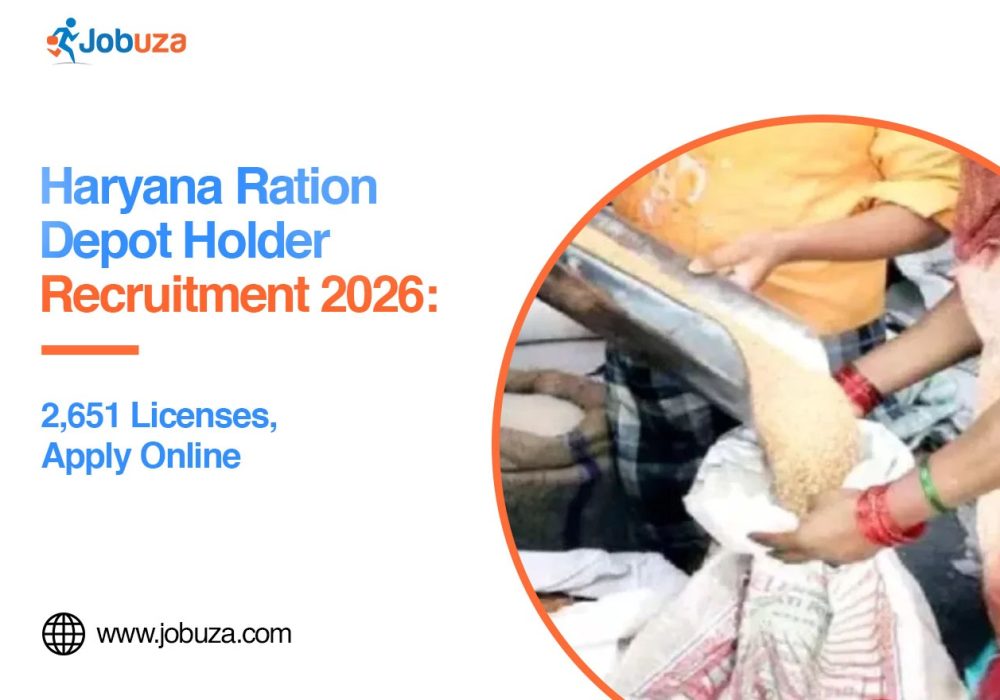
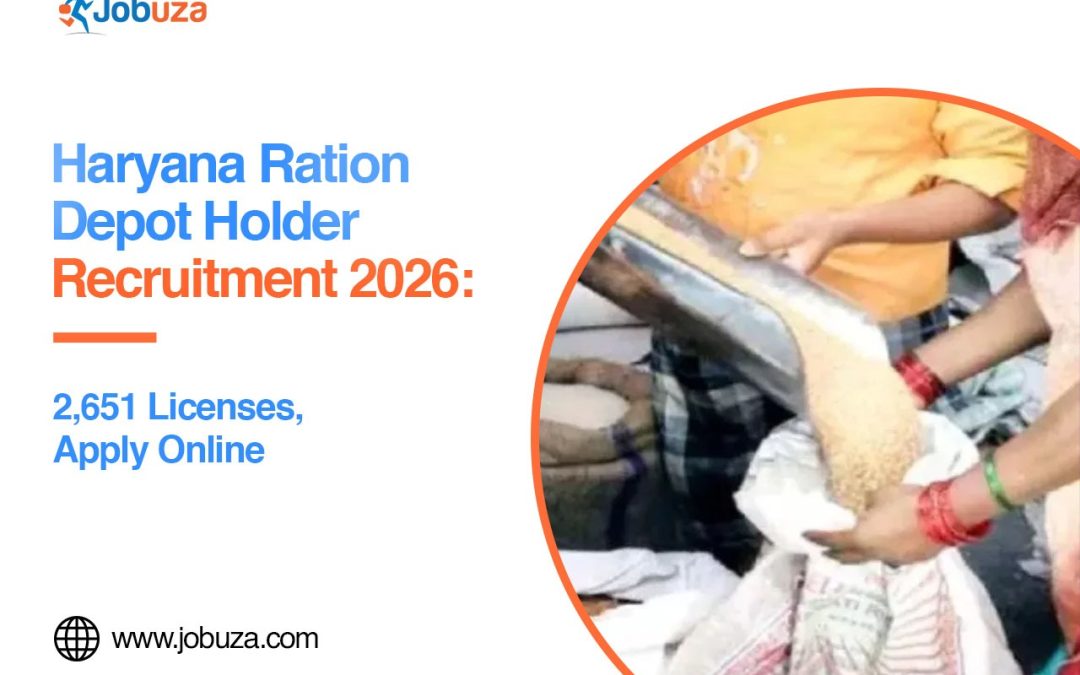
The Haryana government has opened applications for 2,651 new ration depot licences across villages and urban wards in the state. The initiative is being handled by the Department of Food, Civil Supplies and Consumer Affairs, Haryana, and allows eligible residents to operate a Fair Price Shop (FPS).
The online application process began on October 10, 2026, and the announced deadline is November 10, 2026. Applicants can submit their forms through the Antyodaya SARAL Haryana portal. Before applying, check whether a licence is available in your area and make sure you meet the age, education, computer knowledge, and other requirements. The department has also published instructions explaining the application process and documents needed for verification.
Haryana Ration Depot Holder Recruitment 2026: Highlights
| Particulars |
Details |
| Department |
Food, Civil Supplies and Consumer Affairs, Haryana |
| Licence Type |
Fair Price Shop (FPS) / Ration Depot |
| Total Licences |
2,651 |
| Application Mode |
Online |
| Application Start Date |
October 10, 2026 |
| Announced Last Date |
November 10, 2026 |
| Minimum Qualification |
Class 12 (10+2) |
| Age Limit |
21–45 years |
| Application Fee |
Reported as ₹0; confirm on the portal |
| Official Website |
Haryana Food Department |
| Apply Online |
Antyodaya SARAL Haryana |
The department’s website provides links for FPS licence instructions, district- and village-wise vacancies, and the online application service. Check the portal for any revised deadline or updated conditions before submitting your application.
Haryana Ration Depot Holder Vacancy 2026
The government plans to allocate 2,651 new Fair Price Shop licences across eligible locations in Haryana. These shops distribute essential commodities to beneficiaries under the public distribution system.
Vacancies are location-specific. Applicants should first check whether a licence is available in their village or urban ward rather than assuming they can apply from any part of the state. The department has published a district- and village-wise FPS vacancy list on its official website. Use that list to identify an available location before starting the application.
Haryana Ration Depot Holder Recruitment 2026: Important Dates
| Event |
Date |
| Application Process Begins |
October 10, 2026 |
| Last Date Announced |
November 10, 2026 |
| Application Mode |
Online through SARAL Haryana |
The announced application window runs until November 10, 2026. However, applicants should check the official department website for any extension or change in the schedule before relying on this date.
Haryana Ration Depot Holder Eligibility Criteria 2026
Applicants must meet the eligibility conditions for a new Fair Price Shop licence. The department’s instructions specify the age range, local residency, and documents required for the application.
Educational Qualification
Applicants should have passed Class 12 (10+2) from a recognised board. A certificate showing basic computer knowledge is also included in the department’s document checklist.
Keep your educational certificate and computer certificate ready for verification. Check the online application instructions to confirm the accepted certificate formats and any additional conditions.
Age Limit
The stated age limit is:
- Minimum age: 21 years
- Maximum age: 45 years
Applicants should verify the age conditions and any applicable relaxation rules in the latest official instructions before applying. <Cite refs={[“turn286622view1″,”turn394950view3”]}/>
Local Residency Requirement
Applicants must be residents of the village or urban ward for which they want to obtain the licence. They should check the vacancy list and select an available location in their own locality.
A Haryana Family ID, also known as the Parivar Pehchan Patra (PPP ID), is used during the online application process to identify the applicant and retrieve relevant personal information.
Haryana Ration Depot Holder Application Fee 2026
The recruitment information published by Jagran Josh reports no application fee for this licence allocation process. Applicants should confirm this on the official SARAL portal while completing the form, as the department’s instructions are the primary source for the application procedure. <Cite refs={[“turn394950view3″,”turn286622view1”]}/>
Documents Required for Haryana Ration Depot Holder Licence
Before applying, prepare the documents listed in the department’s official instructions. These may be checked by the area inspector during field verification.
The listed documents include:
- Class 12 educational certificate
- Basic computer knowledge certificate
- Applicant’s photograph
- Photograph of the applicant’s signature
- Family ID (PPP ID) and other personal information required by the portal
- Ownership proof, rent agreement or lease document for the proposed premises
- Site map of the proposed Fair Price Shop
- Recommendation for the FPS licence
- Required undertakings regarding family relationships with the Sarpanch or municipal councillor and previous licence cancellation
- Income proof
Keep the original documents and self-attested photocopies available wherever applicable. The department warns that missing documents during verification may delay processing or lead to rejection under the applicable rules. <Cite refs={[“turn286622view1”]}/>
How to Apply Online for Haryana Ration Depot Holder Recruitment 2026
Applications are submitted through the SARAL Haryana portal and then processed through the Haryana Public Distribution System (HPDS) portal.
Follow these steps:
- Visit the Antyodaya SARAL Haryana website.
- Log in with your existing account or register if you are a new user.
- Find the service for a New Fair Price Shop (FPS) Licence.
- Read the instructions and start the application.
- Continue to the HPDS portal when redirected.
- Select Check Vacancy to view available licences in different villages and wards.
- Choose an available vacancy in your locality.
- Enter your Family ID (PPP ID) and select your name from the displayed family details.
- Provide any missing personal information and details of the proposed business premises.
- Review the form, submit it, and save the application number for future tracking.
After submission, the application goes through the prescribed verification and departmental scrutiny process. The final decision on granting a licence rests with the competent licensing authority.
Haryana Ration Depot Holder Recruitment 2026: Selection Process
This is a licence allocation process, not a conventional government job recruitment examination. Applicants do not follow the usual written-exam and interview process associated with many government vacancies. After the online application is submitted, the department may carry out the following checks:
- Vacancy verification: The selected village or ward must have an available FPS licence.
- Document verification: The area inspector may check the original certificates and collect copies.
- Premises verification: The proposed shop’s location and supporting ownership or rental documents may be checked.
- Departmental scrutiny: The application is reviewed under the applicable licensing rules.
- Licence decision: The competent authority decides whether to grant the licence.
Submitting an application does not guarantee that a licence will be issued. Applicants must meet the conditions and complete the required verification.
Important Links
Final words
Haryana Ration Depot Holder Recruitment 2026 offers 2,651 new Fair Price Shop licences for eligible applicants across the state. The process provides residents with an opportunity to operate a ration depot, provided a vacancy is available in their village or urban ward, and they meet the licensing requirements.
Applicants should check the official vacancy list, prepare their educational and computer certificates, and keep the required premises documents ready. The announced application deadline is November 10, 2026, but it is best to confirm the latest schedule and instructions through the Haryana Food Department before submitting the form.
FAQs:
How many ration depot licences are available in Haryana in 2026?
The state has announced 2,651 new Fair Price Shop licences across eligible locations in Haryana.
What is the last date to apply for Haryana Ration Depot Holder Recruitment 2026?
The announced last date is November 10, 2026. Check the official portal for any extension or revised schedule.
What is the educational qualification for a Haryana ration depot licence?
Applicants should have passed Class 12 (10+2) and have a basic computer knowledge certificate, as specified in the application instructions.
What is the age limit for Haryana Ration Depot Holder Recruitment 2026?
The stated age range is 21 to 45 years. Applicants should check the latest official instructions for any applicable relaxation.
Is there an application fee for the ration depot licence?
Recruitment information reports no application fee. Confirm the fee status on the official portal before submitting the application.
by Jobuza Team | Oct 12, 2026 | BLOG, Latest Jobs
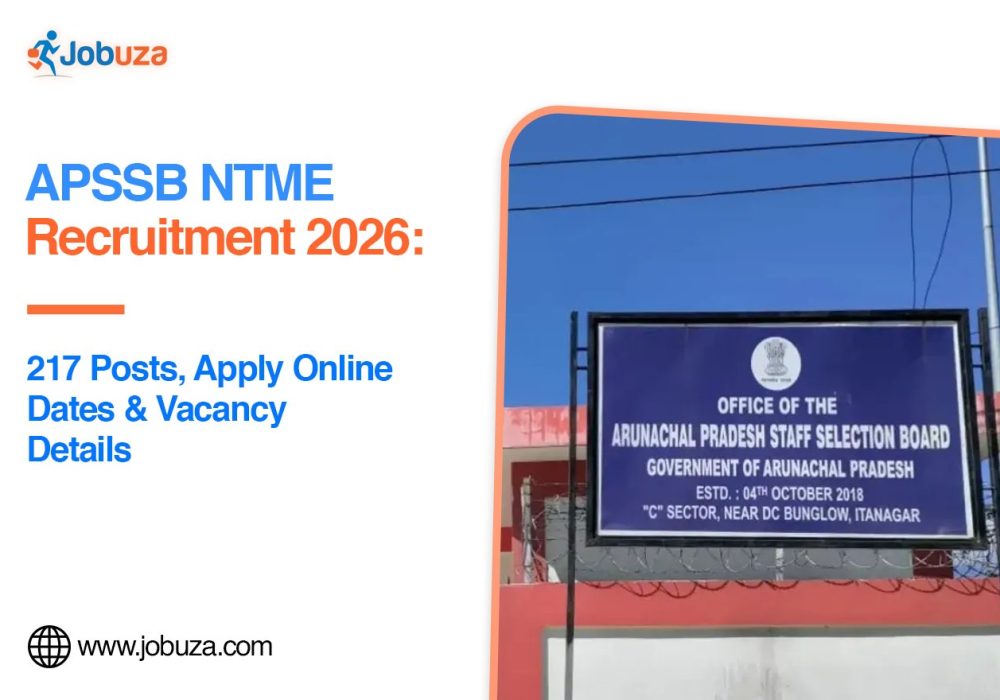
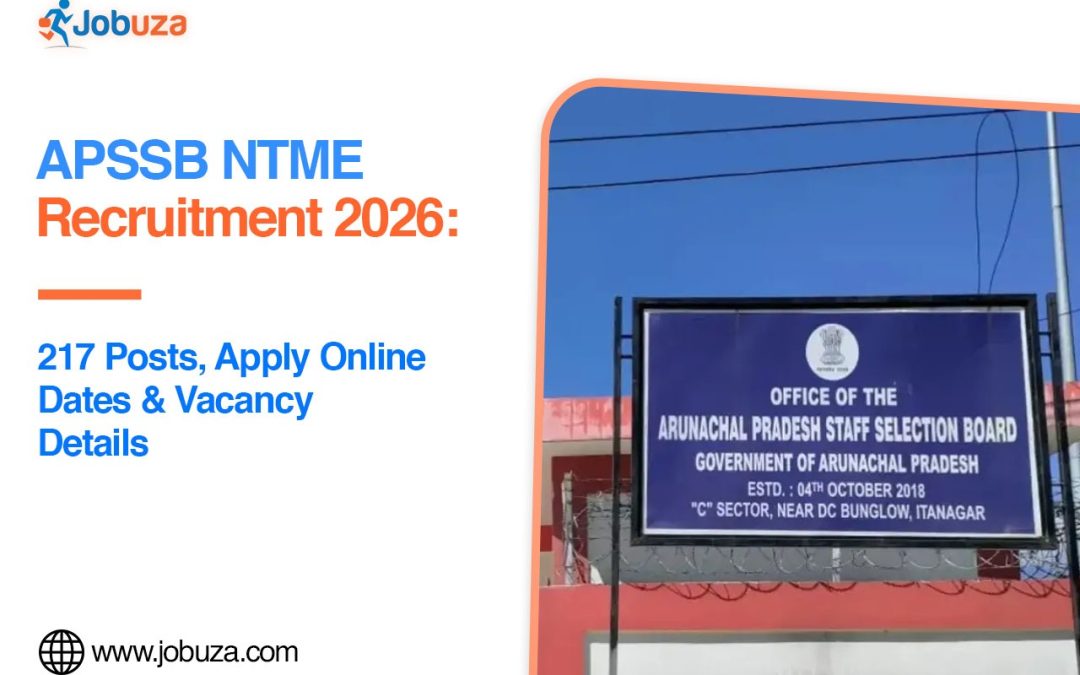
The Arunachal Pradesh Staff Selection Board (APSSB) has announced the Non-Ministerial Technical Examination (NTME) 2026 for 217 Group C vacancies across different state departments. The recruitment includes technical, healthcare, driving, and other non-ministerial positions.
The online application process is scheduled to begin on October 21, 2026, at 3:00 PM and close on November 5, 2026, at 5:00 PM. Candidates who meet the qualification and age requirements for their preferred post can apply through the official APSSB website. The written examination is tentatively scheduled for November 29, 2026. Candidates should read the recruitment notification carefully to check post-wise eligibility, application fees, selection stages, and important dates before applying.
APSSB NTME Recruitment 2026: Highlights
| Particulars |
Details |
| Recruiting Organisation |
Arunachal Pradesh Staff Selection Board |
| Examination Name |
Non-Ministerial Technical Examination (NTME) 2026 |
| Advertisement Number |
06/2026 |
| Total Vacancies |
217 |
| Post Category |
Group C |
| Application Mode |
Online |
| Application Start Date |
October 21, 2026, at 3:00 PM |
| Last Date to Apply |
November 5, 2026, at 5:00 PM |
| Written Exam Date |
November 29, 2026 (tentative) |
| Official Website |
apssb. nic. in |
The board has published a corrigendum dated October 12, 2026. Candidates should check the official APSSB notice board for the latest instructions.
APSSB NTME Vacancy 2026: Post-Wise Details
The recruitment covers several technical and non-ministerial posts in departments such as Health Services, Police Headquarters, Fire and Emergency Services, and Information and Public Relations.
Some of the reported vacancies are listed below.
| Post Name |
Vacancies |
| Auxiliary Nurse Midwife (ANM) |
61 |
| Constable (MT) Driver – Civil Police |
24 |
| Constable (MT) Driver – IRBn |
31 |
| Dental Technician |
23 |
| Other technical and non-ministerial posts |
Remaining vacancies |
| Total |
217 |
The four listed posts account for 139 vacancies. Candidates should refer to the official advertisement for the complete post-wise distribution and department details rather than relying on this partial list.
APSSB NTME Recruitment 2026: Important Dates
Applicants should keep the application and examination dates in mind while preparing their documents.
| Event |
Date |
| Notification Published |
October 9, 2026 |
| Corrigendum Published |
October 12, 2026 |
| Online Application Begins |
October 21, 2026, at 3:00 PM |
| Last Date to Apply |
November 5, 2026, at 5:00 PM |
| Written Examination |
November 29, 2026 (tentative) |
| PET/PST |
January 19, 2027 (tentative) |
| Driving Test |
January 28, 2027 (tentative) |
| Competency Test |
January 28, 2027 (tentative) |
The later examination stages apply to relevant posts and may be subject to changes. Check the latest corrigendum and official schedule before making plans.
APSSB NTME Eligibility Criteria 2026
The eligibility requirements depend on the post. Candidates should check the educational qualification, age limit, licence requirements, and any technical registration conditions mentioned for their chosen position.
Educational Qualification
The recruitment includes posts requiring different levels of education and technical training.
- Auxiliary Nurse Midwife (ANM): The reported requirements include Class 10 and Class 12 qualifications, an ANM course certificate, and valid Nursing Council registration.
- Constable (MT) Driver: Candidates need to meet the prescribed educational requirements and hold the required valid driving licence for the relevant vehicle category.
- Dental Technician: The reported requirements include specified educational qualifications and a relevant technical diploma or ITI trade certificate.
These are examples of post-specific requirements. Candidates must verify the exact qualifications accepted for each post in the official notification
Age Limit
The age limit varies by post. Reported examples include:
| Post |
Reported Age Limit |
| Auxiliary Nurse Midwife (ANM) |
18–35 years |
| Constable (MT) Driver – Civil Police |
18–22 years |
| Constable (MT) Driver – IRBn |
18–22 years |
| Dental Technician |
18–35 years |
Age relaxation may apply to eligible categories under the recruitment rules. Check the official advertisement for the prescribed age-calculation date and applicable relaxations.
APSSB NTME Application Fee 2026
The reported application fee structure is as follows.
| Category |
Application Fee |
| APST Candidates |
₹150 |
| Unreserved (UR) Candidates |
₹200 |
| Persons with Benchmark Disabilities (PwBD) |
Exempted |
Candidates should confirm the fee and payment instructions in the latest official notice before submitting their applications.
APSSB NTME Salary 2026
The salary depends on the post and its assigned pay level. The reported pay scales for the recruitment range from Level 1 to Level 5.
| Pay Level |
Reported Pay Scale |
| Level 1 |
₹18,000–₹56,900 |
| Level 5 |
₹29,200–₹92,300 |
These figures represent the reported pay ranges for the relevant levels, not a single salary applicable to all 217 vacancies. Candidates should check the official post-wise notification to confirm the pay level for their chosen position.
APSSB NTME Selection Process 2026
The selection process depends on the post applied for. It may include a written examination and additional tests for positions that require driving skills, physical fitness, or technical competency.
Written Examination
The written examination is tentatively scheduled for November 29, 2026. Candidates should check the official notification for the examination pattern, syllabus, marking scheme, and qualifying requirements.
Physical Standard Test and Physical Efficiency Test
Certain posts may require candidates to clear a Physical Standard Test (PST) and Physical Efficiency Test (PET). The reported tentative date for these tests is January 19, 2027.
Driving Test
Candidates applying for relevant driver positions may need to demonstrate their driving skills in a separate test. The reported tentative date is January 28, 2027.
Competency Test and Document Verification
Some technical posts may require a competency or practical test. Candidates who progress through the applicable selection stages may also need to present original certificates for verification. The exact selection stages differ by post, so candidates should follow the instructions in the official advertisement and subsequent notices.
How to Apply Online for APSSB NTME Recruitment 2026
Eligible candidates can apply through the APSSB website once the online application window opens.
- Visit the official APSSB website.
- Open the application section and select Non-Ministerial Technical Examination 2026.
- Complete the One-Time Registration process if required.
- Log in using the registration details provided by the portal.
- Fill in your personal information, educational qualifications, and other requested details.
- Select the post or preferences permitted under the recruitment rules.
- Upload your photograph, signature, and required certificates in the prescribed format.
- Pay the application fee, if applicable.
- Review the form carefully and submit it before the deadline.
- Download or print the final application acknowledgement for future reference.
Applications are scheduled to open on October 21 and close on November 5, 2026. Submit your form well before the deadline to avoid last-minute technical problems.
Important Links
| Purpose |
Official Link |
| APSSB Official Website |
Visit Website |
| Official Notice Board |
View Recruitment Notices |
| NTME 2026 Advertisement |
Available on the official notice board |
| NTME 2026 Corrigendum |
Check the notice dated October 12, 2026 |
| Online Application |
Use the APSSB website when the application window opens |
Final words
APSSB NTME Recruitment 2026 offers 217 Group C vacancies across technical, healthcare, driving, and other non-ministerial positions in Arunachal Pradesh. The online application window is scheduled for October 21 to November 5, 2026, while the written examination is tentatively planned for November 29.
Since eligibility and selection requirements differ by post, candidates should review the complete notification before applying. It is also important to check the October 12 corrigendum for any revised instructions and use the official APSSB website for the latest updates.
FAQs:
How many vacancies are available under APSSB NTME Recruitment 2026?
A total of 217 Group C vacancies have been announced under the Non-Ministerial Technical Examination 2026.
When will APSSB NTME online applications begin?
The online application window is scheduled to open on October 21, 2026, at 3:00 PM.
What is the last date to apply for APSSB NTME Recruitment 2026?
The reported deadline is November 5, 2026, at 5:00 PM.
When will the APSSB NTME written examination take place?
The written examination is tentatively scheduled for November 29, 2026.
What qualifications are required for APSSB NTME posts?
Qualifications vary by position. Some posts require Class 10 or Class 12, while technical and healthcare posts may require a diploma, ITI certificate, professional qualification, or registration.
by Jobuza Team | Oct 12, 2026 | BLOG, Latest Jobs
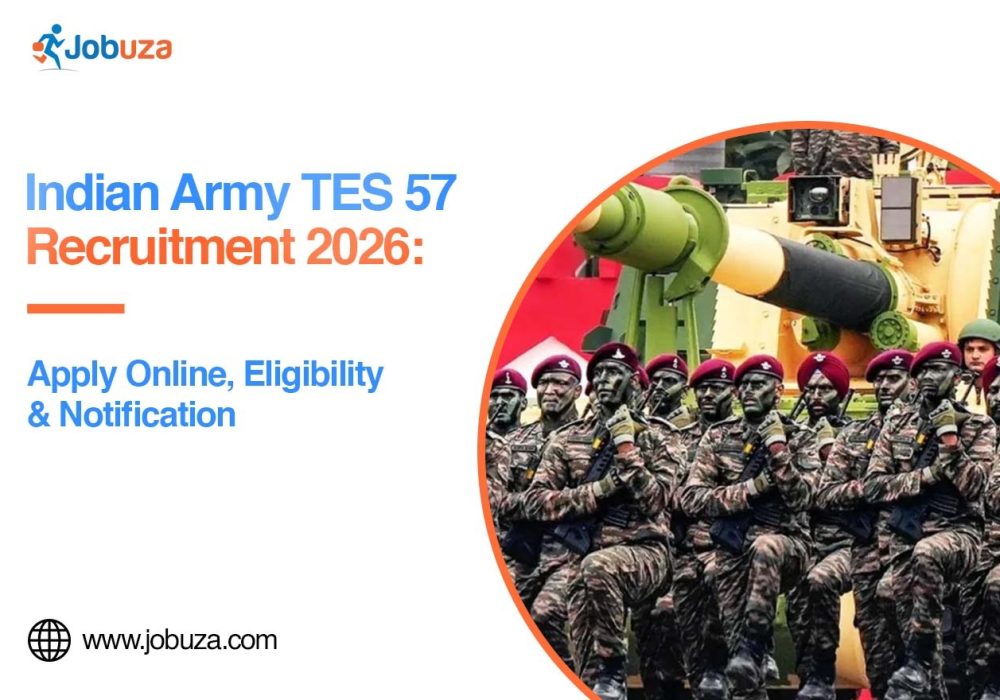
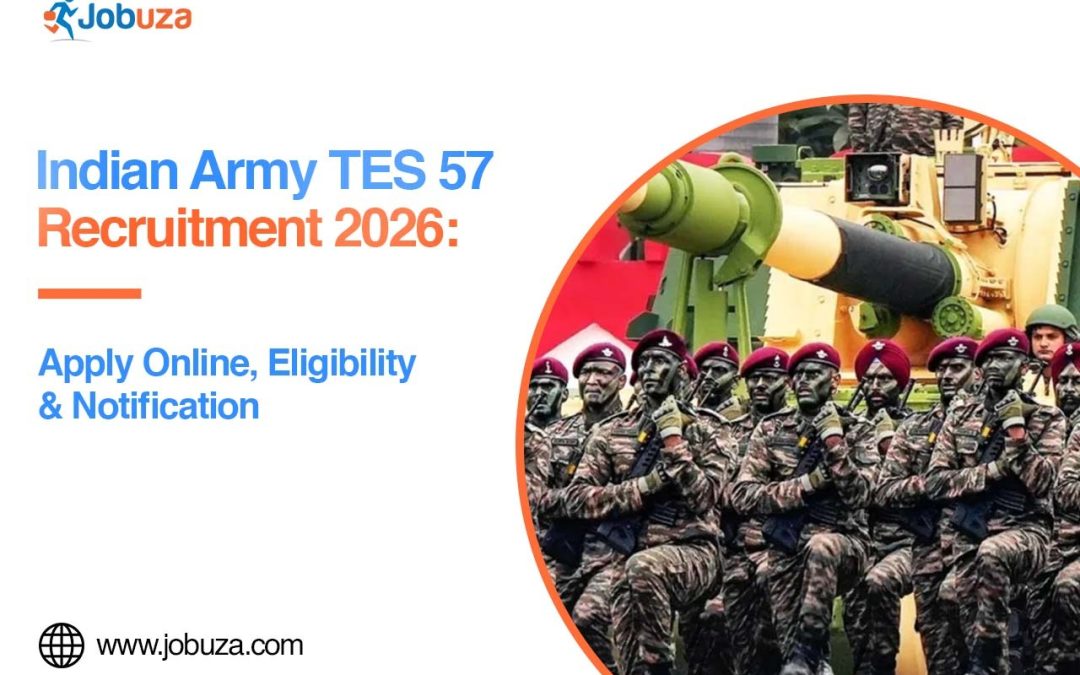
The Indian Army has announced the 57th Technical Entry Scheme (TES 57) for candidates who want to become officers after completing Class 12. The course is scheduled to commence in July 2027. Eligible unmarried male candidates who have passed Class 12 with Physics, Chemistry, and Mathematics (PCM) and appeared for JEE Main 2026 can apply for this entry.
The online application process is scheduled to begin on October 14, 2026, and close on November 12, 2026. Candidates can apply through the official Indian Army recruitment website. Before applying, aspirants should review the educational qualifications, age limit, selection process,s and application instructions mentioned in the official notification
.Indian Army TES 57 Recruitment 2026: Highlights
| Particulars |
Details |
| Organisation |
Indian Army |
| Entry Scheme |
Technical Entry Scheme (TES) |
| Course |
TES 57 |
| Course Commencement |
July 2027 |
| Post |
Officer Entry |
| Eligibility |
Class 12 PCM and JEE Main 2026 |
| Minimum PCM Marks |
60% |
| Application Mode |
Online |
| Application Start Date |
October 14, 2026 |
| Last Date to Apply |
November 12, 2026 |
| Official Website |
joinindianarmy. nic. in |
The recruitment is intended for candidates who meet the specific requirements of the TES entry. Candidates should read the official notification carefully before submitting their applications.
Indian Army TES 57 Recruitment 2026: Important Dates
Candidates should keep track of the application schedule to avoid missing the deadline.
| Event |
Date |
| Notification |
October 2026 |
| Online Application Begins |
October 14, 2026 |
| Last Date to Apply Online |
November 12, 2026 |
| TES 57 Course Begins |
July 2027 |
The application dates are based on the published recruitment information. Candidates should check the official website for any updates or changes to the schedule.
Indian Army TES 57 Eligibility Criteria 2026
Candidates must meet the educational, age, and nationality requirements specified for the 57th Technical Entry Scheme.
Educational Qualification
Applicants must have passed Class 12 or an equivalent examination with Physics, Chemistry,y and Mathematics as compulsory subjects.
The reported minimum requirement is 60% aggregate marks in PCM. Candidates must also have appeared for JEE Main 2026.
Applicants should verify the exact qualification conditions and accepted examination details in the official notification.
Age Limit
The usual TES age requirement is 16½ to 19½ years on the first day of the month in which the course begins.
Since TES 57 is scheduled to commence in July 2027, candidates must verify their date-of-birth eligibility against the official notification. Do not rely only on a general age range, as the notification may specify the exact permissible birth dates.
Marital Status
The published TES 57 eligibility information specifies that candidates must be unmarried males. Applicants should check the official notification for the complete conditions related to marital status and eligibility.
Nationality
Nationality requirements apply under the Indian Army’s entry rules. Candidates should consult the official notification for the eligible nationality categories and any certificate requirements.
Indian Army TES 57 Vacancy Details 2026
The TES 57 recruitment is an officer-entry scheme through which eligible candidates undergo technical training and military training. The exact vacancy count should be taken from the official notification.
Candidates should not assume that the number of vacancies from an earlier TES course will remain the same for TES 57. Check the official advertisement for the authorised intake and any category-specific instructions.
Indian Army TES 57 Selection Process 2026
The selection process generally includes shortlisting, an SSB interview, medical examination,n and final merit preparation.
Shortlisting of Applications
The Indian Army reviews applications against the eligibility conditions and shortlisting criteria specified for the course. Meeting the minimum educational requirement does not automatically guarantee an SSB interview call.
SSB Interview
Shortlisted candidates are called for the Services Selection Board (SSB) interview. This assessment evaluates officer-like qualities, personality, decision-making, leadership potential, and suitability for military service. Candidates should follow the reporting instructions provided with their SSB call letter.
Medical Examination
Candidates who qualify at the SSB stage must undergo a medical examination under the applicable Indian Army standards. Final selection depends on meeting the prescribed medical and other eligibility requirements.
Final Merit List
The final merit list is prepared according to the Army’s notified selection criteria, subject to medical fitness, eligibility, and the availability of vacancies. Candidates should use the official notification for the definitive selection procedure and any course-specific changes.
Indian Army TES 57 Salary and Training
TES is an officer-entry route for eligible Class 12 students. Selected candidates undergo a structured programme that combines technical education with military training. After successful completion of the prescribed training and fulfilment of the applicable requirements, candidates may be commissioned as officers in the Indian Army.
Pay, allowances, training duration, and service conditions are governed by the official scheme rules. Candidates should refer to the current TES 57 notification for the applicable terms rather than relying on salary details from older recruitment cycles.
How to Apply Online for Indian Army TES 57 Recruitment 2026
Eligible candidates can submit their applications through the official Indian Army recruitment portal. Follow these steps:
- Visit the official Indian Army website.
- Open the officer-entry or Technical Entry Scheme section.
- Find the TES 57 recruitment notification.
- Register or log in using the instructions provided on the portal.
- Enter your personal, educational, and contact details accurately.
- Provide the required examination information, including JEE Main details where requested.
- Review the completed application carefully before submitting it.
- Submit the form and save or print the application confirmation for future reference.
The online application is scheduled to open on October 14, 2026. Candidates should follow the instructions displayed on the official portal and complete the process before November 12, 2026.
Important Links
| Purpose |
Link |
| Official Indian Army Website |
Visit Website |
| TES 57 Notification |
Check the official recruitment portal |
| Online Application |
Available through the official portal during the application window |
Final words
Indian Army TES 57 Recruitment 2026 is an opportunity for eligible Class 12 students to pursue an officer career through the Technical Entry Scheme. Candidates who have secured the required PCM marks and appeared for JEE Main 2026 should review the notification and prepare their application details in advance.
The application window is scheduled from October 14 to November 12, 2026. Before applying, confirm your age, educational qualifications, marital status,s and all other conditions in the official notification at joinindianarmy.nic.in.
FAQs
- What is Indian Army TES 57 Recruitment 2026?
It is the recruitment entry for the Indian Army’s 57th Technical Entry Scheme course, scheduled to begin in July 2027.
- When will TES 57 online applications begin?
The online application window is scheduled to open on October 14, 2026.
- What is the last date to apply for TES 57?
The reported last date to submit the online application is November 12, 2026.
- What qualification is required for Indian Army TES 57?
Candidates must have passed Class 12 with Physics, Chemistry, and Mathematics, secured the prescribed PCM aggregate, and appeared for JEE Main 2026.
- What is the age limit for TES 57?
The usual TES age range is 16½ to 19½ years on the first day of the month in which the course begins. Candidates must confirm the exact permissible birth dates in the official notification.

by Jobuza Team | Oct 12, 2026 | BLOG, Latest Jobs
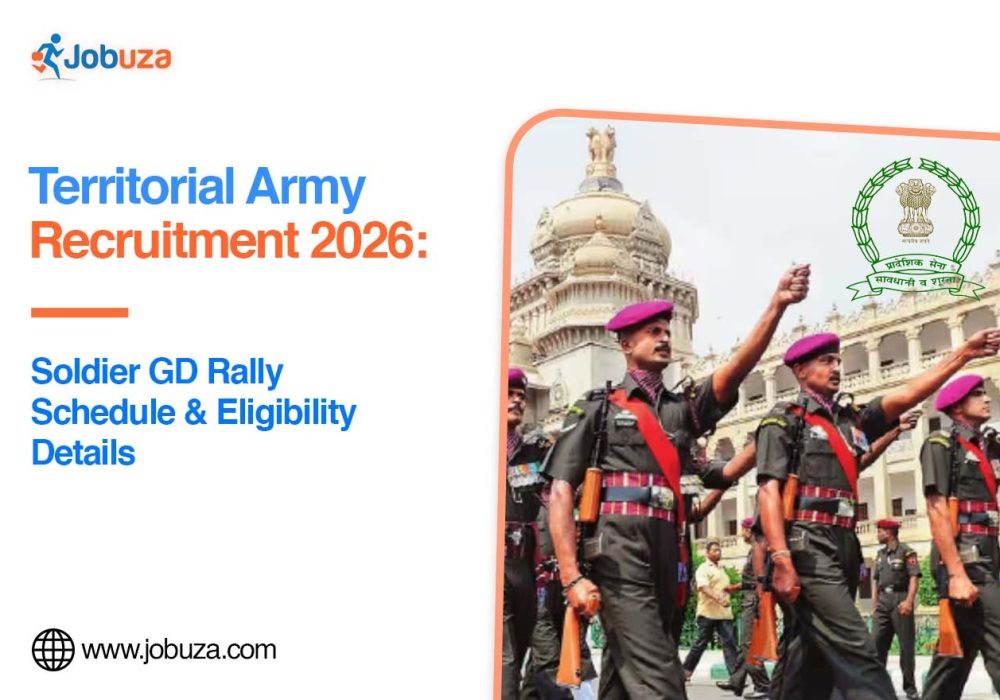
The Territorial Army Recruitment 2026 rally is expected to offer 74 posts under the 137 Composite Ecological Task Force Battalion (TA), 39 Gorkha Rifles. The vacancies include Soldier General Duty (GD), Junior Commissioned Officer (JCO), Clerk, and several tradesmen positions. According to the reported schedule, the recruitment rally will be held from November 16 to November 21, 2026, at Major Dhyan Chand Stadium, New Cantt, Prayagraj, Uttar Pradesh.
Before making travel plans, candidates should check one important detail: this is not a regular Soldier GD recruitment drive open to all young applicants. The reported notice is intended for eligible pension-holding ex-servicemen and certain former women employees of the Ministry of Environment, Forest and Climate Change (MoEF&CC) and State Forest Departments. Applicants should carefully read the eligibility conditions and document requirements before attending the rally.
Territorial Army Recruitment 2026: Highlights
Here are the main details candidates should know before checking the full recruitment information.
| Particulars |
Details |
| Organisation |
Territorial Army |
| Battalion |
137 Composite Ecological Task Force Battalion, 39 Gorkha Rifles |
| Recruitment |
Territorial Army Rally 2026 |
| Total Vacancies |
74 |
| Main Post |
Soldier General Duty (GD) |
| Soldier GD Vacancies |
61 |
| Other Posts |
JCO (GD), Clerk and Tradesmen |
| Rally Dates |
November 16–21, 2026 |
| Reporting Date |
November 16, 2026 |
| Reporting Time |
7:00 AM |
| Rally Venue |
Major Dhyan Chand Stadium, New Cantt, Prayagraj, Uttar Pradesh |
| Application Mode |
Rally-based recruitment |
| Official Website |
https://www.indianarmy.nic.in/ |
These details are based on reported recruitment information. Candidates should check the original notice for the latest instructions before attending.
Territorial Army Vacancy 2026: Post-Wise Details
The recruitment notice reportedly includes 74 vacancies across nine post categories. Soldier General Duty has the largest share, with 61 posts.
| Post Name |
Vacancies |
| Junior Commissioned Officer (GD) |
4 |
| Soldier General Duty (GD) |
61 |
| Soldier Clerk (Staff Duty) |
2 |
| Soldier Chef Community |
1 |
| Soldier Housekeeper |
1 |
| Soldier Washerman |
1 |
| Soldier Dresser |
2 |
| Soldier Tailor |
1 |
| Soldier Steward |
1 |
| Total |
74 |
The eligibility requirements may differ depending on the post. Candidates should confirm the qualifications and other conditions applicable to their preferred position in the official notification.
Territorial Army Recruitment 2026: Rally Schedule
Candidates planning to attend the rally should note the reported dates and venue.
| Event |
Details |
| Rally Begins |
November 16, 2026 |
| Reporting Time |
7:00 AM on November 16, 2026 |
| Last Day of Rally |
November 21, 2026 |
| Venue |
Major Dhyan Chand Stadium, New Cantt, Prayagraj, Uttar Pradesh |
Arrive at the venue according to the instructions in the recruitment notice. Keep enough time for travel and document checks, and confirm whether any post-specific reporting arrangements apply.
Territorial Army Recruitment 2026: Eligibility Criteria
Not everyone can apply for this recruitment. The reported notice identifies specific groups of former service personnel and forest department employees who may be eligible.
Who Can Attend the Rally?
The reported eligible categories include:
- Ex-servicemen who receive a pension.
- Eligible former women employees, including premature retirees, of MoEF&CC and State Forest Departments.
The notice also refers to a minimum of 20 years of service for the applicable former employee categories. Candidates should check the original advertisement to confirm whether their employment history, retirement status, and other details meet the requirements.
Age and Service Conditions
The reported conditions include the following:
- Enrolment within five years of retirement.
- JCOs may serve up to 55 years of age.
- Other Ranks (OR) may serve up to 50 years of age.
- Medical category: SHAPE-1.
- Character standard: Exemplary or Very Good.
These conditions should be checked against the official notice, as the requirements may vary according to a candidate’s category and service background.
Territorial Army Physical Standards 2026
Candidates must meet the physical standards specified for the recruitment. The reported requirements are listed below.
| Physical Parameter |
Requirement |
| Male Height |
160 cm |
| Height for Gorkhas, Garhwalis and Assamese |
152 cm |
| Height for Eligible Former Women Employees |
150 cm |
| Minimum Male Weight |
50 kg |
| Minimum Female Weight |
42 kg |
| Male Chest |
82 cm, with at least 5 cm expansion |
| Female Chest Requirement |
Minimum 5 cm expansion |
Relaxations may be available for candidates from certain regions. Check the official notification to confirm the applicable standards and any permitted exemptions.
Territorial Army Recruitment 2026: Selection Process
The selection process may include physical tests, document screening, a trade or proficiency test, an interview and a medical examination, depending on the post and candidate category.
Physical Tests
The reported physical tests for male candidates include:
- One-mile run
- Pull-ups
- Eight-foot ditch
- Zigzag balance beam
Candidates should prepare according to the standards mentioned in the official notice. Passing the physical tests does not automatically guarantee final selection, as further assessments may be required.
Trade or Proficiency Test
Applicants for tradesmen posts may need to demonstrate their practical skills through a trade-specific test. Eligible former women employees may also be assessed on work related to afforestation and nursery management, where applicable.
Interview and Medical Examination
Candidates who clear the required screening and physical assessments may be called for an interview conducted by a Board of Officers. They must also satisfy the applicable medical fitness standards.
The exact order of the selection stages should be confirmed from the original recruitment notice.
Documents Required for the Territorial Army Rally
Getting the paperwork ready in advance can make the reporting process easier. Eligible candidates should check the official list and arrange the required documents before travelling.
The reported document requirements include:
- Original discharge book, where applicable
- Original Pension Payment Order (PPO)
- Eight recent coloured passport-size photographs
- Character certificate issued by the Village Sarpanch or police authority
- Educational certificates
- Domicile certificate
- Relevant service or employment records
Carry original documents and photocopies wherever instructed. Make sure your details are consistent across your certificates and service records. Missing documents may cause problems during verification.
How to Attend the Territorial Army Recruitment Rally 2026
This recruitment is reported to be rally-based rather than a standard online application drive. Eligible candidates can follow these steps:
- Visit the official Territorial Army website and look for the relevant recruitment notice.
- Read the eligibility conditions carefully to make sure you qualify.
- Confirm the rally date, venue, reporting time, and document requirements.
- Arrange the required certificates, service records, and photographs.
- Reach Major Dhyan Chand Stadium, New Cantt, Prayagraj, as instructed in the notice.
- Attend the applicable screening, physical tests, trade test, interview, and medical examination.
Do not pay any agent who promises recruitment or guaranteed selection. Follow only the instructions issued by the authorised recruitment authorities.
Territorial Army Recruitment 2026: Important Links
A separate online application link for this rally has not been confirmed. Candidates should consult the original notice for the correct reporting and application instructions.
Final words
The reported Territorial Army Recruitment 2026 rally includes 74 vacancies, of which 61 are for Soldier General Duty. The rally is scheduled for November 16–21, 2026, at Major Dhyan Chand Stadium in Prayagraj, Uttar Pradesh.
The most important thing is to check your eligibility before making any plans. This recruitment is intended for specified ex-servicemen pensioners and eligible former women employees of MoEF&CC and State Forest Departments, rather than all general applicants. Read the official notice carefully, arrange the required documents, and confirm the rally details before travelling.
FAQs:
How many vacancies are available in Territorial Army Recruitment 2026?
The reported recruitment includes 74 vacancies, including 61 Soldier General Duty posts.
When will the Territorial Army recruitment rally take place?
The rally is scheduled for November 16 to November 21, 2026. Candidates should check the notice for their reporting instructions.
Where will the Territorial Army rally be held?
The reported venue is Major Dhyan Chand Stadium, New Cantt, Prayagraj, Uttar Pradesh.
Who is eligible for this Territorial Army recruitment?
The reported eligible groups include pension-holding ex-servicemen and certain former women employees of MoEF&CC and State Forest Departments. Candidates must meet the specific service and other conditions in the notification.
What is the minimum height for Soldier GD recruitment?
The reported minimum height for male candidates is 160 cm, with certain relaxations for specified groups. Check the official notice for the applicable standards.
Can general candidates apply online for this rally?
This recruitment is reported as an in-person, rally-based process for specified eligible categories. A separate online application link has not been confirmed.
by Jobuza Team | Oct 8, 2026 | BLOG, Latest Jobs
HAL Junior Executive Recruitment 2026: Apply Online for 150 Posts
Hindustan Aeronautics Limited (HAL) has released the HAL Junior Executive Recruitment 2026 notification for 150 vacancies across nine engineering disciplines. Eligible engineering graduates can apply online for these positions through the official recruitment portal. The application process started on October 7, 2026, and the last date to submit the form is October 17, 2026, at 2:00 PM.
Candidates with a relevant B.E. or B. degree can check the vacancy details, educational qualifications, age limit, application fee, salary, and selection process below before applying.
HAL Junior Executive Recruitment 2026: Highlights
The recruitment is being conducted under Advertisement No. HAL/CHRC-TAR/RECT-03/2026. Here are the important details candidates should know.
| Particulars |
Details |
| Organisation |
Hindustan Aeronautics Limited (HAL) |
| Post Name |
Junior Executive |
| Total Vacancies |
150 |
| Advertisement Number |
HAL/CHRC-TAR/RECT-03/2026 |
| Job Type |
Short-term engagement |
| Application Mode |
Online |
| Application Start Date |
October 7, 2026 |
| Last Date to Apply |
October 17, 2026, up to 2:00 PM |
| Educational Qualification |
Relevant B.E./B.Tech degree |
| Salary Scale |
₹30,000–₹1,20,000 |
| Selection Process |
Shortlisting and interview |
| Official Website |
hal-india.co.in |
HAL Junior Executive Vacancy 2026: Branch-Wise Details
HAL has announced 150 vacancies across nine engineering disciplines. Mechanical Engineering has the highest number of posts, with 78 vacancies.
| Engineering Discipline |
Vacancies |
| Aeronautical |
2 |
| Chemical |
2 |
| Civil |
7 |
| Computer Science |
6 |
| Electrical |
25 |
| Electronics |
21 |
| Mechanical |
78 |
| Metallurgy |
3 |
| Production |
6 |
| Total |
150 |
Candidates should check the official notification to confirm whether their engineering branch is accepted for the discipline they wish to apply for.
HAL Junior Executive Recruitment 2026: Important Dates
Candidates should complete the application process before the deadline. The online application portal specifies the following schedule.
| Event |
Date |
| Online Application Begins |
October 7, 2026, at 2:00 PM |
| Last Date to Apply Online |
October 17, 2026, at 2:00 PM |
| Interview Schedule |
November 2026, tentative |
The interview schedule is tentative, so candidates should check the official website for updates and instructions.
HAL Junior Executive Eligibility Criteria 2026
Before applying, candidates must make sure they meet HAL’s educational and age requirements.
Educational Qualification
Applicants must possess a regular, full-time B.E. or B.Tech degree in the relevant engineering discipline from a recognised university or institution.
The notified disciplines include Aeronautical, Chemical, Civil, Computer Science, Electrical, Electronics, Mechanical, Metallurgy and Production Engineering. Related branches may be accepted where specified in the official notification.
Minimum Marks
The minimum aggregate marks required in the qualifying engineering degree are:
- UR, OBC-NCL and EWS candidates: At least 60%.
- SC, ST and PwBD candidates: At least 50%.
Candidates should verify the accepted degree branches and any other qualification conditions in the detailed advertisement before submitting their applications.
Age Limit
The upper age limit for eligible UR and EWS candidates is 28 years as of October 17, 2026. The minimum age is 18 years.
Age relaxation is applicable to eligible reserved and other categories according to the rules mentioned in the official notification. Candidates should check the advertisement for the conditions applicable to their category.
HAL Junior Executive Application Fee 2026
The application fee details reported for this recruitment are given below.
| Category |
Application Fee |
| UR, OBC and EWS |
₹500 |
| SC, ST and PwBD |
Exempted |
Candidates should confirm the fee applicable to them on the official application portal. Where a fee is required, payment must be completed through the prescribed online payment facility. The recruitment portal states that applications submitted without the applicable fee may be rejected. Official application portal
HAL Junior Executive Salary 2026
Selected candidates will be placed in the E0 pay scale of ₹30,000 to ₹1,20,000. The initial basic pay is ₹30,000 per month. The salary package may also include applicable allowances and benefits, such as Dearness Allowance, House Rent Allowance, cafeteria allowance and medical insurance, subject to HAL’s recruitment terms and rules. The engagement is on a short-term basis for up to three years. Candidates should read the notification carefully to understand the tenure and conditions of employment before applying.
HAL Junior Executive Selection Process 2026
The selection process includes shortlisting and an interview, followed by the required verification and medical formalities.
The main stages are:
- Shortlisting: Candidates are shortlisted based on their aggregate marks in the qualifying engineering degree, as specified in the notification.
- Personal Interview: Shortlisted applicants are called for an interview. Candidates should prepare to discuss their engineering subjects, technical knowledge and relevant skills.
- Document Verification: Educational certificates, identity proof, category certificates and other required documents are checked.
- Medical Examination: Candidates must meet the applicable medical requirements.
The detailed advertisement should be consulted for the shortlisting ratio, interview requirements and other selection conditions.
How to Apply for HAL Junior Executive Recruitment 2026
Eligible candidates can submit their applications online through the HAL recruitment portal. Follow these steps:
- Visit the official HAL Junior Executive application portal.
- Open the recruitment notice titled Junior Executive on Short Term Basis.
- Select the online application option and complete the registration process.
- Enter your personal, educational and contact details carefully.
- Upload the required recent photograph and signature in the prescribed format.
- Review the information entered in the form and correct any errors before final submission.
- Pay the application fee, if applicable.
- Submit the application and save a copy of the confirmation page for future reference.
HAL’s portal advises candidates to apply for only one engineering discipline. Multiple applications for different disciplines may be rejected. Keep your registered email address and mobile number active during the selection process.
Bottom line
The HAL Junior Executive Recruitment 2026 offers 150 short-term positions for eligible engineering graduates across nine disciplines. Candidates who meet the educational qualifications, minimum marks, and age requirements should review the official advertisement and submit their applications by October 17, 2026, at 2:00 PM.
Before applying, verify your engineering branch, category-related eligibility, application fee, and all supporting documents. Use the official HAL recruitment portal for the latest instructions and updates.
FAQs
- How many vacancies are available in HAL Junior Executive Recruitment 2026?
A total of 150 Junior Executive vacancies have been announced across nine engineering disciplines.
- What is the last date to apply for HAL Junior Executive Recruitment 2026?
The last date to apply online is October 17, 2026, at 2:00 PM.
- What qualification is required for HAL Junior Executive posts?
Candidates need a regular, full-time B.E. or B. Tech degree in the relevant engineering discipline, subject to the conditions in the official notification.
- What is the age limit for HAL Junior Executive Recruitment 2026?
The upper age limit for UR and EWS candidates is 28 years as of October 17, 2026. Applicable age relaxations are available according to the recruitment rules.
- What is the salary of a HAL Junior Executive?
The notified E0 pay scale is ₹30,000–₹1,20,000, with an initial basic pay of ₹30,000 per month and applicable benefits.