The Bihar School Examination Board (BSEB) has announced the Bihar School Librarian Eligibility Test (LET) 2026 for candidates interested in School Librarian posts. The recruitment is linked to around 5,800 School Librarian posts in government schools across Bihar. The online application process started on October 1, 2026, and eligible candidates can submit the form up to October 21, 2026.
Candidates who want to apply should check the educational qualifications, age limit, application fee, exam pattern, and other requirements before submitting the form.
The LET is an eligibility test for candidates seeking School Librarian opportunities. Candidates who qualify the test receive an eligibility certificate for the subsequent librarian recruitment process.
Bihar Librarian Vacancy Details
The recruitment drive is associated with 5,800 School Librarian posts across government schools in Bihar.
Post Name
Vacancies
School Librarian
5,800
Total
5,800
Important Dates
Event
Date
Notification
September 28, 2026
Online Application Starts
October 1, 2026
Last Date to Apply
October 21, 2026
Exam
November 19 to December 10, 2026*
*The examination window is tentative. Candidates should check the official website for the final schedule.
Bihar Librarian Eligibility Criteria
Educational Qualification
Candidates should have a Bachelor’s degree in Library Science from a recognised university with the required marks as specified in the notification. Candidates should carefully check the official notification before applying.
Age Limit
The minimum age requirement for Bihar LET 2026 is 21 years. The applicable upper-age rules and relaxations should be checked in the official notification.
Bihar Librarian Application Fee
The reported application fee for Bihar LET 2026 is:
Category
Application Fee
General/BC/EBC
₹960
SC/ST/PwD
₹760
Candidates should verify the applicable fee on the official application portal before making payment.
Bihar Librarian LET 2026 Exam Pattern
The Bihar School Librarian Eligibility Test will be conducted in Computer-Based Test (CBT) mode. The paper will contain 150 objective-type questions carrying 150 marks, with a duration of 150 minutes. There is no negative marking.
Subject
Questions/Marks
Library Science
100
General Knowledge
50
Total
150
Selection Process
The LET is an eligibility examination. Candidates who qualify the test will receive an eligibility certificate, which is required for subsequent School Librarian recruitment opportunities.
The appointment process will follow the applicable recruitment rules and subsequent recruitment notifications.
Fill in the required personal and educational details.
Upload the required documents.
Pay the application fee online.
Check all details carefully.
Submit the application form.
Download and save a copy of the submitted form.
Documents Required
Candidates should keep the following documents ready:
Recent passport-size photograph
Signature
Library Science degree/certificate
Educational marksheets
Category certificate, if applicable
Valid identity proof
Other documents mentioned in the official notification
Important Instructions for Candidates
Check eligibility before submitting the form.
Apply before October 21, 2026.
Enter personal and educational details carefully.
Pay the correct application fee.
Keep a copy of the submitted application form.
Check the official BSEB website for updates to the exam schedule.
Use the official SLET portal for online registration.
Bottom Line
The Bihar Librarian Vacancy 2026 is linked to the Bihar School Librarian Eligibility Test (LET) 2026 for 5,800 School Librarian posts. The online application process is open from October 1 to October 21, 2026.
Uttarakhand Police is preparing for a recruitment drive for around 1,500 posts in 2026. The proposed vacancies are expected to cover different units, including Civil Police, Indian Reserve Battalion (IRB), Fire Services and the Anti-Terrorist Squad (ATS). At present, the detailed recruitment notification has not been released, so candidates will have to wait for the official advertisement for confirmed vacancies, eligibility, application dates, and selection details. The recruitment proposal is still being finalised. Candidates interested in these government jobs should keep an eye on theofficial Uttarakhand Police website and the official UKSSSC website for the latest updates.
Note: The 1,500-post figure is based on the current recruitment proposal. It should not be treated as the final vacancy count until the official notification is released.
Vacancy Details
The proposed recruitment is expected to include vacancies in several police and emergency-service units.
Post/Department
Proposed Vacancies
Civil Police
Around 720
Indian Reserve Battalion (IRB)
Around 315
Fire Services
Around 225
Anti-Terrorist Squad (ATS)
Around 220
Total
Around 1,500
These numbers are tentative and can change before the final recruitment notification is issued.
The official application schedule has not been announced yet. Candidates should rely on the official notification for the final dates. Any dates circulating on unofficial websites should be treated as tentative until confirmed.
Eligibility Criteria
Educational Qualification
The educational qualification for the Uttarakhand Police Recruitment 2026 has not been officially announced yet. As the proposed recruitment covers different departments and posts, the qualification may vary. Depending on the post, candidates may be required to have passed Class 10, Class 12, or hold another specified qualification. The exact educational requirements will be available in the official notification. Candidates should check the post-wise eligibility before submitting an application.
Recruitment Status
The Uttarakhand Police recruitment proposal is currently being processed. The detailed recruitment notification is awaited. Once the official notification is released, it is expected to provide complete information about the posts, vacancies, eligibility requirements, application procedure, and selection process. Until then, candidates should avoid relying on unofficial application dates or eligibility details.
What Candidates Should Check After Notification
Once the official recruitment notice is released, candidates should check the following details carefully:
Post-wise vacancy
Educational qualification
Age limit
Application fee
Application start date
Last date to apply
Physical requirements
Written examination details
Selection process
Salary and pay scale
Required documents
Application procedure
The official details should be taken only from the recruitment notification issued through the authorised Uttarakhand recruitment portal.
How to Check the Official Notification
Candidates can follow these steps to check for the recruitment announcement:
Treat the 1,500-post figure as proposed until the final notification confirms it.
Do not rely on unofficial application dates.
Wait for the official notification for eligibility and age-limit details.
Check the post-wise vacancy before applying.
Read the complete notification once it is released.
Apply only through the official recruitment portal.
Keep checking the official websites for updates.
Bottom Line
The Uttarakhand Police Recruitment 2026 is being planned for around 1,500 posts, with the proposed vacancies covering Civil Police, IRB, Fire Services and ATS. However, the detailed recruitment notification has not been released yet.
The final notification will confirm the exact vacancies, eligibility, application dates, fee, salary, and selection process. Until then, candidates should treat the available vacancy figures as provisional and follow theofficial Uttarakhand Police website andofficial UKSSSC website for verified updates.
The Indian Navy has opened recruitment for eligible sportspersons under Sailor Sports Quota Entry 02/2026. Candidates who have completed Class 12 and have the required sports achievements can apply for the available Sailor positions.
The recruitment is for Direct Entry Petty Officer (Sports Entry) and Direct Entry Chief Petty Officer (Sports Entry). The Navy has not announced a fixed number of vacancies, as the intake will depend on available vacancies and requirements in different sports disciplines.
Interested candidates should check the eligibility and sports requirements carefully before applying. Candidates can visit the officialJoin Indian Navy website for the latest recruitment notification and updates.
Recruitment Highlights
Detail
Information
Organization
Indian Navy
Recruitment
Sailor Sports Quota Entry 02/2026
Post Name
Direct Entry Petty Officer / Direct Entry Chief Petty Officer
Total Vacancies
As per Navy requirement
Job Location
All India
Age Limit
17½ to 25 years
Application Mode
Offline
Application Fee
As mentioned in the notification
Application Start Date
September 26, 2026
Last Date
October 15, 2026
Extended Last Date
October 22, 2026 for eligible remote areas
Selection Process
Shortlisting, Sports Trials and Medical Examination
The Indian Navy has not given a fixed vacancy number for this recruitment. The number of candidates selected will depend on the Navy’s requirements and vacancies available in different sports.
Post
Vacancies
Pay Level
Direct Entry Petty Officer (Sports Entry)
As per requirement
Level 5
Direct Entry Chief Petty Officer (Sports Entry)
As per requirement
Level 6
Candidates should check the detailed recruitment notification on theofficial Indian Navy recruitment portal for the latest information about available positions and service requirements.
Important Dates
Event
Date
Notification Date
September 26, 2026
Application Start Date
September 26, 2026
Last Date
October 15, 2026
Last Date for Specified Remote Areas
October 22, 2026
Sports Trials
To be notified to shortlisted candidates
Candidates from specified remote areas should read the notification carefully to confirm whether the extended deadline applies to them. For recruitment notices and updates, candidates can also check theofficial Indian Navy Notifications page.
Eligibility Criteria
Educational Qualification
Candidates should have passed Class 12 (10+2) or an equivalent examination from a recognised board. Since this is a Sports Quota recruitment, meeting the educational requirement alone is not sufficient. Candidates must also satisfy the prescribed sports achievement criteria for the relevant discipline. Applicants should check the sports certificates and performance requirements mentioned in the official notification before submitting their application.
Age Limit
The prescribed age range for the recruitment is 17½ to 25 years. Candidates should check their date of birth against the dates specified in the official notification. Age relaxation, wherever applicable, will be provided according to the Navy’s rules. The latest eligibility conditions should always be checked on theofficial Indian Navy website before applying.
Selection Process
There is no regular written examination for this Sports Quota recruitment. Candidates are selected through the following stages:
Shortlisting: Applications are checked against the eligibility and sports achievement requirements.
Sports Trials: Shortlisted candidates are called for sports trials. Their performance during the trials is considered for selection.
Medical Examination: Candidates who qualify in the sports trials have to meet the prescribed medical standards.
Final Selection: The final selection depends on eligibility, sports performance, medical fitness, and the vacancies available with the Indian Navy.
Candidates should monitor the officialIndian Navy recruitment page for information about trial dates and further instructions.
How to Apply
Candidates should follow the application instructions given in the official notification carefully.
Before sending the application, candidates should keep a few things in mind:
Read the complete notification before applying.
Check both the educational and sports eligibility requirements.
Enter all details carefully in the application form.
Attach every document asked for by the Navy.
Use the prescribed application format.
Send the form using the postal method specified in the notification.
Do not wait until the final day to send the application.
Keep copies of the application and documents for your records.
Check the official Navy website regularly for updates about sports trials and further selection stages.
Bottom Line
The Indian Navy Sailor Recruitment 2026 under Sports Quota Entry 02/2026 is aimed at eligible sportspersons who want to join the Navy through the sports entry route. The recruitment covers Direct Entry Petty Officer and Direct Entry Chief Petty Officer positions, with vacancies depending on the Navy’s requirements.
Candidates who meet the Class 12 qualification, age limit, and sports criteria can apply according to the prescribed procedure. Since selection involves shortlisting, sports trials, and medical fitness, applicants should pay close attention to the sports eligibility requirements and required certificates. Before applying, candidates should check the latest information on theofficial Join Indian Navy website and itsofficial notifications page.
Canara Bank has released the Canara Bank Recruitment 2026 notification for the engagement of 3,500 Graduate Apprentices under the Apprentices Act, 1961, for the financial year 2026-27. The online application process has started on October 1, 2026, and eligible candidates can submit their applications until October 17, 2026. Candidates must hold a graduation degree in any discipline from a recognised university and meet the prescribed age and other eligibility conditions. The apprenticeship training will be for 12 months, with selected candidates receiving a monthly stipend of ₹16,650. Candidates must first register on the NATS portal before applying through the Canara Bank website.
Recruitment Highlights
Detail
Information
Organization
Canara Bank
Recruitment
Graduate Apprentice Recruitment 2026-27
Post Name
Graduate Apprentice
Total Vacancies
3,500
Job Location
Various States/UTs across India
Application Mode
Online
Notification Date
September 25, 2026
Starting Date
October 1, 2026
Last Date
October 17, 2026
Training Duration
12 Months
Age Limit
20–28 Years
Stipend
₹16,650 per month
Selection Process
State-wise Merit, Document Verification, Local Language Test and Medical Fitness
Canara Bank has announced 3,500 Graduate Apprentice training seats on a provisional basis for FY 2026-27.
Vacancy Details
The recruitment is for Graduate Apprentice training seats. The 3,500 seats are distributed among different states and Union Territories.
Category
Vacancies
Unreserved (UR)
1,541
Other Backward Classes (OBC)
845
Scheduled Caste (SC)
553
Economically Weaker Section (EWS)
335
Scheduled Tribe (ST)
226
Total
3,500
The vacancy distribution is provisional and is subject to the actual requirements of Canara Bank.
Important Dates
Event
Date
Notification Released
September 25, 2026
NATS Registration
Before applying
Application Starts
October 1, 2026
Last Date to Apply
October 17, 2026
Age/Qualification Cut-off Date
September 1, 2026
Document Verification
To be announced
Training Start Date
To be announced
Candidates who are not already registered on the NATS portal need to complete their registration and maintain a 100% complete profile before applying for the Canara Bank apprenticeship.
Eligibility Criteria
Educational Qualification
Candidates applying for the Canara Bank Graduate Apprentice Recruitment 2026 must have:
A graduation degree in any discipline from a university recognised by the Government of India or an equivalent qualification recognised by the Central Government.
The graduation must have been completed not earlier than January 1, 2023, and not later than September 1, 2026.
Candidates with one year or more of work experience are not eligible for this apprenticeship.
Candidates must also satisfy the local language requirement applicable to the state they choose.
Age Limit
The age limit is 20 to 28 years as on September 1, 2026.
Category
Age Relaxation
General/EWS
No relaxation
OBC (Non-Creamy Layer)
3 years
SC/ST
5 years
PwBD
Up to 10 years, as applicable
Additional age concessions may apply to eligible categories as specified in the official notification. Candidates should check the notification carefully before applying.
Application Fee
Category
Application Fee
General/OBC/EWS and other applicable categories
₹500
SC/ST
Nil
PwBD
Nil
The ₹500 fee includes applicable intimation charges. SC, ST and PwBD candidates are exempt from the application fee.
Salary / Stipend
This recruitment is for apprenticeship training, not regular employment with Canara Bank. Selected Graduate Apprentices will receive a monthly stipend of ₹16,650 during the one-year training period. The apprenticeship will continue for 12 months. Apprentices are not treated as regular employees of the bank during the training period.
Selection Process
There is no written examination for this Canara Bank Apprentice recruitment. Candidates will be shortlisted through the prescribed merit process and must then complete the required verification stages.
State-wise Merit List – Merit is prepared based on the prescribed academic marks.
Document Verification – Shortlisted candidates must provide the required original documents.
Local Language Test – Candidates must meet the applicable local language requirement.
Medical Fitness – Candidates must satisfy the prescribed medical fitness conditions.
Final Selection – Engagement is subject to fulfillment of all eligibility and verification requirements.
The merit list is prepared based on candidates’ marks in Class 12/HSC/10+2 or Diploma, as applicable. The prescribed minimum qualifying marks are 60% for general candidates and 55% for SC/ST/PwBD candidates.
How to Apply Online
Candidates need to complete NATS registration first and then apply through the Canara Bank recruitment portal. The application process is completely online.
Enter your personal, educational, and NATS details.
Select the preferred state and district as permitted.
Upload the required photograph, signature, and documents.
Pay the application fee, if applicable.
Check all details carefully.
Submit the application form.
Download and save the completed application and payment receipt for future reference.
Documents Required
Before you start the application, keep these documents ready:
Graduation certificate or degree
Marksheets
Class 12/HSC certificate or Diploma marksheet
NATS enrolment details
Valid photo ID
Passport-size photograph
Signature
Category certificate, if applicable
PwBD certificate, if applicable
Local language proof, wherever required
Any other documents specified in the notification
Important Instructions for Candidates
Check the eligibility criteria before you submit your application.
Complete your NATS profile first, then apply through Canara Bank.
Make sure your graduation completion date falls within the prescribed period.
Choose your state and district carefully.
Check the local language requirement for the state you select.
Upload your documents in the prescribed format and size.
Don’t leave it until the last date to finish your application.
Save your application number, login details, and payment receipt.
Keep a copy of the final submitted application for future reference.
Bottom Line
Canara Bank’s 2026 recruitment is now open, with 3,500 Graduate Apprentice training seats up for grabs for FY 2026-27. If you’re a graduate between 20 and 28 years old, you can apply online from October 1 to October 17, 2026. The training runs for one year, and selected apprentices get a monthly stipend of ₹16,650. There’s no written exam to worry about. Selection goes through the prescribed merit process, followed by document verification, a local language assessment, and a medical fitness check. One thing to sort out first: complete your NATS registration before you submit your Canara Bank application.
Candidates should verify all eligibility requirements and application instructions on the official Canara Bank Recruitment page and complete the required registration through theofficial NATS portal before applying.
The Jharkhand Staff Selection Commission (JSSC) has started the online application process for the Jharkhand Trained Assistant Acharya Combined Competitive Examination (JTAACCE) 2026 for Para Teacher candidates. The recruitment covers 7,299 Assistant Teacher posts, including 6,101 regular vacancies and 1,198 backlog vacancies for Classes 1 to 5 and Classes 6 to 8. The online application window opened on September 29, 2026, and eligible candidates can apply until October 18, 2026, at midnight. Applications are being accepted online through the JSSC recruitment portal.
Recruitment Highlights
Detail
Information
Organization
Jharkhand Staff Selection Commission (JSSC)
Recruitment
JTAACCE-2026 Para Teacher
Advertisement
04/2026 & 05/2026
Post Name
Trained Assistant Acharya (Para Teacher)
Total Vacancies
7,299
Regular Vacancies
6,101
Backlog Vacancies
1,198
Job Location
Jharkhand
Application Mode
Online
Starting Date
September 29, 2026
Last Date
October 18, 2026
Photo/Signature Upload
October 22, 2026
Correction Window
October 23–24, 2026
Selection Process
Main Examination, Merit List and Document Verification
The 7,299 JSSC JTAACCE vacancies are divided between regular and backlog posts. The regular recruitment has 6,101 posts, while 1,198 posts are backlog vacancies reserved for eligible serving Para Teachers as specified in the notification.
The backlog vacancies are meant for eligible Para Teachers working under the Jharkhand Education Project Council, Ranchi, subject to the prescribed experience requirements.
Important Dates
Event
Date
Notification Released
July 22, 2026
Application Starts
September 29, 2026
Last Date to Apply
October 18, 2026
Photo & Signature Upload
October 22, 2026
Application Correction
October 23–24, 2026
Exam Date
To be announced
Candidates should note that the application schedule was revised. The current JSSC application portal confirms September 29 as the registration start date and October 18 as the closing date.
Eligibility Criteria
Educational Qualification
The qualification depends on the teaching level and subject selected.
For Classes 1 to 5: Candidates generally need the prescribed Intermediate/10+2 qualification along with the required elementary education training qualification such as D.El.Ed., B.El.Ed. or an applicable special education qualification. Candidates with graduation and the prescribed D.El.Ed. qualification may also be eligible.
For Classes 6 to 8: Candidates need the prescribed graduation qualification in the relevant subject along with B.Ed., D.El.Ed., B.El.Ed. or another accepted teacher-training qualification, depending on the post.
Candidates must also meet the applicable JTET/CTET/TET requirements prescribed for the relevant teaching level. The notification contains post-wise qualification conditions, so applicants should check the detailed requirements before submitting the form.
For backlog vacancies, candidates must also satisfy the prescribed Para Teacher experience requirement. The JSSC application portal specifies a minimum of two years of continuous service as an Assistant Teacher (Para Teacher) under JEPC, Ranchi, along with the other eligibility conditions.
Age Limit
The age is calculated as of August 1, 2026.
Category
Maximum Age
UR/EWS
35 years
EBC-I/BC-II Male
37 years
UR/EWS/EBC-I/BC-II Female
38 years
SC/ST Male & Female
40 years
Additional relaxation is available under the applicable rules. Serving Para Teachers can receive age relaxation equivalent to their contractual service period, subject to the maximum age limit of 58 years. PwBD and ex-servicemen candidates may also receive additional relaxation as prescribed.
Application Fee
Category
Application Fee
General/EWS/EBC-I/BC-II
₹100
SC/ST candidates of Jharkhand
₹50
PwBD candidates with 40% or more disability
Exempted
The fee is non-refundable. Candidates applying for both the regular and backlog advertisements can submit them through the combined application process and pay the applicable fee once.
Salary / Pay Scale
The pay level depends on the teaching class.
Post
Pay Level
Pay Scale
Assistant Teacher, Classes 1–5
Level 4
₹25,500–₹81,100
Assistant Teacher, Classes 6–8
Level 5
₹29,200–₹92,300
The Class 6–8 posts covering Language, Social Science, and Science & Mathematics are placed at Pay Level 5.
Selection Process
The JSSC JTAACCE selection process includes:
Main Written Examination
Merit List
Document Verification
Final Appointment
The examination is common to the two advertisements, while the final selection is subject to merit, eligibility, reservation provisions, and successful verification of documents.
Exam Pattern
The examination pattern differs for candidates applying for Classes 1–5 and Classes 6–8 posts.
Classes 1 to 5
Paper
Subject
Questions
Marks
Duration
Paper 1
Mother Tongue — Qualifying
100
100
2 hours
Paper 2
Notified Language
100
100
2 hours
Paper 3
GK & Current Affairs, Social Science, Science & Mathematics
200
200
3 hours
Total
400
400
Paper 1 is qualifying in nature, with a minimum requirement of 30%. Its marks are not added to the final merit score. Paper 3 includes General Knowledge and Current Affairs, Social Science, and Science & Mathematics.
Classes 6 to 8
Paper
Subject
Questions
Marks
Duration
Paper 1
Mother Tongue — Qualifying
100
100
2 hours
Paper 2
Notified Language
100
100
2 hours
Paper 3
General Knowledge & Current Affairs
100
100
2 hours
Paper 4
Subject Paper
180
180
3 hours
Total
480
480
The subject paper is based on the applicable teaching stream, such as Language, Social Science, or Mathematics and Science.
How to Apply Online
Candidates can apply through the JSSC’s online recruitment portal.The current portal confirms that applications are being accepted for JTAACCE-2026 (Para Teacher) under Advertisement Nos. 04/2026 and 05/2026. (IBTEX examination)
Steps to Apply
Visit the official JSSC recruitment website.
Open the JTAACCE-2026 Para Teacher application link.
Complete the new registration with your basic details.
Use the registration credentials to log in.
Enter your personal, educational, and Para Teacher experience details.
Select the applicable post and vacancy.
Upload the required photograph, signature,e and certificates.
Pay the application fee, if applicable.
Check all information carefully before submission.
Submit the application form.
Download and save the final application form for future reference.
The official application portal advises candidates to carefully verify the information provided because incorrect or incomplete details can lead to rejection of candidature.
Documents Required
Candidates should keep the required documents ready, including:
Educational certificates
Mark sheets
Valid identity proof
Passport-size photograph
Signature
JTET/CTET/TET certificate, where applicable
Category certificate, if applicable
PwBD certificate, if applicable
Para Teacher experience/service certificate, where required
Other documents mentioned in the recruitment notification
Important Instructions for Candidates
Check the post-wise eligibility requirements before applying.
Make sure the JTET/CTET/TET requirement is fulfilled where applicable.
Enter your personal and educational information carefully.
Upload the photograph and signature in the prescribed format.
Complete the application before October 18, 2026.
Keep your registration number, password, RD, and other login details safe.
Save a copy of the submitted application and fee receipt.
Use the correction window on October 23–24 only if changes are required and permitted.
Bottom Line
The JSSC JTAACCE Recruitment 2026has opened applications for 7,299 Para Teacher posts covering teaching positions for Classes 1 to 5 and Classes 6 to 8. The application process started on September 29, 2026, and the last date to apply is October 18, 2026. Candidates should carefully check their educational qualifications, TET requirements, age limit, and, where applicable, Para Teacher experience before submitting the online form. The exam date will be announced separately by JSSC.
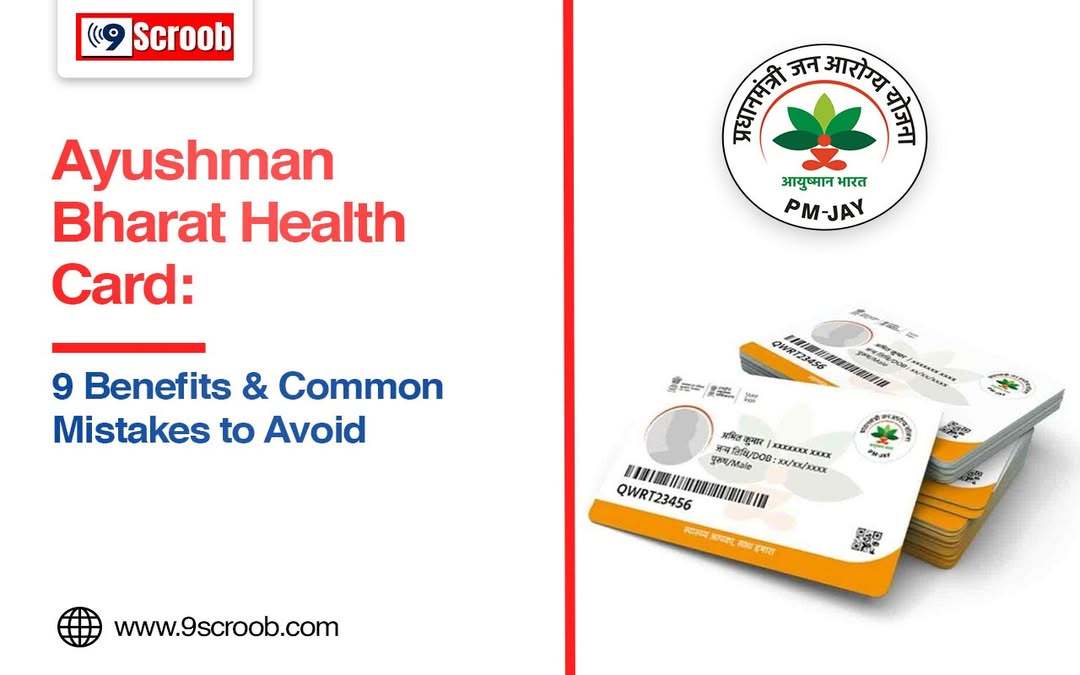
Hospital bills can be heavy on a family, especially when someone needs to be admitted or has to go through a big procedure. The Ayushman Bharat health card can ease some of that burden for eligible families.
Under the Ayushman Bharat Pradhan Mantri Jan Arogya Yojana (AB PM-JAY), an eligible family gets health cover of up to ₹5 lakh every year for covered hospital treatment. You get cashless treatment at empanelled hospitals. But holding the card does not mean every medical cost will be paid. Here are the main benefits, and the mistakes people often make.
9 Important Benefits of the Ayushman Bharat Health Card
Here are some best benefits of ayushman bharat health card that you can avail for easy treamtment in big hospitals
Up to ₹5 Lakh Cover
Your family can get up to ₹5 lakh of cover every year for covered hospital treatment. This amount is shared by the whole family. Any eligible member can use it, depending on who needs treatment.
Cashless Treatment
At empanelled hospitals, you can get covered treatment without paying from your pocket. Still, ask the hospital before admission whether your treatment is covered under the scheme.
No Limit on Family Size
The scheme does not limit how many people in an eligible family can be covered. There is no age or gender limit either. This is a big help for large families.
Old Health Problems Are Covered
Pre-existing diseases are covered from the very first day, as per the scheme’s rules and exclusions. You do not need to wait for months or years before your treatment is covered.
Works Across India
You can use the card at an empanelled hospital in any state. So if you are travelling or staying somewhere else for a while, you can get covered treatment there. You do not have to go back home for it.
Costs Before and After Hospital Stay
Some costs before and after your hospital stay are covered too. Under the standard rules, this means up to three days before admission and 15 days after discharge. What exactly is covered depends on the treatment package.
Many Costs Are Included
A package can include medicines, tests, room charges, surgeon fees and other services. But not everything is covered in every case, so check your package first.
Government and Private Hospitals
You can use the card at both government and private hospitals, as long as they are empanelled under PM-JAY. Check whether the hospital is still on the list before you plan your treatment.
Help in Emergencies
There is a process for emergencies too. If you do not have your ID with you at that moment, you may still get emergency treatment. The hospital will tell you which documents you need to show later.
Common Mistakes to Avoid
Not checking if the hospital is empanelled: Make sure the hospital is officially part of the scheme before you take treatment.
Thinking everything is covered: Only the treatments listed in approved packages are covered. Some services and costs are left out.
Paying without asking questions: If the hospital asks for extra money, ask what it is for and whether it falls outside the package.
Not knowing your package: Before admission, find out which package applies to you and what it includes.
Forgetting your documents: Keep your Ayushman card and ID with you so there is no delay in verification.
Trusting agents or unofficial websites: Never share your personal or card details with strangers. Use only official government sources for information.
Thinking the ₹5 lakh has no limit: This is a yearly amount for the whole family, and it covers only eligible services.
Not asking about exclusions: Ask the hospital’s Ayushman desk if any part of your treatment is not covered.
Keeping quiet about a problem: If you face trouble or feel you were charged wrongly, use the official PM-JAY complaint system.
What to Remember
The Ayushman Bharat health card is a big help when an eligible family needs covered hospital treatment. But it is just as important to know how the scheme works. Before treatment, check that the hospital is empanelled, find out if your procedure is covered, understand your package and keep your documents ready. For the latest details, go only to official PM-JAY or National Health Authority sources.
FAQs
What is the Ayushman Bharat health card?
It is a card given under AB PM-JAY. You use it to get health benefits at empanelled hospitals.
How much health cover do I get?
An eligible family gets up to ₹5 lakh every year for covered hospital treatment.
Can I use the card in another state?
Yes. The scheme works across India, so you can get covered treatment at empanelled hospitals in other states too.
Are pre-existing diseases covered?
Yes. They are covered from day one, as per the scheme’s rules and exclusions.
Does every hospital accept the Ayushman card?
No. Only hospitals empanelled under the scheme accept it. Check the hospital’s current status before treatment.