by Jobuza Team | Aug 17, 2026 | BLOG, Latest Jobs, Teaching Jobs
The Government of Karnataka has announced a major recruitment drive for 15,000 teaching positions for the 2026–27 academic year. The GPSTR Karnataka Teacher Recruitment 2026 offers opportunities for eligible candidates to apply for posts such as Graduate Primary Teacher, Assistant Master, Primary School Teacher, Physical Education Teacher and Computer Science Teacher.
The online application process is scheduled to begin on 18 August 2026, and eligible candidates can submit their applications until 7 September 2026. Since this is a district-level recruitment drive, candidates should carefully check the notification and vacancy details for their respective districts before applying.
The recruitment will be conducted for teaching positions in different regions of Karnataka, including Kalyana Karnataka and Non-Kalyana Karnataka. Candidates should ensure that they meet the prescribed eligibility criteria before submitting their application form.
This article provides complete details about the GPSTR Karnataka Teacher Recruitment 2026, including important dates, vacancies, eligibility criteria, selection process, salary and the online application process.
GPSTR Karnataka Teacher Recruitment 2026 Notification
The detailed GPSTR Karnataka Teacher Recruitment 2026 notification has been released for 15,000 teaching vacancies across the state. The notification contains important information regarding district-wise vacancies, eligibility requirements, educational qualifications, age criteria, selection process and application instructions.
Candidates are advised to download and read the notification carefully before applying. As the recruitment is being conducted at the district level, applicants should also check the specific notification and requirements applicable to the district for which they wish to apply.
GPSTR Karnataka Teacher Recruitment 2026 Notification PDF
Download PDF
GPSTR Karnataka Teacher Recruitment 2026 Important Dates
Candidates planning to apply for the Karnataka Teacher Recruitment 2026 should keep track of the important dates to avoid missing the application deadline. The online registration process will begin on 18 August 2026 and will remain open until 7 September 2026.
| Event |
Date |
| Notification Release Date |
12 August 2026 |
| Online Application Start Date |
18 August 2026 |
| Last Date to Apply Online |
7 September 2026 |
Candidates are advised to complete their applications well before the last date to avoid any technical issues or delays.
GPSTR Karnataka Teacher Vacancy 2026
A total of 15,000 teaching vacancies have been announced under the GPSTR Karnataka Teacher Recruitment 2026. The vacancies are distributed between the Kalyana Karnataka and Non-Kalyana Karnataka regions.
The largest number of vacancies has been announced for Graduate Primary Teacher posts, followed by Assistant Master positions. Opportunities are also available for Primary School Teachers, Physical Education Teachers and Computer Science Teachers.
| Post Name |
Kalyana Karnataka |
Non-Kalyana Karnataka |
Total Vacancies |
| Graduate Primary Teacher (GPT) |
3,228 |
5,272 |
8,500 |
| Assistant Master (AM) |
2,214 |
2,286 |
4,500 |
| Primary School Teacher (PST) |
800 |
100 |
900 |
| Physical Education Teacher (PET) |
425 |
175 |
600 |
| Computer Science Teacher (CST) |
300 |
200 |
500 |
| Total |
6,967 |
8,033 |
15,000 |
Candidates should check the detailed district-wise notification to understand the exact number of vacancies available in their preferred district and category. The final selection and appointment process will be carried out according to the rules and eligibility conditions mentioned in the official recruitment notification.
by Jobuza Team | Aug 17, 2026 | BLOG, Latest Jobs, Railway Jobs
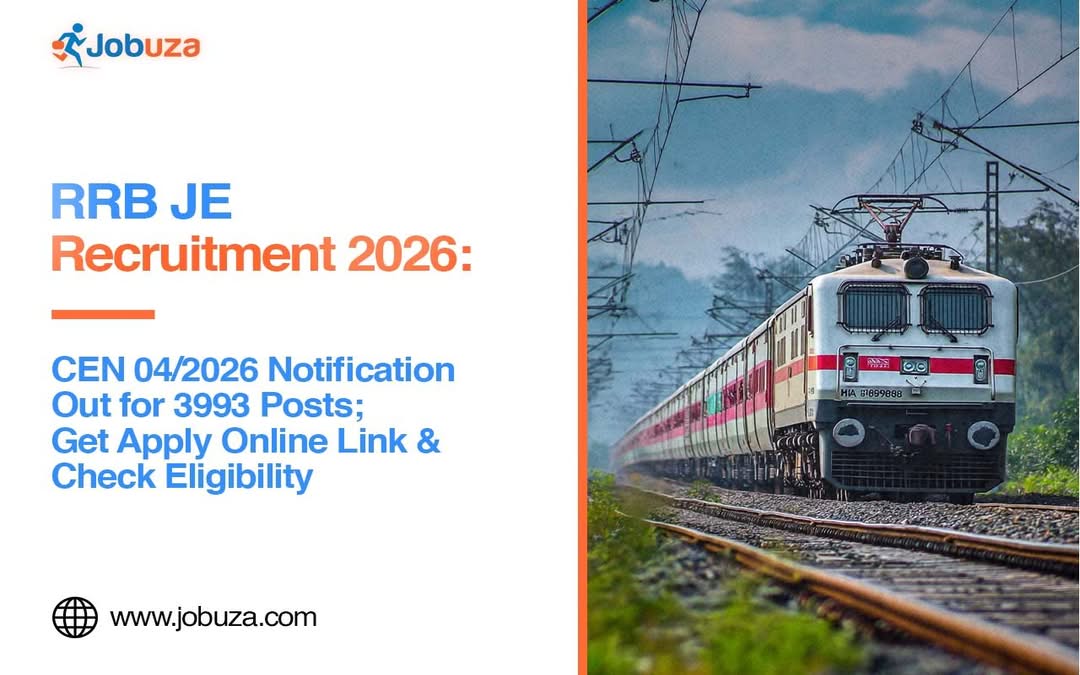
The Railway Recruitment Board (RRB) has released the detailed notification for RRB JE Recruitment 2026 under CEN 04/2026. The recruitment drive has been announced for 3,993 vacancies for the posts of Junior Engineer (JE) and Depot Material Superintendent (DMS) across various Railway Recruitment Boards in India.
The online application process began on 14 August 2026 and eligible candidates can submit their applications until 13 September 2026. Candidates who successfully complete the application process can pay the required application fee until 15 September 2026.
Applicants must meet the prescribed educational qualifications and age requirements before applying. The age limit for the recruitment is 18 to 33 years, subject to applicable age relaxation for reserved categories.
The selection process will include Computer-Based Tests, followed by Document Verification and a Medical Examination. Selected candidates will be appointed at Pay Level 6 and will receive an initial basic pay of Rs. 35,400 per month.
RRB JE Recruitment 2026 Overview
The RRB JE notification has been released under CEN 04/2026 for the recruitment of Junior Engineer and Depot Material Superintendent posts. Candidates can check the important details of the recruitment below.
| Particulars |
Details |
| Conducting Body |
Railway Recruitment Board (RRB) |
| Post Name |
Junior Engineer and Depot Material Superintendent |
| Advertisement Number |
CEN 04/2026 |
| Total Vacancies |
3,993 |
| Notification Release Date |
13 August 2026 |
| Application Start Date |
14 August 2026 |
| Last Date to Apply |
13 September 2026 |
| Last Date for Fee Payment |
15 September 2026 |
| Mode of Application |
Online |
| Selection Process |
CBT, Document Verification and Medical Examination |
| Job Location |
Across India |
| Official Website |
rrb.indianrailways.gov.in |
RRB JE Recruitment 2026 Notification PDF
The detailed RRB JE Notification 2026 contains complete information about the recruitment process, including vacancy details, eligibility criteria, educational qualifications, age limit, application fee, selection process and other important instructions.
Candidates are advised to read the official notification carefully before submitting the online application form. This will help ensure that they meet all the eligibility requirements for the post they wish to apply for.
RRB JE Notification 2026
Download Notification PDF
RRB JE Recruitment 2026 Apply Online
Candidates who are eligible and interested in applying for RRB JE Recruitment 2026 can submit their application through the official RRB application portal. Applicants should complete the registration process and provide all the required details carefully.
Candidates will need to use their registered mobile number or email address along with their login credentials to access the application form.
RRB JE Recruitment 2026 Apply Online
Apply Online Here
The application form should be submitted before the closing date of 13 September 2026. Candidates are advised not to wait until the last date to apply, as technical issues or heavy traffic on the website may cause delays.
How to Apply for RRB JE Recruitment 2026
Candidates can follow the steps below to complete the RRB JE 2026 online application process.
- Visit the official RRB website.
- Click on the Apply Online option available on the homepage.
- You will be redirected to the official RRB application portal.
- Select the application link for CEN 04/2026 for the recruitment of Junior Engineer and Depot Material Superintendent.
- New candidates should create an account and complete the registration process.
- Existing users can log in using their RRB account credentials.
- Enter the required personal, educational and other details in the application form.
- Upload the necessary documents in the prescribed format.
- Pay the applicable application fee using the available online payment methods.
- Review all the information carefully before submitting the application form.
- Submit the application and save a copy of the confirmation page for future reference.
RRB JE Application Fee 2026
Candidates are required to pay the prescribed application fee while submitting the online application form. The fee can be paid through online payment methods such as internet banking, debit card, credit card or UPI.
The application fee varies according to the candidate’s category.
| Category |
Application Fee |
| Unreserved/UR |
Rs. 500 |
| SC, ST, Ex-Servicemen, PwBD, Female, Transgender, Minorities and Economically Backward Class (EBC) |
Rs. 250 |
Candidates should check the detailed notification for information regarding fee payment conditions and any applicable refund provisions before completing the payment.
by Jobuza Team | Aug 13, 2026 | Bank Jobs, BLOG, Latest Jobs
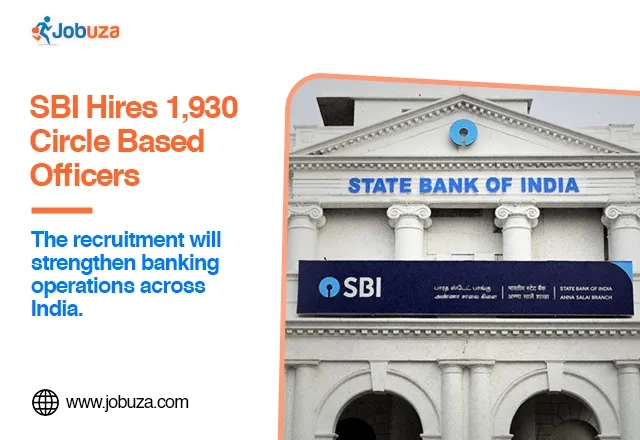
State Bank of India (SBI) has recruited 1,930 Circle Based Officers (CBOs) as part of its ongoing efforts to strengthen customer service and improve banking operations across its extensive branch network. The newly appointed officers will support the bank’s customer-focused approach across urban, semi-urban and rural locations.
SBI Strengthens Its Officer Workforce With New CBOs
The recruitment is aimed at expanding SBI’s officer cadre and improving service delivery across different parts of the country. The new Circle Based Officers will play an important role in customer engagement, relationship management and day-to-day banking services.
SBI said the recruitment supports its broader “Digital First, Customer First” vision, under which the bank is working to provide simpler, seamless and more personalised banking experiences.
New Officers to Support 53 Crore SBI Customers
The newly recruited CBOs will contribute to the delivery of banking services to SBI’s customer base of more than 53 crore customers across India.
With banking needs becoming increasingly digital and customer expectations continuing to evolve, the officers are expected to strengthen the bank’s relationship-led service model while supporting its digital initiatives.
SBI Chairman Welcomes Newly Recruited Officers
Welcoming the new recruits, SBI Chairman Challa Sreenivasulu Setty highlighted the importance of employees in the bank’s transformation journey.
He said the young officers would have an important role in providing seamless, personalised and accessible banking services while maintaining the trust that customers have placed in SBI over the years.
The chairman also extended his best wishes to the newly recruited officers as they begin their careers with the country’s largest public sector bank.
SBI Has More Than 2.45 Lakh Employees
State Bank of India currently has a workforce of more than 2,45,000 employees. The bank continues to focus on talent development and capability building as part of its efforts to create a more responsive and technology-driven banking ecosystem.
SBI said its human resources remain an important part of its transformation strategy. The bank is combining technological advancements with relationship-based banking to provide personalised services across customer segments and channels.
Focus on Digital Banking and Customer-Centric Services
The latest recruitment reflects SBI’s continued focus on strengthening its workforce in line with changing customer requirements.
The addition of new Circle Based Officers is expected to help the bank expand its service capabilities across its branch network while supporting its digital banking and customer-centric initiatives.
SBI Continues to Invest in Its Workforce
SBI’s latest recruitment highlights the importance of skilled banking professionals as the financial services sector continues to evolve. While digital banking is becoming increasingly important, the bank continues to rely on its workforce to provide personalised assistance and maintain customer relationships.
With the recruitment of 1,930 CBOs, SBI aims to further strengthen its branch-level operations and support its vision of providing accessible, efficient and customer-focused banking services across the country.

by Jobuza Team | Aug 12, 2026 | BLOG, IT/Tech Jobs, Latest Jobs, Technical/IT Jobs
The Delhi Pollution Control Committee (DPCC) has announced DPCC Recruitment 2026 for various technical, scientific, legal and administrative positions. The recruitment drive includes posts such as Senior Environmental Engineer, Environmental Engineer, Assistant Environmental Engineer, Scientist, Scientific Assistant, Senior Lab Assistant, Assistant Law Officer, Legal Assistant and System Analyst.
A total of 54 vacancies have been announced under this recruitment drive. Interested and eligible candidates can check the detailed eligibility requirements and application procedure through the official DPCC notification.
The recruitment is being conducted through a rolling advertisement, which means applications are being processed in different phases based on the date of submission. According to the available notification details, the second phase of applications is open until August 14, 2026, while the third phase will continue until August 31, 2026.
Candidates should carefully read the official notification before submitting their application to ensure that they meet the post-wise eligibility requirements.
DPCC Recruitment 2026 Overview
| Particulars |
Details |
| Organisation |
Delhi Pollution Control Committee |
| Recruitment |
DPCC Recruitment 2026 |
| Total Vacancies |
54 |
| Application Mode |
As per prescribed application process |
| Recruitment Type |
Rolling Advertisement |
| Second Phase Last Date |
August 14, 2026 |
| Third Phase Last Date |
August 31, 2026 |
| Official Website |
dpcc.delhigovt.nic.in |
DPCC Recruitment 2026 Vacancy Details
The DPCC recruitment drive includes opportunities across environmental engineering, scientific research, laboratory work, law and information technology.
| Post Name |
Number of Vacancies |
| Senior Environmental Engineer |
7 |
| Environmental Engineer |
15 |
| Assistant Environmental Engineer |
11 |
| Additional Director (Scientific-E) |
1 |
| Senior Scientist Level-II (Scientist-D) |
1 |
| Senior Scientist Level-I (Scientist-C) |
2 |
| Scientist-B |
1 |
| Scientific Assistant |
4 |
| Senior Lab Assistant |
5 |
| Assistant Law Officer |
1 |
| Legal Assistant |
5 |
| System Analyst |
1 |
| Total |
54 |
DPCC AEE and Other Posts Eligibility Criteria
Candidates must fulfil the educational qualifications and other eligibility conditions prescribed for their respective posts. The requirements differ depending on the position.
Environmental Engineering Posts
For the posts of Senior Environmental Engineer, Environmental Engineer and Assistant Environmental Engineer, candidates are required to have an engineering degree or higher qualification in the relevant field.
The eligible disciplines include Civil Engineering, Environmental Engineering, Chemical Engineering, Electrical Engineering, Mechanical Engineering, Electronics and Communication Engineering, Biomedical Engineering, Water Resources, Remote Sensing, GIS and Hydrology, subject to the specific requirements mentioned for each post.
Candidates applying for the Senior Environmental Engineer post are required to possess the prescribed higher engineering qualification mentioned in the notification.
Scientific Posts
Candidates applying for scientific positions such as Additional Director, Senior Scientist and Scientist-B must possess the required Master’s degree or Doctorate in Science, depending on the post.
The exact qualification and experience requirements may vary from one scientific position to another. Applicants should therefore check the official notification carefully before applying.
Scientific Assistant and Laboratory Posts
Candidates applying for the Scientific Assistant post should possess a Bachelor’s degree in Science from a recognised institution.
For the remaining laboratory-related posts, candidates should carefully check the official notification for the complete educational qualification and other requirements applicable to the position.
Legal and System Analyst Posts
Candidates applying for Assistant Law Officer must possess a recognised degree in Law.
The detailed eligibility criteria for the Legal Assistant and System Analyst posts should be checked directly in the official notification.
DPCC Recruitment 2026 Selection Process
The selection process and evaluation criteria may vary depending on the post. Candidates should refer to the official DPCC recruitment notification for complete information regarding the selection stages, shortlisting process, document verification and other requirements.
Applicants should ensure that all information and supporting documents submitted with the application are correct and valid.
How to Apply for DPCC Recruitment 2026
Interested and eligible candidates can follow the prescribed application procedure mentioned by the Delhi Pollution Control Committee.
- Visit the official DPCC website.
- Go to the Office Order & Circulars section.
- Find the DPCC Recruitment 2026 notification and prescribed application form.
- Download and carefully read the official advertisement.
- Complete the application form in English or Hindi, as permitted.
- Attach a recent passport-size photograph and other required documents.
- Check all the details carefully before submitting the application.
- Submit the completed application according to the procedure and timeline mentioned in the official notification.
- Keep a copy of the submitted application and supporting documents for future reference.
Important Dates for DPCC Recruitment 2026
Candidates should pay special attention to the phase-wise application schedule because this recruitment is being conducted through a rolling advertisement.
The second phase of the application process is scheduled to continue until August 14, 2026, while the third phase is scheduled to remain open until August 31, 2026.
Candidates are advised not to wait until the final date and should complete the application process well in advance.
DPCC Recruitment 2026: Important Points to Remember
Before applying, candidates should verify the post-wise educational qualifications, experience requirements and other eligibility conditions. Since different posts have different requirements, meeting the general eligibility criteria does not automatically make a candidate eligible for every position.
Applicants should also regularly check the official DPCC website for updates related to the recruitment process, application status and further announcements.
Disclaimer: This article is based on the recruitment information provided in the notification details. Candidates should verify the complete eligibility criteria, application procedure, selection process and other conditions through the official DPCC Recruitment 2026 notification before applying.
by Jobuza Team | Aug 12, 2026 | BLOG, IT/Tech Jobs, Latest Jobs, Technical/IT Jobs
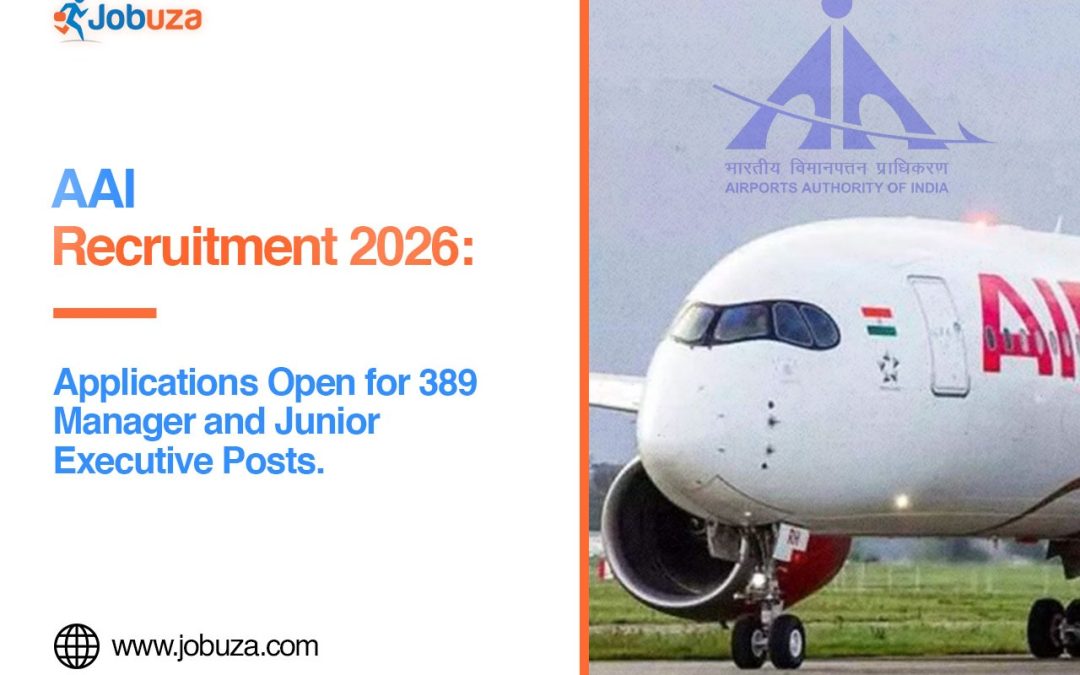
The Airports Authority of India (AAI) has released the AAI Recruitment 2026 notification for Junior Executive and Manager posts. This recruitment drive offers opportunities across several departments, including Civil Engineering, Electrical Engineering, Finance, Information Technology, Architecture, Law, Fire Services, Operations and Commercial.
According to the notification details, eligible and interested candidates can submit their applications online through the official AAI website. The application process began on August 8, 2026, and the last date to apply is September 7, 2026. Candidates are advised to carefully check the official notification and post-wise eligibility requirements before submitting their application.
This article covers the important details related to AAI Recruitment 2026, including vacancies, eligibility criteria, important dates, selection process and steps to apply online.
AAI Recruitment 2026 Apply Online
Candidates interested in applying for Junior Executive and Manager posts should complete the online application through the official recruitment section of the Airports Authority of India.
Before applying, candidates should carefully verify their personal, educational and other details. Incorrect or incomplete information may lead to rejection of the application at any stage of the recruitment process.
AAI Recruitment 2026 Important Dates
| Particulars |
Details |
| Organisation |
Airports Authority of India (AAI) |
| Post Name |
Manager and Junior Executive |
| Advertisement Number |
12/2026/CHQ/DR-CBT |
| Application Mode |
Online |
| Application Start Date |
August 8, 2026 |
| Last Date to Apply |
September 7, 2026 |
| Official Website |
aai.aero |
AAI Recruitment 2026 Vacancy Details
The recruitment notification mentions vacancies for Manager and Junior Executive positions in different departments.
| Post Name |
Vacancies |
| Manager (Civil Engineering) |
145 |
| Manager (Electrical Engineering) |
16 |
| Manager (Finance) |
34 |
| Manager (Information Technology) |
5 |
| Manager (Architecture) |
4 |
| Manager (Law) |
2 |
| Manager (Fire Services) |
14 |
| Manager (Operations) |
28 |
| Manager (Commercial) |
9 |
| Manager (Corporate Planning & Management Services) |
1 |
| Manager (Corporate Communication) |
2 |
| Junior Executive (Finance) |
36 |
| Junior Executive (Law) |
6 |
| Junior Executive (Operations) |
79 |
| Junior Executive (Survey & Cartography) |
8 |
Candidates should refer to the official notification for the final category-wise and post-wise vacancy details.
AAI Recruitment 2026 Eligibility Criteria
Candidates must fulfil the prescribed eligibility requirements for the post they wish to apply for. The educational qualification varies depending on the department and position.
Applicants may be required to possess qualifications such as BE, B.Tech, MBA, CA or other relevant degrees from a recognised university or institution. Candidates should check the detailed post-wise educational requirements mentioned in the official notification before applying.
AAI Recruitment 2026 Age Limit
As per the available recruitment details, the maximum age limit is:
- Manager Posts: Up to 32 years
- Junior Executive Posts: Up to 27 years
The age will be calculated as per the date mentioned in the official notification. Relaxation in the upper age limit may be available for candidates belonging to reserved categories according to applicable government and AAI rules.
AAI Recruitment 2026 Selection Process
The selection process may vary depending on the post applied for. The recruitment process can include the following stages:
- Computer Based Test
- Document Verification
- Physical Measurement Test, where applicable
- Driving Test, where applicable
- Physical Endurance Test, where applicable
- Interview or other post-specific assessment
Candidates must qualify for the required stages of the selection process applicable to their chosen post. The final selection will be made according to the recruitment rules and merit criteria specified by AAI.
How to Apply for AAI Recruitment 2026
Candidates can follow these steps to submit their online application:
- Visit the official Airports Authority of India website.
- Go to the Recruitment or Careers section.
- Find the AAI Recruitment 2026 notification for Manager and Junior Executive posts.
- Read the official notification carefully.
- Complete the registration process using the required details.
- Fill in the online application form.
- Upload the required photograph, signature and supporting documents.
- Pay the application fee, if applicable.
- Review all the information carefully before final submission.
- Submit the application and download the confirmation page for future reference.
AAI Recruitment 2026: Important Points to Remember
Candidates should not wait until the last date to submit their application. They should ensure that they meet the eligibility requirements for their selected post and keep all necessary documents ready before starting the application process.
Applicants should also regularly check the official AAI website for updates regarding the examination, admit card, selection process and other recruitment-related announcements.
Disclaimer
The information provided in this article is based on the recruitment details shared in the notification content. Candidates are advised to verify the final vacancy details, eligibility criteria, application fee, selection process and other conditions through the official AAI Recruitment 2026 notification before applying.
by Jobuza Team | Aug 12, 2026 | BLOG, Latest Jobs
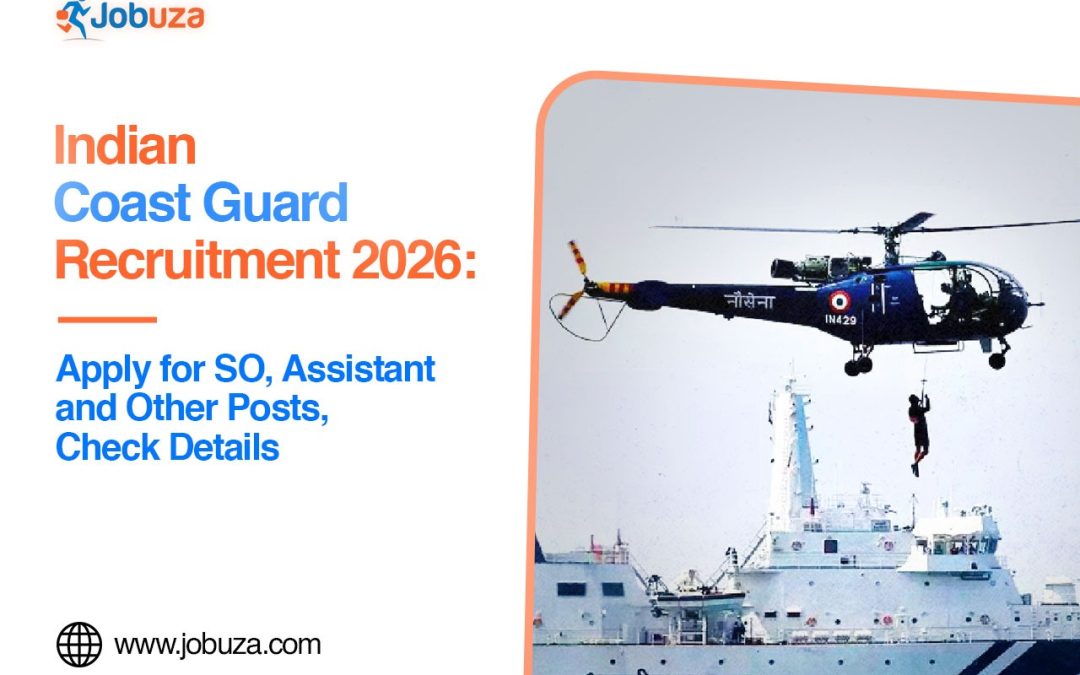
The Indian Coast Guard (ICG) has released an indicative recruitment notification for various civilian positions through the Employment News dated August 8 to August 14, 2026. The recruitment drive is expected to fill a total of 54 vacancies across different posts, including Civilian Staff Officer (Logistics), Section Officer, Personal Assistant, Chief Draughtsman and Assistant.
Candidates who are looking for government job opportunities can check the detailed notification and application instructions on the official Indian Coast Guard website before applying.
Indian Coast Guard Recruitment 2026 Overview
The Indian Coast Guard recruitment drive has been announced for civilian posts at different locations. The number and location of vacancies mentioned in the recruitment notice may be subject to change depending on the requirements of the organisation.
| Particulars |
Details |
| Organisation |
Indian Coast Guard |
| Recruitment |
Indian Coast Guard Civilian Recruitment 2026 |
| Advertisement |
Employment News, August 8–14, 2026 |
| Total Vacancies |
54 |
| Application Mode |
As per detailed notification |
| Official Website |
indiancoastguard.gov.in |
Indian Coast Guard Vacancy 2026 Details
A total of 54 civilian vacancies have been announced under the Indian Coast Guard Recruitment 2026. The vacancies are distributed across several posts.
| Post Name |
Number of Vacancies |
| Civilian Staff Officer (Logistics) |
4 |
| Section Officer |
6 |
| Personal Assistant / Chief Draughtsman |
5 |
| Assistant |
39 |
| Total |
54 |
Candidates should check the detailed advertisement for post-wise vacancy distribution, posting locations and other conditions before submitting their application.
Indian Coast Guard Recruitment 2026 Eligibility Criteria
The eligibility criteria for Indian Coast Guard civilian posts may vary depending on the position. Candidates must carefully check the educational qualification, age limit, experience requirements and other conditions mentioned in the detailed notification.
Applicants should ensure that they fulfil all eligibility requirements before applying. Applications submitted by candidates who do not meet the prescribed conditions may be rejected during the recruitment process.
Indian Coast Guard Recruitment 2026 Application Process
Candidates are advised to visit the official Indian Coast Guard website and read the detailed recruitment notification carefully before applying.
The application process and required documents will be mentioned in the official advertisement. Applicants should keep their educational certificates, identity proof, photographs and other required documents ready before submitting the application.
Documents Required for Application
Candidates may be required to submit or provide the following documents during the application and recruitment process:
- Educational qualification certificates
- Age proof
- Valid identity proof
- Category certificate, if applicable
- Experience certificates, where required
- Recent passport-size photographs
- Other documents mentioned in the official notification
Indian Coast Guard Selection Process 2026
The selection process may differ according to the post applied for. Candidates should refer to the detailed notification for complete information regarding the selection stages.
Depending on the recruitment rules, the selection process may include written examination, skill test, document verification or other stages prescribed by the Indian Coast Guard.
Candidates will need to qualify at each applicable stage to proceed further in the recruitment process.
Important Instructions for Candidates
Before applying for the Indian Coast Guard Recruitment 2026, candidates should carefully read the official notification and verify their eligibility. They should ensure that all information provided in the application form is correct and matches their official documents.
Applicants are also advised to keep checking the official Indian Coast Guard website for updates regarding the detailed notification, application dates, examination schedule and other recruitment-related announcements.
Indian Coast Guard Recruitment 2026
The Indian Coast Guard Recruitment 2026 offers an opportunity for eligible candidates to apply for 54 civilian positions in different categories. Since the current notification is indicative, candidates should wait for or check the detailed advertisement for complete information about eligibility, application deadlines, selection procedure and other important requirements.
For the latest and most accurate information, candidates should rely only on the official Indian Coast Guard website and recruitment notification.