The Jharkhand Staff Selection Commission (JSSC) has released the official notification for the JSSC Para Teacher Recruitment 2026. Through this recruitment drive, the commission aims to fill 7,299 Trained Assistant Teacher (Para Teacher Category) vacancies across the state. Candidates who meet the required eligibility criteria will be able to submit their online applications from July 31, 2026, through the official JSSC website. The last date to apply is August 30, 2026.
Interested candidates are advised to read the official notification carefully before submitting their application to understand the eligibility criteria, vacancy details, important dates, and selection process.
JSSC Para Teacher Recruitment 2026 Notification
The detailed notification for the JSSC JTAACCE Para Teacher Recruitment 2026 has been released under Advertisement No. 04/2026. It contains complete information regarding educational qualifications, age limit, category-wise vacancies, application process, and other important instructions.
Candidates should download and read the notification carefully before applying online.
JSSC Para Teacher Recruitment 2026 Highlights
Here are the key details of the recruitment drive:
Particulars
Details
Recruiting Authority
Jharkhand Staff Selection Commission (JSSC)
Exam Name
JTAACCE 2026
Post Name
Trained Assistant Teacher (Para Teacher Category)
Total Vacancies
7,299
Job Location
Jharkhand
Application Mode
Online
Online Registration Begins
July 31, 2026
Last Date to Apply
August 30, 2026
Official Website
jssc.jharkhand.gov.in
Important Dates
Candidates should keep the following schedule in mind while applying for the recruitment process.
Event
Date
Notification Release
July 22, 2026
Online Application Begins
July 31, 2026
Last Date to Apply
August 30, 2026
JSSC Para Teacher Vacancy 2026
The recruitment drive includes both regular and backlog vacancies.
Post Category
Vacancies
Regular Teaching Posts
6,101
Backlog Teaching Posts
1,198
Total
7,299
Eligibility Criteria
Candidates applying for the JSSC Para Teacher Recruitment 2026 must satisfy the eligibility conditions prescribed in the official notification. The notification includes detailed information regarding educational qualifications, age limit, reservation benefits, and other requirements.
Applicants are advised to verify their eligibility before submitting the online application form.
Selection Process
The selection process will be conducted by the Jharkhand Staff Selection Commission as per the recruitment rules mentioned in the official notification. Candidates must successfully complete all stages of the selection process to be considered for appointment.
Further details regarding the examination pattern, merit list, document verification, and final selection are available in the official notification.
How to Apply for JSSC Para Teacher Recruitment 2026
Candidates can complete their online application by following these simple steps:
Step 1: Visit the official JSSC website.
Step 2: Click on the JTAACCE 2026 Online Application link available on the homepage.
Step 3: Register using the required details and generate your registration number and password.
Step 4: Log in using your credentials and fill in the application form carefully.
Step 5: Upload your recent photograph, signature, and other required documents in the prescribed format.
Step 6: Pay the application fee online, if applicable.
Step 7: Review all the information entered in the application form before final submission.
Step 8: Submit the application form and download the confirmation page for future reference.
Final Words
The JSSC Para Teacher Recruitment 2026 offers an excellent opportunity for candidates seeking teaching jobs in Jharkhand. With 7,299 vacancies available, eligible applicants should complete the registration process within the prescribed dates and ensure that all required documents are uploaded correctly. Candidates are also advised to keep checking the official website for updates regarding the examination schedule, admit card, and other important announcements.
The Arunachal Pradesh Staff Selection Board (APSSB) has started the online application process for the APSSB CHSL Recruitment 2026. Through this recruitment drive, the board aims to fill 207 Group C vacancies across various government departments in Arunachal Pradesh. Candidates who have passed Class 12 and meet the prescribed eligibility criteria can submit their applications online from 20 July to 10 August 2026 through the official APSSB website.
The recruitment includes several Group C posts such as Lower Division Clerk (LDC), Data Entry Operator (DEO), Stockman, Agricultural Field Assistant, Laboratory Assistant, and more. Candidates will be selected through a written examination followed by a skill test for applicable posts.
APSSB CHSL Recruitment 2026 Overview
Candidates can check the important details of the recruitment below.
Candidates should keep the following schedule in mind before applying.
Event
Date
Online Application Starts
20 July 2026
Last Date to Apply
10 August 2026 (5:00 PM)
Tentative Written Examination
20 September 2026
Skill Test (Applicable Posts)
From 10 October 2026
APSSB CHSL Vacancy 2026
The board has announced a total of 207 vacancies across different Group C posts.
Post Name
Vacancies
Lower Division Clerk (LDC)
89
Stockman
56
Agricultural Field Assistant (Junior)
16
Fishery Demonstrator
15
Field Assistant
13
Data Entry Operator (DEO)
7
Laboratory Assistant
4
Record Keeper / Record Clerk
4
Junior Secretariat Assistant
3
Total
207
APSSB CHSL Recruitment 2026 Eligibility Criteria
Candidates must satisfy the eligibility requirements before submitting the application form.
Nationality
Applicants must be citizens of India.
Educational Qualification
Candidates must have passed Class 12 (Higher Secondary) from a recognized board or institution.
For Data Entry Operator (DEO), candidates must have a typing speed of 35 words per minute (10,500 KDPH) on a computer.
For Agricultural Field Assistant (Junior), candidates must have completed Class 12 with Science.
Certain posts may require additional qualifications such as a Diploma in Computer Application, as specified in the official notification.
Age Limit
The minimum age required is 18 years.
The upper age limit varies according to the post:
Up to 32 years for selected posts such as Lower Division Clerk and Agricultural Field Assistant.
Up to 35 years for Fishery Demonstrator.
Reserved category candidates will receive age relaxation as per government rules.
Application Fee
Candidates are required to pay the application fee according to their category.
Category
Application Fee
APST Candidates
₹150
Unreserved (UR) Candidates
₹200
Selection Process
The selection process consists of the following stages:
Written Examination
Skill Test (for applicable posts)
Document Verification
Candidates must secure the minimum qualifying marks prescribed by the board to move to the next stage.
How to Apply for APSSB CHSL Recruitment 2026
Candidates can complete the online application by following these steps:
Step 1: Visit the official APSSB website.
Step 2: Click on the APSSB CHSL Recruitment 2026 application link.
Step 3: Complete the registration process using the required details.
Step 4: Log in with your credentials and fill out the online application form carefully.
Step 5: Upload your recent passport-size photograph, signature, and required documents.
Step 6: Pay the application fee through the online payment gateway.
Step 7: Verify all the entered details before final submission.
Step 8: Submit the application form and download a copy for future reference.
Salary Details
Candidates selected under the APSSB CHSL Recruitment 2026 will receive a salary as per the Arunachal Pradesh Government Pay Matrix. Depending on the post, the pay scale ranges from ₹18,000 to ₹81,100 along with applicable allowances and benefits.
Final Words
The APSSB CHSL Recruitment 2026 offers an excellent opportunity for 12th-pass candidates looking for government jobs in Arunachal Pradesh. With 207 Group C vacancies available across multiple departments, eligible candidates should complete their online application before 10 August 2026. Applicants are also advised to regularly visit the official website for updates regarding admit cards, examination dates, and further recruitment announcements.
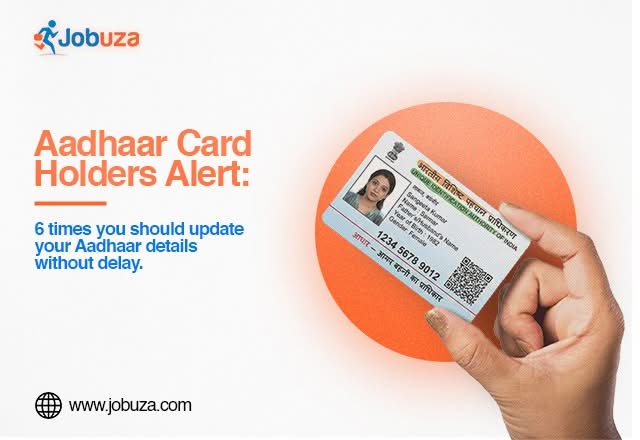
The Aadhaar card is one of the most important identity documents for Indian residents. It is widely used for banking services, government schemes, income tax filing, mobile SIM verification, passport applications, and various other official purposes. Keeping your Aadhaar information accurate is essential to avoid delays in verification and ensure uninterrupted access to important services.
If your personal details have changed over time, updating your Aadhaar should be a priority. Here are six situations where you should consider updating your Aadhaar card without delay.
1. You Have Changed Your Residential Address
If you have moved to a new home, city, or state, updating your address in Aadhaar is important. An incorrect address may create issues during KYC verification, banking services, loan applications, insurance, and government benefit transfers.
2. Your Registered Mobile Number Has Changed
Your Aadhaar-linked mobile number is required to receive OTPs for authentication and online services. If your previous mobile number is no longer active or you have switched to a new one, update it as soon as possible to continue accessing Aadhaar-related services without interruption.
3. There Is an Error in Your Personal Information
Incorrect details such as your name, date of birth, or gender can lead to verification failures. Even a minor spelling mistake may create problems while applying for financial services, passports, or government schemes. If you notice any incorrect information, request a correction immediately.
4. Your Biometric Details Need an Update
Biometric information, including fingerprints, iris scans, and photographs, should be updated whenever required. Children are required to update their biometrics after reaching the prescribed age, while adults may also need biometric updates if fingerprint or iris authentication repeatedly fails.
5. Your Photograph Is Outdated
Although an old photograph does not affect the validity of your Aadhaar card, updating it can make identity verification easier. If your appearance has changed significantly over the years, replacing your Aadhaar photo can help avoid confusion during document verification.
6. You Are Facing Aadhaar Authentication Issues
Repeated authentication failures while accessing banking services, telecom facilities, government subsidies, or digital services may indicate that your Aadhaar details require an update. Refreshing your demographic or biometric information can help resolve these issues.
Documents Required for Aadhaar Update
Depending on the type of correction, you may need the following documents:
Aadhaar Card
Valid Proof of Identity (POI)
Valid Proof of Address (POA)
Date of Birth proof (if applicable)
Supporting documents for name change or other corrections
Make sure all documents are valid and match the details you want to update.
Benefits of Keeping Aadhaar Updated
Maintaining accurate Aadhaar information offers several advantages, including:
Smooth KYC verification for banks and financial institutions.
Faster access to government welfare schemes and subsidies.
Hassle-free banking, insurance, and investment services.
Easy mobile SIM activation and verification.
Reduced chances of authentication failures.
Quicker processing of official applications and document verification.
Things to Check Before Applying
Before submitting your Aadhaar update request, carefully verify all the information and keep the required documents ready. Double-check spellings, dates, and address details to avoid rejection or unnecessary delays during the verification process.
Final Words
Aadhaar is linked to many essential public and private services, making it one of the most important identity documents in India. Keeping your Aadhaar details updated helps ensure smooth verification, uninterrupted access to banking and government services, and fewer authentication-related issues. Regularly reviewing your Aadhaar information and updating it whenever necessary can save time and prevent avoidable complications in the future.
A PAN (Permanent Account Number) card is one of the most important financial documents in India. It is required for filing income tax returns, opening bank accounts, investing in financial products, purchasing property, and completing several high-value transactions. Since PAN is linked to many financial activities, it has also become a common target for fraudsters.
If someone misuses your PAN card, it could lead to serious financial and legal issues, including fraudulent loans, unauthorized bank accounts, fake tax filings, or identity theft. Knowing how to check your PAN card activity can help you identify suspicious transactions early and take timely action.
Why PAN Card Security Is Important
Your PAN card acts as a unique financial identity. If it falls into the wrong hands, fraudsters may misuse it for various illegal activities, such as:
Applying for loans in your name
Opening unauthorized bank accounts
Filing fake income tax returns
Committing identity theft
Carrying out fraudulent financial transactions
Regularly monitoring your financial records can help prevent such misuse.
How to Check If Your PAN Card Has Been Misused
One of the easiest ways to detect PAN card misuse is by checking your credit report. A credit report contains information about loans, credit cards, and other borrowing activities linked to your PAN.
If you notice any loan or credit account that you did not apply for, it may indicate unauthorized use of your PAN details.
Check Your Credit Score Online
You can access your credit score and credit report through various digital platforms or authorized credit bureaus.
To check your credit report:
Step 1: Open a trusted financial app or visit an authorized credit bureau website.
Step 2: Select the Credit Score or Credit Report option.
Step 3: Enter the required details, including your PAN and registered mobile number.
Step 4: Complete the identity verification process.
Step 5: Review your credit report carefully and check all active loans, credit cards, and financial accounts.
If you find any unfamiliar loan or credit facility, investigate it immediately.
Warning Signs of PAN Card Misuse
Watch out for these signs that may indicate your PAN has been misused:
Unknown loans appearing in your credit report
Credit cards you never applied for
Unexpected recovery calls from banks or lenders
Incorrect financial information in your credit history
Tax notices related to transactions you never made
Ignoring these warning signs could lead to financial complications in the future.
What Should You Do If You Find Unauthorized Activity?
If you discover any suspicious transaction linked to your PAN card, take immediate action.
You should:
Contact the concerned bank or financial institution.
Raise a dispute with the credit bureau.
Report the matter to the Income Tax Department if tax-related misuse is involved.
File a complaint with the local cybercrime authorities if identity theft is suspected.
Keep records of all communications and complaint reference numbers.
Prompt reporting can help prevent further misuse and protect your financial identity.
Tips to Protect Your PAN Card
To keep your PAN details secure, follow these precautions:
Do not share your PAN card with unknown individuals or unverified websites.
Use only trusted platforms for financial transactions.
Regularly monitor your credit report.
Keep your registered mobile number and email updated.
Verify the authenticity of websites before uploading PAN documents.
Never share OTPs or confidential financial information with anyone.
Final Words
Your PAN card is one of your most valuable financial documents, and protecting it should be a priority. Regularly checking your credit report and monitoring financial activity can help you identify unauthorized transactions before they become major problems. If you notice any suspicious activity linked to your PAN, report it immediately to the concerned authorities and financial institutions to safeguard your identity and financial records.
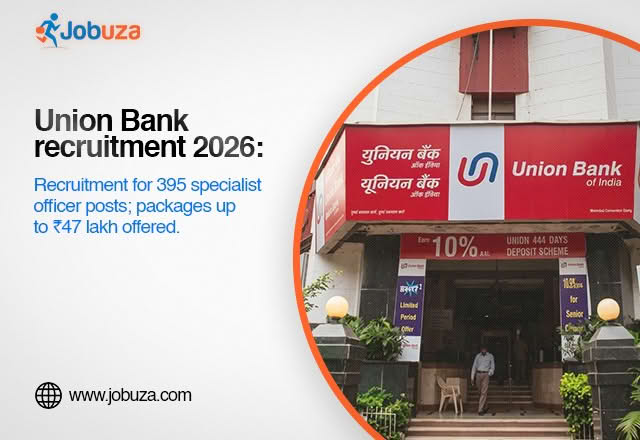
The Union Bank of India has started the online application process for 395 Specialist Officer (SO), General Banking Officer, and Domain Expert Officer posts under its 2026-27 recruitment drive. Candidates interested in building a career in the banking sector can submit their applications online from July 21 to August 10, 2026.
The recruitment will be conducted on a regular basis, and selected candidates will be posted at various locations across India based on the bank’s requirements.
Union Bank Recruitment 2026 Overview
Union Bank of India is recruiting eligible candidates for multiple officer-level positions across different departments. The selection process and eligibility criteria vary depending on the post.
Particulars
Details
Organization
Union Bank of India
Recruitment Year
2026-27
Post Name
Specialist Officer, General Banking Officer, Domain Expert Officer
Total Vacancies
395
Application Mode
Online
Registration Dates
July 21 to August 10, 2026
Job Location
Across India
Union Bank Recruitment 2026 Vacancy Details
The recruitment drive includes officer-level vacancies across various grades.
Post
Vacancies
Manager
163
Senior Manager
153
Chief Manager
52
Assistant General Manager
20
Deputy General Manager
7
Total
395
Eligibility Criteria
Candidates must meet the educational qualifications and experience requirements prescribed for the respective posts in the official notification.
The minimum age for most positions is 22 years, while the upper age limit varies between 30 and 50 years, depending on the post. Age relaxation will be provided to candidates belonging to reserved categories as per Government of India rules.
Application Fee
Candidates must pay the application fee online while submitting the application form.
Category
Application Fee
SC/ST/PwBD
₹177
All Other Categories
₹1,180
Selection Process
The selection process depends on the level of the post applied for.
For MMGS-II and MMGS-III Posts
Candidates may have to appear for:
Online Examination (if conducted)
Group Discussion
Personal Interview
Document Verification
Medical Examination
For SMGS-IV to TEGS-VI Posts
Selection may include:
Group Discussion
Secondary Assessment
Personal Interview
Document Verification
Medical Examination
For Specialist Officer posts, the online examination will primarily assess professional knowledge related to the relevant field.
For General Banking Officer posts, the examination is expected to include questions on:
Reasoning Ability
Quantitative Aptitude
English Language
Professional Knowledge
Candidates should note that 0.25 marks will be deducted for every incorrect answer in the online examination.
Salary and Annual Package
Union Bank offers an attractive salary package along with several employee benefits.
The basic pay starts from ₹64,820 for Manager-level posts and goes up to ₹1,56,500 for Deputy General Manager positions.
The estimated annual Cost to Company (CTC) ranges from approximately ₹21 lakh to ₹47 lakh, depending on the post and grade.
Selected candidates will also receive benefits such as:
Dearness Allowance (DA)
House Rent Allowance (HRA)
Medical Facilities
Leave Fare Concession (LFC)
Other admissible allowances and benefits
Probation Period and Service Bond
Candidates appointed through this recruitment drive will undergo a two-year probation period.
They will also be required to sign a three-year service bond. Candidates who resign before completing the bond period will have to pay the prescribed bond amount along with applicable taxes and other charges as per the bank’s rules.
How to Apply for Union Bank Recruitment 2026
Candidates can complete the online application by following these steps:
Step 1: Visit the official Union Bank of India recruitment portal.
Step 2: Click on the Union Bank Recruitment 2026 application link.
Step 3: Register using a valid email ID and mobile number.
Step 4: Fill in the application form with personal, educational, and professional details.
Step 5: Upload the required documents, photograph, and signature.
Step 6: Pay the application fee online.
Step 7: Review all the details carefully and submit the application form.
Step 8: Download and print the confirmation page for future reference.
Final Words
The Union Bank Recruitment 2026 offers an excellent opportunity for experienced professionals and banking aspirants to secure officer-level positions in one of India’s leading public sector banks. With 395 vacancies, attractive annual packages of up to ₹47 lakh, and multiple career growth opportunities, eligible candidates should complete their online applications before the August 10, 2026 deadline. Before applying, candidates are advised to carefully read the official notification to verify the eligibility criteria, post-wise qualifications, and selection process.
Building long-term wealth is not just about earning higher returns—it is also about reducing your tax burden. This is where EEE (Exempt-Exempt-Exempt) investment schemes become valuable. These investments offer tax benefits at three stages: on the amount invested, on the interest earned, and on the maturity proceeds, making them among the most tax-efficient investment options available in India.
Although the number of pure EEE investment options is limited, these government-backed schemes provide safety, stable returns, and long-term financial security. Here are five of the best tax-saving investment options that can help you grow your wealth while enjoying significant tax benefits.
What is an EEE Investment?
EEE stands for Exempt-Exempt-Exempt, which means:
The investment amount qualifies for tax deduction (subject to applicable tax laws).
The interest or returns earned remain tax-free during the investment period.
The maturity amount is also exempt from tax.
These features make EEE schemes ideal for retirement planning, wealth creation, and long-term savings.
1. Public Provident Fund (PPF)
The Public Provident Fund (PPF) is one of India’s most trusted long-term investment schemes. Backed by the Government of India, it offers guaranteed returns along with complete EEE tax benefits.
Currently, the scheme offers an interest rate of 7.1% per annum, with rates reviewed every quarter by the government.
Key Features
Government-backed investment
Lock-in period of 15 years
Minimum annual investment: ₹500
Maximum annual investment: ₹1.5 lakh
Tax deduction available under Section 80C under the old tax regime
Interest and maturity amount remain tax-free
PPF is considered an excellent option for conservative investors planning for retirement or long-term financial goals.
2. Employees’ Provident Fund (EPF)
The Employees’ Provident Fund (EPF) is a retirement savings scheme designed for salaried employees. It is managed by the Employees’ Provident Fund Organisation (EPFO).
Both employers and employees contribute to the EPF account, helping build a retirement corpus over the course of employment.
Key Features
Current interest rate: 8.25% per annum
Suitable for salaried employees
Employer and employee both contribute
Employee contributions qualify for tax benefits under Section 80C (old tax regime)
Eligible interest and maturity proceeds are tax-efficient under applicable rules
EPF remains one of the most popular retirement investment options in India.
3. Voluntary Provident Fund (VPF)
The Voluntary Provident Fund (VPF) allows salaried employees to contribute more than the mandatory EPF contribution.
Since VPF is linked to EPF, it earns the same interest rate and offers attractive tax benefits within the prescribed limits.
Key Features
Available only to EPF members
Government-backed retirement savings option
Same interest rate as EPF
Suitable for long-term retirement planning
Five years of continuous service required for full tax benefits in many cases
Investors should note that interest earned on contributions beyond the prescribed exemption limit may be taxable under current tax rules.
4. Sukanya Samriddhi Yojana (SSY)
The Sukanya Samriddhi Yojana (SSY) is a government-backed savings scheme introduced to support the future financial needs of a girl child.
It offers one of the highest interest rates among small savings schemes while providing full EEE tax benefits.
Key Features
Current interest rate: 8.2% per annum
Account can be opened for girls below 10 years of age
Investment allowed for up to two girl children in a family
Maturity period of 21 years
Eligible for tax deduction under Section 80C
Interest and maturity amount are tax-free
SSY is considered one of the best long-term savings options for education and marriage expenses.
5. National Pension System (NPS)
The National Pension System (NPS) is a market-linked retirement investment scheme that combines wealth creation with tax savings.
Unlike the other schemes, NPS is often referred to as a partially EEE investment because taxation applies to certain portions of the retirement corpus.
Key Features
Available to Indian citizens aged 18 to 70 years
Market-linked returns based on asset allocation
Potential long-term returns of around 9–12%
Additional tax deduction available under Section 80CCD
Flexible investment choices
Partial withdrawals allowed under specified conditions
NPS is suitable for investors who are comfortable with market-linked investments and want to build a retirement corpus over the long term.
Which Tax-Saving Investment Is Best?
The right investment depends on your financial goals and risk appetite.
PPF is ideal for safe, long-term wealth creation.
EPF is best suited for salaried employees planning retirement.
VPF helps employees increase retirement savings while earning EPF interest.
SSY is an excellent option for securing a girl child’s future.
NPS is suitable for investors looking for retirement planning with market-linked growth.
Final Words
EEE investment schemes continue to be among the most tax-efficient savings options available in India. They combine tax benefits with long-term wealth creation and financial security, making them attractive for conservative as well as retirement-focused investors. Before investing, compare each scheme’s eligibility, lock-in period, returns, and tax benefits to choose the option that best matches your financial goals.