by Jobuza Team | Jun 11, 2026 | BLOG, Latest Jobs
The Central Industrial Security Force (CISF) has officially announced the CISF ASI Paramedical Recruitment 2026 for various medical support positions. The recruitment drive aims to fill 24 vacancies for Assistant Sub-Inspector (ASI) posts in different paramedical trades, including Pharmacist, X-Ray Technician, and Lab Technician.
Eligible male and female candidates can submit their applications online through the official CISF recruitment portal. The online application process began on June 8, 2026, and will remain open until July 7, 2026.
This recruitment presents an excellent opportunity for candidates with paramedical qualifications who are looking for a government job in the healthcare sector.
CISF ASI Paramedical Recruitment 2026 Overview
The recruitment is being conducted by the Central Industrial Security Force to fill vacancies in its medical support staff category. Selected candidates will be appointed under Pay Level 5 and may be posted anywhere in India based on organizational requirements.
Recruitment Highlights
- Recruiting Authority: Central Industrial Security Force (CISF)
- Post Name: Assistant Sub-Inspector (ASI) Paramedical Staff
- Total Vacancies: 24
- Application Mode: Online
- Application Start Date: June 8, 2026
- Last Date to Apply: July 7, 2026
- Selection Process: Written Examination, Physical Standard Test (PST), Basic Vocational Aptitude Test (BVAT), Document Verification, and Medical Examination
- Official Website: cisfrectt.cisf.gov.in
CISF ASI Paramedical Vacancy 2026
The recruitment notification includes vacancies for several paramedical positions. Candidates should carefully review the eligibility requirements before submitting their applications.
The available posts include:
- ASI Pharmacist
- ASI X-Ray Technician
- ASI Lab Technician
A total of 24 vacancies have been announced across these trades.
Eligibility Criteria for CISF ASI Paramedical Recruitment 2026
Candidates must possess the required educational qualifications for the specific post they wish to apply for.
ASI Pharmacist
Applicants must have completed Class 12 from a recognized board. They should also possess a Diploma or Degree in Pharmacy from a recognized institution approved by the Central or State Government. Additionally, candidates must be registered as a pharmacist under the Pharmacy Act, 1948.
ASI X-Ray Technician
Candidates should have passed Class 12 from a recognized board and possess a two-year Diploma in Radiography from a government-recognized institution.
ASI Lab Technician
Applicants must have completed Class 12 with Science subjects from a recognized board. They should also hold a two-year Diploma in Medical Laboratory Technology from a recognized institution.
Application Fee
Candidates belonging to the General, OBC, and EWS categories are required to pay an application fee of ₹100 while submitting the online application form.
Candidates from SC, ST, Female, and Ex-Servicemen categories are exempted from paying the application fee.
Selection Process
The selection process for CISF ASI Paramedical Recruitment 2026 consists of multiple stages.
Candidates will first appear for a written examination. Those who qualify will be called for the Physical Standard Test (PST). After successfully clearing the PST, candidates will undergo document verification and the Basic Vocational Aptitude Test (BVAT). The final stage of recruitment will be the medical examination.
Only candidates who successfully clear all stages will be considered for final selection.
How to Apply for CISF ASI Paramedical Recruitment 2026
Candidates can complete their online application by following these steps:
Visit the official CISF recruitment website.
Complete the registration process using the required personal details.
Log in to the recruitment portal and select the desired ASI Paramedical post.
Fill out the online application form carefully with accurate information.
Upload the required documents, including your photograph and signature.
Pay the application fee according to your category, if applicable.
Review all entered information and submit the application form.
Download and save a copy of the submitted application for future reference.
Important Instructions for Candidates
Before applying, candidates should carefully read the official notification to understand the eligibility conditions, educational qualifications, age criteria, and recruitment process.
Providing incorrect information or submitting incomplete documents may result in the rejection of the application.
Candidates are also advised to keep copies of all uploaded documents and application details for future recruitment stages.
Helpline for Recruitment Queries
Candidates facing difficulties during the application process or any stage of recruitment can contact the CISF recruitment helpline for assistance.
The helpline numbers are:
011-24366431
011-24307933
Support is available on working days between 10:00 AM and 6:00 PM.
Final Words
The CISF ASI Paramedical Recruitment 2026 offers a valuable opportunity for qualified healthcare and paramedical professionals seeking a stable government career. With vacancies available for Pharmacists, X-Ray Technicians, and Lab Technicians, eligible candidates should complete their applications before the July 7, 2026 deadline.
Interested applicants are encouraged to review the official notification thoroughly and submit their applications well before the closing date to avoid last-minute issues.
Frequently Asked Questions
What is the last date to apply for CISF ASI Paramedical Recruitment 2026?
The last date to submit the online application form is July 7, 2026.
How many vacancies have been announced?
A total of 24 vacancies have been announced for various ASI Paramedical posts.
Which posts are available under this recruitment?
The recruitment includes vacancies for Pharmacist, X-Ray Technician, and Lab Technician positions.
What is the application fee for General category candidates?
General, OBC, and EWS category candidates must pay an application fee of ₹100.
Are female candidates required to pay the application fee?
No, female candidates are exempted from paying the application fee.
What is the selection process for CISF ASI Paramedical Recruitment?
The selection process includes a written examination, PST, document verification, BVAT, and medical examination.
Where can candidates apply online?
Candidates can apply through the official CISF recruitment portal at cisfrectt.cisf.gov.in.
Can candidates from any state apply?
Yes, eligible Indian citizens from any state can apply, and selected candidates may be posted anywhere in India based on organizational requirements.

by Jobuza Team | Jun 11, 2026 | BLOG, Trending News
Retirement planning is something many people postpone while focusing on current financial responsibilities such as household expenses, children’s education, and daily living costs. However, building a reliable source of income for your later years is one of the most important financial decisions you can make.
To encourage long-term savings and provide financial security after retirement, the Government of India introduced the Atal Pension Yojana (APY). The scheme is designed to help individuals create a steady pension income and reduce financial uncertainty during retirement.
What Is Atal Pension Yojana?
Atal Pension Yojana is a government-backed pension scheme that aims to provide a guaranteed monthly pension after the age of 60. It is particularly beneficial for people working in the unorganised sector who may not have access to employer-sponsored retirement benefits.
Under this scheme, subscribers make regular monthly contributions during their working years. In return, they receive a fixed pension amount after retirement based on the pension plan they choose at the time of enrollment.
How Does the Scheme Work?
The amount you contribute to the Atal Pension Yojana depends on two important factors: your age at the time of joining and the pension amount you want to receive after retirement.
The scheme offers five pension options:
- ₹1,000 per month
- ₹2,000 per month
- ₹3,000 per month
- ₹4,000 per month
- ₹5,000 per month
Subscribers are required to contribute for a minimum period of 20 years. Once they reach the age of 60, they begin receiving the guaranteed monthly pension selected under the scheme.
Joining at a younger age allows individuals to contribute smaller monthly amounts while building a larger retirement corpus over time.
Eligibility Criteria for Atal Pension Yojana
To enroll in the Atal Pension Yojana, applicants must meet the following conditions:
- Must be an Indian citizen
- Age should be between 18 and 40 years
- Must have an active savings bank account
- Should not be an income taxpayer
Individuals below 18 years or above 40 years are not eligible to join the scheme. Since contributions continue until the age of 60, enrolling early provides greater flexibility and lower monthly contribution requirements.
Pension Benefits Under APY
One of the biggest advantages of Atal Pension Yojana is the assurance of a fixed monthly pension after retirement.
The highest pension available under the scheme is ₹5,000 per month, which amounts to ₹60,000 annually. This guaranteed income can help retirees manage essential living expenses and maintain financial independence.
Married couples can also maximize benefits by enrolling separately. If both spouses choose the highest pension option, they can receive a combined pension of up to ₹10,000 per month or ₹1.2 lakh annually after retirement.
This additional income can play a significant role in covering household expenses and improving financial stability during retirement years.
How to Apply for Atal Pension Yojana
The application process for APY is simple and can be completed through most banks in India.
To apply, visit the bank branch where you hold a savings account and request the Atal Pension Yojana application form. Fill in the required personal details, choose your preferred pension amount, and submit the completed form.
After successful enrollment, the monthly contribution amount is automatically deducted from your savings account, ensuring timely payments without any manual effort.
Key Benefits of Atal Pension Yojana
Atal Pension Yojana offers several advantages for individuals looking to build a secure retirement plan.
The scheme provides a government-backed guaranteed pension, making it a reliable option for long-term financial planning. Monthly contributions are affordable, allowing people from different income groups to participate comfortably.
The enrollment process is simple and accessible through banks across the country. The scheme also offers financial protection for spouses and nominees, ensuring continued support for family members.
Most importantly, APY encourages disciplined saving habits, helping individuals gradually build a retirement fund without placing a significant burden on their monthly budget.
Why Early Enrollment Matters
One of the most effective ways to maximize the benefits of Atal Pension Yojana is to join as early as possible. Younger subscribers enjoy lower monthly contribution requirements while gaining more time to build retirement savings.
Starting early not only reduces financial pressure but also helps create a stronger foundation for long-term financial security.
Final Thoughts
Atal Pension Yojana is a practical and affordable retirement planning solution for millions of Indians, especially those working in the unorganised sector. The scheme offers guaranteed pension benefits, simple enrollment, and long-term financial security backed by the Government of India.
If you are between 18 and 40 years of age and meet the eligibility requirements, enrolling in APY can be a valuable step toward creating a stable and dependable income after retirement. Planning today can help ensure greater financial independence and peace of mind in the future.
Frequently Asked Questions
What is the maximum pension available under Atal Pension Yojana?
The maximum guaranteed pension available under APY is ₹5,000 per month after the subscriber reaches 60 years of age.
Who can join Atal Pension Yojana?
Any Indian citizen between 18 and 40 years of age with an active savings bank account can apply, subject to the scheme’s eligibility conditions.
How long do I need to contribute to APY?
Subscribers must contribute for at least 20 years and continue contributions until reaching the age of 60.
Can both husband and wife join APY?
Yes. Both spouses can enroll separately and receive individual pension benefits after retirement.
Is the pension amount guaranteed?
Yes. The pension amount selected at the time of enrollment is guaranteed by the Government of India under the scheme’s guidelines.
How are contributions paid?
Monthly contributions are automatically deducted from the subscriber’s linked savings bank account.
Why should I join APY at a young age?
Joining early helps reduce monthly contribution requirements and allows more time to build retirement savings.
Is APY suitable for self-employed individuals?
Yes. The scheme is particularly beneficial for self-employed individuals, small business owners, daily wage earners, and workers in the unorganised sector who may not have access to formal pension plans.
by Jobuza Team | Jun 11, 2026 | BLOG, Trending News
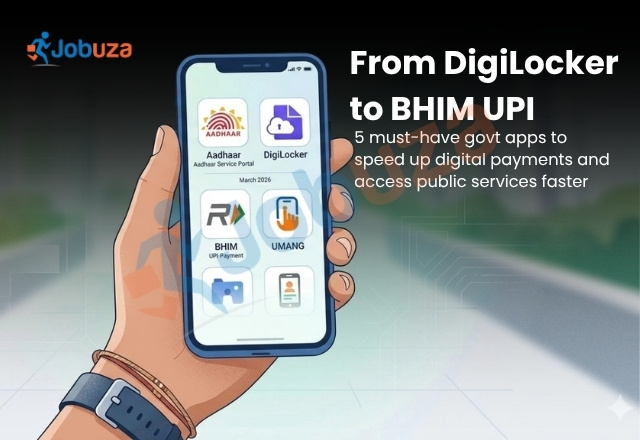
India’s digital transformation has made accessing government services easier than ever. Today, citizens can use mobile applications to manage important documents, make secure payments, access public services, and complete essential tasks without visiting government offices.
Despite the growing availability of these digital tools, many people are still unaware of the benefits they offer. From storing official documents digitally to making instant bank transfers and accessing hundreds of government services, these apps can save time, reduce paperwork, and simplify daily life.
Here are five government-backed applications that can make your everyday activities more convenient and efficient.
DigiLocker
DigiLocker is a secure digital document wallet developed by the Government of India. It allows users to store and access important documents such as Aadhaar cards, driving licences, vehicle registration certificates, educational certificates, and more.
Documents issued through DigiLocker are legally valid and can be used for verification purposes whenever required. This eliminates the need to carry physical copies of important documents.
UMANG
UMANG, which stands for Unified Mobile Application for New-age Governance, provides access to more than 1,000 government services through a single platform.
Users can access services related to EPFO, PAN, Aadhaar, gas booking, utility bill payments, pension services, and much more. Instead of downloading multiple government apps, citizens can access a wide range of services from one convenient application.
mParivahan
mParivahan is a useful application for vehicle owners and drivers. It provides digital access to vehicle registration certificates (RC) and driving licences.
The app also helps users verify vehicle details, check registration information, and access various transport-related services. Digital documents available through mParivahan are accepted by traffic authorities across India.
Digi Yatra
Digi Yatra is designed to improve the airport travel experience. It uses facial recognition technology to enable paperless airport entry and boarding.
Passengers can move through airport checkpoints more quickly without repeatedly showing physical identity documents. The app helps reduce waiting times and makes air travel more convenient.
BHIM UPI
BHIM UPI is one of India’s most popular digital payment applications. Developed by the National Payments Corporation of India (NPCI), it enables secure and instant bank-to-bank money transfers.
Users can send and receive money, pay bills, scan QR codes, and complete transactions directly from their bank accounts. The platform is simple, secure, and widely accepted across the country.
Why These Apps Matter
Using these government applications can significantly reduce paperwork and improve access to essential services. Whether you need to manage documents, make payments, travel, or access government schemes, these apps offer a faster and more efficient experience.
They also promote transparency, reduce dependency on physical documents, and help citizens complete tasks from the comfort of their homes.
Download Apps Only from Trusted Sources
While downloading any government application, users should remain cautious. Cybercriminals often circulate fake APK files, suspicious links, and fraudulent messages that may appear genuine.
To stay safe, always download applications from official government websites, the Google Play Store, or the Apple App Store. Avoid installing apps from unknown sources or clicking on unverified links shared through social media or messaging platforms.
Downloading apps from trusted sources helps protect your personal information and reduces the risk of fraud, identity theft, and financial loss.
Final Thoughts
Government-backed digital applications are transforming the way citizens interact with public services. Apps such as DigiLocker, UMANG, mParivahan, Digi Yatra, and BHIM UPI offer secure, reliable, and convenient solutions for everyday needs.
By using these apps effectively, you can save time, reduce paperwork, access services more quickly, and enjoy a smoother digital experience. As India continues its journey towards digital governance, these applications have become essential tools for modern living.
Frequently Asked Questions
What is DigiLocker used for?
DigiLocker allows users to securely store and access official documents such as Aadhaar cards, driving licences, educational certificates, and vehicle registration documents.
Why should I install UMANG?
UMANG provides access to hundreds of government services, including EPFO, PAN, utility payments, gas booking, pension services, and more, all from one platform.
What services does mParivahan offer?
mParivahan provides digital driving licences, vehicle registration certificates, vehicle verification services, and transport-related information.
How does Digi Yatra help travellers?
Digi Yatra enables paperless airport entry and boarding through facial recognition technology, helping passengers move through airports more quickly.
Is BHIM UPI safe for digital payments?
Yes, BHIM UPI offers secure bank-to-bank transfers, QR code payments, bill payments, and other digital transactions using India’s UPI network.
Where should I download these apps?
Always download government applications from official websites, the Google Play Store, or the Apple App Store.
Can these apps reduce paperwork?
Yes, these applications support digital documentation and online verification, significantly reducing the need for physical paperwork.
Do these apps completely eliminate fraud risks?
No. While they are secure platforms, users should still avoid suspicious links, fake APK files, and phishing attempts.
Are DigiLocker documents legally valid?
Yes, documents issued and verified through DigiLocker are legally recognized and accepted by various government departments and institutions.
Can these apps help with personal finance management?
Yes, especially BHIM UPI, which simplifies payments, fund transfers, and transaction management while supporting better financial organization.
by Jobuza Team | Jun 9, 2026 | BLOG, Latest Jobs
The Telangana Public Service Commission (TGPSC) has released the official notification for the recruitment of Assistant Executive Engineer (Civil) posts in the Transport, Roads and Buildings Department. The recruitment drive aims to fill 222 vacancies across Telangana, offering a valuable opportunity for engineering graduates seeking a government job.
Eligible candidates can submit their applications online through the official TGPSC website. The commission has advised applicants to complete the registration process well before the closing date to avoid last-minute technical issues.
TGPSC AEE Recruitment 2026 Overview
TGPSC has invited online applications for Assistant Executive Engineer (Civil) positions under the Telangana government. Candidates who meet the required educational qualifications and eligibility criteria can apply within the prescribed timeline.
Recruitment Highlights
| Particulars |
Details |
| Recruiting Authority |
Telangana Public Service Commission (TGPSC) |
| Post Name |
Assistant Executive Engineer (Civil) |
| Department |
Transport, Roads and Buildings Department |
| Total Vacancies |
222 |
| Application Mode |
Online |
| Last Date to Apply |
July 13, 2026 |
| Tentative Exam Date |
October 2026 |
| Official Website |
tgpsc.gov.in |
TGPSC AEE Vacancy 2026
Under this recruitment drive, the Telangana Public Service Commission will fill a total of 222 Assistant Executive Engineer (Civil) vacancies.
Candidates can refer to the official notification for detailed category-wise and reservation-wise vacancy distribution.
TGPSC AEE Eligibility Criteria 2026
Before applying, candidates should carefully review the eligibility conditions mentioned in the official notification.
Educational Qualification
Applicants must possess the required Civil Engineering qualification from a recognized university or institution approved by the relevant authorities.
Candidates are advised to verify the detailed educational requirements in the official recruitment notification before submitting their applications.
Age Limit
The age criteria and applicable relaxations for reserved categories will be governed by Telangana government recruitment rules as specified in the notification.
Important Dates for TGPSC AEE Recruitment 2026
Candidates should keep track of all important recruitment events.
- Last Date to Submit Online Application: July 13, 2026
- Hall Ticket Download: Seven days before the examination
- Tentative Examination Schedule: October 2026
Applicants are encouraged to apply early rather than waiting until the final date.
Selection Process for TGPSC AEE Recruitment 2026
The selection process will be conducted according to the guidelines mentioned by the Telangana Public Service Commission.
Candidates will be shortlisted based on their performance in the prescribed examination. The commission is expected to conduct the recruitment examination in October 2026.
Further details regarding the exam pattern, syllabus, and selection procedure will be available in the detailed notification.
How to Apply for TGPSC AEE Recruitment 2026
Candidates must apply online through the official TGPSC portal.
Step-by-Step Application Process
Step 1: Visit the official TGPSC website.
Step 2: Log in using your One Time Registration (OTR) credentials.
Step 3: New applicants must first complete the One Time Registration process by entering the required personal and educational details.
Step 4: Access the Assistant Executive Engineer recruitment application form.
Step 5: Fill in all required information carefully.
Step 6: Upload the necessary documents, photograph, and signature.
Step 7: Review the application form and submit it online.
Step 8: Download and save a copy of the submitted application form for future reference.
One Time Registration Requirement
Candidates applying through TGPSC for the first time must complete the One Time Registration (OTR) process before submitting the application.
The OTR system allows applicants to create a permanent profile that can be used for future Telangana government recruitment notifications.
Why This Recruitment Is Important
The TGPSC AEE Recruitment 2026 offers a significant opportunity for Civil Engineering graduates looking to build a stable career in the government sector. With 222 vacancies available in the Transport, Roads and Buildings Department, the recruitment drive is expected to attract a large number of applicants from across Telangana.
Interested candidates should carefully read the official notification, verify their eligibility, and complete the online application process before July 13, 2026.

by Jobuza Team | Jun 9, 2026 | BLOG, Latest Jobs, PSU Jobs
The Karnataka State Police Department has started the online application process for Karnataka Police Constable Recruitment 2026. Candidates interested in joining the police force can now apply for 3,395 Police Constable (Civil) vacancies through the official website.
The recruitment drive aims to fill vacancies across various categories, including positions for men, women, in-service candidates, and transgender applicants. Eligible candidates can submit their applications online before the last date.
Karnataka Police Recruitment 2026 Overview
The Karnataka Police Department has announced a large-scale recruitment drive for Police Constable (Civil) posts under the non-HK cadre. The online registration process began on June 8, 2026, and candidates are advised to complete their applications well before the deadline.
Recruitment Highlights
| Particulars |
Details |
| Recruiting Authority |
Karnataka State Police Department |
| Post Name |
Police Constable (Civil) |
| Total Vacancies |
3,395 |
| Application Start Date |
June 8, 2026 |
| Application Last Date |
July 3, 2026 |
| Fee Payment Last Date |
July 4, 2026 |
| Written Examination |
August 2, 2026 |
| Application Mode |
Online |
Karnataka Police Constable Vacancy 2026
A total of 3,395 vacancies have been announced under this recruitment drive.
The category-wise distribution of posts is as follows:
- Direct Men: 2,266 posts
- Direct Women: 755 posts
- In-Service Men: 257 posts
- In-Service Women: 82 posts
- Transgender Candidates: 35 posts
Candidates can check the official notification for detailed district-wise and category-wise vacancy information.
Karnataka Police Eligibility Criteria 2026
Candidates must carefully check the eligibility conditions before applying for the recruitment process.
Educational Qualification
Applicants must possess the educational qualification prescribed by the Karnataka State Police Department. Detailed qualification requirements are available in the official recruitment notification.
Age Limit
The age criteria will be applicable as per the recruitment rules mentioned in the official advertisement. Reserved category candidates may be eligible for age relaxation according to government guidelines.
Important Dates for Karnataka Police Recruitment 2026
Candidates should keep track of all important events related to the recruitment process.
- Online Application Begins: June 8, 2026
- Last Date to Apply: July 3, 2026
- Last Date for Fee Payment: July 4, 2026
- Written Examination: August 2, 2026
How to Apply for Karnataka Police Constable Recruitment 2026
Candidates can complete the application process online through the Karnataka Examination Authority website.
Step-by-Step Application Process
Step 1: Visit the official website.
Step 2: Open the Karnataka Police Recruitment 2026 application link.
Step 3: Complete the registration process using the required details.
Step 4: Fill in the application form carefully.
Step 5: Upload the necessary documents and photographs.
Step 6: Pay the application fee, if applicable.
Step 7: Submit the application form and save a printout for future reference.
Candidates are allowed to apply for only one unit or district under this recruitment drive.
Karnataka Police Selection Process 2026
The selection process consists of multiple stages designed to evaluate candidates’ knowledge, physical fitness, and medical suitability.
Written Examination
The first stage is an offline OMR-based written examination.
The test will contain 100 questions from subjects such as:
- General Knowledge
- Science
- Geography
- History
- Indian Constitution
- Mental Ability
- Ethics
Physical Standard Test and Endurance Test
Candidates shortlisted from the written examination will be called for Physical Standard Test (PST) and Endurance Test (ET).
The department will shortlist candidates in a ratio of 1:5 based on written examination performance.
Physical Standards
For General Male Candidates:
For General Female and Transgender Candidates:
Medical Examination
Candidates who clear the physical tests will undergo a detailed medical examination conducted by the designated medical board.
Only medically fit candidates will be considered for final selection.
Karnataka Police Recruitment 2026 Notification PDF
The detailed recruitment notification has been released by the Karnataka State Police Department. Candidates should read the official advertisement carefully to understand eligibility requirements, reservation rules, examination details, and other important instructions before applying.
With 3,395 vacancies available, this recruitment presents a significant opportunity for candidates seeking a government job in the police department. Interested applicants should complete their registration before the closing date and begin preparation for the written examination and physical tests.
by Jobuza Team | Jun 8, 2026 | BLOG, Trending News
For years, the IRCTC app has been the preferred choice for millions of Indian railway passengers when booking train tickets. Whether it is a reserved seat, Tatkal booking, or checking train schedules, IRCTC has remained the primary platform for railway reservations.
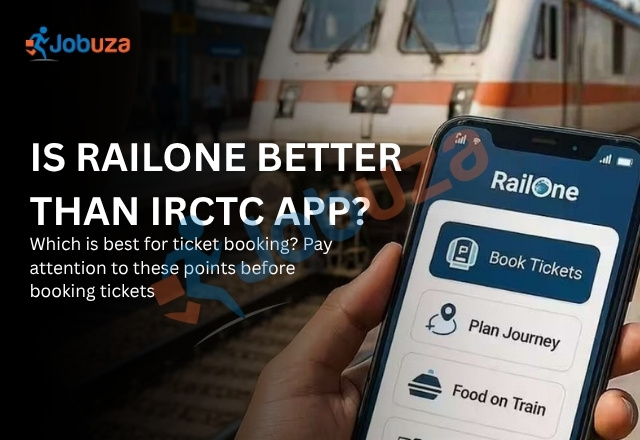
However, Indian Railways has now introduced RailOne, a new all-in-one application that is quickly attracting attention. Developed by the Centre for Railway Information Systems (CRIS), RailOne combines multiple railway services into a single platform, making it easier for passengers to manage their travel needs from one app.
As more users begin exploring RailOne, many are asking the same question: Which app is better for ticket booking, RailOne or IRCTC?
What Is RailOne?
RailOne is a comprehensive railway application designed to bring several railway-related services together in one place.
Previously, passengers often needed different apps for different services. IRCTC was used for reserved ticket bookings, UTS was required for unreserved and platform tickets, while Rail Madad was used for complaints and passenger assistance.
RailOne aims to eliminate this inconvenience by providing all these services through a single application.
RailOne vs IRCTC: Understanding the Biggest Difference
The biggest difference between RailOne and IRCTC lies in the range of services they offer.
IRCTC Focuses Primarily on Reserved Ticket Booking
The IRCTC Rail Connect app is specifically designed for railway reservations. It remains the most trusted platform for booking:
- Confirmed train tickets
- Tatkal tickets
- Premium Tatkal tickets
- Railway tourism services
- Catering and travel-related services
Millions of passengers use the platform daily, making it the most established railway booking app in India.
RailOne Offers Multiple Railway Services in One App
RailOne goes beyond reserved ticket booking and combines several railway services into a single platform.
Passengers can use RailOne for:
- Reserved train ticket booking
- General ticket booking
- Platform ticket booking
- Local train ticket booking
- Live train tracking
- PNR status checking
- Food ordering during travel
- Passenger complaint registration
This integrated approach is one of the biggest reasons behind RailOne’s growing popularity.
Key Features That Make RailOne Popular
RailOne offers several features designed to improve the user experience.
Single Sign-In Convenience
Passengers no longer need separate accounts for different railway services. One login provides access to multiple features across the platform.
Saved Passenger Profiles
The app allows users to save passenger details in advance. This reduces the time required during ticket booking and makes the process more convenient.
Faster User Experience
Many early users have reported that RailOne offers a smooth and responsive interface, particularly for general and platform ticket bookings.
Multiple Services Under One Platform
From checking train locations to ordering meals while travelling, RailOne combines several commonly used railway services in a single application.
Which App Is Better for Ticket Booking?
The answer depends largely on your travel requirements.
Choose IRCTC If
IRCTC remains the better option if your primary goal is:
- Booking confirmed reserved tickets
- Securing Tatkal tickets
- Managing long-distance train travel
- Using a platform with a long track record and high reliability
The app continues to be the most trusted reservation platform for Indian Railways passengers.
Choose RailOne If
RailOne may be a better choice if you:
- Frequently travel by train
- Need both reserved and unreserved ticket booking options
- Want platform ticket booking in the same app
- Prefer live train tracking and additional railway services
- Want a single app for most railway-related activities
Its all-in-one approach makes it especially useful for regular commuters and daily travellers.
Are There Any Limitations of RailOne?
While RailOne has received positive feedback for its convenience and features, some users have reported occasional payment gateway issues and technical glitches.
Since the platform is relatively new, such challenges are expected during the early stages. As updates continue, the overall user experience is likely to improve further.
RailOne vs IRCTC: Final Verdict
Both RailOne and IRCTC serve different purposes and offer unique advantages.
IRCTC continues to be the most reliable choice for reserved and Tatkal ticket bookings, making it the preferred platform for long-distance railway travel.
RailOne, on the other hand, brings together multiple railway services under one roof, offering a more comprehensive experience for passengers who frequently use Indian Railways.
If your priority is simple and reliable reservation booking, IRCTC remains an excellent choice. If you want an all-in-one railway app that handles everything from ticket booking to train tracking and passenger support, RailOne is worth considering.