by Jobuza Team | Apr 7, 2026 | BLOG, Trending News
Artificial Intelligence is no longer limited to engineers or researchers. Today, AI is widely used in offices, schools, and even media organizations. From automating daily tasks to improving productivity, AI has become a part of everyday work. As a result, more people are now interested in learning how it works and how it can be used in real-life situations.
The good part is that many leading tech companies are offering free AI courses in 2026. These courses are designed for beginners as well as professionals who want to upgrade their skills without spending money on expensive programs.
Why Learning AI in 2026 is Important
With the growing use of AI across industries, having basic knowledge of artificial intelligence is becoming a valuable skill. Whether you are a student, job seeker, or working professional, learning AI can open up new career opportunities.
Free online courses make it easier to understand concepts like machine learning, generative AI, and automation without needing a technical background.
Top 8 Platforms Offering Free AI Courses
Google
Google offers beginner-friendly AI courses through its Grow with Google initiative. These courses focus on practical learning, including topics like Generative AI and how AI can be used at work. The content is easy to understand and suitable for those who are just starting.
Link: http://grow.google/ai
OpenAI
OpenAI provides learning resources through its academy platform. These materials help learners understand how modern AI systems function and how developers can build AI-powered tools and applications.
Link: http://academy.openai.com
Microsoft
Microsoft Learn is a popular platform offering a wide range of AI and machine learning courses. It includes training on AI development, cloud-based AI, and data-related technologies, making it suitable for both beginners and advanced learners.
Link: http://learn.microsoft.com/training
NVIDIA
NVIDIA provides technical training programs focused on deep learning and high-performance computing. These courses are ideal for learners who want to understand the technical side of AI systems.
Link: http://developer.nvidia.com/training
Amazon Web Services
AWS Skill Builder offers courses on artificial intelligence and machine learning in cloud environments. It helps learners understand how AI tools are developed and deployed using cloud technologies.
ink: http://skillbuilder.aws
IBM
IBM SkillsBuild is designed to help learners build career-ready skills. It offers training in artificial intelligence, data analysis, and other in-demand technologies.
Link: http://skillsbuild.org
Meta
Meta provides AI learning resources, tutorials, and documentation that explain machine learning models and AI systems. It is a good option for learners interested in real-world AI applications.
Link: http://ai.meta.com/resources
DeepLearning.AI
DeepLearning.AI offers short and practical courses on topics like generative AI, neural networks, and prompt engineering. These courses are highly useful for understanding modern AI tools.
Link: http://deeplearning.ai
Conclusion
As artificial intelligence continues to transform industries, learning AI has become more important than ever. These free courses offered by top global platforms provide an excellent starting point for anyone interested in understanding AI. With flexible learning options and high-quality content, you can begin your AI journey in 2026 without any financial burden and build skills that are highly valuable in today’s job market.

by Jobuza Team | Apr 7, 2026 | BLOG, Trending News
The Central Board of Direct Taxes (CBDT) has issued an important clarification that brings relief to investors holding old or legacy investments. According to the latest notification, income arising from the transfer of investments made before April 1, 2017 will not fall under the scope of General Anti-Avoidance Rules (GAAR).
This move is expected to remove long-standing confusion around taxation and provide certainty to investors, especially those who have held investments for the long term.
No Tax Impact Under GAAR for Old Investments
The clarification clearly states that GAAR provisions will not apply to capital gains earned from investments made on or before April 1, 2017. This effectively means that such transactions will not be scrutinized under anti-avoidance rules, even if the structure of the investment appears complex.
The decision aligns with the government’s earlier intent to protect investments made before the implementation of GAAR. It also addresses concerns raised after recent legal developments, ensuring that genuine investors are not adversely affected.
However, it is important to note that GAAR can still be applied in cases where tax avoidance arrangements are detected, even if the underlying investments were acquired before April 2017.
Amendment in Income-Tax Rules
The CBDT has amended Rule 128 of the Income-tax Rules, 2026 to incorporate this clarification. With this amendment, gains arising from older investments have been granted what is known as “grandfathering” status.
This update reinforces the principle that investments made under previous tax frameworks should not be subjected to new compliance burdens introduced later.
What is Grandfathering in Taxation
Grandfathering is a concept where existing investments or arrangements continue to be governed by the rules that were in place at the time they were made. Any new regulations apply only to future transactions.
This approach ensures stability and predictability for investors. It prevents sudden changes in tax rules from impacting decisions that were taken under a different regulatory environment. It also helps maintain trust in the financial system by protecting long-term investments from unexpected policy shifts.
Understanding GAAR and Its Purpose
GAAR was introduced to prevent tax avoidance through artificial or non-genuine arrangements. It gives tax authorities the power to ignore or reclassify transactions that are primarily designed to reduce tax liability without any real economic purpose.
Although GAAR was announced in the Union Budget 2012-13, it came into effect from April 1, 2017. Since its introduction, there have been concerns among investors about possible misuse or excessive scrutiny.
The latest clarification helps strike a balance by ensuring that genuine investments made before the implementation of GAAR are not unnecessarily questioned.
Impact on Investors
This development is particularly beneficial for long-term investors, including foreign investors and institutional stakeholders, who had invested in India before April 2017. It removes ambiguity around taxation and provides a clearer framework for future planning.
By excluding such investments from GAAR provisions, the government has reinforced investor confidence and ensured policy consistency.
Conclusion
The CBDT’s clarification on tax-free treatment under GAAR for investments made before April 1, 2017 is a significant step towards improving transparency and investor confidence. By granting grandfathering benefits, the government has ensured that past investments remain protected from new tax rules. This move will likely encourage long-term investment and bring greater stability to the tax regime in India.
by Jobuza Team | Apr 7, 2026 | BLOG, Latest Jobs
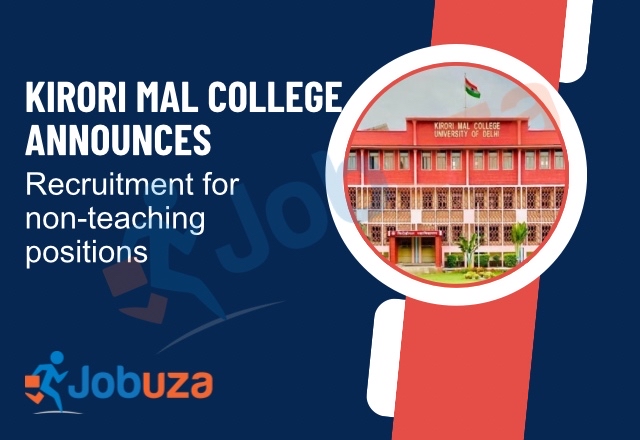
Kirori Mal College has released a recruitment notification for various non-teaching posts. A total of 57 vacancies are available across multiple departments, offering opportunities for candidates with different educational backgrounds. Interested and eligible candidates can apply online through the official website before the last date, March 27, 2026.
This recruitment drive includes positions such as Senior Technical Assistant, Senior Personal Assistant, Senior Assistant, Junior Assistant, Library Attendant, Laboratory Assistant, and Lab Attendant.
Kirori Mal College Vacancy 2026 Details
The recruitment aims to fill 57 non-teaching posts across different roles. Some of the key vacancies include Senior Personal Assistant, Senior Technical Assistant (Computer), Senior Assistant, Cartographer Assistant, Assistant, and Junior Assistant. In addition, multiple positions are available for Library Attendant, Laboratory Assistant in subjects like Botany, Chemistry, Physics, and Zoology, as well as Lab Attendant posts in various departments.
Candidates should carefully review the post-wise vacancy distribution before applying, as each position has specific eligibility requirements.
Important Dates for KMC Recruitment 2026
The online application process is currently active and candidates can submit their forms until March 27, 2026. Applicants are advised to complete their registration well before the deadline to avoid last-minute issues.
Eligibility Criteria and Age Limit
The eligibility criteria vary depending on the post applied for. For higher-level positions such as Senior Personal Assistant, Senior Technical Assistant, and Senior Assistant, candidates must hold a bachelor’s or master’s degree along with relevant work experience. The maximum age limit for these posts is generally 35 years.
For roles like Junior Assistant, Cartographer Assistant, and Library Attendant, candidates must have a bachelor’s degree along with specific skills such as typing or relevant certifications. The age limit for these posts is up to 32 years.
For Laboratory Assistant positions, candidates must possess a bachelor’s degree along with lab experience. Lab Attendant posts require candidates to have passed 12th in Science or 10th with ITI or a relevant skill certificate. The maximum age limit for these positions is also 32 years.
Age relaxation will be applicable as per government norms for reserved categories.
Selection Process for KMC Non-Teaching Posts
The selection process consists of three stages. First, candidates will appear for an online written examination that will test general aptitude and reasoning ability. Shortlisted candidates will then be called for a skill or typing test, depending on the post applied for. Finally, document verification will be conducted to confirm eligibility and qualifications.
Candidates must clear each stage to be considered for final selection.
How to Apply for Kirori Mal College Recruitment 2026
To apply for the recruitment, candidates need to visit the official website at dunt.uod.ac.in. On the homepage, they should click on the KMC Non-Teaching Recruitment 2026 link and select the desired post.
After registration, candidates must log in and fill out the application form carefully. Required documents such as photographs, signatures, and educational certificates must be uploaded. Once the application fee is paid, candidates can submit the form and download a copy for future reference.
It is important to note that candidates applying for more than one post must submit separate applications and pay the application fee for each position.
Conclusion
Kirori Mal College Recruitment 2026 offers a valuable opportunity for candidates seeking non-teaching government jobs under Delhi University. With multiple vacancies across different departments and roles, candidates from various educational backgrounds can apply. Interested applicants should ensure they meet the eligibility criteria and complete the application process before March 27, 2026.

by Jobuza Team | Apr 7, 2026 | BLOG, IT/Tech Jobs, Latest Jobs, Technical/IT Jobs
Design Cafe Hiring Senior Interior Designer in Visakhapatnam (Vizag Center)
Design Cafe is hiring a Senior Interior Designer for its Vizag Center in Visakhapatnam, Andhra Pradesh. This role is perfect for candidates who have strong experience in residential interior design, especially modular interiors, and want to grow in a professional and creative environment.
The position is based in the Asilmetta area of Visakhapatnam. Candidates applying for this role must have 3 to 5 years of experience, with a clear focus on modular residential projects. This is an important requirement, so only relevant profiles will be considered.
As a Senior Interior Designer, your main responsibility will be to understand client needs and convert them into practical and attractive design solutions. You will regularly interact with clients, create design concepts, and present ideas using sketches, drawings, and floor plans. You will also prepare concept boards to help clients visualize the final outcome. A good understanding of design principles, creativity, and attention to detail is essential for this role.
To apply, you should have at least 3 years of experience in residential interior projects and be confident in handling clients and projects independently. A diploma or degree in Interior Design or Architecture is required. You should also have good knowledge of AutoCAD, Google SketchUp, and Microsoft Office. Strong communication skills in English are important for presenting ideas clearly.
Candidates with a Diploma in Interior Designing or a B.Arch degree will be preferred.
If you are interested in this opportunity, you can send your profile to rajshree.dayal@designcafe.com.

by Jobuza Team | Apr 6, 2026 | BLOG, Latest Jobs, Technical/IT Jobs
The Bhabha Atomic Research Centre (BARC) has started the online application process for BARC JRF 2026 recruitment. A total of 105 Junior Research Fellowships are being offered under this programme. Candidates who are interested in research careers in Physics, Chemistry, and Life Sciences can apply through the official BARC website.
The application process began on March 10, 2026, and the last date to submit the online form is March 31, 2026. Applications are accepted only in online mode, and candidates are advised to complete the process well before the deadline.
BARC JRF 2026 Important Dates
Candidates should carefully track all key dates related to the recruitment process. The online application window is open from March 10 to March 31, 2026. The list of shortlisted candidates for interviews will be released on May 19, 2026.
Candidates will be able to select their interview slots between May 21 and May 28, 2026. The interview process is scheduled to be conducted from June 22 to July 3, 2026. The final result will be announced on July 15, 2026. The pre-employment medical examination will take place between August 12 and August 14, 2026, and the JRF programme will commence from August 17, 2026.
BARC JRF 2026 Eligibility Criteria
BARC has announced 105 fellowships for candidates in the fields of Physics, Chemistry, and Life Sciences. Applicants must have qualifications such as M.Sc., Integrated M.Sc., B.S.-M.S. dual degree, or B.S. with a research component in the relevant subject.
Candidates must also have a valid score in national-level exams such as UGC-CSIR NET, JEST, ICMR-JRF, ICAR-JRF, DBT BET, GATE, or JGEEBILS. These scores must be valid as of July 1, 2026.
The applicant must be an Indian citizen and should be below 28 years of age as on August 1, 2026. Age relaxation is applicable as per government rules for reserved categories.
Fellowship Amount and Benefits
Selected candidates will receive a monthly stipend of ₹37,000 during the first two years as Junior Research Fellows. Based on performance, the fellowship may be upgraded to Senior Research Fellow with a monthly stipend of ₹42,000.
In addition to the stipend, candidates will receive an annual contingency grant of ₹60,000. Medical benefits will also be provided during the tenure. The total duration of the fellowship is five years.
Candidates will be required to stay in the institute hostel during the PhD programme, and accommodation will be provided by BARC.
BARC JRF 2026 Selection Process
The selection process is based on shortlisting and interview performance. Candidates will first be shortlisted based on their academic performance and valid entrance exam scores. Shortlisted candidates will then be called for a personal interview.
Final selection will depend on the candidate’s performance in the interview conducted by BARC.
How to Apply for BARC JRF 2026
Candidates can apply online through the official BARC website. The application process includes registration, filling out the form, uploading documents, and paying the application fee if applicable.
Applicants should ensure that all details are correct before submission. It is also important to read the official notification carefully before applying.
Conclusion
BARC JRF 2026 is an excellent opportunity for candidates looking to build a career in research and pursue a PhD from a reputed institute. With attractive fellowship benefits and a structured research programme, this recruitment offers strong career growth. Interested candidates should apply before March 31, 2026, and start preparing for the interview process.
by Jobuza Team | Apr 6, 2026 | BLOG, Central Govt Job, Latest Jobs
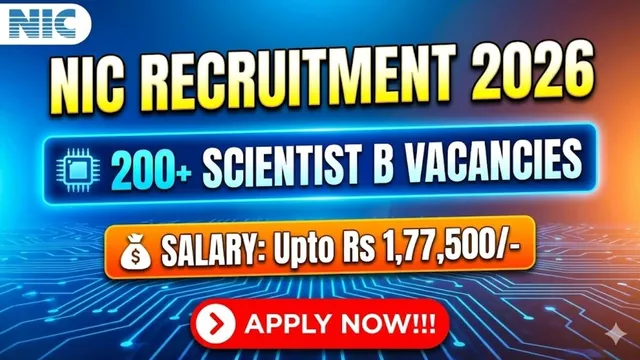
The National Informatics Centre (NIC) has released the official notification for NIC Recruitment 2026, inviting applications for Scientist-B posts. This is a prestigious Group-A S&T (Gazetted) position offered under direct recruitment. Candidates who are interested in building a career in government technology roles can apply online through the official website, recruitment.nic.in.
The online application process started on 27 March 2026 and will remain open until 24 April 2026. Candidates are advised to complete their application well before the last date to avoid any technical issues.
NIC Scientist B Recruitment 2026 Overview
NIC is recruiting eligible and qualified candidates for the post of Scientist-B in Pay Level 10, with a salary ranging from ₹56,100 to ₹1,77,500 as per the 7th CPC. The selection process will be based on valid GATE scores of 2024, 2025, or 2026, followed by a personal interview.
This recruitment offers a great opportunity for candidates with a technical background to work in a reputed government organization and contribute to India’s digital infrastructure.
NIC Scientist B Recruitment 2026 Important Dates
Candidates should keep track of the important dates to ensure they do not miss any deadlines. The application process has already begun from 27 March 2026. The last date to apply online is 24 April 2026. The cut-off date for determining eligibility is 31 March 2026. The schedule for document verification and personal interview will be announced later on the official website.
Eligibility Criteria for NIC Scientist B 2026
Candidates applying for NIC Scientist B Recruitment 2026 must meet the required educational qualifications and must have a valid GATE score. The detailed eligibility conditions, including educational background and age limit, are available in the official notification. Applicants are advised to carefully read all instructions before applying.
NIC Scientist B 2026 Selection Process
The selection process for Scientist-B posts in NIC is based on merit and performance in GATE. Candidates will be shortlisted for the next stage, which is a personal interview, based on their GATE scores from 2024, 2025, or 2026. Final selection will depend on overall performance in the interview.
How to Apply for NIC Recruitment 2026
Candidates can apply online by visiting the official website recruitment.nic.in. The application process includes registration, filling out the online application form, uploading required documents, paying the application fee, and downloading the confirmation page.
It is important to ensure that all details entered in the application form are correct and match the official documents.
NIC Scientist B 2026 Application Fee
Applicants from the General, OBC (NCL), and EWS categories are required to pay an application fee of ₹800 through online mode. However, candidates belonging to SC, ST, PwBD categories, and women candidates are exempted from paying the application fee.
Conclusion
NIC Recruitment 2026 for Scientist-B posts is an excellent opportunity for candidates seeking a high-level government job in the technical field. With a good salary package, career growth, and the chance to work with a prestigious organization, this recruitment is expected to attract a large number of applicants. Candidates should apply on time and prepare well for the selection process to secure their position.