by Jobuza Team | Feb 2, 2026 | BLOG, Trending News
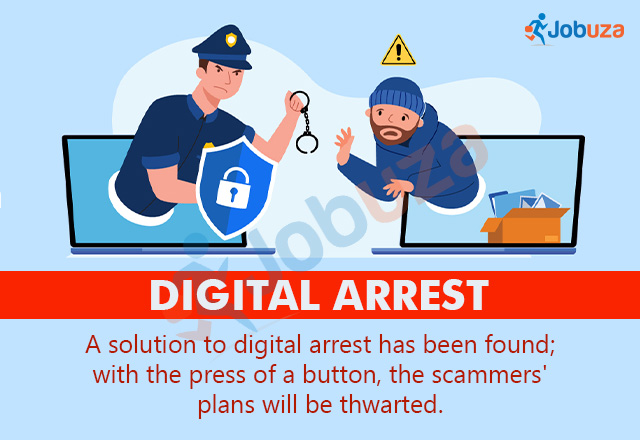
Digital arrest scams are increasing rapidly in India, and the government is now working on new ways to stop them. The Ministry of Home Affairs has formed a high-level committee to find practical solutions that can protect people from such online fraud.
One major idea suggested by the committee is a “kill switch” feature. This would allow people to immediately stop suspicious financial activity with just one button if they feel they are being targeted by a scam.
What Is the Kill Switch?
The kill switch would act like an emergency safety button. If someone believes they are dealing with a fraudster, they can press this button to instantly stop all transactions from their accounts.
Once activated, no money can be transferred, and accounts may be temporarily frozen. This can help prevent scammers from stealing funds while the issue is being checked.
Compensation for Victims May Be Introduced
The committee has also discussed ways to reduce financial losses for victims. A system could be introduced to compensate people who lose money in digital fraud cases.
This may include special insurance-type products that cover losses caused by online scams. The goal is to make digital transactions safer and improve trust in the system.
How the Emergency Button Could Work
Experts are considering adding this emergency button to digital payment apps. This means users could have the feature directly inside the apps they already use for transactions.
If someone senses fraud, they can press the button, and all linked accounts would immediately stop processing transactions. This quick action could reduce damage during scam attempts.
Steps to Recover Stolen Money
The committee is also looking at ways to identify suspicious transactions faster. If fraud is detected early, it may be possible to stop stolen money from being moved across multiple accounts, which often makes recovery difficult.
Authorities are exploring systems that can track and block such movements to improve the chances of getting money back.
What Are Digital Arrest Scams?
In digital arrest scams, fraudsters contact people through video calls and pretend to be police officers or government officials. They claim the victim is involved in a serious crime and create panic.
Using leaked personal information, fake ID cards, and false documents, scammers pressure victims into sending large amounts of money to “clear” their name.
The government’s new safety measures aim to stop these scams quickly and protect people from falling victim to such threats.
Disclaimer: This article has been adapted for clarity and readability based on publicly reported information. Original reporting credit belongs to its respective source.

by Jobuza Team | Jan 30, 2026 | BLOG, Trending News
The Ministry of Labour and Employment is planning to implement the four new Labour Codes from April 1. This date matches the start of the new financial year, which makes it easier for companies to adjust their salary structures and financial planning.
The main concern is the possible increase in Provident Fund (PF) and gratuity costs due to changes in how wages are calculated under the new system.
Why the Government Prefers an April Rollout
The draft rules for the Labour Codes are likely to be finalized by mid-February. However, many industry groups have asked the government to delay implementation.
February and March are the last months of the financial year. Introducing major salary and compliance changes during this period could create accounting and budgeting problems for companies.
Starting from April 1 gives businesses a fresh financial year to make adjustments smoothly.
The Four Labour Codes Covered
The rollout includes these four major labour laws:
Draft rules for these Codes were issued on December 31, and the government asked stakeholders to send suggestions within 30 to 45 days.
The Labour Codes were passed earlier, but they can only come into effect after the final rules are officially notified.
How Salary Structure Changes May Affect PF and Gratuity
One of the biggest changes is the new definition of wages.
Under the new rules, allowances cannot be more than 50 percent of total salary. This means a larger part of an employee’s salary will be counted as “wages.”
Because PF and gratuity are calculated on wages, this could lead to:
-
Higher PF contributions from both employers and employees
-
Higher gratuity payments in the long term
-
Possible changes in take-home salary
This is one reason companies want the new rules to begin from April, when annual salary revisions usually happen.
Possible Benefits for Gig and Platform Workers
The government is also reviewing social security rules for gig and platform workers.
Right now, a worker must complete:
Officials are considering reducing this requirement so more gig workers can qualify for benefits like health insurance, life cover, and accident insurance.
SPREE Scheme Brings More Workers Into Social Security
The government also shared updates about the SPREE scheme. This scheme helps employers and employees register under the Employees’ State Insurance (ESI) system without penalties.
So far, the scheme has added:
The scheme is active from July 1, 2025 to January 31, 2026. It gives previously unregistered workers a chance to join the social security system without facing old dues or legal action.
EPFO Gives More Flexibility for PF Withdrawals
The government has also introduced changes in EPFO rules. PF members can now withdraw up to 75 percent of their PF balance, while keeping at least 25 percent saved for retirement.
This step is meant to help workers during financial emergencies while still protecting long-term savings.
What Employees and Employers Should Expect
If the Labour Codes start from April 1:
-
Companies may revise salary structures
-
PF and gratuity contributions could increase
-
Payroll systems may need updates
-
Employees might see small changes in take-home pay
In the long run, the new Labour Codes aim to simplify labour laws and expand social security coverage across India.
April 1 is being seen as the most practical date to begin these changes without disrupting the current financial year.

by Jobuza Team | Jan 29, 2026 | BLOG, Trending News
Gold is not just an investment in India. It is tradition, security, and family legacy. Many families prefer to keep gold jewellery and coins at home, but a common question arises — is it legal, and are there limits?
Here is a clear and simple guide to help you understand the rules.
Is It Legal to Store Gold at Home in India?
Yes, it is completely legal to store gold at home in India.
There is no fixed legal limit on how much gold you can own, as long as you can explain where it came from. Gold purchased from declared income, received as a gift, or inherited from family is allowed.
The issue only arises if tax authorities question the source of the gold and you are unable to provide a reasonable explanation.
Income Tax Rules on Gold Held at Home
The Income Tax Department does not restrict ownership, but during a tax raid, certain quantities of gold jewellery are treated as non-seizable, even if you do not have purchase proof.
As per CBDT guidelines:
Gold within these limits is generally not seized during a search. However, officers may still ask about the source, especially if the overall financial profile does not match the assets.
If you hold gold above these limits and cannot explain how you acquired it, the excess quantity may be seized or taxed.
Do You Need Purchase Receipts for Gold?
It is always better to keep receipts, but not having them does not automatically make your gold illegal.
Receipts are useful when gold is purchased from:
-
Jewellers
-
Banks
-
Online gold platforms
If you do not have receipts, you should at least be able to explain the source through other supporting documents.
Rules for Inherited Gold
Gold passed down through family is very common in India. In such cases, you should try to maintain some record of inheritance.
Helpful documents include:
-
A will mentioning gold assets
-
A family settlement document
-
An affidavit stating inheritance details
-
Old wealth tax returns (if available)
Even photos, family records, or proof that elders owned gold can support your claim if needed.
Rules for Gold Received as Gifts
Gold received during weddings, festivals, or family occasions is allowed. However, large gifts should ideally be documented.
You can maintain:
-
A gift deed from the person giving the gold
-
Wedding cards or photos showing customary gifting
-
A written family declaration for clarity
Gifts from close relatives are generally not taxed, but documentation helps avoid future trouble.
What Happens If Gold Is Unaccounted?
If you are found with a large amount of gold and cannot explain its source, tax authorities may:
-
Seize the gold temporarily
-
Issue a notice asking for explanation
-
Treat it as undisclosed income
In such cases, heavy tax and penalties can apply under income tax laws. This is why maintaining a basic paper trail is very important.
Is There a Limit on Buying Gold?
There is no upper limit on how much gold you can buy. However, certain transaction rules apply:
-
PAN is required for high-value purchases
-
Large cash transactions can attract scrutiny
-
Always insist on a proper invoice in your name
Buying gold through banking channels or digital payments creates a clear legal record.
Safer Alternatives to Storing Gold at Home
If you are uncomfortable keeping large quantities of gold at home, you can consider safer legal options.
Bank Lockers
You can store jewellery and coins in a bank locker for better security. Access is controlled, and lockers can only be inspected by authorities through proper legal procedure.
Digital Gold
Digital gold allows you to buy gold online, backed by physical gold stored in secure vaults. Transactions are recorded, making it easy to prove ownership.
Sovereign Gold Bonds (SGBs)
Issued by the Reserve Bank of India, SGBs are one of the safest ways to invest in gold. You earn interest and avoid storage risks.
Practical Situations Many Families Face
No documents for ancestral gold
You can prepare a notarized affidavit explaining the inheritance and keep any supporting family proof.
Gold gifted during a wedding
Maintain a simple written note from the giver and keep wedding-related proof.
Old gold bought years ago without bills
Try to maintain a written record of approximate purchase time and source of funds. Bank withdrawal history or family declarations can help.
How to Safely and Legally Store Gold at Home
-
Keep all gold purchase bills in a safe physical and digital folder
-
Maintain a simple record of which family member owns what
-
Avoid large cash purchases for new gold
-
Consider insurance for high-value jewellery
-
Consult a Chartered Accountant if your family owns significant gold assets
Gold Is Emotional, But Documentation Is Practical
For Indians, gold carries memories and traditions. But in legal and tax matters, emotions do not replace documentation.
Storing gold at home is legal. Owning large amounts is also legal. The key is being able to explain the source clearly if ever required.

by Jobuza Team | Jan 28, 2026 | BLOG, Latest Jobs
The Rajasthan Staff Selection Board (RSSB) has officially announced the Clerk Grade II and Junior Assistant Recruitment 2026, creating a huge opportunity for candidates looking for a secure government job. A total of 10,644 vacancies will be filled across different Rajasthan state departments.
This recruitment is especially attractive for young candidates, as the minimum qualification is Class 12 pass with basic computer knowledge. The online application process starts on January 15, 2026, and will remain open until February 13, 2026.
With a transparent selection process and a large number of openings, lakhs of aspirants from Rajasthan and other states are expected to apply.
RSSB Vacancy Details 2026
RSSB has divided the total vacancies into two categories:
-
Non-TSP Area Posts: 9,642
-
TSP (Tribal Sub-Plan) Area Posts: 1,002
Reservation for SC, ST, OBC, EWS, women, and other eligible categories will be provided according to Rajasthan government rules.
The selected candidates will work in clerical roles in government offices. Daily responsibilities may include maintaining files, data entry, preparing basic reports, and assisting senior officials in routine administrative work.
Important Dates for RSSB Recruitment 2026
Candidates should keep track of the following key dates:
-
Online application start date: January 15, 2026
-
Last date to apply online: February 13, 2026
-
Last date for fee payment: February 13, 2026
-
Application correction window: Until February 16, 2026
-
Expected written exam dates: July 5 and 6, 2026
-
Admit card release: A few days before the exam
Eligibility Criteria for Clerk and Junior Assistant Posts
Educational Qualification
Applicants must have passed Class 12 from a recognised board. In addition, they must have basic computer knowledge proven through one of the following:
Candidates must also have knowledge of Hindi in Devanagari script and a basic understanding of Rajasthan’s culture.
Age Limit
How to Apply for RSSB Clerk Grade II and Junior Assistant Recruitment 2026
The application process is completely online. Follow these steps carefully:
-
Visit the Rajasthan SSO portal.
-
Log in using your SSO ID and password. If you don’t have one, create a new SSO ID first.
-
After login, go to the recruitment section.
-
Click on RSSB Clerk Grade II / Junior Assistant Recruitment 2026.
-
Fill in all the required details carefully.
-
Upload your photograph and signature in the prescribed format.
-
Pay the application fee through the available online payment options.
-
Review all the information and submit the form.
-
Download and save a copy of the application form for future reference.

by Jobuza Team | Jan 28, 2026 | BLOG, Trending News
1. Check if you are required to file an ITR
You must file an Income Tax Return if your income crosses the basic exemption limit set by the government. Apart from income, there are other conditions where filing becomes mandatory. For example, if you own assets in India or abroad, invest in shares or ESOPs, or have large financial transactions, you may need to file an ITR even if your taxable income is low.
Filing is also required if your total bank deposits are more than ₹50 lakh, your savings or current account balance exceeds ₹1 crore, your annual electricity bill is above ₹1 lakh, or you spend more than ₹2 lakh on foreign travel in a year. Business owners must also file if their annual sales exceed ₹60 lakh, even when profits are lower.
2. Understand how your taxable income is calculated
Your taxable income is not just your salary. It includes all sources of income such as salary, interest from bank deposits, rental income, and returns from investments. From this total income, you can subtract eligible deductions to reduce your tax burden.
Common deductions include contributions to PPF or NPS, life and health insurance premiums, home loan interest, and house rent payments if you qualify for HRA or other benefits. Knowing your deductions helps you avoid paying more tax than necessary.
3. Choose between the old and new tax regime
The government offers two tax regimes. The new tax regime has lower tax rates but removes most deductions and exemptions. The old tax regime has higher tax rates but allows you to claim several deductions.
You should compare both options before filing. In many cases, people with home loans, insurance, and investment deductions may benefit more from the old regime. Those without many deductions may find the new regime simpler and cheaper.
4. Do not miss the filing deadline
Filing your ITR on time is very important. To avoid penalties, you should file by the due date, which is usually in July or September depending on government notifications for that year. If you miss the deadline, you can still file a belated return, but you may have to pay a late fee ranging from ₹1,000 to ₹10,000 based on your income and the delay.
Late filing can also delay your tax refund and may create issues when applying for loans or visas.
5. Keep all important documents ready
Before starting your ITR, collect all necessary documents. These usually include Form 16 from your employer, your PAN and Aadhaar (which must be linked), and proof of tax-saving investments such as PPF, insurance, or fixed deposits.
If you have a home loan, keep the interest certificate ready. Also gather any receipts related to deductions you plan to claim. Having these documents in one place makes filing faster and reduces errors.
6. Understand what Form 16 tells you
Form 16 is issued by your employer and works like a summary of your salary and taxes. It shows your total salary, exemptions, deductions, and the tax already deducted and deposited with the government.
This document is very important because most of the salary details in your ITR come directly from Form 16. Always cross-check the numbers before submitting your return.
7. Review your Form 26AS carefully
Form 26AS is a tax passbook that shows all the tax deducted on your income. It includes TDS from salary, bank interest, and other payments. It also shows advance tax and self-assessment tax, if any.
You should compare Form 26AS with your income details to make sure there are no mismatches. Any difference can delay your refund or lead to notices from the tax department.
8. Check your Annual Information Statement (AIS)
The Annual Information Statement gives a detailed record of your financial activities. It may include savings account interest, dividends, share transactions, mutual fund investments, and foreign remittances.
Since the ITR form is often pre-filled using AIS data, you should review it carefully and correct any incorrect entries before filing.
9. Complete e-verification after filing
Submitting the ITR form is not the final step. You must e-verify your return within 30 days, otherwise it will be treated as invalid. E-verification confirms that the return was filed by you.
You can verify using Aadhaar OTP, net banking, or an Electronic Verification Code (EVC). This step is essential for your return to be processed and for any refund to be issued.
10. Select the correct ITR form
Choosing the right ITR form is crucial. ITR-1 is for individuals with income from salary, one house property, and other sources like interest. ITR-2 is for individuals and HUFs without business income. ITR-3 is for those with business or professional income. ITR-4 is meant for taxpayers opting for the presumptive taxation scheme.
Using the wrong form can lead to rejection of your return, so always check carefully before filing.
Filing your Income Tax Return on time not only helps you avoid penalties but also builds a strong financial record. A clean tax history is useful when applying for loans, credit cards, or visas. If you feel unsure in your first year, taking help from a tax professional can make the process smooth and stress-free.
by Jobuza Team | Jan 27, 2026 | BLOG, Latest Jobs
The Employees’ State Insurance Corporation (ESIC) has announced recruitment for 225 Insurance Medical Officer (IMO) Grade II posts. This is a good opportunity for MBBS doctors who want to work in government medical services under ESIC.
The application process is offline, and interested candidates must submit their forms before February 17, 2026.
Recruitment Overview
Organization: Employees’ State Insurance Corporation (ESIC)
Post Name: Insurance Medical Officer (IMO) Grade II
Total Vacancies: 225
Notification Date: January 20, 2026
Application Start Date: January 20, 2026
Last Date to Apply: February 17, 2026
Application Mode: Offline (Speed Post or Registered Post)
Selection Basis: UPSC CMSE 2024 Merit List
Exam or Interview by ESIC: No
Official Website: esic.gov.in
Who Can Apply
Educational Qualification
Candidates must have an MBBS degree from a recognized institution. They must also have completed their mandatory rotating internship.
Age Limit
The maximum age is 35 years as of August 1, 2024. Age relaxation is available for reserved categories as per government rules.
Salary and Benefits
Selected candidates will be placed under Pay Level 10 of the 7th Pay Commission.
Basic Pay: ₹56,100 to ₹1,77,500 per month
Other benefits include:
-
Non-Practicing Allowance (NPA)
-
Dearness Allowance (DA)
-
House Rent Allowance (HRA)
-
Travel Allowance (TA)
-
Other government benefits
Vacancy Distribution
The 225 posts are divided by category:
Unreserved (UR): 63
Scheduled Caste (SC): 64
Scheduled Tribe (ST): 43
Other Backward Classes (OBC): 33
Economically Weaker Section (EWS): 22
All posts are for Insurance Medical Officer Grade II in ESIC hospitals and dispensaries.
Selection Process
There will be no separate exam or interview by ESIC.
Selection will be based only on the UPSC Combined Medical Services Examination (CMSE) 2024 merit list.
Shortlisted candidates will go through:
Final selection depends on meeting all eligibility and medical standards.
How to Apply
Applications must be sent by Speed Post or Registered Post to:
Joint Director (Recruitment)
ESI Corporation
Panchdeep Bhawan, CIG Marg
New Delhi – 110002
Documents to Attach
Candidates must include:
-
Passport-size photograph
-
Birth certificate
-
MBBS degree and mark sheets
-
Internship completion certificate
-
Category certificate (if applicable)
-
UPSC CMSE 2024 roll number and marks
-
Consent letter to share UPSC marks
Incomplete applications may be rejected.
Important Instructions
Candidates should read the official notification carefully before applying. Make sure all documents are correct and attached properly. Keep a copy of the application form for future use.
For updates and official notices, regularly visit esic.gov.in.