by Jobuza Team | Jan 22, 2026 | BLOG, Latest Jobs
Candidates planning to apply for the OPSC OCS Preliminary Examination 2026 must carefully check the eligibility criteria before filling out the application form. The basic requirement is that the applicant must be a Graduate from a recognised university in India.
The Odisha Public Service Commission (OPSC) conducts the Odisha Civil Services (OCS) Examination every year to recruit eligible candidates for Group A and Group B posts in various state government departments of Odisha. Since this is a highly competitive and prestigious examination, meeting all eligibility conditions is mandatory.
OPSC OCS 2026 Overview
OPSC has released the official notification for the Odisha Civil Services Examination 2026, inviting applications from eligible candidates for administrative positions. Aspirants are advised to read the complete notification carefully to understand all eligibility requirements, including age limit, educational qualification, language proficiency, and nationality.
The OCS exam recruits candidates for the following services:
-
Odisha Administrative Service (OAS)
-
Odisha Police Service (OPS)
-
Odisha Revenue Service
-
Odisha Taxation & Accounts Service
-
Odisha Labour Service
-
Odisha Excise Service
-
Odisha Cooperative Service
-
Odisha Skill Development & Employment Service
-
Odisha Welfare Service
-
Odisha Transport Service
-
Odisha Tourism Service
OPSC OCS Age Limit 2026
To be eligible for the OPSC OCS Examination 2026, a candidate must:
The age is calculated as on 1st January 2025.
This means the candidate must not have been born earlier than 2nd January 1983 and not later than 1st January 2004.
OPSC OCS Age Relaxation
Relaxation in the upper age limit is provided to reserved category candidates as per government rules.
| Category |
Age Relaxation |
| SC / ST / SEBC |
5 years |
| Women |
5 years |
| Ex-Servicemen |
5 years (based on service period) |
| Persons with Disabilities (PwBD) |
10 years |
| PwBD (SC / ST / SEBC) |
15 years (combined) |
OPSC OCS Educational Qualification
According to the official notification, candidates must possess a Bachelor’s Degree from:
-
Any University established by an Act of the Central or State Legislature in India, or
-
An Educational Institution established by an Act of Parliament, or
-
A University deemed under Section 3 of the UGC Act, 1956, or
-
A Foreign University approved by the Central Government
Candidates appearing in the final year of their degree may apply, provided they produce proof of qualification at the time of document verification.
Odia Language Proficiency
Knowledge of the Odia language is mandatory. Candidates must be able to read, write, and speak Odia and must have fulfilled at least one of the following conditions:
-
Passed the Middle School Examination with Odia as a language subject, or
-
Passed High School Certificate or equivalent examination with Odia as the medium of instruction in non-language subjects, or
-
Passed Odia as a language subject in Class VII final examination from a recognised school, or
-
Passed a Middle English School standard Odia test conducted by the School & Mass Education Department of the Government of Odisha
OPSC OCS Nationality
To be eligible for the OPSC OCS Examination 2026:
by Jobuza Team | Jan 21, 2026 | BLOG, Trending News
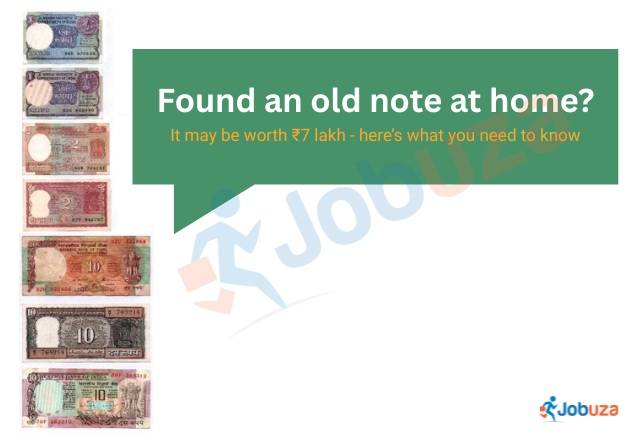
Old currency notes and coins are no longer just reminders of the past. For many collectors, they have turned into valuable assets. In India, interest in rare currency is growing rapidly, and certain old banknotes are now selling for lakhs of rupees.
If you have an old currency note from the pre-independence period lying at home, it may be worth far more than its face value.
The British-Era 1-Rupee Note Creating Buzz
One of the most talked-about rare notes among collectors is the 1-rupee banknote from the British era. Issued around 1935, this note carries the signature of J.W. Kelly, who served as the Governor during that period.
Being nearly 90 years old, this note is considered extremely rare. In recent years, collectors have shown strong interest in owning it, pushing its market value as high as ₹7 lakh in some cases, especially when the note is in excellent condition.
What Makes This 1-Rupee Note So Valuable?
This banknote is not just old; it represents an important phase of India’s financial history. Several factors contribute to its high value among collectors:
-
Historical importance from the British era
-
Limited number of notes still in circulation
-
Signature of the then Governor
-
High demand among currency collectors
-
Well-preserved condition without cuts, stains, or damage
Only notes that are clean, intact, and original fetch premium prices. Any tear, discoloration, or missing part can significantly reduce the value.
Where Are Old Notes and Coins Sold Online?
With the rise of digital platforms, collectors now often buy and sell rare currency online. Websites such as Coin Bazaar and Quikr are commonly used for listing and auctioning old notes and coins.
However, it is important to note that the Reserve Bank of India (RBI) does not officially permit the buying or selling of old banknotes and coins as collectibles. Such transactions are carried out at the buyer’s and seller’s own risk, and individuals should exercise caution.
Why Does a 1-Rupee Note Sell for Lakhs?
The key reason behind the high price is rarity. The 1-rupee note has been discontinued multiple times over the years. As time passed, fewer notes survived in good condition, making them harder to find.
Pre-independence currency notes are especially valuable because they are closely linked to India’s colonial history, making them highly desirable among serious collectors.
A Brief History of the 1-Rupee Note in India
The 1-rupee note was first introduced in 1917, featuring King George V. Its printing was stopped in 1926, then restarted in 1940, and later discontinued again in 1994.
After a gap of nearly two decades, the note was reintroduced in 2015.
One unique feature of the older versions of the 1-rupee note is that they carry the inscription “Government of India” instead of “Reserve Bank of India.” This is because the note was originally issued before the RBI was established in 1935.
Should You Check Old Notes Stored at Home?
If you come across a British-era 1-rupee note while cleaning old documents or family belongings, it could be a rare collector’s item. With proper authentication and good condition, such notes may be worth lakhs of rupees.
Before discarding old currency, it is worth taking a closer look—you might be holding a valuable piece of history.

by Jobuza Team | Jan 21, 2026 | BLOG, Trending News
PF and Investment Details: If you often find yourself switching between multiple apps and statements every month to track your bank balance, stock market investments, provident fund, and insurance policies, there is good news on the way. Soon, all your financial information could be available in one single consolidated statement.
India’s financial regulators are working on a system that aims to give individuals a complete view of their savings and investments in one place, making personal finance tracking simpler and more transparent.
No More Managing Multiple Financial Statements
At present, individuals need to log in separately to banking apps, mutual fund platforms, insurance portals, and PF websites to understand their financial position. On top of that, banks, mutual funds, and insurance companies send separate monthly or annual statements.
This scattered approach often makes it difficult to understand one’s overall wealth and financial health.
The proposed system aims to change this by offering a single monthly snapshot of a person’s entire financial portfolio, instead of multiple reports from different institutions.
Financial Regulators Are Working Together
The initiative is being led by the Securities and Exchange Board of India (SEBI). To make the system effective, SEBI is coordinating with other major financial regulators, including:
-
Reserve Bank of India (RBI)
-
Insurance Regulatory and Development Authority of India (IRDAI)
-
Pension Fund Regulatory and Development Authority (PFRDA)
The objective is to bring the entire banking, financial services, and insurance ecosystem under a common reporting framework.
Expansion of the Consolidated Account Statement (CAS)
Currently, investors already receive a Consolidated Account Statement (CAS) for their stock market and mutual fund investments. This statement typically includes:
However, the scope of the CAS is limited. Regulators are now planning to expand it so that it reflects an individual’s complete financial picture, not just market investments.
What Financial Details May Be Included
As per ongoing discussions, the expanded consolidated statement could include:
-
Bank account balances
-
Small savings scheme details
-
Insurance policy information
-
Bond investments
-
Provident Fund (PF) savings
-
National Pension System (NPS) accounts
With PFRDA’s involvement, pension-related information may also become part of the same statement.
How This Will Benefit Individuals
Once implemented, this system could help individuals:
-
Track all savings and investments from one place
-
Get a clearer understanding of their overall financial health
-
Reduce reliance on multiple apps and paper statements
-
Make better and more informed financial planning decisions
The Bigger Picture
PF and Investment Details: By bringing banking, insurance, pension, and market investments together under a single consolidated view, regulators aim to simplify financial management for millions of Indians. Although the system is still under discussion, it represents a major step toward greater transparency, convenience, and efficiency in personal finance tracking.
If implemented successfully, managing money in India could soon become far more organized and stress-free.
by Jobuza Team | Jan 21, 2026 | BLOG, Latest Jobs, Technical/IT Jobs
The National Institute of Technology Silchar (NIT Silchar) has announced a recruitment notification for 01 Junior Research Fellow (JRF) post. This opportunity is open for candidates holding a Post Graduate Degree (M.Sc or equivalent). Interested and eligible candidates can apply offline via email from 13 January 2026 to 30 January 2026 through the official website nits.ac.in.
This recruitment is for a DST-sponsored research project under the Department of Mechanical Engineering, NIT Silchar. Candidates selected for the JRF position will receive a monthly stipend of up to Rs. 42,000 based on project tenure.
NIT Silchar JRF Recruitment 2026 Overview
Organization Name: National Institute of Technology Silchar
Post Name: Junior Research Fellow (JRF)
Number of Posts: 01
Project Duration: Up to 3 Years
Salary:
-
Rs. 37,000 per month (First two years as JRF)
-
Rs. 42,000 per month (Afterward as SRF)
Qualification Required: Post Graduate Degree
Age Limit: Maximum 35 Years
Advertisement Number: NITS/Dean(R&C)/ME/686/01/2026
Last Date to Apply: 30 January 2026
Official Website: www.nits.ac.in
NIT Silchar JRF Vacancy Details
Post Name
Junior Research Fellow (JRF)
Number of Vacancies
01 (One)
Tenure
Three years or completion of the project, whichever is earlier. Extension is subject to performance review every 12 months.
Eligibility Criteria for NIT Silchar JRF 2026
Project Title
Automation scope in fabricating biodegradable super-hydrophobic composite using banana pseudostem fiber and beeswax for sustainable packaging applications.
Essential Qualification
Candidates must have:
-
A Post Graduate Degree in Basic Science
OR
-
Graduate/Post Graduate Degree in a Professional Course selected through National Eligibility Tests such as CSIR-UGC NET, GATE, or other national-level examinations conducted by DST, DRDO, IISc, IIT, IISER, etc., as per Government of India guidelines dated 26 June 2023.
Desirable Qualification
Specialization or background in Mechanical Engineering will be preferred.
Principal Investigator
Dr. Simanchal Kar
Assistant Professor, Department of Mechanical Engineering
National Institute of Technology Silchar, Assam
Salary Structure
-
Rs. 37,000 per month for the first two years as Junior Research Fellow (JRF)
-
Rs. 42,000 per month after two years as Senior Research Fellow (SRF)
Age Limit
-
Maximum age limit is 35 years
-
Age relaxation is applicable for SC, ST, OBC, Women, PWD, and EWS candidates as per Government of India rules
Important Dates
Date of Notification: 13 January 2026
Last Date to Submit Application: 30 January 2026 (till 24:00 hrs)
Selection Process
-
Shortlisted candidates will be informed about the interview date and mode (online or offline) via email
-
The institute may limit the number of candidates called for interview based on screening
-
NIT Silchar reserves the right not to recruit any candidate if suitable candidates are not found
-
Selected candidates must sign an agreement at the time of joining
General Instructions
-
The position is temporary and purely project-based
-
The project involves significant field work, so candidates should apply only if they are comfortable with it
-
Employed candidates must submit a No Objection Certificate (NOC) from their employer at the time of interview
-
Reservation and relaxation rules will be followed as per Government of India norms
How to Apply for NIT Silchar JRF Recruitment 2026
Eligible candidates must submit the following documents:
All documents should be sent as scanned copies via email to:
Email ID: simanchal@mech.nits.ac.in
Email Subject Line:
Application for the post of JRF under the SERB-DST project
The application must be submitted on or before 30 January 2026.
by Jobuza Team | Jan 20, 2026 | Bank Jobs, BLOG, Latest Jobs
The Bank of Maharashtra has announced Apprentice Recruitment 2026 for fresh graduates. This recruitment drive offers 600 apprentice vacancies under the Apprenticeship Act, 1961.
The programme is designed for candidates who want practical exposure to banking work. Selected apprentices will learn about branch operations, customer service, and day-to-day banking activities during the training period.
Bank of Maharashtra Apprentice Recruitment 2026: Important Dates
Candidates should note the key dates before applying.
Notification Release Date: January 13, 2026
Application Start Date: January 15, 2026
Last Date to Apply Online: January 25, 2026
Applications must be submitted online before the closing date.
Eligibility Criteria for Bank of Maharashtra Apprentice Posts
Candidates must meet the following eligibility conditions.
Educational Qualification
Applicants should have a Bachelor’s degree in any discipline from a recognised university.
Age Limit
The candidate’s age should be between 20 and 28 years.
Age relaxation will be given to reserved category candidates as per government rules.
Local Language Requirement
Candidates must be able to read, write, and speak the local language of the state where they will be posted.
Selection Process for Maharashtra Bank Apprentices
The selection process is merit-based. There will be no written exam or interview.
Candidates will be shortlisted based on their academic performance. Final selection will be done after document verification.
Training Period and Monthly Stipend
Selected candidates will undergo one year of apprenticeship training.
Stipend: Around ₹9,000 per month
Training Areas: Customer service, account handling, branch operations, and basic banking functions
How to Apply for Bank of Maharashtra Apprentice Recruitment 2026
Follow the steps below to apply online.
-
Visit the official website of the Bank of Maharashtra at bankofmaharashtra.bank.in
-
Go to the “Career” or “Recruitment” section
-
Click on the “Apprentice Recruitment 2026” notification
-
Register using your personal details
-
Fill in educational information
-
Upload the required documents
-
Pay the application fee, if applicable
-
Submit the application form
-
Save or print the confirmation page
Application Fee Details
The application fee is non-refundable.
UR / EWS / OBC: ₹150 + GST
SC / ST: ₹100 + GST
PwBD: No fee
Important Note
Candidates are advised to regularly check the official Bank of Maharashtra website for updates related to the recruitment process.
by Jobuza Team | Jan 20, 2026 | Bank Jobs, BLOG, Latest Jobs
RBI Office Attendant Vacancy 2026: 572 Posts for 10th Pass Candidates
The Reserve Bank of India (RBI) has released the official notification for RBI Office Attendant Recruitment 2026 under Panel Year 2025. A total of 572 vacancies have been announced for the post of Office Attendant.
This recruitment is a good opportunity for candidates who have passed Class 10 and want a secure government job in the banking sector. The online application process has started, and eligible candidates can apply through the official website rbi.org.in. The last date to submit the application form is February 4, 2026.
RBI Office Attendant Application Form 2026: Important Dates
Candidates must complete the application and fee payment before the deadline.
Online Application Start Date: January 15, 2026
Last Date to Apply Online: February 4, 2026
Last Date for Fee Payment: February 4, 2026
Tentative Exam Dates: February 28 and March 1, 2026
Applicants should regularly check the RBI website for any updates related to the recruitment process.
RBI Office Attendant Recruitment 2026: Overview
Recruitment Name: RBI Office Attendant Recruitment 2026 (Panel Year 2025)
Post Name: Office Attendant
Total Vacancies: 572
Educational Qualification: 10th Pass
Age Limit: 18 to 25 years
Exam Mode: Online
Salary: Rs. 46,029 per month (without HRA)
RBI Office Attendant Salary 2026
Candidates selected for the Office Attendant post will receive an initial basic pay of Rs. 24,250 per month. The pay scale is as follows:
Rs. 24250 – 840 (4) – 27610 – 980 (3) – 30550 – 1200 (3) – 34150 – 1620 (2) – 37390 – 1990 (4) – 45350 – 2700 (2) – 50750 – 2800 (1) – 53550
At present, the gross monthly salary (without HRA) is around Rs. 46,029. If a candidate does not stay in bank-provided accommodation, they will also receive House Rent Allowance (HRA) at 15% of the salary.
RBI Office Attendant Eligibility Criteria 2026
Candidates must meet the following eligibility conditions before applying.
Educational Qualification
The applicant must have passed Class 10 (Matriculation) from a recognized board.
Candidates with graduation or higher qualifications are not eligible for this recruitment.
Age Limit
Minimum Age: 18 years
Maximum Age: 25 years
Age will be calculated as of January 1, 2026. Age relaxation will be provided to reserved category candidates as per government rules.
Language Requirement
Candidates must know how to read, write, speak, and understand the local language of the state or region they are applying for.
RBI Office Attendant Selection Process 2026
The selection process includes two stages.
Online Examination
The online exam will be conducted for 90 minutes and will include the following sections:
Reasoning Ability: 30 Questions, 30 Marks
General English: 30 Questions, 30 Marks
General Awareness: 30 Questions, 30 Marks
Numerical Ability: 30 Questions, 30 Marks
Language Proficiency Test (LPT)
Candidates who qualify for the online exam will be called for the Language Proficiency Test. This test is only qualifying in nature.
RBI Office Attendant Application Fee 2026
SC / ST / PwD / Ex-Servicemen: Rs. 50 + GST
General / OBC / EWS: Rs. 450 + GST
The application fee must be paid online before the last date.
How to Apply for RBI Office Attendant Recruitment 2026
Candidates can apply online by following these steps:
-
Visit the official website rbi.org.in
-
Click on “Recruitment for the Post of Office Attendant – Panel Year 2025”
-
Register using your basic details
-
Upload the required documents
-
Pay the application fee
-
Submit the application form and download a copy
Important Note
Candidates should keep checking the official RBI website for information related to admit cards, exam dates, and results.