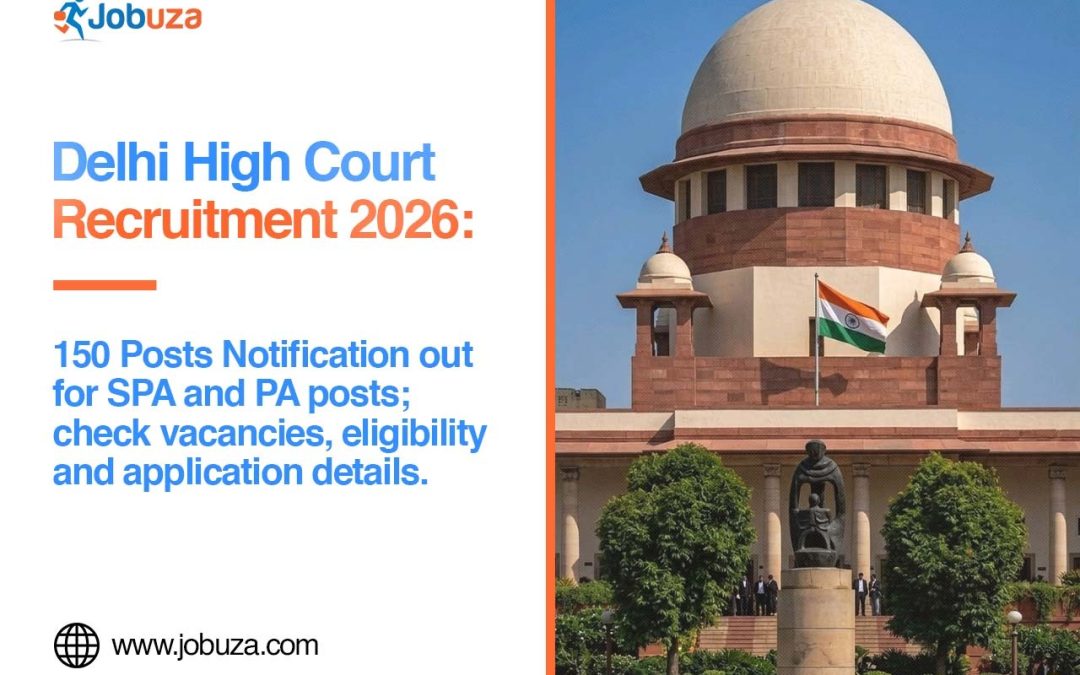
Delhi High Court Recruitment 2026: The High Court of Delhi has released the notification for the Senior Personal Assistant (SPA) and Personal Assistant (PA) Examination 2026. The recruitment drive aims to fill a total of 150 vacancies, including 117 Senior Personal Assistant posts and 33 Personal Assistant posts.
Eligible candidates can submit their applications online from September 15 to October 5, 2026 through the official Delhi High Court website. Candidates interested in these posts should check the eligibility criteria, age limit, application dates and selection process before applying.
Delhi High Court Recruitment 2026: Overview
Particulars
Details
Conducting Authority
High Court of Delhi
Examination
Senior Personal Assistant & Personal Assistant Examination 2026
Total Vacancies
150
Senior Personal Assistant
117
Personal Assistant
33
Application Mode
Online
Application Start Date
September 15, 2026
Last Date to Apply
October 5, 2026
Correction Window
October 12 to 14, 2026
Exam Date
To be announced
Official Website
delhihighcourt.nic.in
Delhi High Court Recruitment 2026 Notification PDF
The Delhi High Court has published the official notification for the SPA and PA Examination 2026. The notification contains important information related to vacancies, educational qualifications, age limit, application fee, selection process and other recruitment conditions.
Candidates should read the complete notification carefully before submitting their applications. The official vacancy circular is available on the Delhi High Court website.
Delhi High Court Recruitment 2026 Official Notification:Download PDF
Delhi High Court Vacancy 2026: Post-Wise Details
A total of 150 vacancies have been announced under the recruitment drive. Candidates can check the post-wise vacancy details below.
Post
Vacancies
Senior Personal Assistant
117
Personal Assistant
33
Total
150
The Senior Personal Assistant post is classified as Group B and comes under Level 8 of the 7th CPC Pay Matrix. The Personal Assistant post is also a Group B position and falls under Level 7.
Delhi High Court Recruitment 2026: Eligibility Criteria
Candidates applying for the SPA and PA posts must fulfil the educational and skill requirements mentioned in the official notification.
Educational Qualification
Senior Personal Assistant: Candidates must hold a graduation degree from a recognised university. They should also have an English shorthand speed of 110 words per minute and an English typing speed of 40 words per minute on a computer. Candidates should have working knowledge of computers.
Personal Assistant: Candidates must have a graduation degree from a recognised university, along with an English shorthand speed of 100 words per minute and an English typing speed of 40 words per minute on a computer.
The required educational qualification must be obtained by October 5, 2026.
Delhi High Court Recruitment 2026: Age Limit
The age limit for the recruitment will be calculated as of January 1, 2026.
Minimum age: 18 years
Maximum age: 32 years
Candidates belonging to eligible reserved categories will receive relaxation in the upper age limit as per the applicable government rules.
Applicants should check the official notification for category-wise age relaxation and other eligibility conditions.
Delhi High Court Recruitment 2026: Application Dates
The online application process will begin on September 15, 2026. Eligible candidates can submit their applications until October 5, 2026.
The correction window will be available from October 12 to October 14, 2026. Candidates should complete their applications well before the deadline to avoid last-minute technical issues.
The examination date has not been announced yet. Candidates should regularly check the official Delhi High Court website for further updates.
How to Apply for Delhi High Court Recruitment 2026?
Candidates can apply for the Senior Personal Assistant and Personal Assistant posts through the official Delhi High Court website.
The application process can be completed by following these steps:
Visit the official Delhi High Court website at delhihighcourt.nic.in.
Open the Recruitment section on the homepage.
Find the link for the Senior Personal Assistant (SPA) and Personal Assistant (PA) Examination 2026.
Complete the registration using the required details.
Log in and fill out the online application form.
Upload the required documents, including the photograph and signature.
Pay the applicable application fee through the available online payment method.
Check all the details entered in the application form carefully.
Submit the application form and save a copy for future reference.
Delhi High Court Recruitment 2026: Selection Process
The selection process for the Senior Personal Assistant and Personal Assistant posts will be conducted according to the stages prescribed by the Delhi High Court.
Candidates should refer to the official recruitment notification for complete details about the examination pattern, skill tests and other stages involved in the selection process.
The exam date is yet to be announced. Any further updates regarding the examination schedule will be published on the official website.
Delhi High Court Recruitment 2026: Important Points
Candidates should make sure they meet all the eligibility requirements before applying. In particular, applicants must have the required graduation qualification and shorthand and typing speeds for the respective post.
The application form should be submitted within the prescribed deadline, and candidates should retain the application form and payment receipt for future reference.
For the latest updates, candidates should visit the official Delhi High Court website and check the recruitment section regularly.
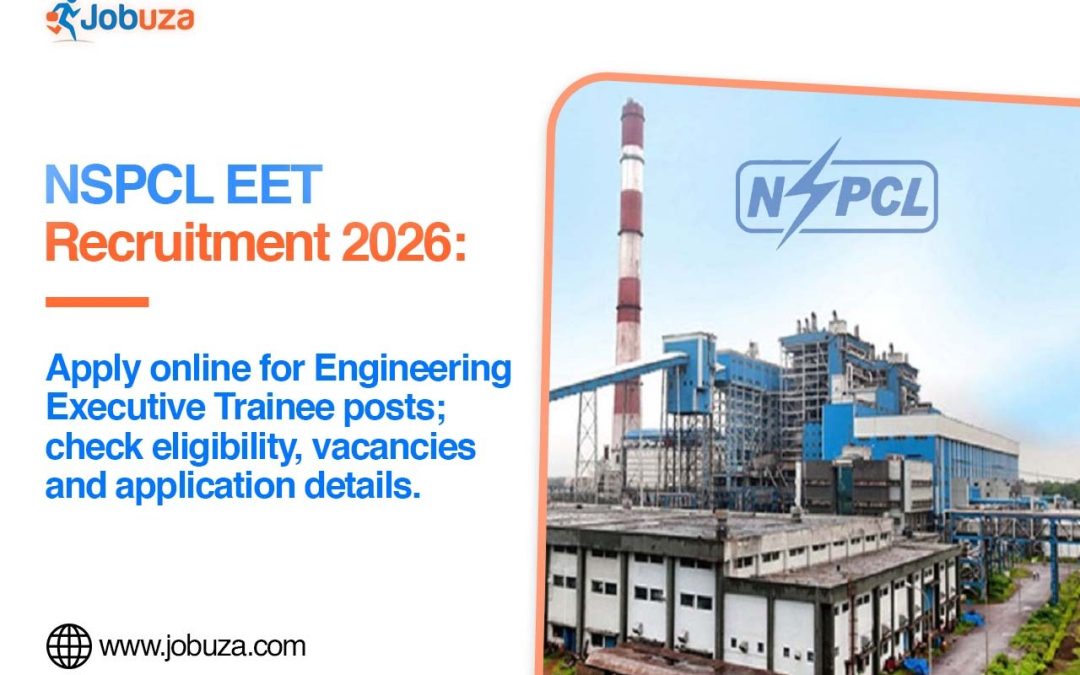
NSPCL EET Recruitment 2026: NTPC-SAIL Power Company Limited (NSPCL), a joint venture between NTPC Limited and Steel Authority of India Limited (SAIL), has released an indicative notification for the recruitment of Engineering Executive Trainees (EET)-2027.
The recruitment will be conducted through the GATE 2027 examination. Candidates from eligible engineering disciplines can apply for the EET-2027 recruitment after appearing for GATE 2027.
The indicative notification has been published in the Employment News for September 5-11, 2026. The recruitment will cover engineering disciplines including Mechanical, Electrical, Electronics and Instrumentation.
Candidates interested in the Engineering Executive Trainee recruitment should go through the official notification before applying. The notification contains important information about eligibility, disciplines, selection criteria and the recruitment process.
The EET-2027 recruitment will be linked to the GATE 2027 examination, and candidates should make sure that they meet the prescribed requirements for their respective engineering discipline.
The detailed notification and application-related information will be available through the careers section of the official NSPCL website.
NSPCL EET Recruitment 2026: Who Can Apply?
Candidates who want to be considered for the EET-2027 recruitment must appear for the Graduate Aptitude Test in Engineering (GATE) 2027 in the relevant engineering paper.
The eligible GATE papers include:
Mechanical Engineering (ME)
Electrical Engineering (EE)
Electronics and Communication Engineering (EC)
Instrumentation Engineering (IN)
Candidates should note that the shortlisting process will be based on their GATE 2027 performance. Marks obtained in previous GATE examinations or other examinations will not be considered for shortlisting.
NSPCL EET Recruitment 2026: Available Engineering Disciplines
The Engineering Executive Trainee positions will be offered in four engineering disciplines. Candidates must appear for the appropriate GATE paper related to the discipline for which they want to apply.
The disciplines are:
Mechanical Engineering (ME): Candidates with the relevant engineering qualification can apply through GATE Mechanical.
Electrical Engineering (EE): Candidates from the eligible Electrical Engineering stream can apply through GATE Electrical.
Electronics and Communication Engineering (EC): Candidates from the relevant Electronics and Communication Engineering discipline can apply through GATE EC.
Instrumentation Engineering (IN): Candidates with the required qualification in Instrumentation Engineering can apply through GATE IN.
NSPCL EET Recruitment 2026: Selection Process
The selection process for Engineering Executive Trainees will be based on GATE 2027 performance. Candidates will first need to appear for the GATE 2027 examination in the relevant engineering discipline.
Based on their GATE 2027 performance, eligible candidates will be shortlisted for the next stages of the NSPCL recruitment process.
Candidates should check the detailed NSPCL notification for complete information about the selection procedure and weightage applicable at each stage.
How to Apply for NSPCL EET Recruitment 2026?
The detailed application process and important dates will be announced by NSPCL through its official recruitment portal.
Candidates should regularly check the careers section of the NSPCL website for the opening of the online application process. Once applications begin, candidates will need to complete the registration, enter the required details and submit the application as per the instructions.
Before applying, candidates should keep their educational documents and GATE-related details ready to avoid errors during the application process.
NSPCL EET Recruitment 2026: Important Points
The recruitment is for Engineering Executive Trainees (EET)-2027 and will be linked to GATE 2027.
Candidates must appear for GATE 2027 in one of the specified engineering disciplines. NSPCL will consider GATE 2027 performance only for shortlisting, while scores from previous years will not be accepted.
Since the detailed recruitment advertisement will contain the final eligibility requirements and application schedule, candidates should read the official notification carefully before submitting their application.
NSPCL EET Recruitment 2026: Check Official Website
Candidates can find the latest notification, application details and other recruitment updates on the official NSPCL website.
The official website of NTPC-SAIL Power Company Limited is nspcl.co.in. Applicants are advised to rely on the official notification for the latest information regarding eligibility, application dates, selection process and other recruitment conditions.
AI isn’t just a tech-industry thing anymore. It’s crept into finance, healthcare, marketing, retail, customer service- basically every corner of the working world -as companies lean on it to speed up routine work and make quicker decisions.
If you’re on the job hunt, having some AI skills under your belt can genuinely set you apart. Below, we’ve rounded up some of the best AI courses covering practical, real-world territory that can make your resume more job-ready. One honest caveat up front, though: no course comes with a guaranteed job or a bigger paycheck attached.
Why AI Skills Matter for Job Seekers in 2026
You’ve already run into AI at work, even if your job has nothing to do with technology. It’s woven into content creation, data analysis, support work, research, and automation, and that list keeps growing.
That’s exactly why picking the right AI courses to complement whatever you already do well is worth the effort. A marketer who understands how these tools actually work suddenly brings something distinctive to the team, no coding required.
But there’s a real difference between holding a certificate and actually being able to use a skill. Employers care far more about what you can demonstrate than which course name shows up on your LinkedIn.
5 Best AI Courses to Take in 2026
1. Generative AI and Prompt Engineering
This is the obvious starting point for beginners. It usually covers how generative AI works, how to write prompts that actually get results, research, and content creation; no coding background needed, which makes it a good fit for marketing, education, or business-minded people.
2. Machine Learning Fundamentals
This one’s for anyone curious about what’s actually happening under the hood of the AI tools they use daily. These AI courses typically cover datasets, algorithms, models, and some basic Python groundwork if you’re aiming at a more technical machine learning, AI, or data career.
3. AI for Business and Marketing
This suits people who want to pair business instincts with AI skills, think customer research, campaign planning, content creation, and workflow optimization. It’s aimed at marketers, business grads, and entrepreneurs who want to layer AI on top of the business knowledge they already have.
4. Data Analytics With AI
These AI courses teach you to turn messy spreadsheets, dashboards, and big datasets into clear insights faster than doing it manually. Look for project-based courses here rather than pure theory; that’s where it actually sinks in.
5. AI Automation
This is about building workflows that quietly take over repetitive tasks like reporting, data entry, and routine communication handy for anyone in operations, business, or tech who’s tired of doing the same thing by hand every week.
How AI Courses Can Make Your Resume Stronger
A certificate helps, but it shouldn’t be the whole pitch. Employers want proof you can use what you learned, not just that you sat through a video series:
Only list certifications relevant to the specific job you’re applying for
Show real projects, not just a list of completed courses
Keep a GitHub profile if your work involves code or data
Be ready to talk through what you built, which tools you used, and why
Remember, a project proves capability in a way a certificate alone can’t
AI Jobs You Can Explore After Learning These Skills
Depending on your background, this kind of learning can open doors to roles like:
AI Content Specialist
AI Marketing Specialist
Data Analyst
Machine Learning Engineer
AI Automation Specialist
Business Analyst
AI Operations Specialist
Various AI product roles
Requirements vary a lot by employer, industry, and experience level, so it’s worth reading actual job postings and researching the right AI courses before committing to a learning path.
How to Choose the Right AI Course
A few things worth checking before you commit to one:
A clear goal: know the job or skill you’re actually aiming for
A difficulty level that matches where you’re at right now
Hands-on projects rather than passive theory
Up-to-date material, since AI moves fast
A credible instructor who actually knows the subject
Content relevant to the kind of workplace you’re targeting
How to Turn AI Learning Into Job Opportunities
Finishing one of these AI courses is really just the starting line:
Build two or three practical projects that show what you can do
Update your resume around the skills you actually gained, not just the course title
Refresh your LinkedIn so recruiters can find your new skills and projects
Apply for internships, freelance work, or entry-level roles to get real experience
Keep learning, since AI tools and workplace requirements keep shifting
Final Words
AI skills are becoming useful across a growing range of careers, and you don’t need to learn everything at once. Pick one of the best AI courses that lines up with your target role, put the skills into practice, and build a portfolio that backs it up. Real experience and a solid portfolio, combined with the right course, can make you a stronger candidate in a shifting job market and open the door to more AI jobs down the line.
FAQs
Which AI courses are best for beginners? Generative AI and prompt engineering tend to be the most beginner-friendly, since most introductory courses don’t require advanced programming knowledge.
What AI skills should job seekers learn in 2026? Generative AI, prompt engineering, data analytics, automation, and machine learning are all worth exploring.
Can AI courses help me get a job? They can help you build relevant skills, but finishing a course doesn’t guarantee employment on its own. Experience, real projects, qualifications, and the job market itself all play a part too.
Do AI jobs require coding? Not always. Some roles need programming and technical chops, while others lean more into AI tools, business processes, marketing, or operations.
Should I add AI certifications to my resume? Yes, when they’re relevant to the role you’re going for. Just pair them with real projects and experience so employers can see how you actually apply what you know.
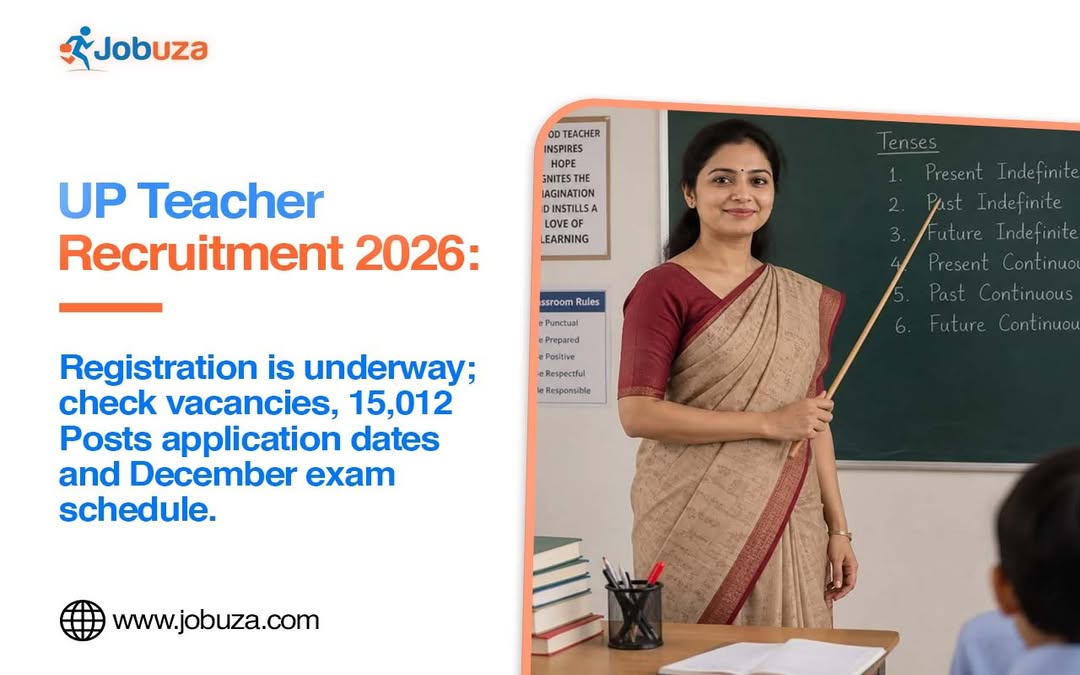
Lucknow: The Uttar Pradesh Education Service Selection Commission (UPESSC) has announced recruitment for 15,012 teacher posts under the Basic and Secondary Education departments. Candidates interested in these vacancies can check the registration schedule, application deadlines and examination dates before applying.
The recruitment drive includes 11,508 Assistant Teacher (Urban) posts, 897 Assistant Teacher posts in the attached primary sections of non-government-aided secondary schools, and 2,607 Post Graduate Teacher (PGT) posts.
UP Teacher Recruitment 2026: Important Dates
The registration process for 11,508 Assistant Teacher (Urban) and 897 Assistant Teacher posts starts on September 16, 2026.
Candidates can pay the application fee until October 15, while the application correction window will remain open until October 19, 2026.
The examination for these posts is scheduled to be held on December 3 and 4, 2026.
For the 2,607 PGT vacancies, the online registration process will begin on September 18, 2026. Candidates can deposit the application fee until October 17, and the correction facility will be available until October 21, 2026.
UP Teacher Vacancy 2026: Vacancy Details
Post
Number of Vacancies
Assistant Teacher (Urban)
11,508
Assistant Teacher
897
Post Graduate Teacher (PGT)
2,607
Total
15,012
The vacancies cover teaching positions under both the Basic and Secondary Education departments. Candidates should check the detailed notification for the eligibility requirements applicable to their chosen post.
UPESSC Teacher Recruitment 2026: OTR Is Mandatory
The UPESSC has introduced a One-Time Registration (OTR) system for candidates applying for the advertised teaching posts.
Candidates must complete their OTR before submitting the application form for the respective post. Completing the OTR process in advance can help candidates avoid delays when the application window opens.
Applicants should also make sure that the information entered during OTR is accurate, as the same details may be used during the subsequent application process.
UP Teacher Recruitment 2026: Application Process
Eligible candidates will need to complete the registration and application process online through the official UPESSC website.
Before submitting the form, candidates should carefully check their personal details, educational qualifications and other information. They should also pay the applicable application fee within the prescribed deadline.
Candidates should keep a copy of the submitted application form and payment confirmation for future reference.
UP Teacher Recruitment 2026: Check Official Notification
The detailed recruitment advertisements contain important information about eligibility criteria, vacancies, application fees, selection process and important dates.
Candidates should read the notification for their respective post carefully before applying. Since the Assistant Teacher and PGT recruitment have separate schedules, applicants should check the deadline that applies to their post.
For the latest updates and official notifications, candidates can visit the UPESSC website at upessc.up.gov.in.
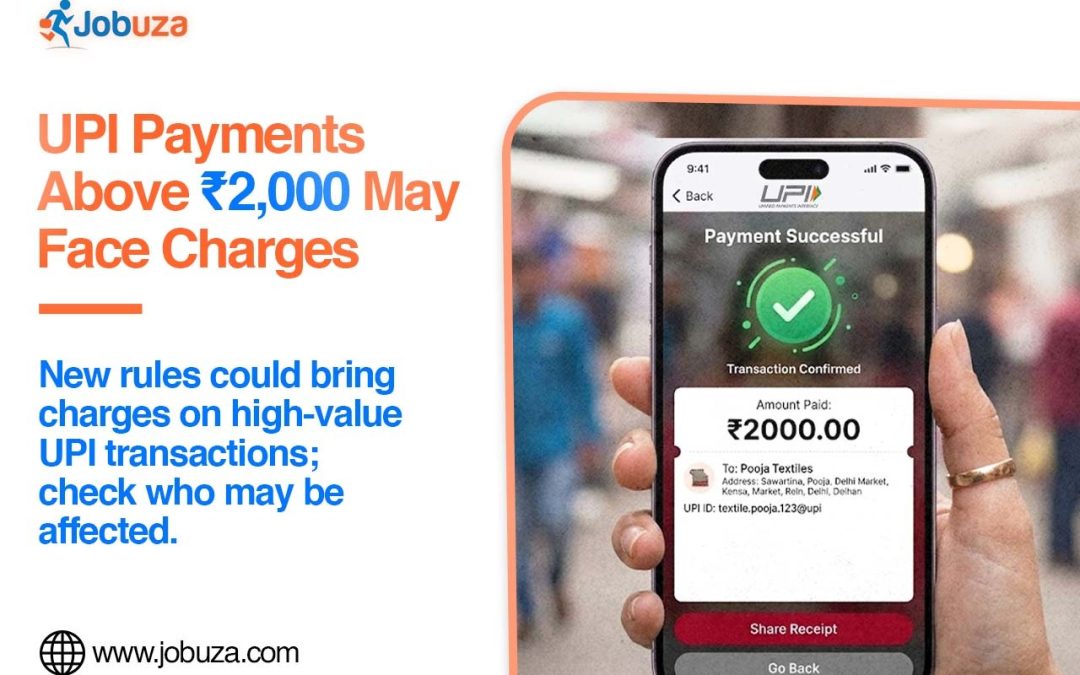
NEW DELHI: UPI payments above Rs 2,000 could attract charges in the future, while transactions up to the specified limit will continue to remain free for users. The government has directed banks and payment service providers not to charge customers for transactions made through UPI or RuPay debit cards up to Rs 2,000.
The move gives a statutory basis to keep digital payments free for users within the specified transaction limit.
Will UPI Payments Above Rs 2,000 Attract Charges?
Under the new framework, UPI transactions above Rs 2,000 may attract a Merchant Discount Rate (MDR). MDR is a fee charged by banks or payment service providers to merchants for processing digital payments.
However, the government has not yet announced the final MDR rate for such transactions.
According to sources, the rate could be in the range of 0.25% to 0.4% of the transaction value. The final rate and the transactions on which it will apply are expected to be clarified by the government.
UPI Payments Up to Rs 2,000 Will Remain Free
For customers, UPI payments up to Rs 2,000 will continue to remain free under the new arrangement. The same applies to payments made through RuPay debit cards within the specified limit.
The government has also indicated that any MDR introduced for higher-value transactions would be limited to certain merchant payments. The proposed rate is expected to be nominal and significantly lower than the MDR generally associated with debit and credit card transactions.
What About UPI Person-to-Person Payments?
Person-to-Person (P2P) UPI transactions will continue to be free.
This means users transferring money directly to another person through UPI will not have to pay a transaction fee. The proposed MDR would primarily concern eligible merchant transactions above the specified threshold.
What Does This Mean for UPI Users?
For most everyday UPI users, there may be little immediate impact. Small payments within the Rs 2,000 limit will continue to be free.
However, people making higher-value payments to merchants may need to check whether a fee applies once the government announces the final MDR structure. The actual impact will depend on the transaction type, merchant category and final rules.
UPI Charges Above Rs 2,000: Key Points
Transaction Type
Proposed Status
UPI payment up to Rs 2,000
No customer charge
RuPay debit card payment up to Rs 2,000
No customer charge
UPI merchant payment above Rs 2,000
MDR may apply
Person-to-person UPI payment
Remains free
Proposed MDR
Around 0.25% to 0.4%, according to sources
The key point is that UPI will not suddenly become a paid service for all transactions. The proposed changes are focused on certain merchant transactions above Rs 2,000, while P2P payments and transactions within the specified limit will remain free.
Employers care a lot less about your degree or job title than they used to. What actually gets you hired, and keeps your career moving, are practical, adaptable skills you can actually prove on the job. Building the right job skills can open doors a resume on its own never will. In this guide, we’ll walk through 10 valuable job skills worth developing, plus simple ways to build them through practice, online courses, and real projects. And here’s the good part: most of these skills for jobs don’t take years to learn. Just consistent effort.
10 Most Valuable Job Skills to Learn
The job market is changing fast, and having the right skills can make a big difference in landing opportunities and growing your career.
Communication Skills This one never goes out of style. Clear writing, speaking, listening, and presenting are among the most valuable job skills you can have, full stop. You get better at it through practice; presentations, meetings, and everyday professional writing all count.
Critical Thinking This is about learning to actually analyse information instead of just reacting to it. Try questioning your assumptions and weighing different solutions before you settle on one; it sharpens your decision-making over time.
Skills in Artificial Intelligence (AI)
AI literacy has gone from “nice to have” to one of the most in-demand skills out there. You don’t need to become an expert overnight; just start experimenting with the AI tools relevant to your field.
Digital Literacy Getting comfortable with everyday workplace software makes a bigger difference than people realise. Spreadsheets, collaboration apps, project-management tools; these are a solid place to start.
Problem-Solving Anyone can point out a problem. What matters is finding a workable solution. Work through real projects, at work or even in your personal life, to build this muscle.
Adaptability Roles change, tools change, priorities shift constantly. Showing you can roll with it is genuinely valuable. Push yourself outside your comfort zone every so often, and it’ll turn into one of your strongest job skills over time.
Time Management Knowing what actually matters and managing deadlines around it is a skill in itself. Calendars, task lists, time-blocking; use whatever system actually works for you.
Teamwork Working well with people who think and operate differently than you do isn’t always easy, but it’s learnable. Practise active listening, share your ideas openly, and get comfortable giving (and receiving) constructive feedback.
Leadership You don’t need a management title to lead. Taking ownership of a project or helping a colleague figure something out- that’s leadership too, and it builds over time.
Data Skills Being able to read and actually use data to make decisions is increasingly non-negotiable. Start small: spreadsheets, basic analysis, simple charts, and build from there.
How to Master These Skills Faster
You don’t need to tackle all ten at once; that’s a recipe for burnout. Here’s a more realistic way:
Concentrate on 1-2 skills rather than attempting to learn all of them simultaneously.
Take a short online course or go through a step-by-step tutorial
Apply what you learn right away to a real-world project
Practice often for 20-30 minutes at a time
Request honest feedback from colleagues, mentors, or peers along the way
Keep a record of your progress and add completed projects to your CV or portfolio.
Use online learning platforms to upskill in both technical and soft skills
Which Job Skills Should You Learn First?
It really depends on where you are going: new to us? Focus on communication, digital literacy, and time management.
Heading into a tech role? AI and data skills should be your priority.
Aiming for management? Leadership, teamwork, and problem-solving will serve you best.
The point is to choose skills for jobs that actually match where you want to go; not just whatever’s trending on LinkedIn this month.
Final Thoughts
Here’s the reassuring part: valuable job skills can be picked up at any stage of your career. You don’t need to go back to school or make some dramatic pivot to start. What actually moves the needle is applying what you learn, not collecting a stack of certificates. So pick one skill from this list and start today; small, consistent effort adds up faster than most people expect.
FAQs
What are the 10 most valuable job skills to learn today? Communication, critical thinking, AI, digital literacy, problem-solving, adaptability, time management, teamwork, leadership, and data skills are highly valuable.
Which job skills can help with career growth? AI, communication, leadership, problem-solving, adaptability, and data skills can help improve career growth and job opportunities.
How can I improve my job skills quickly? Choose one or two skills, practise regularly, take an online course, and apply what you learn through real-world projects.
What are the best skills to learn for jobs in 2026? AI literacy, data skills, digital literacy, communication, adaptability, and problem-solving are among the most useful skills to develop in 2026.
Are soft skills as important as technical job skills? Yes. Soft skills such as communication, teamwork, leadership, and adaptability are important alongside technical skills in many careers.