by Jobuza Team | Feb 16, 2026 | BLOG, Trending News
Your salary slip is more than a record of what you earn each month. It is the foundation for calculating your taxable income. Many employees focus only on their net salary, but income tax is not calculated on the take-home amount. To understand your real tax liability, you must analyse each component in your salary structure and apply the rules of the tax regime you choose.
According to chartered accountant Suresh Surana, income tax is calculated on taxable income computed under the head “Salaries,” not on the net pay shown in the salary slip. This means every earning component must be evaluated carefully to determine what is taxable, what is exempt, and what deductions are allowed.
Understanding the Structure of a Salary Slip
A typical salary slip contains multiple components that are treated differently under tax laws. These usually include:
-
Basic salary
-
House Rent Allowance (HRA)
-
Special allowance
-
Bonuses or incentives
-
Employer contributions to retirement funds
-
Employee deductions such as provident fund contributions
All these earnings together form your gross salary. The calculation of taxable income begins from this figure, not from the net salary credited to your bank account.
Step 1: Identify Gross Salary
Gross salary includes all earnings shown in your salary slip before deductions. This includes basic pay, HRA, special allowance and any other taxable benefits provided by the employer.
This amount serves as the starting point for tax calculation under both the old and new tax regimes.
Step 2: Calculate Taxable Salary Under the New Tax Regime
The new tax regime follows a simplified structure with lower tax rates but limited deductions.
Under this regime:
-
Most exemptions and deductions are not available.
-
Allowances such as HRA are fully taxable.
-
Employee contributions to provident fund are not deductible.
-
Only specifically permitted deductions, such as the standard deduction where applicable, can be reduced from gross salary.
Employer contributions to retirement funds become taxable only if they exceed the prescribed limits. When the contribution goes beyond the specified threshold, the excess amount is added to taxable income.
To calculate taxable salary under the new regime, subtract only the allowed deductions from gross salary. The remaining amount becomes your taxable income.
Step 3: Calculate Taxable Salary Under the Old Tax Regime
The old tax regime allows several exemptions and deductions, which can significantly reduce taxable income for eligible taxpayers.
Under this regime:
-
HRA may be partially or fully exempt if conditions are met.
-
Employee contributions to provident fund may qualify for deduction under Section 80C.
-
Additional deductions under Chapter VI-A, such as insurance premiums or specified investments, may be claimed.
Taxable income under the old regime is calculated by reducing eligible exemptions and deductions from gross salary, subject to statutory limits.
Step 4: Compare Taxable Income Under Both Regimes
The main difference between the two tax systems lies in the availability of exemptions and deductions. The new regime offers simplicity with fewer deductions, while the old regime provides multiple tax-saving options but requires more documentation.
To choose the better option:
-
Calculate taxable income under both regimes using your salary slip.
-
Apply the respective tax rates.
-
Select the regime that results in lower tax liability.
Why Net Salary Should Not Be Used for Tax Calculation
Net salary is the amount received after deductions such as provident fund, professional tax and other adjustments. However, income tax is calculated before many of these deductions are applied. Relying on net pay can lead to incorrect tax estimation and planning mistakes.
Accurate tax computation always begins with gross salary and then applies regime-specific rules.
Key Takeaway
To determine taxable income correctly, you must break down your salary slip into individual components and apply the rules of the tax regime you choose. The process starts with gross salary and ends with taxable income after adjusting for permitted deductions and exemptions.

by Jobuza Team | Feb 12, 2026 | BLOG, PAN/Aadhar Card Updates, Trending News
The Unique Identification Authority of India (UIDAI) has introduced a new Aadhaar mobile application that makes Aadhaar services simpler, safer, and more convenient. With this new app, users can update their mobile number and address directly from home and complete Aadhaar verification digitally without carrying photocopies of their Aadhaar card.
This step has been taken to reduce the risk of Aadhaar misuse and make identity verification more secure in daily life.
Why the New Aadhaar App Is Important
Until now, people often had to submit photocopies of their Aadhaar card for hotel check-ins, SIM card purchases, office verification, and many other purposes. Sharing photocopies increases the risk of personal data misuse.
The new Aadhaar app solves this issue by allowing users to share only the required information digitally, without revealing their full Aadhaar number or biometric details. It adds a strong layer of privacy and security to Aadhaar-based verification.
Key Benefits of the New Aadhaar App
The new Aadhaar app offers several features that make Aadhaar management easier and safer:
-
Users can update their mobile number and address from home
-
Offline Aadhaar verification is now possible
-
Personal details can be shared in a limited and secure manner
-
Aadhaar number and biometric data do not need to be shared
-
Aadhaar becomes easier to manage for the whole family
This makes the Aadhaar system more user-friendly and privacy-focused.
How to Download and Set Up the Aadhaar App
The Aadhaar app is available for both Android and iPhone users.
-
Download the app from the Google Play Store or Apple App Store
-
Open the app and allow required permissions such as location, camera, contacts, and SMS
-
Enter your Aadhaar number
-
Select the mobile SIM linked with your Aadhaar for SMS verification
-
Complete face authentication by scanning your face through the app
Once these steps are completed, your registration in the Aadhaar app will be successful.
How Offline Aadhaar Verification Works
One of the most powerful features of the new app is offline Aadhaar verification. This allows users to verify their identity without sharing full Aadhaar details or requiring internet access.
The app provides two secure options:
Share ID:
This feature generates a password-protected digital file that contains only limited details such as name or age. You can share only the information that is necessary.
QR Code Scanning:
Verification can be completed by scanning a secure QR code shown by the other party. This allows quick and safe identity confirmation.
These features reduce the need to submit physical Aadhaar copies.
How to Update Mobile Number and Address in Aadhaar
Updating Aadhaar details has become much easier through the new app. Users can now request updates without visiting an Aadhaar center.
Steps to update details:
-
Open the Aadhaar app and log in
-
Select the “Update Aadhaar Details” option on the home screen
-
Choose whether you want to update your mobile number or address
-
Enter the new information
-
Submit the request and complete the authentication process
-
Pay the nominal update fee
-
After verification, your details will be updated in Aadhaar records
This feature saves time and reduces the need for repeated visits to Aadhaar enrollment centers.
Additional Features of the Aadhaar App
The app also includes several useful tools for families:
-
Up to five Aadhaar profiles can be managed on one device
-
Parents can manage Aadhaar details of children or dependents
-
Aadhaar contact card feature allows limited and secure sharing of identity details
These features make the app practical for household use.
UIDAI’s New Rule for Aadhaar Verification
UIDAI has also introduced a new regulation for organizations that want to use offline Aadhaar verification. Now, institutions such as banks, hotels, and service providers must first register with the government before performing Aadhaar verification.
This rule ensures that only authorized organizations can verify Aadhaar details, adding another layer of data protection for users.
Read More PAN/Aadhar Card Updates
by Jobuza Team | Feb 11, 2026 | BLOG, Trending News
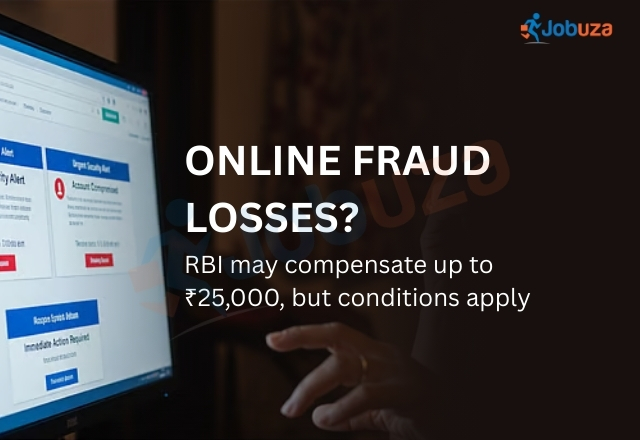
Online Payment Fraud: The Reserve Bank of India (RBI) is preparing a new framework to protect customers against losses from small-value fraudulent digital transactions. In a recent monetary policy address, RBI Governor Sanjay Malhotra confirmed that the central bank will propose rules allowing compensation of up to ₹25,000 to eligible victims of online fraud.
This move is part of a broader set of measures introduced by the RBI to strengthen customer protection and improve the safety of digital payments across India. The draft guidelines are expected to be released soon.
What the New Compensation Framework Covers
According to the RBI, the compensation framework will revisit existing rules on customer liability in cases of electronic banking fraud. At the post-Monetary Policy Committee (MPC) press conference, key points of the proposed system were outlined:
-
The compensation benefit will be granted only once in a lifetime to a customer. It is not an annual entitlement.
-
The lifetime limit has been introduced to encourage users to stay vigilant and avoid repeated mistakes.
-
The maximum compensation amount is capped at ₹25,000.
-
The actual payout will be calculated as 85% of the loss or ₹25,000, whichever is lower.
How the Compensation Will Work
Under the proposed rules, the amount a customer receives will depend on the value of the loss:
-
If the fraud loss is ₹50,000, 85 percent equals ₹42,500 — but the payout will be limited to ₹25,000.
-
If the fraud loss is ₹20,000, 85 percent equals ₹17,000 — so the customer would receive ₹17,000.
These provisions aim to strike a balance between consumer protection and responsible use of digital payment systems.
Fraud Cases Remain High
Data released by the RBI shows that Indian banks reported 13,469 cases of card and internet-based fraud in the fiscal year 2024-25, with total losses of ₹5.2 billion. This follows 29,080 reported frauds and ₹14.57 billion in losses in 2023-24.
Other RBI Measures for Customer Protection
In the same announcement, the RBI also said it will issue guidelines on several related areas:
-
Misselling of financial products by lenders.
-
Recovery practices used by loan agents.
-
A discussion paper on enhancing the safety of digital payment systems.
Online Payment Fraud in India : The RBI highlighted the need to ensure that third-party products offered at bank counters are suitable for customers and aligned with individual risk appetites. New measures under consideration include the introduction of “lagged credits” and additional authentication requirements for senior citizens using digital payments.
by Jobuza Team | Feb 6, 2026 | BLOG, Trending News
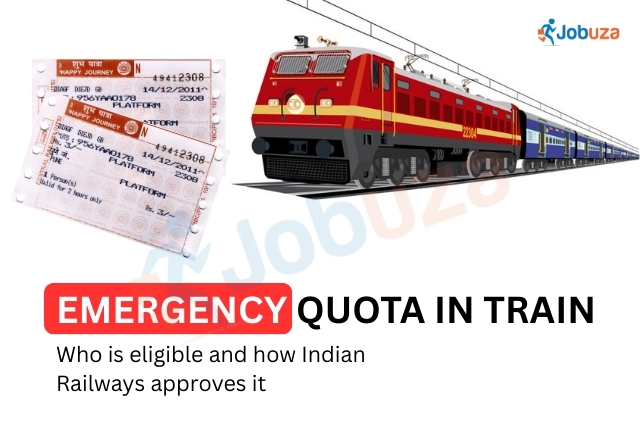
Indian Railways offers multiple ticket booking quotas to help passengers travel in different situations. One of the most important but least understood among them is the Emergency Quota (EQ). This quota is designed to handle urgent and unavoidable travel needs, but it is not available to the general public.
Here is a simple guide to understand who can use the Emergency Quota and how Indian Railways approves these requests.
What Is the Emergency Quota in Indian Railways?
The Emergency Quota is a special reservation quota maintained by Indian Railways to accommodate passengers who must travel urgently due to official or unavoidable personal reasons.
A limited number of seats or berths are kept aside in various trains and travel classes. These seats are released only after reviewing genuine requests from eligible categories of passengers.
Who Is Eligible for the Emergency Quota?
According to the Ministry of Railways, the Emergency Quota is mainly meant for High Official Requisition (HOR) holders and other priority categories.
Primary Eligible Categories
The quota is first meant for:
-
Central Government Ministers
-
Judges of the Supreme Court and High Courts
-
Members of Parliament (MPs)
-
Other high-ranking government officials covered under High Official Requisition
These passengers are considered on priority, especially if they are on the waiting list and need to travel urgently.
Other Cases Considered Under Emergency Quota
After priority categories are handled, Indian Railways may consider other genuine emergency requests based on the seriousness of the situation. These include:
-
Travel on urgent government duty
-
Family bereavement (death of a close family member)
-
Serious illness or medical emergencies
-
Important job interviews
-
Other unavoidable and urgent personal situations
Approval in such cases depends on seat availability and the urgency of the request.
How Indian Railways Approves Emergency Quota Requests
Indian Railways receives a large number of Emergency Quota requests every day from different sources. Because of limited seats, requests are approved based on a strict priority system.
Priority System Used by Railways
The Railways follow the Warrant of Precedence, which is an official ranking order of government positions in India.
-
Emergency Quota is first allotted for self-travel of HOR holders and Members of Parliament.
-
These requests are processed strictly according to their rank and seniority under the Warrant of Precedence.
-
Only after these are cleared are other requests considered.
How Remaining Emergency Quota Seats Are Allotted
Once priority officials are accommodated, the Railways examine other pending requests. The decision to approve these is based on several factors:
-
Official status of the passenger
-
Nature and seriousness of the emergency
-
Purpose of travel
-
Availability of seats in the requested train and class
This ensures that the limited Emergency Quota is used only for genuine and urgent needs.
Where Emergency Quota Requests Are Processed
Emergency Quota requests are handled by special railway offices known as Emergency Quota Cells. These are located at:
-
Zonal Railway Headquarters
-
Divisional Railway Headquarters
-
Some important non-headquarter railway stations
These offices review and process the requests before releasing seats.
Written Requests Are Mandatory
To prevent misuse of the Emergency Quota, Indian Railways has made it compulsory that requests must be submitted in writing.
Verbal requests or informal recommendations are not considered. The Railway Board has instructed all zones to release Emergency Quota seats only after receiving proper written requisitions from authorized sources.
Important Things to Remember About Emergency Quota
-
Emergency Quota is not meant for regular passengers.
-
It cannot be booked directly online like Tatkal tickets.
-
Approval is not guaranteed and depends on priority and availability.
-
Strong and genuine reasons increase the chance of approval, but final discretion rests with railway authorities.
Conclusion
The Emergency Quota in Indian Railways is a special facility created to manage urgent and unavoidable travel situations, mainly for high-ranking officials and serious emergency cases. Since the number of seats is limited, approvals follow a strict priority system and require proper written requests.
by Jobuza Team | Feb 2, 2026 | BLOG, Trending News
Finance Minister Nirmala Sitharaman presented the Union Budget 2026–27 in Parliament, outlining several changes in customs duties and import tariffs. These changes are expected to directly affect the prices of many everyday and industrial items in India. While some goods may become more affordable due to reduced duties, others could turn more expensive as taxes increase.
Here is a clear breakdown of what may get cheaper and what could cost more for consumers.
Items Expected to Get Cheaper
The government has proposed reducing customs duty on several essential and strategic items. This move is aimed at lowering costs for consumers, supporting key industries, and improving access to critical goods.
Personal and Consumer Goods
-
Personal use imported goods
-
Leather footwear and related leather items
-
Textile garments
-
Microwave ovens
-
Overseas tour packages
-
Foreign education expenses
Healthcare and Medicines
-
Seventeen medicines used in cancer treatment
-
Drugs, medicines, and Food for Special Medical Purposes (FSMP) for seven rare diseases
Energy, Technology, and Manufacturing
-
Lithium-ion cells used in batteries
-
Solar glass used in renewable energy projects
-
Critical minerals required for high-tech and clean energy sectors
-
Biogas-blended CNG
-
Aircraft manufacturing components
Food and Marine Sector
These reductions are expected to make healthcare treatments more affordable and support India’s push towards clean energy and domestic manufacturing.
Items Expected to Get Costlier
Some goods and financial areas may see higher taxes or duties, which could lead to increased costs for consumers and businesses.
-
Alcohol
-
Cigarettes and tobacco products
-
Components used in nuclear power projects
-
Certain minerals such as iron ore and coal
-
Penalties and stricter action related to misreporting of income tax
-
Changes in taxation related to stock options and futures trading
These measures are often aimed at increasing government revenue, discouraging harmful consumption, or tightening financial compliance.
Will Imported Wine Become Cheaper?
Although alcohol in general may become more expensive, there could be a different trend for certain imported beverages. Under the recently finalised India–European Union trade agreement, India is expected to reduce or remove tariffs on a large share of European exports.
As a result, wine, beer, and some other spirits imported from Europe may become cheaper in India. Other products that could benefit from lower tariffs under this agreement include kiwis, pears, fruit juices, non-alcoholic beer, and some processed food items.
Other Key Highlights from Budget 2026–27
In her 81-minute Budget speech, the Finance Minister also addressed several important policy areas, including timelines for income tax return filing, changes in Securities Transaction Tax (STT) on futures and options, expansion of India’s semiconductor mission, and the development of rare earth corridors.
The Budget received praise from Prime Minister Narendra Modi and several leaders from the ruling party, who described it as growth-focused. However, opposition parties criticised it, calling it lacking in strong reforms aimed at supporting lower-income groups.
by Jobuza Team | Feb 2, 2026 | BLOG, Trending News
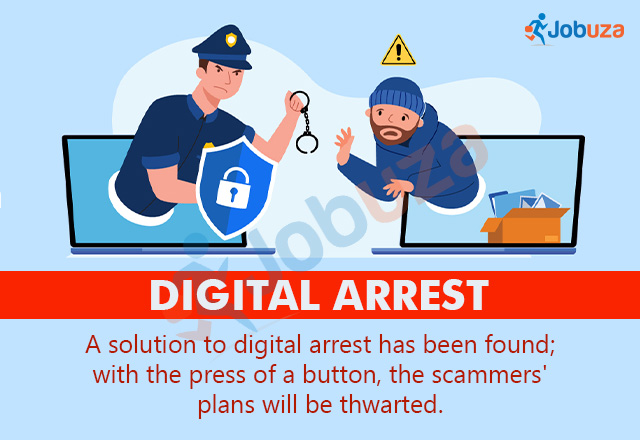
Digital arrest scams are increasing rapidly in India, and the government is now working on new ways to stop them. The Ministry of Home Affairs has formed a high-level committee to find practical solutions that can protect people from such online fraud.
One major idea suggested by the committee is a “kill switch” feature. This would allow people to immediately stop suspicious financial activity with just one button if they feel they are being targeted by a scam.
What Is the Kill Switch?
The kill switch would act like an emergency safety button. If someone believes they are dealing with a fraudster, they can press this button to instantly stop all transactions from their accounts.
Once activated, no money can be transferred, and accounts may be temporarily frozen. This can help prevent scammers from stealing funds while the issue is being checked.
Compensation for Victims May Be Introduced
The committee has also discussed ways to reduce financial losses for victims. A system could be introduced to compensate people who lose money in digital fraud cases.
This may include special insurance-type products that cover losses caused by online scams. The goal is to make digital transactions safer and improve trust in the system.
How the Emergency Button Could Work
Experts are considering adding this emergency button to digital payment apps. This means users could have the feature directly inside the apps they already use for transactions.
If someone senses fraud, they can press the button, and all linked accounts would immediately stop processing transactions. This quick action could reduce damage during scam attempts.
Steps to Recover Stolen Money
The committee is also looking at ways to identify suspicious transactions faster. If fraud is detected early, it may be possible to stop stolen money from being moved across multiple accounts, which often makes recovery difficult.
Authorities are exploring systems that can track and block such movements to improve the chances of getting money back.
What Are Digital Arrest Scams?
In digital arrest scams, fraudsters contact people through video calls and pretend to be police officers or government officials. They claim the victim is involved in a serious crime and create panic.
Using leaked personal information, fake ID cards, and false documents, scammers pressure victims into sending large amounts of money to “clear” their name.
The government’s new safety measures aim to stop these scams quickly and protect people from falling victim to such threats.
Disclaimer: This article has been adapted for clarity and readability based on publicly reported information. Original reporting credit belongs to its respective source.