by Jobuza Team | Jan 22, 2025 | BLOG, Trending News
What to Do If Someone Opens a Credit Card in Your Name
Identity theft is on the rise, setting new records every year. In 2018 alone, more than 446 million personal records were exposed across 1,244 data breaches, according to the Identity Theft Resource Center.
Discovering that someone opened a credit card in your name can be shocking. You may find out through a statement in the mail for an account you never opened, a sudden drop in your credit score, or an unfamiliar account on your credit report.
Once the initial shock fades, it’s crucial to act fast. The thief still has your personal information and could continue using it. Taking immediate steps can help you close the fraudulent account and prevent further damage.
Steps to Take If Someone Opens a Credit Card in Your Name
1. Contact the Credit Card Issuer's Fraud Department
The first thing you should do is notify the credit card issuer that the account is fraudulent. If you received an email or letter about the account, do not call the number listed—it could be a phishing scam. Instead, visit the issuer’s official website and use the customer service number provided there.
Ask them to close the account and investigate the fraud. If they are unable to close it immediately, request that they place a hold or freeze to prevent further charges. Keep detailed records of all conversations, including names and case numbers, for future reference.
2. Report the Identity Theft
File an identity theft report with the Federal Trade Commission (FTC) at IdentityTheft.gov. This report serves as official documentation and can help you dispute fraudulent accounts with credit bureaus.
You may also choose to file a police report, especially if the fraud involves a large amount of money or if you know who committed the crime. Some creditors and credit bureaus may request a police report to process fraud claims.
3. Secure Your Credit with a Fraud Alert or Credit Freeze
Once you’ve handled the fraudulent account, take steps to prevent further damage. You can place a fraud alert or a credit freeze on your credit report.
-
Fraud Alert: Alerts lenders that you may be a victim of identity theft. They must verify your identity before opening new accounts in your name. You only need to request an alert with one of the three credit bureaus—Experian, Equifax, or TransUnion—and they will notify the others.
- Initial fraud alert: Lasts for one year and can be renewed indefinitely.
- Extended fraud alert: Lasts for seven years and requires a copy of your FTC identity theft report.
-
Credit Freeze: Prevents creditors from accessing your credit report entirely, making it difficult for thieves to open new accounts. Unlike fraud alerts, you must request a freeze separately with each credit bureau. A credit freeze does not affect your current credit accounts but may need to be lifted when applying for new credit, renting an apartment, or seeking employment.
4. Check Your Credit Reports for More Fraud
A fraudulent credit card account may not be the only issue. Check your credit reports for any other suspicious activity. You can get free weekly credit reports at AnnualCreditReport.com from all three major credit bureaus.
Review the accounts listed, especially the opening dates, and compare them with your records. If you notice any unfamiliar accounts, investigate further and take immediate action.
5. Dispute Fraudulent Accounts with Credit Bureaus
If you find unauthorized accounts, dispute them with each credit bureau. Fraudulent accounts can severely damage your credit score, especially if the thief has missed payments or maxed out the credit limit.
To dispute fraudulent accounts:
- Contact Experian, Equifax, and TransUnion directly through their websites.
- Submit your FTC identity theft report as supporting evidence.
- Clearly state that the account is fraudulent and request its removal.
Once your dispute is received, the credit bureaus will contact the issuer for verification. If they confirm fraud, the account will be removed from your report.
Take Action Immediately
Identity theft can cause lasting financial harm if left unaddressed. The faster you act, the less damage a fraudster can do. Take these steps as soon as you discover a fraudulent credit card account in your name.
To protect yourself moving forward, regularly review your credit reports, monitor your bank and credit card statements, and be cautious about sharing personal information online.
By staying vigilant, you can reduce your risk of identity theft and safeguard your financial future.
by Jobuza Team | Jan 20, 2025 | BLOG, Trending News
8th Pay Commission Approved: What It Means for Government Employees and Pensioners
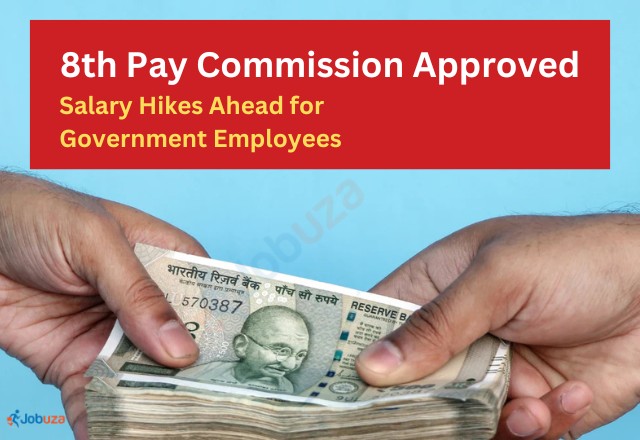
Salary Hikes: The Indian government has approved the 8th Pay Commission, bringing fresh hope for central government employees and pensioners. The commission will review and recommend salary structures, with the final report expected by 2026 and implementation likely the same year.
What Is the 8th Pay Commission?
The Pay Commission is a government-appointed body that revises salary structures for central government employees and pensioners. It considers factors like inflation, economic growth, and employee welfare to ensure fair compensation.
Did You Know? The first Pay Commission in India was introduced in 1946 and has since played a crucial role in shaping government employee salaries.(Salary Hikes)
Key Features of the 8th Pay Commission
Here’s what to expect from the newly approved commission:
- Approval Date: January 2025
- Report Submission: Expected by 2026
- Implementation: Likely in 2026
- Chairman: Yet to be appointed
The commission’s primary goal is to enhance salaries while ensuring fiscal responsibility.
How Will the 8th Pay Commission Impact Salaries?
The 8th Pay Commission is expected to bring substantial salary hikes and improved benefits, helping employees manage rising living costs.
Expected Benefits for Employees and Pensioners
- Basic Salary: Significant hike to match inflation
- Dearness Allowance (DA): Revised rates for better affordability
- Housing Benefits: Increased House Rent Allowance (HRA)
- Pensioners: Higher payouts for retirees
These improvements will benefit millions of employees and pensioners, strengthening their financial stability.
Implementation Process of the 8th Pay Commission
The government has outlined clear steps for the commission’s implementation:
- Appointment of Members – A chairman and two members will be appointed.
- Drafting Recommendations – Salary structures and allowances will be reviewed.
- Submission of Report – The final report is expected by 2026.
- Government Approval – The cabinet will review and approve recommendations before implementation.
Why the 8th Pay Commission Matters
This development reflects the government’s commitment to addressing inflation and employee welfare. By improving salaries and benefits, the commission will enhance the financial well-being of government employees and pensioners, ensuring a better standard of living.
Conclusion
The 8th Pay Commission is set to bring positive changes for government employees and pensioners, with higher salaries, better allowances, and improved pension payouts. As the commission prepares its recommendations, millions of families await these much-needed financial improvements.
Stay tuned for updates on the latest developments.
Disclaimer: This information is for general reference. For official details, refer to government notifications.
by Jobuza Team | Jan 20, 2025 | BLOG, Trending News
Say No to Cash Transactions: Understanding Income Tax Implications
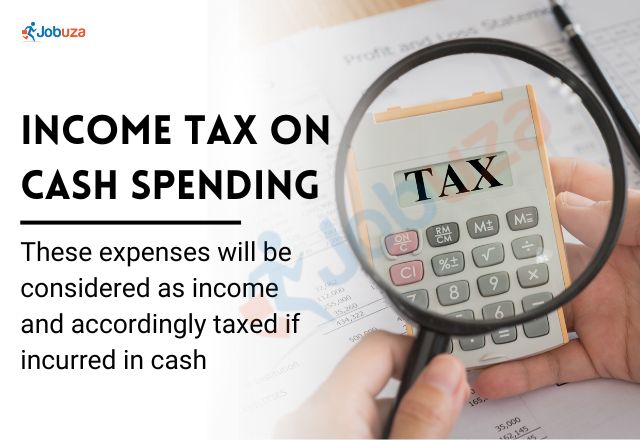
The Income Tax Department strongly advocates responsible use of cash to ensure compliance with tax laws. Various provisions in the Income Tax Act restrict excessive cash transactions, and violating these rules can lead to increased tax liabilities and penalties. The government’s goal is to formalize the economy and curb illicit cash transactions.
Key Restrictions on Cash Transactions
1. No Tax Deductions for Certain Cash Transactions
Certain payments made in cash do not qualify for tax deductions. These include donations to political parties, scientific research contributions, rural development, and specific business expenses. If cash is used in these transactions, exemptions and deductions are denied, thereby increasing taxable income.
2. Denial of Exemptions for Political Donations
Under Sections 13A and 13B, political parties cannot receive cash donations exceeding Rs 2,000. Electoral trusts also lose their tax exemption if they accept cash beyond this limit. This regulation ensures transparency in political funding.
3. Restrictions on Borrowing and Repaying via Hundi
Section 69D states that any amount borrowed or repaid in cash through a hundi (a financial instrument) is considered income and taxed accordingly in the financial year of the transaction.
Business Expense Disallowances
4. Disallowance of Business Expenses Paid in Cash
Under Section 40A(3), business expenses exceeding Rs 10,000 paid in cash on a single day are not eligible for tax deductions. If unpaid liabilities from a previous year are settled in cash exceeding Rs 10,000, the amount is considered taxable income for the year of payment.
For businesses engaged in plying, hiring, or leasing goods carriages, the cash expense limit is Rs 35,000 instead of Rs 10,000.
Capital Expenditure and Asset Depreciation Restrictions
5. No Depreciation for Cash Purchases
If a person purchases an asset and pays more than Rs 10,000 in cash, the amount is not considered part of the asset’s cost. Consequently, depreciation on that amount cannot be claimed under Section 43(1).
6. No Deductions for Capital Expenditure in Cash
Section 35AD allows tax deductions for capital expenses in specified businesses, but payments exceeding Rs 10,000 in cash are not eligible for these deductions.
Donation and Tax Deduction Limits
7. Cash Donations Are Restricted
-
General Charitable Donations: Donations exceeding Rs 2,000 in cash are not eligible for deductions under Section 80G.
-
Scientific Research and Rural Development: Contributions over Rs 2,000 must be made through non-cash modes for tax benefits under Section 80GGA.
-
Political Contributions: Companies and individuals cannot claim deductions for political contributions made in cash under Sections 80GGB and 80GGC.
Encouraging Cashless Transactions
8. Health Insurance Premiums Must Be Paid Digitally
Under Section 80D, health insurance premiums must be paid through non-cash modes to claim tax deductions. However, payments for preventive health check-ups can be made in cash.
9. Higher Tax Audit Threshold for Digital Transactions
Businesses with cash transactions under 5% of total receipts and payments qualify for a higher tax audit threshold of Rs 10 crore under Section 44AB. Otherwise, the standard limit remains Rs 1 crore.
10. Lower Presumptive Tax for Digital Payments
Under Section 44AD, businesses receiving payments digitally benefit from a reduced presumptive tax rate of 6% instead of 8%. The discount applies if receipts are through bank transfers, electronic clearing systems, or prescribed electronic modes.
TDS on Cash Transactions
11. TDS on Cash Withdrawals Over Rs 1 Crore
Section 194N imposes a 2% TDS on cash withdrawals exceeding Rs 1 crore in a financial year from banks, co-operative societies, or post offices. If the person has not filed income tax returns for three years, the TDS rate is:
12. TDS on Cash Payments for Professional Services
Under Section 194M, individuals or HUFs making payments exceeding Rs 50 lakh in a year for professional services or labor contracts must deduct 5% TDS, regardless of the mode of payment.
Mandatory Filing of Income Tax Returns
13. Compulsory ITR Filing for High-Value Transactions
As per the seventh proviso to Section 139(1), individuals must file income tax returns if they:
-
Deposit Rs 1 crore or more in current accounts
-
Spend more than Rs 2 lakh on foreign travel
-
Spend over Rs 1 lakh on electricity bills
Failure to file returns by the due date under Section 234F results in a penalty of Rs 5,000 along with applicable interest and further legal consequences.
Conclusion
The government’s measures to restrict cash transactions are part of a larger effort to curb black money and promote a digital economy. Understanding these tax provisions helps individuals and businesses comply with regulations and avoid unnecessary tax burdens. To maximize tax benefits and ensure compliance, opting for digital transactions over cash is the best approach.
by Jobuza Team | Jan 17, 2025 | BLOG, Highlights, Trending News
Personal loans offer flexible repayment tenures and quick loan disbursement which is a great option if you are looking for urgent funds to cover your sudden expenses for a while. In India, Aadhaar card has proved to be a very important document for availing of financial services. It is a known identity and address proof that makes it easy to apply for personal loans.
A 2 lakh loan on an Aadhaar card is an easy to access financial option for people who need money instantly and without much paper work. Let us understand in detail
Key benefits of loan on Aadhar card
Simplified documentation: Aadhaar card based loans are different from normal loans as they don’t require many documents such as income proof, address proof, and identity proof. Aadhaar is being used as a single document to verify both identity and address by lenders, reducing the need for paperwork.
Digital process: These loans are offered online and provide a completely digital process. This speeds up approvals, eliminates manual intervention and disbursal.
Accessibility: Even those with limited financial documents can get loans on Aadhar card. Hence, if you do not have a regular income source, you can still apply for the loan and meet your financial obligations.
Quick processing: These loans offer faster approvals and disbursals because of the digital application process. This way you can save your precious time effectively.
No collateral required: Loans on Aadhar card are unsecured, meaning you are not required to pledge any assets as collateral.
Eligibility criteria for 2 lakh loan on Aadhaar card
Age: Usually, you are required to be between 21 to 60 years old. In some cases lenders may approve up to the age of 65.
Income: Usually, lenders require a minimum monthly income between ₹15,000 and ₹25,000. It is available to salaried and self employed individuals.
Credit score: A good credit score (in the range of 650-700 or more) makes it more likely that you’ll be approved and get low interest rates.
Employment status: You must be a salaried employee or self employed individual.
Valid Aadhaar card: For verification purpose, Aadhaar card has to be active and linked to the applicant’s mobile number.
Documents required for 2 lakh loan on Aadhaar card
Although the specific documents required may depend on the bank’s policies as well as your overall profile, most lenders require these documents in order to evaluate your eligibility:
- PAN card
- Last 3-6 months bank account statements
- Income proof in case of salaried individuals
- ITR return (for self employed people)
How to apply for a 2 lakh loan on Aadhaar card
Online application: Go to the lender’s website or download their mobile app.
Eligibility check: Check for the eligibility criteria for the loan. You can use an eligibility calculator provided by the lender in order to determine the eligibility.
Document upload: Upload your Aadhaar card, PAN card, and income proofs. Make sure you have linked your Aadhaar with your mobile number for OTP based authentication.
Approval and disbursal: After you submit your documents, the loan is approved. The disbursal takes 24 to 48 hours, depending on the lender.
Things to keep in mind
Interest rates: Personal loans are unsecured, hence, the interest rates will depend on other factors such as credit score, income, credit history and many other factors. Hence, compare interest rates offered by various lenders before choosing one.
Processing fees: Check for processing fees as well as other charges which may levy on the EMI in order to avoid any last minute surprises.
EMI affordability: Calculate your monthly instalment with the help of an EMI calculator and see if it fits in your budget.
Credit score impact: Repaying your loan on time can help your credit score, and missing one or failing to repay can hurt your creditworthiness. Hence, borrow mindfully and only if you really require the loan.
by Jobuza Team | Jan 7, 2025 | BLOG, Highlights, Trending News
SBI has launched two new deposit schemes: Har Ghar Lakhpati, a recurring deposit plan helping customers save ₹1 lakh or more, and SBI Patrons, a fixed deposit scheme offering higher interest rates for senior citizens aged 80 and above.
The State Bank of India (SBI) has launched two innovative deposit schemes: ‘Har Ghar Lakhpati’ and ‘SBI Patrons,’ aiming to enhance financial inclusion and cater to diverse customer needs.
Pre-Calculated Recurring Deposit Scheme
‘Har Ghar Lakhpati’ is a pre-calculated recurring deposit designed to help customers accumulate ₹1 lakh or multiples thereof. This scheme simplifies the process of achieving financial goals, allowing customers to plan and save effectively. It is also available to minors, encouraging early financial planning and savings habits.
SBI Patrons: Specialized Fixed Deposit for Senior Citizens
SBI has introduced ‘SBI Patrons,’ a specialized fixed deposit scheme tailored for senior citizens aged 80 years and above. This product offers enhanced interest rates, recognizing the long-standing relationship many senior customers have with the bank. SBI Patrons is available to both existing and new term deposit customers.
Interest Rates and Terms
The minimum tenure for recurring deposits is 12 months (one year), and the maximum is 120 months (10 years). The interest rates for this scheme are aligned with those offered on fixed deposits.
SBI Patrons: Depositors under this scheme would earn an additional 10 basis points higher interest rate than what is offered to senior citizens. The current fixed deposit rates for senior citizens are:
- Above 1 year tenure: 6.80%
- Above 2 years: 7%
- Above 3 years to less than 5 years: 6.75%
- For 5-10 years: 6.5%
Strategic Objectives
These initiatives reflect SBI’s commitment to innovation and customer-centric solutions. By introducing these schemes, SBI aims to:
- Enhance financial inclusion by offering products that cater to specific customer segments.
- Strengthen its market leadership in deposits.
- Provide goal-oriented deposit products that align with customers’ aspirations.
SBI Chairman CS Setty emphasized the bank’s dedication to leveraging innovation and technology to deliver solutions that empower every customer, contributing to India’s growth journey towards becoming a developed nation by 2047.
Summary of the news
| Why in News |
Key Points |
| SBI launched two new deposit schemes: Har Ghar Lakhpati and SBI Patrons |
– Har Ghar Lakhpati: Pre-calculated recurring deposit to accumulate ₹1 lakh or more.
– SBI Patrons: Fixed deposit scheme for senior citizens aged 80 and above.
– Har Ghar Lakhpati available for minors.
– SBI Patrons offers 10 bps higher interest rate for senior citizens.
– Tenure for Har Ghar Lakhpati ranges from 12 months to 120 months. |
| Scheme Names |
Har Ghar Lakhpati, SBI Patrons |
| Target Group |
–General customers, including minors.
– SBI Patrons: Senior citizens aged 80 years and above. |
| Interest Rates |
– Interest aligned with fixed deposit rates.
– SBI Patrons: Additional 0.1% interest over senior citizens’ FD rates. |
| Tenure for Har Ghar Lakhpati |
12 months to 120 months (1 year to 10 years). |
| SBI Patrons Fixed Deposit Rates for Senior Citizens |
– 6.80% for 1 year+
– 7.00% for 2 years+
– 6.75% for 3 years to less than 5 years
– 6.50% for 5-10 years |
| Launch Date |
The schemes were announced on January 2025. |
by Jobuza Team | Jan 3, 2025 | BLOG, Trending News
RBI to Close Inactive and Dormant Bank Accounts from January 1, 2025: Full Details and Revival Steps
The Reserve Bank of India (RBI) has announced a major update that will come into effect from January 1, 2025. As part of its efforts to enhance banking security and reduce the risk of fraud, the RBI has directed banks to close specific types of accounts that remain unused or inactive for extended periods.
This new rule is aimed at improving the overall efficiency of banking operations and ensuring better compliance with regulatory guidelines.
Types of Bank Accounts That Will Be Closed
1. Dormant Accounts
Dormant accounts are those that have seen no activity for a continuous period of two years or more. These accounts are more vulnerable to misuse and fraudulent activities. Closing them is intended to protect account holders and ensure better security within the banking system.
2. Inactive Accounts
Accounts that have not recorded any transactions for the past 12 months or longer will be marked as inactive. These accounts can be reactivated, but if not used, they may be closed by the bank. The purpose of this step is to reduce operational burden on banks and prevent the misuse of idle accounts.
3. Zero Balance Accounts
Accounts that maintain a zero balance for a long period may also be subject to closure. The RBI aims to reduce financial risk, avoid misuse of these accounts, and promote better communication between customers and their banks. This also helps banks keep customer KYC (Know Your Customer) information updated.
How to Avoid Closure of Your Bank Account
To prevent your bank account from being closed under the new RBI guidelines, you should take the following steps:
Reactivate inactive accounts:
If your account has been inactive for over 12 months, make at least one transaction (such as a deposit, withdrawal, or UPI payment) to keep it active.
Engage with dormant accounts:
If your account has been dormant for two years or more, you must visit your bank branch and complete the required formalities to reactivate it.
Maintain a positive balance:
Avoid keeping your account at zero balance for extended periods. Even a small balance and periodic transactions can help keep your account in good standing.
Why RBI Is Implementing This Rule
The primary goals of this move are to:
-
Strengthen banking security
-
Minimize the risk of online fraud and unauthorized transactions
-
Ensure accurate and updated customer records
-
Improve the overall efficiency of banking operations
Final Reminder
If you have a bank account that you haven’t used in a while, now is the time to take action. A simple transaction or a visit to your bank branch can help you avoid account closure and retain access to essential banking services.
For more updates on banking rules and job openings, visit:
Click here for latest bank jobs and updates