by Jobuza Team | Jan 2, 2025 | BLOG, Trending News
Income Tax Rules 2024-25: What’s New and What Taxpayers Should Know Before Filing ITR in July 2025
As the financial year 2024 comes to an end, India’s income tax system has undergone several key changes. The Union Budget 2024-25, along with updates announced in July 2024, has introduced a series of tax reforms that directly impact salaried individuals, investors, and business owners.
These new rules will apply for the current financial year (2024-25) and will affect how you file your income tax return (ITR) in July 2025.
Here’s a simple breakdown of the 10 major changes you need to know.
1. New Tax Regime Slabs Revised
The new income tax regime has been revised to provide relief to taxpayers. The updated slab rates could help save up to ₹17,500 annually.
Revised slab rates under the new regime:
-
Income up to ₹3 lakh – No tax
-
₹3 lakh to ₹7 lakh – 5%
-
₹7 lakh to ₹10 lakh – 10%
-
₹10 lakh to ₹12 lakh – 15%
-
₹12 lakh to ₹15 lakh – 20%
-
Above ₹15 lakh – 30%
2. Higher Standard Deduction
The standard deduction has been increased under the new regime:
-
For salaried individuals: from ₹50,000 to ₹75,000
-
For family pensioners: from ₹15,000 to ₹25,000
3. No Change in the Old Tax Regime
There are no changes in the old tax regime. If you choose the old system, the existing tax slab rates and deductions will continue as they are.
Old regime slab rates:
4. Capital Gains Tax Hiked
There are two important changes in capital gains taxation:
-
Short-term capital gains (on listed shares or mutual funds) will now be taxed at 20% instead of 15%
-
Long-term capital gains tax increased from 10% to 12.5%, and the tax-free limit has been raised from ₹1 lakh to ₹1.25 lakh
5. Securities Transaction Tax (STT) Increased
Traders in stocks and F&O (derivatives) will now pay more STT:
-
On options, STT rises from 0.0625% to 0.1%
-
On futures, it increases from 0.0125% to 0.02%
6. New Tax Rule for Share Buybacks (From Oct 1, 2024)
Earlier, companies paid tax on share buybacks and investors received the amount tax-free.
Now, buyback proceeds will be taxed as income in the hands of shareholders, similar to how dividends are taxed, based on your personal slab.
7. Indexation Benefit Limited
For property sales, the government has made changes to how tax is calculated:
This may increase tax liability for those selling property after holding it for many years.
8. Key TDS (Tax Deducted at Source) Changes
Several important changes in TDS rates and rules:
-
TDS of 5% merged into 2% for various payments
-
The 20% TDS on mutual fund redemptions is removed
-
TDS on e-commerce transactions reduced from 1% to 0.1%
-
TCS (Tax Collected at Source) can now be adjusted against TDS on salaries
-
Delays in TDS payments will not be treated as criminal if paid by the filing deadline
9. Reopening of Income Tax Assessments
Tax assessments can now be reopened up to 5 years after the end of the relevant financial year, but only if the escaped income exceeds ₹50 lakh.
10. Vivad Se Vishwas Scheme 2024
To reduce tax-related disputes, the government has reintroduced the Vivad Se Vishwas Scheme.
-
Taxpayers with pending appeals can settle disputes by paying the disputed tax plus a small percentage
-
Once payment is made and Form 1 is submitted, penalties and interest are waived, and the case is closed
Final Words
These new rules will have a direct impact on your salary, savings, investments, and how you file your ITR. Make sure to understand the regime you choose and plan your taxes accordingly.
For more latest financial updates and news, visit:
Click here for trending news

by Jobuza Team | Jan 2, 2025 | BLOG, Trending News
New UPI Rules Take Effect Today: Increased Limits, Wider Access, and Key Changes
New UPI rules: Unified Payments Interface (UPI) transactions in India are undergoing significant changes starting today. With an aim to enhance digital payment adoption and ensure smoother transactions, the Reserve Bank of India (RBI) has introduced new guidelines that impact transaction limits, accessibility, and user convenience. Here’s everything you need to know.
1. Increased Transaction Limits
One of the most significant changes is the increase in transaction limits for specific categories. The maximum limit for payments in sectors like healthcare and education has been raised to ₹5 lakh, making high-value transactions more seamless. Earlier, the UPI limit was capped at ₹1 lakh for most users, except for certain categories like capital markets and insurance, where it was ₹2 lakh.
2. UPI for Pre-Sanctioned Credit Lines
UPI is now expanding its functionality by allowing transactions through pre-approved credit lines from banks. This means users can make payments even when their savings account balance is low, provided they have a sanctioned credit line. This move is expected to boost credit accessibility while maintaining the ease of UPI payments.
3. Wider Acceptance for Digital Transactions
The new rules also focus on making UPI payments more inclusive. The RBI has expanded the scope of UPI transactions to include more small businesses, merchants, and service providers. This broader acceptance aims to encourage digital payments across urban and rural areas alike.
4. Enhanced Security Features
With the rise in digital transactions, security has been a prime concern. The updated UPI framework introduces stronger authentication measures, fraud detection mechanisms, and enhanced user protection to safeguard transactions from cyber threats and unauthorized access.
5. AutoPay and Recurring Payments
The AutoPay feature for UPI has been improved to support higher-value transactions. Users can now set up recurring payments for larger amounts, making bill payments, subscriptions, and EMI deductions more convenient. This change simplifies transactions for both businesses and consumers.
Impact of These Changes
The new UPI rules are expected to drive higher digital transaction volumes, improve payment efficiency, and enhance user experience. Businesses will benefit from smoother high-value transactions, while individual users will experience more flexibility in managing their payments.
As digital payments continue to evolve, these updates reinforce UPI’s position as one of the most preferred and secure payment methods in India. Stay informed and make the most of these new features to enjoy a seamless payment experience.
For More Updates: Click Here

by Jobuza Team | Dec 19, 2024 | BLOG, Trending News
Indian Railways Reduces Advance Ticket Booking Period to 60 Days: Key Updates
IRCTC ticket booking: Indian Railways has introduced a major change in its ticket reservation policy. Starting today, November 1, 2024, passengers can book train tickets only up to 60 days in advance, a reduction from the previous 120-day advance reservation period.
This revision will not affect passengers who have already booked tickets under the old policy, allowing them to proceed with their travel plans as scheduled.
Why Has Indian Railways Reduced the Advance Reservation Period?
According to the Ministry of Railways, this adjustment aims to ensure that train bookings reflect genuine passenger demand. A study revealed that 21% of reservations made between 61 and 120 days in advance were later canceled, while 5% of passengers failed to board their scheduled trains. By shortening the booking window, the ministry hopes to minimize ticket hoarding and fraud while making seats available for passengers who genuinely intend to travel.
Top 5 Key Points to Know
-
Some Express Trains Will Have Different Rules
Certain daytime express trains, including the Taj Express and Gomti Express, will continue to follow lower advance reservation limits.
-
Foreign Tourists’ Advance Booking Remains Unchanged
The 365-day advance reservation period for foreign tourists will continue without any modifications.
-
Existing Bookings Will Remain Valid
Tickets booked before October 31, 2024, under the old 120-day policy will still be valid. However, any bookings beyond the new 60-day window can still be canceled if needed.
-
Addressing No-Show Passengers and Fraud
The ministry aims to reduce cases where passengers fail to cancel their tickets, leading to fraud and impersonation. This move is expected to improve ticket availability for genuine travelers.
-
A Similar Policy Was in Place Earlier
Between 1995 and 1998, the advance reservation period was even shorter—just 30 days. The current revision brings the policy closer to those earlier standards.
Exceeding Luggage Limits? Be Ready for a Fine
In a separate development, Western Railway has issued a strict warning regarding excess luggage. Passengers carrying luggage beyond the permissible limit for their travel class will face penalties.
According to a statement released on Tuesday, only a certain amount of luggage is allowed per passenger without additional charges. However, oversized items like scooters, bicycles, and other large consignments exceeding 100 cm x 100 cm x 70 cm will not qualify for free allowance.
Western Railway has also urged passengers to avoid overcrowding at railway stations and enter only when necessary, as per their train schedules.
IRCTC ticket booking With these policy updates, Indian Railways aims to improve passenger convenience, curb fraudulent bookings, and streamline travel operations across the country.
by Jobuza Team | Dec 9, 2024 | BLOG, Trending News
EPFO to Introduce ATM Withdrawals for Provident Fund Under New Initiative
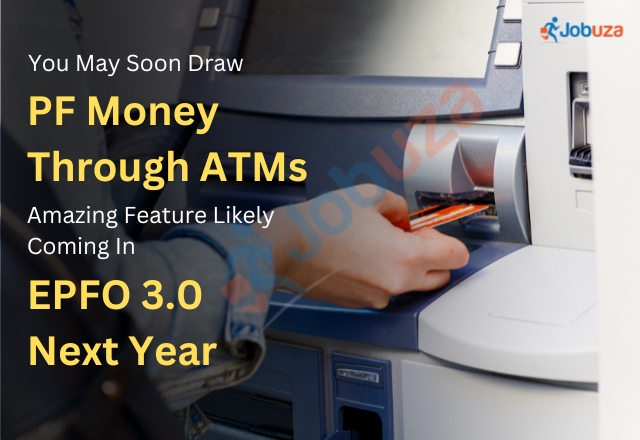
PF Money: In a major move to enhance convenience for its members, the Employees’ Provident Fund Organisation (EPFO) is set to launch EPFO 3.0. One of the most significant updates in this version is the ability for subscribers to withdraw their Provident Fund (PF) directly from ATMs. According to a report by ET Now, this initiative aims to simplify the withdrawal process, allowing members to access their PF savings without the usual waiting period.
How the New ATM Withdrawal Feature Will Work
To facilitate this upgrade, the labour ministry plans to issue an ATM card similar to a debit card. Using this card, members can withdraw PF money directly from ATMs, reducing the processing time significantly. Currently, PF withdrawals take around seven to ten days to reflect in a linked bank account. However, with this new feature, members will have instant access to their funds.
Although this initiative improves accessibility, certain limitations will still apply. For instance, subscribers will only be able to withdraw up to 50% of their total PF balance through ATMs. Reports suggest that this feature could become available between May and June 2025.
Possible Removal of the 12% Contribution Cap
In another potential reform, the government is considering removing the existing 12% cap on employee contributions to the Provident Fund. If implemented, this change will allow employees to contribute an unlimited amount to their PF accounts. However, employer contributions will remain fixed according to the employee’s salary to prevent additional financial burdens on businesses.
What These Changes Mean for EPFO Members
These initiatives reflect EPFO’s commitment to modernizing its services and offering greater financial flexibility to its members. The introduction of ATM withdrawals will eliminate delays, providing immediate access to funds during emergencies. Additionally, the removal of the contribution cap could enable employees to save more for retirement without restrictions.
As EPFO moves forward with these updates, members can expect a more efficient and user-friendly system that aligns with their financial needs.
For More Latest Updates: Click Here

by Jobuza Team | Dec 9, 2024 | BLOG, Trending News
Ek Parivar Ek Naukari Yojana (One Family One Job Scheme) is an ambitious initiative being implemented by various state governments in India. The goal of this scheme is to ensure that one member of every family gets a government job, thereby improving their economic situation and increasing employment opportunities. Key Features of the Scheme:
Objective:
The primary aim of this scheme is to provide a government job to one member of every family, ensuring better social and economic conditions for the family.
Organizations and Jobs:
The scheme offers government job opportunities in various departments as per state government norms. The categories and types of jobs may vary depending on the state.
Eligibility Criteria:
The benefit of this scheme is available to families that do not have any government job. Candidates must meet the general qualifications, age limit, and eligibility criteria for the specific job openings.
Support and Training:
Candidates may receive training and guidance for preparing for government exams or interviews. Many states implement this through job fairs or government exam programs.
How to Apply:
Online Application:
Visit the official website of the concerned state government and gather detailed information about the scheme. If the recruitment process is ongoing under the scheme, you can find the application link to apply.
Application Process:
Fill in the required details in the application form such as name, address, educational qualifications, and family details. Upload necessary documents like Aadhaar card, income certificate, and family membership certificate.
Examination and Interview:
Once the application is accepted, candidates may be called for an examination and interview. After passing the examination, the appointment process for the job will begin.
Eligibility:
- Residency: The candidate must be a resident of the respective state.
- Family Details: The family should not already have a government job.
- Age Limit: Generally between 18-40 years (varies by state).
- Educational Qualifications: Depends on the type of job being applied for.
This scheme aims to increase job availability and strengthen the economic condition of families. Candidates are advised to read the state-specific rules and requirements before applying.
Online Application Process:
Visit the Official State Government Website:
Go to the state government’s official website. For instance, if you are from Uttar Pradesh, Bihar, or any other state, visit the respective state’s government portal.
Find the Application Link:
Look for the “Ek Parivar Ek Naukari Yojana” section on the website, and click on the application link if recruitment is currently open.
Fill in the Application Form:
Provide personal details such as name, address, educational qualifications, family details, and upload required documents (Aadhaar card, family certificate, educational qualifications, etc.).
Application Fee:
Some states may charge an application fee. Pay the fee if applicable, and proceed to submit your application.
Examination and Interview:
After application approval, candidates may be called for an interview or examination. If successful, the candidate will be offered a government job.
This scheme is a great step towards improving employment opportunities and financial stability for families across India.
click here for more trending news – https://jobuza.com/category/trending-news/
by Jobuza Team | Nov 29, 2024 | BLOG, PAN/Aadhar Card Updates, Trending News
New PAN 2.0 System Explained: Duplicate PAN, Penalty Risk & How to Check or Surrender Safely
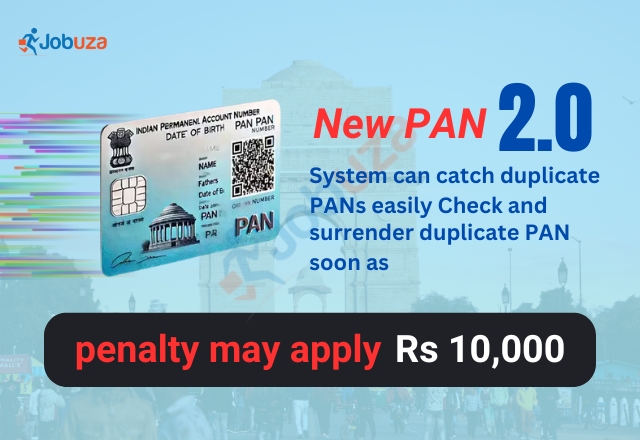
The Indian government has introduced PAN 2.0, an upgraded version of the Permanent Account Number (PAN) system. This improved system is part of the government’s ongoing effort to eliminate duplicate PANs, prevent fraud, and enhance the overall security of financial systems.
PAN 2.0 is Optional – But Be Cautious of Duplicate PANs
If you already have a valid PAN card, you are not required to apply for PAN 2.0. It is completely optional. However, if you discover that a duplicate PAN has been issued in your name—whether intentionally or accidentally—you must surrender it immediately.
Holding more than one PAN card is illegal under Section 139A of the Income Tax Act, and can lead to a penalty of up to ₹10,000 under Section 272B.
How the Government Tracks Duplicate PANs
With PAN 2.0, the government now uses advanced technologies to detect and prevent duplicate PAN issuance. According to a Ministry of Finance press release (dated November 26, 2024), the new system includes:
-
A centralised detection mechanism
-
Advanced data analytics
-
Real-time Aadhaar validation
-
QR code embedded PAN cards
-
Improved logic to catch duplicate applications automatically
These security upgrades make it difficult for anyone to misuse another person’s identity or documents to get multiple PANs.
Why Duplicate PANs Are a Serious Problem
Tax and legal experts warn that duplicate PANs have been used in:
-
Fake company registrations
-
GST and input tax credit fraud
-
Financial fraud using stolen identities
Often, individuals may not even know a second PAN exists in their name. Fraudsters sometimes use stolen or fake documents to create fraudulent identities.
How to Check If You Have a Duplicate PAN
If you’re unsure whether a duplicate PAN has been issued in your name, you can:
-
Check PAN status on the Income Tax Department’s e-filing portal:
Visit the PAN verification page
-
Contact your Jurisdictional Assessing Officer (JAO):
You can directly approach your local income tax office to confirm if more than one PAN exists under your name or documents.
What to Do If You Find a Duplicate PAN
If you confirm that you have a duplicate PAN, surrender it immediately to avoid legal issues.
Steps to surrender a duplicate PAN:
-
Visit the PAN service provider’s website (NSDL or UTIITSL)
-
Fill the PAN correction/surrender form
-
Select the option to retain one PAN and surrender the other
-
Submit supporting documents
-
You can also write to your Jurisdictional Assessing Officer for deactivation
Can You Be Penalised for a Duplicate PAN?
Yes, but voluntary surrender can help you avoid the penalty.
Experts like Avnish Arora (Forvis Mazars) and Mihir Tanna (S.K. Patodia) confirm that:
-
If you voluntarily surrender a duplicate PAN, especially if it was issued unintentionally (e.g., after losing your card), no penalty is imposed.
-
The tax officer must give you an opportunity to explain before imposing any fine.
-
Genuine mistakes (like unknowingly applying for a new PAN instead of reissuing the old one) are generally treated with leniency if corrected in time.
PAN-Aadhaar Linkage Issues with Duplicate PANs
In some real cases, Aadhaar was accidentally linked to the wrong (duplicate) PAN. When this happens, the duplicate PAN must first be deactivated, and only then can the correct PAN be re-linked with Aadhaar.
If your Aadhaar is not linked to the valid PAN, your ITR filing and bank transactions may be disrupted.
Why PAN 2.0 Is a Step Toward Safer Digital ID
According to industry experts like Wriju Ray (IDfy) and Bimal Jain (A2Z Taxcorp LLP):
-
PAN 2.0 helps in eliminating fraud by making the system more traceable
-
QR codes and Aadhaar linkage improve verification
-
PAN misuse in GST fraud and shell company creation can be reduced
-
Real-time validations ensure only one PAN is issued per person
Ray adds that further improvements, such as requiring live selfies or biometric confirmation, could make the system even more secure.
Final Advice
If you have:
-
Lost your PAN and applied for a new one instead of requesting a reprint
-
Received another PAN unknowingly (e.g., through a family member’s mistake)
-
Any suspicion that your identity has been misused
Take action now. Visit the income tax portal or your jurisdictional assessing officer to check and surrender any duplicate PANs.
Possessing more than one PAN is a violation of tax law—even if it was accidental.
Click here for more trending updates and financial news:
https://jobuza.com/category/trending-news/