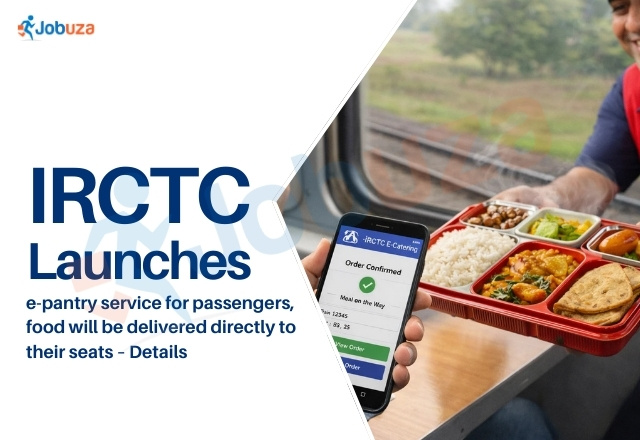
The IRCTC has introduced a new e-pantry service to make onboard dining more convenient for rail passengers. The service allows travelers to pre-order meals before their journey and receive them directly at their seats after the train departs. It is currently available on 25 trains and is designed especially for routes where meals are not included in the ticket fare or where onboard pantry facilities are not available.
How the E-Pantry Service Works
Passengers can order food while booking tickets online or after completing their reservation. The facility is available only to travelers with confirmed or RAC tickets.
After placing an order, passengers receive a confirmation message along with a Meal Verification Code (MVC) via SMS or email. During the journey, the food vendor delivers the order only after verifying this code, ensuring secure and accurate delivery at the passenger’s berth.
Travelers can pre-order standard meals as well as packaged drinking water such as Rail Neer.
Refund Facility for Undelivered Orders
The service includes a consumer protection feature. If a passenger does not receive the ordered meal, they can request a refund through the designated process. This policy is intended to build trust and ensure service reliability as the facility expands across more routes.
Pilot Launch and Expansion
According to a report by India Today, the e-pantry system was initially introduced as a pilot project on one of India’s longest-distance trains. Following its trial phase, the service has now been extended to 25 trains across the network.
The initiative particularly benefits passengers traveling on long-distance routes without pantry cars, offering them access to pre-booked, verified meals without leaving their seats.
Why the Service Matters for Passengers
The e-pantry service reflects a broader effort by Indian Railways to modernize passenger services and improve travel comfort. By allowing advance meal booking and secure seat delivery, the system reduces uncertainty around food availability and minimizes the need for platform purchases during stops.
As the service expands, it is expected to enhance travel convenience for millions of passengers, especially on long-haul routes where meal options have traditionally been limited.