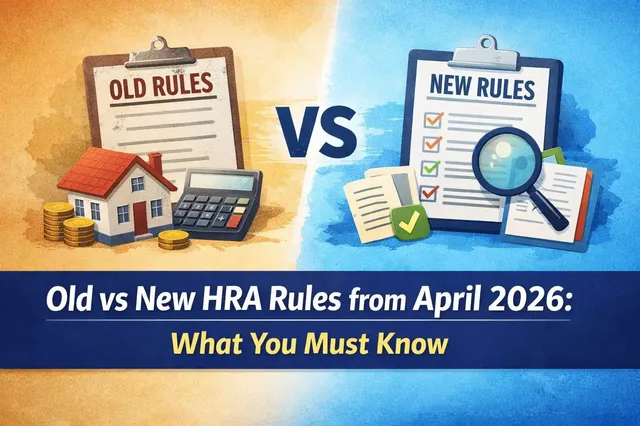
A major update in House Rent Allowance rules is set to take effect from April 1, 2026. Under the new provisions, salaried individuals claiming HRA tax benefits will have to provide more detailed information about their rental arrangements. The change is part of the updated tax framework introduced under the new income tax system.
The rule is aimed at improving transparency and reducing false claims related to rent payments, which have been a concern for tax authorities in recent years.
Mandatory Disclosure of Landlord Relationship
One of the most important changes is the requirement to disclose your relationship with the landlord. Taxpayers will need to mention whether they are paying rent to a family member such as parents, spouse, siblings or any other relative.
This information will be reported through Form 12BB or the newly introduced reporting formats under the updated rules. The disclosure becomes especially important in cases where individuals are paying rent within the family.
PAN Requirement for High Rent Payments
If your total annual rent exceeds one lakh rupees, providing the landlord’s PAN becomes mandatory. This rule continues to apply but will now be more strictly enforced with better tracking systems.
In case the landlord does not have a PAN, taxpayers must submit a declaration mentioning the landlord’s name and address along with a statement confirming the absence of PAN. This ensures that rent claims are properly documented and verifiable.
Why This Rule Has Been Introduced
The primary objective behind this update is to prevent misuse of HRA tax benefits. In many cases, taxpayers have claimed rent deductions using fake landlords or inflated rent amounts.
With the new system, the Income Tax Department will be able to cross-check the tenant’s claims with the landlord’s reported income. This creates a verification mechanism that reduces the chances of tax evasion and ensures only genuine claims are accepted.
Penalty for Incorrect or False Claims
Failure to comply with the new rules can lead to serious consequences. If a taxpayer does not disclose the landlord relationship or fails to provide accurate details, the HRA claim may be rejected during assessment.
This can increase the taxable income and result in higher tax liability. In addition, penalties may be imposed under Section 270A of the Income Tax Act. The penalty can range from 50 percent of the tax on under-reported income to as high as 200 percent in cases of misreporting.
Documents You Should Keep Ready
To avoid any issues during tax filing or assessment, taxpayers should maintain proper documentation related to rent payments. These include rent receipts, a valid rent agreement, Form 12BB, and proof of payment such as bank statements or transaction records.
If the annual rent exceeds one lakh rupees, keeping the landlord’s PAN details ready is also essential.
Can You Claim HRA for Rent Paid to Family Members
Yes, claiming HRA while paying rent to family members is allowed under tax rules. However, the arrangement must be genuine and properly documented.
The rent paid should be reflected as income in the family member’s income tax return. In addition, there must be actual money transfer and supporting documents such as rent agreements and receipts.
Additional Benefit for Working Professionals
Taxpayers can also claim both HRA exemption and home loan benefits under certain conditions. For example, if a person owns a house in one city but lives on rent in another city due to work, they can claim both deductions.
Final Words
The new HRA rules coming into effect from April 1, 2026, place greater responsibility on taxpayers to ensure accurate reporting and proper documentation. While the changes may seem strict, they are designed to bring more transparency into the system and reduce misuse of tax benefits.
Salaried individuals should review their rent arrangements and keep all necessary documents ready to avoid penalties and ensure smooth tax filing.