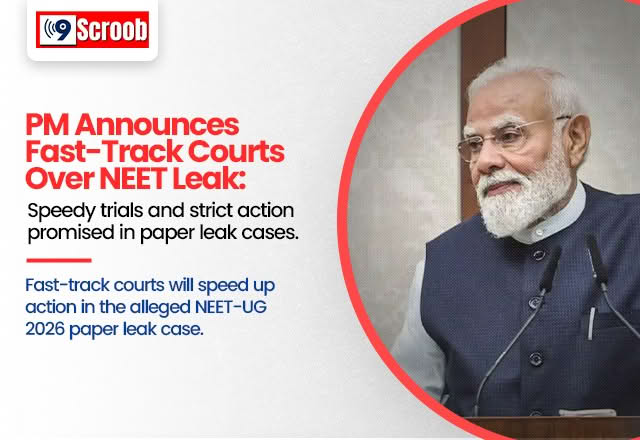
New Delhi, July 23: As outrage over the alleged NEET-UG 2026 paper leak continues to grow, Prime Minister Narendra Modi on Thursday announced that the Centre will set up fast-track courts to ensure speedy trials and strict punishment for those involved in examination paper leak cases.
The announcement comes amid nationwide protests by students, parents, and opposition parties demanding accountability and stronger safeguards to protect the integrity of competitive examinations.
PM Modi’s Message to Students
Sharing the announcement on X, Prime Minister Modi said the future of India’s youth is the government’s highest priority and assured students that those responsible for paper leaks would face strict legal action.
“Nothing is more important than the future of our youth. Those who play with the dreams of our students will not be spared. We have decided to establish fast-track courts to ensure swift and stringent punishment in paper leak cases.”
The Prime Minister also said he had directed all concerned agencies to expedite investigations so that the guilty are brought to justice without unnecessary delay. He added that the government remains committed to protecting the interests of honest students and restoring trust in the country’s examination system.
Announcement Comes Amid Growing Protests
The Centre’s decision follows days of demonstrations across several states over the alleged NEET paper leak. Student groups have demanded a transparent investigation, tougher action against those involved, and reforms to prevent similar incidents in the future.
The issue gained further attention after the recent ‘Sansad Chalo’ protest in Delhi, where demonstrators clashed with Delhi Police while marching towards Parliament. The incident intensified political pressure on the government and sparked a nationwide debate over examination transparency.
Why the Issue Matters
For millions of students, NEET is one of the most important examinations of their academic journey. Many spend years preparing for the medical entrance test, making any allegation of malpractice a matter of serious concern.
Students say the controversy has shaken their confidence in the examination system and are calling for stronger security measures, better monitoring, and quicker action against organised paper leak networks.
Opposition Demands More Accountability
While welcoming strict punishment for those responsible, Opposition leaders argued that the government’s announcement alone is not enough.
Congress leader Rahul Gandhi reiterated his demand for the resignation of Union Education Minister Dharmendra Pradhan, saying students deserve accountability along with long-term reforms to restore confidence in national examinations.
Several Opposition parties have also called for greater transparency in the investigation and stronger institutional safeguards to prevent future paper leaks.
What Are Fast-Track Courts?
Fast-track courts are special courts created to hear specific cases on priority. They are designed to reduce delays in legal proceedings by ensuring faster hearings and quicker verdicts.
The government believes that expediting paper leak cases will not only deliver justice faster but also discourage organised exam fraud in the future.
What Happens Next?
The Centre is expected to announce the framework for the proposed fast-track courts in the coming weeks. Meanwhile, investigations into the alleged NEET paper leak are continuing, with authorities working to identify everyone involved.
As Parliament debates the issue and protests continue in different parts of the country, the government’s latest move is being viewed as an effort to reassure millions of students that examination fraud will be dealt with firmly.
Whether the announcement succeeds in restoring public confidence will depend on how quickly the promised measures are implemented and whether they lead to lasting reforms in India’s examination system.