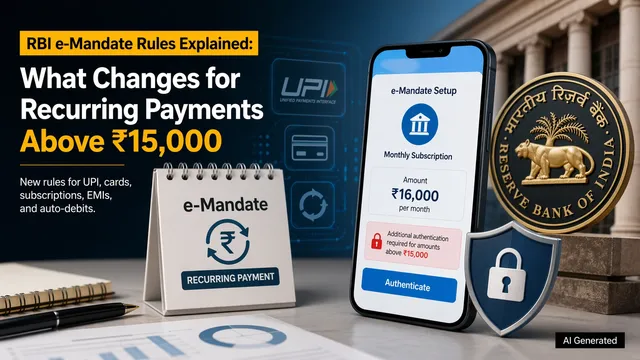
The Reserve Bank of India has introduced updated guidelines for e-mandates, bringing more clarity and control to recurring digital payments. These changes are aimed at making auto-debit transactions smoother while strengthening user protection across platforms like UPI, debit cards, credit cards, and prepaid instruments.
What Is the New Rs 15,000 Rule?
Under the revised framework, recurring payments up to Rs 15,000 can now be processed without requiring an OTP. This makes smaller payments like OTT subscriptions, mobile recharges, and utility bills faster and hassle-free.
However, for transactions above Rs 15,000, an additional authentication step such as OTP will be mandatory. This ensures better security for higher-value payments and reduces the risk of unauthorized deductions.
Important Exception You Should Know
There is a notable exception to this rule. Payments such as insurance premiums, mutual fund investments, and credit card bill payments between Rs 15,000 and Rs 1 lakh may still be processed without OTP, provided certain conditions are met. This flexibility ensures that essential financial commitments are not disrupted.
Mandatory Alerts Before and After Payment
To improve transparency and user control, RBI has made it compulsory for banks and payment platforms to send alerts:
- A pre-debit notification must be sent at least 24 hours before the payment
- This alert will include details like merchant name, transaction amount, and debit date
- Users will have the option to cancel or opt out before the payment is processed
Additionally, post-debit alerts will also be sent after every transaction, along with details on grievance redressal. This ensures users are always informed about their payments.
No Charges for Using e-Mandate
The RBI has clearly stated that no charges can be imposed on customers for setting up or using e-mandates. This makes automated payments more accessible and cost-effective for users.
Better Protection Against Fraud
The updated rules also extend RBI’s existing customer protection guidelines to recurring payments. In case of any unauthorized auto-debit, users will have limited liability, provided they report the issue within the specified time.
What This Means for Users
These changes strike a balance between convenience and security. Smaller transactions will now happen seamlessly without OTP interruptions, while larger payments will have added safeguards.
The 24-hour alert system gives users enough time to review and stop unwanted transactions, addressing one of the biggest concerns around auto-debits.
Overall, the updated e-mandate rules are a step towards a safer and more user-friendly digital payment ecosystem.