The State Bank of India (SBI) has officially released the SBI PO Notification 2026 for the recruitment of Probationary Officers (PO). The notification has been published on the official website of SBI, sbi.co.in, on June 18, 2026. Interested and eligible candidates can apply online for 1,500 PO vacancies through the official recruitment portal.
The SBI PO recruitment process will be conducted in multiple stages, including the Preliminary Examination, Main Examination, Psychometric Test, Group Exercise, and Interview. Candidates who successfully clear all stages will be selected for the Probationary Officer post in SBI.
SBI PO Recruitment 2026 Eligibility Criteria
Candidates planning to apply for SBI PO 2026 must fulfil the required eligibility conditions mentioned in the official notification.
Applicants should have a bachelor’s degree from a recognised university or institution in any discipline. Candidates who are currently in the final year of their graduation programme can also apply, provided they submit proof of completing their degree within the specified timeline.
The age limit for SBI PO Recruitment 2026 is between 21 and 30 years. However, candidates belonging to reserved categories will receive age relaxation as per the government rules.
SBI PO Vacancy 2026 Details
SBI has announced a total of 1,500 vacancies for the Probationary Officer post. Out of these, 1,446 vacancies are regular positions, while 54 vacancies are backlog posts.
The category-wise distribution of regular vacancies is as follows:
General (UR): 588 vacancies
Economically Weaker Section (EWS): 144 vacancies
Other Backward Classes (OBC): 390 vacancies
Scheduled Caste (SC): 216 vacancies
Scheduled Tribe (ST): 108 vacancies
The backlog vacancies include 18 posts for SC candidates and 36 posts for ST candidates.
SBI PO Notification 2026 Direct Link to Apply
Candidates interested in applying for SBI PO Recruitment 2026 can visit the official SBI website and complete the online application process. Applicants are advised to carefully check the eligibility criteria, important dates, and application instructions before submitting the form.
Direct Link to Apply: [Official SBI Recruitment Portal]
How to Apply Online for SBI PO Recruitment 2026
Candidates can follow these steps to complete the SBI PO 2026 application process:
Step 1: Visit the official SBI website at sbi.co.in.
Step 2: Open the “Careers” section available at the bottom of the homepage.
Step 3: Click on the “Current Openings” option to view the latest recruitment notifications.
Step 4: Select the “Recruitment of Probationary Officers (PO) 2026” notification link.
Step 5: Read all instructions carefully and click on the “Apply Online” option.
Step 6: Complete the registration process by entering the required personal and contact details.
Step 7: Fill out the application form with educational qualifications and other required information.
Step 8: Upload scanned copies of documents, including photographs, signatures, and certificates.
Step 9: Pay the application fee through the available online payment methods.
Step 10: Review all details entered in the application form and submit it.
After successful submission, candidates should download and save the confirmation page for future reference.
SBI PO Recruitment 2026 Important Dates
Event
Date
Online application start date
June 18, 2026
Last date to submit application form
July 8, 2026
Last date for editing application details
July 8, 2026
Online fee payment period
June 18, 2026 to July 8, 2026
Last date to print application form
July 23, 2026
Candidates are advised to complete the SBI PO 2026 application process before the deadline to avoid last-minute technical issues. Applicants should also verify all details and documents carefully before final submission to ensure their application is accepted.
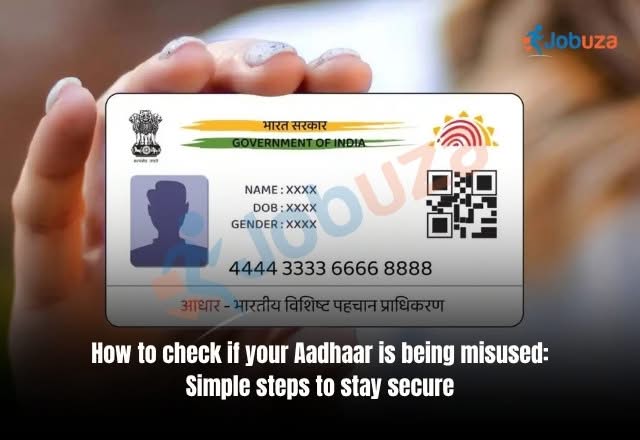
aadhaar card misuse: Aadhaar has become one of the most important identity documents in India and is widely used for various services such as banking, mobile SIM verification, government schemes, and financial transactions.
aadhaar card misuse: While Aadhaar makes identity verification easier, improper sharing of Aadhaar details or using biometric authentication on unknown platforms can increase the risk of identity fraud.
If you are worried that someone may be using your Aadhaar details without your permission, you can check your Aadhaar authentication history and take necessary security measures.
What Is Aadhaar Authentication History?
Whenever your Aadhaar number is used for identity verification, a digital record is generated. This verification may happen through:
OTP-based authentication
Fingerprint authentication
Iris authentication
Other biometric verification methods
This digital record is called Aadhaar Authentication History.
UIDAI provides this facility so Aadhaar holders can check when and where their Aadhaar was used for authentication.
Why Should You Check Aadhaar Authentication History?
Regularly checking your Aadhaar usage history helps you identify any suspicious or unauthorized activity linked to your identity.
The authentication history includes details such as:
Date and time of authentication
Type of authentication method used
Records of previous authentication attempts
Activity details from the last six months
By reviewing these details, users can quickly detect if their Aadhaar information has been used without their knowledge.
How to Check Aadhaar Usage History Online
Aadhaar holders can check their authentication history through UIDAI services and the mAadhaar application.
Follow these steps:
Download the mAadhaar app from Google Play Store or Apple App Store.
Login using your Aadhaar number.
Verify your identity through OTP sent to your registered mobile number.
Create a secure 4-digit PIN for accessing Aadhaar services.
Open the My Aadhaar section.
Enter your security PIN.
Select the Security option.
Choose Aadhaar Authentication History.
Select the required date range to view details.
After completing these steps, you can check all recent authentication activities linked to your Aadhaar number.
What to Do If You Find Suspicious Aadhaar Activity?
If you notice any unknown authentication record or activity that you do not recognize, take immediate action.
Here are some steps you can follow:
Contact the UIDAI helpline number 1947 and report the issue.
Lock your Aadhaar biometric information using the mAadhaar app.
Keep checking your Aadhaar authentication history regularly.
Avoid sharing Aadhaar details with unknown individuals or websites.
Quick action can help reduce the chances of identity misuse and financial fraud.
Important Tips to Keep Your Aadhaar Details Safe
To protect your Aadhaar information, follow these security practices:
Avoid Unnecessary Sharing of Aadhaar Copies
Do not share Aadhaar photocopies unless it is absolutely required. Always verify why your Aadhaar details are being requested.
Use Masked Aadhaar
Whenever possible, use a Masked Aadhaar that hides the first eight digits of your Aadhaar number while showing only the last four digits.
Enable Biometric Lock
Locking your biometric details adds an extra layer of security and prevents unauthorized fingerprint or iris authentication.
Verify Service Providers Before Sharing Details
Always check the authenticity of banks, companies, websites, or agencies asking for your Aadhaar information.
Why Aadhaar Monitoring Is Important
With increasing digital transactions and online services, protecting your identity has become more important than ever.
Regularly checking your Aadhaar authentication history helps you stay aware of how your personal information is being used. It also allows you to take quick action if any unauthorized activity is detected.
A small step like monitoring Aadhaar usage can help protect your identity, personal information, and financial security in the digital age.
Filing your Income Tax Return (ITR) for FY 2025-26 requires proper understanding of the applicable tax slabs and benefits available under both the old and new income tax regimes.
Many salaried taxpayers often wonder whether they can legally pay zero income tax on their earnings. The answer depends on the tax regime selected, total taxable income, deductions claimed, and eligibility for tax rebates.
One of the most important benefits available to eligible taxpayers is the Section 87A rebate under the Income Tax Act, which can significantly reduce or eliminate tax liability.
What Is Section 87A Tax Rebate?
Section 87A rebate is a tax benefit provided to resident individual taxpayers whose total income falls within the specified limit.
Under this rebate, taxpayers can reduce their final tax liability after calculating tax as per applicable income tax slabs.
The process works as follows:
Tax is calculated according to the applicable income tax rates.
The eligible Section 87A rebate amount is deducted from the calculated tax.
The remaining tax liability becomes zero if the rebate covers the entire tax amount.
Zero Tax Benefit Under New Income Tax Regime
Under the new income tax regime, individuals with total income up to ₹12 lakh can claim a rebate of up to ₹60,000 under Section 87A.
This means eligible taxpayers with income up to ₹12 lakh may have no tax liability after applying the rebate.
However, taxpayers should note that the basic exemption limit and zero-tax limit are different concepts.
For example, even if the basic exemption limit is lower, taxpayers may still pay zero tax due to the Section 87A rebate benefit.
Section 87A Rebate Under Old Tax Regime
Taxpayers opting for the old income tax regime can also claim Section 87A benefits.
Under the old regime:
Individuals with taxable income up to ₹5 lakh can claim a rebate of up to ₹12,500.
This benefit can reduce the final tax liability to zero for eligible taxpayers.
Taxpayers can choose between the old and new tax regimes depending on their income structure, deductions, and financial planning.
Marginal Relief Under New Tax Regime
Apart from the Section 87A rebate, the new tax regime also provides marginal relief for taxpayers whose income slightly exceeds ₹12 lakh.
This provision ensures that taxpayers do not face a sudden increase in tax liability just because their income crosses the rebate limit.
According to tax experts, marginal relief applies when taxable income exceeds ₹12 lakh but remains within the specified limit.
Under marginal relief, the additional tax payable is restricted to the amount by which income exceeds the ₹12 lakh threshold.
Section 87A Rebate Explained With Examples
The benefit of Section 87A can be understood through different income scenarios:
Tax Regime
Taxable Income
Tax Before Rebate
Section 87A Benefit
Final Tax Liability
Old Regime
₹5 lakh
₹12,500
₹12,500
Nil
New Regime
₹12 lakh
₹60,000
₹60,000
Nil
New Regime
Slightly above ₹12 lakh
Calculated as per slabs
Marginal relief applicable
Reduced tax
The final tax calculation depends on deductions, exemptions, income sources, and applicable tax rules.
Important Points About Section 87A Rebate
Taxpayers should keep the following points in mind:
Under the new tax regime, Section 87A rebate is not available on income taxed at special rates, such as certain capital gains or lottery winnings.
Under the old tax regime, rebate benefits are available against normal tax liability but may not apply to certain long-term capital gains covered under Section 112A.
Only resident individual taxpayers can claim the Section 87A rebate.
Taxpayers must calculate their total taxable income correctly before claiming the benefit.
Section 87A Changes From FY 2026-27
Section 87A of the Income Tax Act, 1961 will be replaced by Section 156 of the Income Tax Act, 2025 from 1 April 2026.
The new provision will apply from Financial Year 2026-27 and taxpayers should check updated tax rules while filing future income tax returns.
Final Takeaway
Section 87A rebate is an important tax-saving benefit for eligible taxpayers. By understanding the rules of both old and new tax regimes, taxpayers can choose the right option and reduce their tax burden legally.
Before filing ITR for FY 2025-26, taxpayers should carefully check their income, deductions, and rebate eligibility to ensure accurate tax calculation.
The rental housing market in India is growing rapidly, and with changing laws and digital processes, tenants need to stay updated before renting a property in 2026.
However, there is no single set of new rent rules that applies uniformly across the entire country. Since tenancy laws come under state jurisdiction, rules can vary from one state to another.
The Model Tenancy Act (MTA), 2021 provides a framework for rental agreements and tenant-landlord relationships, but states have the option to adopt or modify these guidelines according to their requirements.
Before signing a rental agreement in 2026, tenants should understand the important rules and responsibilities applicable in their state.
1. Written Rental Agreement Is Now More Important Than Ever
The practice of renting a house based only on verbal promises is gradually disappearing across India.
Property experts recommend having a detailed written rental agreement that clearly mentions all important terms, including:
Monthly rent amount
Security deposit details
Lock-in period
Maintenance responsibilities
Notice period
Rent increase terms
Renewal conditions
A properly drafted rental agreement helps avoid misunderstandings and protects the rights of both tenants and landlords.
2. Digital Registration of Rental Agreements Is Increasing
One major change in the rental sector in 2026 is the growing use of digital registration systems.
Several states are moving towards online platforms where rental agreements can be submitted and registered digitally with authorities.
However, tenants should remember that digital registration is not yet a mandatory nationwide rule. Requirements may differ depending on state laws and local regulations.
Before renting a property, tenants should check the registration process applicable in their city or state.
3. Security Deposit Rules for Tenants
Security deposit has always been one of the biggest concerns for tenants.
Under the Model Tenancy Act, a limit of up to two months’ rent for residential properties has been suggested as the security deposit amount.
However, this rule is not automatically applicable across all parts of India. In many cities with high rental demand, landlords may still ask for higher deposits if allowed under local practices or state regulations.
Tenants should check the applicable rules before making any payment.
4. Rent Increase Terms Must Be Clearly Mentioned
Tenants should avoid agreements where landlords say, “We will decide the rent later.”
Every rental agreement should clearly mention:
When the rent can be increased
How frequently rent can be revised
The formula or percentage for rent hikes
Having clear rent revision terms helps prevent future disputes between tenants and landlords.
5. Maintenance Responsibilities Should Be Clearly Defined
Maintenance-related issues are among the most common reasons for landlord-tenant disputes.
Before signing the rental agreement, both parties should clearly decide who will handle different types of repairs.
Generally:
Major structural repairs are handled by landlords.
Daily maintenance and minor repairs are usually the tenant’s responsibility.
Clearly defining these responsibilities in advance can help avoid conflicts during the tenancy period.
6. Landlords Cannot Remove Tenants Without Legal Process
Social media often spreads misinformation that landlords can immediately remove tenants after a lease expires or during a dispute.
However, landlords generally need to follow proper legal procedures and notice requirements before asking tenants to vacate.
At the same time, tenants should also follow the agreed lease terms. Staying in a property beyond the agreed rental period may lead to penalties or legal action depending on applicable state rules.
Following proper notice periods protects the interests of both tenants and property owners.
7. Tenant and Landlord Verification Is Important
Identity verification and documentation have become an important part of the rental process.
Depending on state rules, tenants and landlords may need to complete formalities such as:
Police verification
Identity proof submission
Aadhaar or PAN details
Required rental forms
Completing these verification processes helps maintain transparency and reduces the chances of future legal issues.
Things Tenants Should Check Before Renting a House in 2026
Before finalising a rental property, tenants should:
Read the rental agreement carefully.
Understand all charges and responsibilities.
Check security deposit conditions.
Confirm maintenance rules.
Verify landlord details.
Follow state-specific tenancy regulations.
With changing rental practices and increasing digital processes, staying informed about house rent rules in 2026 can help tenants avoid disputes and ensure a smoother renting experience.
The Uttar Pradesh Government has started the UP Rojgar Mela 2026 to provide employment opportunities to job seekers across the state. The employment fair is being organised through the Rojgaar Sangam Portal at rojgaarsangam.up.gov.in.
The job fair will be conducted in different districts of Uttar Pradesh, where candidates can apply for various job opportunities available in both private and government sectors.
Candidates aged between 18 and 40 years can participate in the Rojgar Mela. From 10th pass students to postgraduate candidates, eligible applicants can register online free of cost and take part in the recruitment process.
UP Rojgar Mela 2026: Overview
The UP Rojgar Mela is organised by the Employment Department, Government of Uttar Pradesh, with the aim of connecting unemployed youth with suitable job opportunities.
Through the Rojgaar Sangam portal, candidates can search for available vacancies, register themselves, and participate in district-level employment fairs.
There is no fixed last date for registration. Eligible candidates can register anytime through the official portal and participate according to the schedule announced for their district.
UP Rojgar Mela 2026 District-Wise Schedule
The Uttar Pradesh government is conducting employment fairs in multiple districts during June and July 2026. Candidates should check the schedule of their respective district before applying.
Date
District
Total Vacancies
20 June 2026
Agra
18,720
20 June 2026
Kanpur Nagar
700
22–23 June 2026
Shamli
200
24–25 June 2026
Shamli
200
30 June 2026
Ayodhya
773
1–2 July 2026
Shamli
200
3–4 July 2026
Shamli
200
7 July 2026
Bhadohi (Sant Ravidas Nagar)
1,928
14 July 2026
Bhadohi (Sant Ravidas Nagar)
550
19 June 2026
Prayagraj
2,995
19 June 2026
Ayodhya
1,450
19–20 June 2026
Shamli
200
18–19 June 2026
Pratapgarh
950
17–20 June 2026
Bhadohi (Sant Ravidas Nagar)
2,110
17 June 2026
Balrampur
305
17 June 2026
Mirzapur
1,295
17 June 2026
Mahoba
350
17 June 2026
Meerut
1,187
16 June 2026
Gonda
495
15–16 June 2026
Kanpur Nagar
10
Registration Started
Saharanpur
450
Candidates are advised to confirm the latest schedule and venue details through the official Rojgaar Sangam portal.
UP Rojgar Mela 2026 Eligibility Criteria
Candidates from different educational backgrounds can participate in the employment fair.
The eligibility requirements are:
Candidates who have passed Class 10th or Class 12th can apply.
Graduate, postgraduate, and diploma holders are also eligible.
Applicant’s age should be between 18 and 40 years.
Both male and female candidates can participate.
How to Register for UP Rojgar Mela 2026 Online
Interested candidates can complete the registration process through the official Rojgaar Sangam website.
Follow these steps:
Visit the official website rojgaarsangam.up.gov.in.
Click on the Rojgar Mela 2026 Online Registration / Job Seeker option.
Create a new account using your mobile number and email address.
Login using the generated user ID and password.
Enter personal details, educational qualifications, and category information.
Upload your photograph and other required details.
Submit the registration form.
The registration process for UP Rojgar Mela 2026 is completely free.
Benefits of UP Rojgar Mela 2026
The employment fair provides several benefits to job seekers, including:
Direct interaction between candidates and employers.
Opportunities for jobs in private and government sectors.
Free online registration facility.
Employment opportunities for candidates from different educational backgrounds.
Easy access to district-level recruitment drives.
The UP Rojgar Mela 2026 is a major initiative by the Uttar Pradesh government to help young candidates find suitable employment opportunities. Eligible candidates should complete their registration and regularly check the official portal for upcoming job fair updates.
Bank of Baroda (BOB) has released the latest recruitment notification for various managerial positions under its Corporate and Institutional Credit (C&IC) Department. The recruitment drive includes vacancies for posts such as Manager, Senior Manager, Chief Manager, Credit Analyst, Vice President, and Assistant Vice President.
Interested and eligible candidates can apply online through the official website of Bank of Baroda. The online application process will begin from 16 June 2026 and candidates can submit their applications until 6 July 2026.
Applicants are advised to carefully read the official notification, check eligibility requirements, and keep all required documents ready before applying.
BOB Recruitment 2026 Apply Online Link
Candidates who meet the required eligibility criteria can apply for Bank of Baroda Recruitment 2026 through the official application portal.
Before submitting the application form, candidates should verify all details, upload the required documents, and complete the fee payment process within the given deadline.
BOB Recruitment 2026 Application Link: Apply Here
Bank of Baroda Recruitment 2026 Highlights
Bank of Baroda will start the online registration process for 86 Manager and Senior Manager posts from 16 June 2026. Candidates can check the important recruitment details below:
Candidates applying for Bank of Baroda Manager Recruitment 2026 must fulfil the required eligibility conditions related to education, age, experience, and other requirements.
Applicants providing incorrect information or incomplete details during the application process may face cancellation of their candidature at any stage.
Educational Qualification
Candidates should have:
A graduate degree in any discipline.
A postgraduate degree or diploma in Finance.
Professional qualifications such as CA, CMA, CS, or CFA will also be considered.
Age Limit
The age criteria for applicants are:
Minimum Age: 25 years
Maximum Age: 42 years
Age relaxation will be applicable as per government rules.
Work Experience Required
Candidates must have relevant professional experience depending on the position applied for.
The required experience may range between 3 years to 8 years according to the respective job grade.
CIBIL Score Requirement
Candidates must have a minimum 680 CIBIL score at the time of joining.
Applicants with a lower credit score may not be eligible for the recruitment process.
Nationality Criteria
Only Indian citizens are eligible to apply.
Certain categories of citizens from Nepal, Bhutan, and Tibet may also be eligible as per government guidelines.
Job Location
Selected candidates may be posted anywhere across India as per Bank of Baroda’s requirements.
BOB Recruitment 2026 Application Fee
Candidates need to pay the application fee according to their category.
General, EWS, and OBC Candidates: ₹850 (including GST)
The selection process for Bank of Baroda Recruitment 2026 will include multiple stages.
Online Examination
The online test will carry a total of 150 marks and will have a duration of 150 minutes.
The exam will include sections such as:
Reasoning Ability
English Language
Quantitative Aptitude
Professional Knowledge
The first three sections will be qualifying in nature. General and EWS category candidates need to secure at least 40% marks, while reserved category candidates need 35% marks.
The Professional Knowledge section will contribute towards the final selection score.
Psychometric Assessment
Candidates who qualify the required stages may have to appear for a psychometric assessment.
This stage will be qualifying in nature.
Personal Interview
Candidates shortlisted for the interview round must meet the minimum qualifying marks.
General category candidates: 60%
Reserved category candidates: 55%
The final selection will be based on performance in the selection stages and fulfilment of all eligibility requirements.
BOB Recruitment 2026: Important Points for Candidates
Candidates planning to apply for these posts should ensure that they:
Check eligibility criteria before applying.
Submit accurate details in the application form.
Keep educational certificates and experience documents ready.
Complete the application process before the deadline.
Bank of Baroda Recruitment 2026 provides a good opportunity for experienced professionals looking for career growth in the banking sector. Applicants should regularly check the official website for updates related to the recruitment process.