by Jobuza Team | May 14, 2026 | BLOG, Trending News
The central government has increased the import duty on gold and silver from 6 percent to 15 percent in a major move aimed at protecting India’s foreign exchange reserves and strengthening the economy amid global uncertainty.
Under the revised structure, gold and silver imports will now attract a 10 percent basic customs duty along with a 5 percent Agriculture Infrastructure and Development Cess (AIDC). This brings the total effective import duty to 15 percent.
The decision comes at a time when rising global crude oil prices, pressure on the rupee, and increasing demand for US dollars are creating challenges for the Indian economy.
Why the Government Increased Gold Import Duty
The government’s decision is being linked to several economic concerns, including the growing import bill and pressure on foreign exchange reserves.
Experts believe that higher import duty may help reduce excessive dependence on imported gold and improve the country’s overall trade balance.
Reduction in Gold and Silver Imports
India is one of the world’s largest consumers of gold, but a major portion of domestic demand is fulfilled through imports.
According to industry data, investment demand for gold has also increased sharply in recent months. Reports suggest that investment in gold ETFs rose significantly during the March quarter.
By increasing import duty, the government aims to make imported gold more expensive, which may reduce unnecessary demand and lower overall imports.
Experts also believe that promoting gold recycling and encouraging participation in the Gold Monetization Scheme could help reduce dependence on imported precious metals.
Pressure on Foreign Exchange Reserves
Gold imports are paid for in US dollars, which directly affects India’s foreign exchange reserves.
At the same time, rising crude oil prices and geopolitical tensions in the global market have increased demand for the dollar worldwide. This has added further pressure on India’s forex reserves.
Prime Minister Narendra Modi has also urged citizens to avoid unnecessary purchases and conserve resources to support the economy during uncertain global conditions.
Reports indicate that gold imports had already fallen sharply in recent months, and the higher duty could lead to a further decline.
Government Wants To Stabilise the Rupee
The Indian rupee has been facing continuous pressure against the US dollar.
When imports of commodities like gold and crude oil rise, the country needs more dollars for payments, which increases demand for the US currency and weakens the rupee further.
By discouraging imports of non-essential products such as gold, the government hopes to reduce pressure on the rupee and maintain currency stability.
Economists believe that controlling unnecessary imports can help improve investor confidence and reduce volatility in the foreign exchange market.
Efforts To Reduce Trade Deficit
The trade deficit increases when a country imports more goods than it exports.
Experts often classify gold as a non-productive import because it does not directly contribute to manufacturing output or exports on a large scale.
Along with crude oil and electronic goods, gold imports contribute significantly to India’s overall import bill.
The government believes that reducing gold imports can help improve the country’s trade balance and support long-term economic stability.
Jewelry Industry Raises Concerns
While the government sees the move as necessary for economic management, the jewelry industry has expressed concerns about its impact on demand and employment.
Industry representatives say that a sharp rise in gold prices due to higher import duty could reduce consumer purchases, affecting jewelers, artisans, and workers associated with the sector.
Millions of people in India are directly or indirectly connected to the jewelry industry for their livelihood.
Experts believe the long-term success of the policy will depend on how effectively the government supports domestic gold recycling and alternative investment options.
Impact on Gold Prices and Consumers
Following the increase in import duty, gold and silver prices in the domestic market may rise further.
Consumers planning to buy jewelry or invest in gold could face higher costs in the coming months.
At the same time, financial experts believe that the move may encourage some investors to explore alternative investment options instead of physical gold purchases.
Read More Trending News Updates
by Jobuza Team | May 14, 2026 | BLOG, Trending News
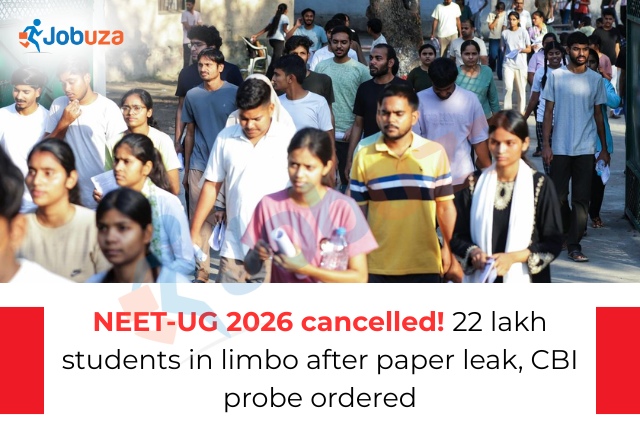
The National Testing Agency (NTA) has officially cancelled the NEET UG 2026 examination following allegations of a major paper leak. The entrance exam, which was conducted on May 3 and attended by more than 22 lakh students across the country, will now be held again from the beginning.
The decision came after reports of irregularities surfaced just days after the examination. The matter has now been handed over to the Central Bureau of Investigation for a detailed investigation into the alleged leak and possible involvement of organised networks.
Why NEET UG 2026 Was Cancelled
According to the NTA, the examination was cancelled after evidence shared by law enforcement agencies suggested that the integrity of the exam had been compromised.
The agency stated that allowing the existing examination results to stand could have damaged the credibility and fairness of one of India’s largest medical entrance examinations. As a result, the authorities decided that conducting a fresh examination was the only fair solution for all candidates.
The controversy reportedly began after officials received information regarding suspicious activities linked to the question paper shortly after the exam concluded.
What the CBI Investigation Will Focus On
The central government has assigned the case to the CBI to investigate how the alleged leaked paper reached candidates before the examination.
Reports suggest that the leaked material may have included all 90 Biology questions and all 45 Chemistry questions from the actual examination paper.
Investigators are expected to examine whether the incident involved an organised cheating network operating across multiple states.
The investigation will reportedly trace the suspected leak route beginning from a printing facility in Jaipur and extending to several locations, including:
- Sikar
- Jhunjhunu
- Nagaur
- Dehradun
- Jaipur
- Kerala
Authorities have already questioned around 15 individuals in connection with the case.
The NTA has assured full cooperation with the investigation and said that all technical records, documents, and related data will be provided to the agency.
Relief Measures Announced for Students
To reduce inconvenience for students, the NTA has announced several relief measures for candidates affected by the cancellation.
The agency clarified that students will not need to complete a fresh registration process. Existing application data will automatically remain valid for the re-examination.
The previously allotted examination centres will also continue for most candidates.
In addition:
- No additional application fee will be charged
- Any fee already collected will be refunded
- Fresh admit cards will be issued before the new examination date
The revised examination schedule is expected to be announced through official channels in the coming weeks.
NTA Appeals Students To Avoid Rumours
The NTA has advised students and parents not to rely on unverified information circulating on social media platforms.
Candidates have been asked to follow only official announcements for updates regarding the new exam date, admit cards, and examination guidelines.
The agency also encouraged students to continue their preparation while waiting for the revised schedule.
Uncertainty Among Lakhs of Medical Aspirants
The cancellation has created anxiety and uncertainty among lakhs of NEET aspirants and their families. For many students, the examination represents years of preparation and determines admission into medical colleges across India.
Despite the disruption, officials have maintained that protecting the fairness and transparency of the examination system is essential for safeguarding the future of deserving candidates.
Students are now waiting for the official announcement regarding the fresh NEET UG 2026 examination date and further instructions from the NTA.
Read More Trending News Updates
by Jobuza Team | May 13, 2026 | BLOG, Trending News
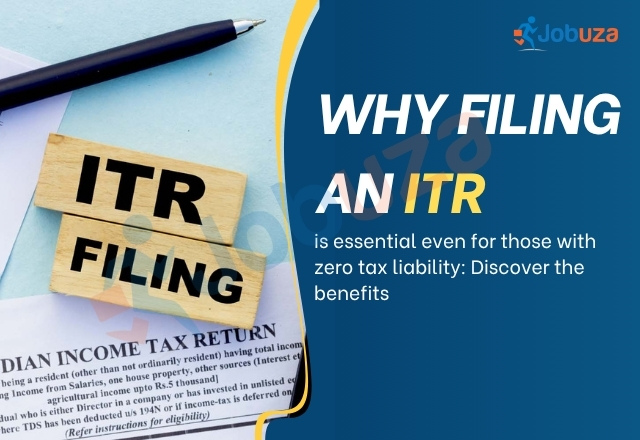
Many people believe that filing an Income Tax Return (ITR) is necessary only when they have to pay income tax. However, this is not entirely true. Even individuals with zero tax liability can benefit significantly from filing their ITR on time.
In today’s digital financial system, filing an ITR is not just about paying taxes. It also acts as an official record of your income, financial activities, and tax compliance. Whether you are a salaried employee, freelancer, student, or small business owner, filing an ITR can provide several long-term financial advantages.
Filing ITR Helps You Claim TDS Refunds
There are many situations where Tax Deducted at Source (TDS) is deducted even when your total income falls below the taxable limit.
For example, TDS may be deducted from:
- Bank fixed deposit interest
- Freelance income
- Dividend earnings
- Contract payments
In such cases, the only way to claim a refund of the deducted amount is by filing an Income Tax Return.
Without filing an ITR, the deducted money may remain unclaimed.
ITR Serves as an Official Income Record
An ITR works as a legal and official document of your annual income and financial transactions. It also helps maintain transparency between taxpayers and the Income Tax Department.
Your filed return gets matched with important records such as:
- AIS (Annual Information Statement)
- TIS (Taxpayer Information Summary)
This helps ensure that your financial details remain properly documented and reduces the chances of receiving notices or scrutiny in the future.
Important for Loan Applications
Income Tax Returns play an important role when applying for different types of loans.
Banks and financial institutions often ask applicants to submit ITR records for the previous two to three years while processing:
- Home loans
- Car loans
- Personal loans
- Business loans
Even if you had no tax liability during those years, your ITR still acts as proof of income and financial stability. A regular ITR filing history can improve your credibility and increase the chances of loan approval.
Useful for Visa Applications
ITR documents are also considered important during visa processing.
Many countries ask applicants to provide Income Tax Return records for the last three to five years for:
- Student visas
- Work visas
- Tourist visas
- Business visas
These documents help embassies verify your financial background and income sources. In some cases, the absence of ITR records may affect the approval process.
Filing ITR Improves Financial Credibility
Regularly filing Income Tax Returns reflects financial discipline and responsible tax compliance. It creates a strong financial profile that can be beneficial in the future for banking, investments, insurance, and credit-related matters.
Even if your income is currently below the taxable limit, maintaining a proper ITR history can be valuable later when your income increases or financial requirements change.
Income Tax Department Tracks Financial Transactions
With increasing digitisation, the Income Tax Department can monitor many types of financial activities, including:
- Bank transactions
- Investment records
- High-value purchases
- Online financial activities
Filing an ITR helps maintain proper documentation of your income and financial dealings. This can help avoid confusion or unnecessary inquiries in the future.
Why Filing ITR Is a Smart Financial Habit
Filing an Income Tax Return is no longer limited to taxpayers with high incomes. It has become an important financial practice for maintaining transparency, building financial credibility, and accessing banking and visa-related benefits.
Even when there is no tax liability, filing an ITR can help you secure refunds, strengthen your financial profile, and keep your income records officially documented.

by Jobuza Team | May 13, 2026 | Bank Jobs, BLOG, Latest Jobs
State Bank of India is preparing for a major hiring drive as the country’s largest public sector lender plans to recruit around 3,000 to 4,000 employees over the next year. The new recruitment initiative is aimed at strengthening the bank’s loan recovery and collection operations as its overall loan portfolio continues to grow.
The announcement was made by SBI Chairman CS Setty during the bank’s fourth-quarter earnings discussion.
SBI Focuses on Stronger Loan Recovery System
According to the SBI chairman, the bank has significantly improved its underwriting system over the years, which has helped reduce bad loans to their lowest level in nearly two decades.
Now, the bank is shifting its focus towards building a stronger collection and recovery mechanism to maintain healthy asset quality in the future.
Speaking about the hiring plan, Setty said the bank will recruit thousands of employees specifically for the loan collection segment. The decision comes at a time when the banking sector is closely monitoring asset quality and future credit risks.
SBI Reports Strong Financial Performance
SBI recently announced a strong financial performance for the January–March quarter. The bank reported a 5.6 percent year-on-year increase in standalone net profit, which reached Rs 19,684 crore.
Along with its quarterly earnings, the bank also declared a dividend of Rs 17.35 per share for shareholders.
The improvement in financial performance has been supported by better loan management, lower bad loans, and stronger operational efficiency.
Why SBI Is Expanding Its Recovery Team
The expansion of the recovery and collection workforce is also linked to upcoming regulatory changes expected from the Reserve Bank of India.
The Reserve Bank is expected to implement Expected Credit Loss (ECL) norms, which may require banks to maintain provisions even for SMA-1 accounts. Because of this, banks are becoming more cautious about loan monitoring and recovery processes.
Industry experts believe that strengthening the collection system at an early stage can help banks control future stress in their loan books.
SBI Employee Strength Increases
SBI’s workforce has already seen steady growth during the financial year. According to available data, the bank had around 2.45 lakh employees at the end of FY26, compared to approximately 2.36 lakh employees a year earlier.
With the addition of up to 4,000 new employees, SBI is expected to further expand its operational and recovery capabilities across the country.
SBI Hiring Could Create New Banking Job Opportunities
The latest hiring plan could create fresh employment opportunities for candidates interested in the banking and finance sector. While the bank has not yet released an official recruitment notification for these positions, more details regarding eligibility, application process, and selection criteria may be announced in the coming months.
Candidates interested in SBI recruitment updates are advised to regularly check the official website of State Bank of India for future announcements.

by Jobuza Team | May 13, 2026 | BLOG, Trending News
State-owned oil marketing companies have issued an important warning for LPG consumers across India regarding a growing number of online delivery scams. Major companies including Hindustan Petroleum Corporation Limited, Indian Oil Corporation, and Bharat Petroleum have alerted customers about fraudsters sending fake LPG delivery messages and making fraudulent calls in the name of gas agencies.
The companies shared the warning through their official social media platforms after reports of increasing cyber fraud cases targeting domestic LPG users.
Fake LPG Delivery Messages Targeting Customers
According to the advisory, scammers are sending fake SMS and WhatsApp messages that appear similar to official LPG delivery notifications. These messages are designed to trick customers into sharing sensitive details such as One-Time Passwords (OTPs) and Delivery Authentication Codes (DACs).
In several cases, fraudsters are also calling consumers while pretending to be gas agency representatives. They ask customers to complete KYC verification or Aadhaar linking to avoid disconnection of gas services. During the process, they request OTPs and other confidential information.
Oil companies have clearly stated that official representatives never ask customers to share OTPs through phone calls, WhatsApp chats, or suspicious links.
HPCL Shares Official Delivery Message Details
HPCL explained that genuine LPG delivery messages follow a specific format. According to the company, official delivery SMS messages are sent only from the sender name “VM-HPGASc-S” and contain a 4-digit OTP used only during cylinder delivery.
The company advised customers not to trust any urgent or suspicious-looking message that differs from the official format.
HPCL also clarified that its employees or delivery agents never ask customers to share OTPs over calls or messaging apps.
How LPG Consumers Can Stay Safe
Customers are advised to use only official platforms while booking LPG cylinders or updating account details. Consumers should avoid clicking unknown links or responding to messages received from personal mobile numbers.
Official apps recommended by the companies include:
Consumers should also regularly verify messages received from gas agencies and avoid sharing personal details without confirmation.
What To Do If You Become a Victim of LPG Scam
If any customer has accidentally shared banking details, OTPs, or lost money in such scams, they should immediately contact the National Cyber Crime Helpline by dialing 1930.
Cybercrime experts say that reporting fraud within the “golden hour” significantly increases the chances of freezing stolen funds and preventing further misuse.
Consumers can also report incidents through the official cybercrime portal managed by the Government of India.
Oil Companies Urge Customers To Remain Alert
With digital fraud cases increasing rapidly, oil marketing companies are encouraging LPG users to stay cautious while dealing with online messages and calls related to gas delivery services.
Customers are advised to trust only official communication channels and avoid sharing sensitive information with unknown callers or unverified platforms.

by Jobuza Team | May 12, 2026 | BLOG, Latest Jobs, State Govt Job
The Himachal Pradesh State Cooperative Bank (HPSCB) has released a short notification for the recruitment of 91 Junior Clerk posts. This recruitment offers a good opportunity for candidates who are looking to build a career in the banking sector after completing Class 12.
Eligible candidates will soon be able to apply online through the official website of Himachal Pradesh State Cooperative Bank. According to the notification, the recruitment process will be conducted on a regular basis through IBPS Mumbai under the PACS and OCS quotas of Himachal Pradesh.
The detailed notification containing complete information regarding important dates, exam pattern, and online application schedule is expected to be released shortly.
HPSCB Junior Clerk Recruitment 2026 Overview
| Particulars |
Details |
| Organisation |
Himachal Pradesh State Cooperative Bank |
| Post Name |
Junior Clerk |
| Total Vacancies |
91 |
| Job Location |
Himachal Pradesh |
| Qualification |
12th Pass / Graduation |
| Minimum Marks Required |
50% |
| Age Limit |
18 to 45 Years |
| Selection Process |
Prelims and Mains Examination |
| Basic Salary |
Rs 19,900 |
| Estimated Monthly Salary |
Up to Rs 26,600 |
| Application Mode |
Online |
HPSCB Junior Clerk Recruitment 2026 Eligibility Criteria
Candidates applying for the Junior Clerk posts must meet the required educational qualification and age criteria mentioned by the bank.
Educational Qualification
Applicants must have passed Class 12 from a recognised board with at least 50 percent marks.
Candidates who possess a graduation degree or higher qualifications are also eligible to apply for the recruitment process.
Bonafide residents of Himachal Pradesh will receive special concessions according to the rules prescribed by the government.
Age Limit
The minimum age required for the recruitment is 18 years, while the maximum age limit is 45 years.
Reserved category candidates will receive age relaxation as per government norms.
HPSCB Junior Clerk Application Fee 2026
The expected application fee for General category candidates is around Rs 1,000.
For women candidates and applicants belonging to SC, ST, and other reserved categories, the application fee is expected to be approximately Rs 800.
The exact fee details will be confirmed in the detailed official notification.
HPSCB Junior Clerk Selection Process 2026
The selection process for Junior Clerk recruitment will be conducted in two stages.
Preliminary Examination
The first stage will be the Preliminary Examination. The exam will include questions from English Language, Reasoning Ability, and Numerical Ability.
Candidates who qualify in the prelims examination will become eligible for the next stage.
Main Examination
Shortlisted candidates will appear for the Main Examination. The mains exam will include subjects such as Reasoning, Mathematics, English, and General Knowledge.
Final selection will be based on performance in the recruitment stages and fulfillment of eligibility conditions.
HPSCB Junior Clerk Salary 2026
Candidates selected for the Junior Clerk posts will receive salary benefits under the Level-2 Pay Scale.
The starting basic salary will be approximately Rs 19,900 per month. Including allowances and other benefits, the total monthly salary may reach around Rs 26,600.
Apart from salary, employees will also receive additional government-approved benefits and facilities offered by the bank.
How to Apply for HPSCB Junior Clerk Recruitment 2026
Candidates will need to apply online through the official HPSCB website once the application link becomes active.
Applicants should first complete the registration process and then fill out the online application form carefully. After entering all required details, candidates must upload their photograph, signature, and necessary documents.
The application form will be submitted successfully after payment of the application fee. Candidates are advised to keep a printout of the final submitted form for future use.
HPSCB Junior Clerk Recruitment 2026 Important Information
The detailed recruitment notification is expected to be released soon on the official website. Candidates should regularly check the official portal for updates regarding exam dates, admit card release, and application schedule.
This recruitment can be a strong opportunity for 12th-pass candidates who are looking for stable government banking jobs in Himachal Pradesh.