by Jobuza Team | Sep 22, 2026 | BLOG
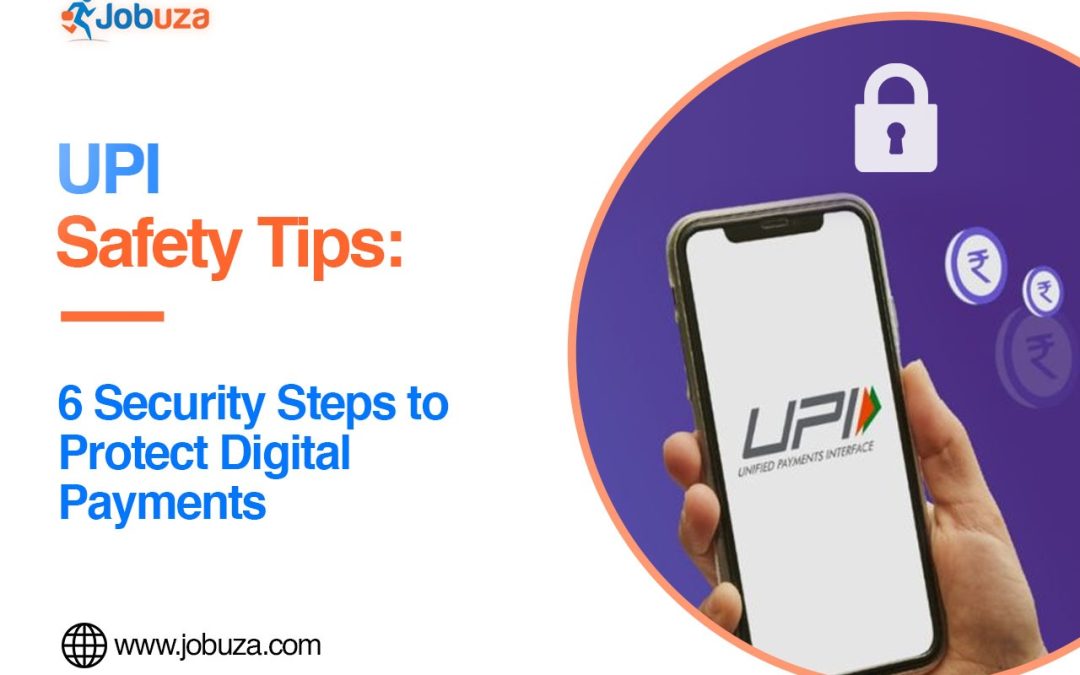
Let’s be honest, UPI has made money matters almost too easy. Split a bill, order food, pay your electrician, send cash to a friend- all in a few taps. But that same speed and convenience is exactly what scammers are counting on. As digital payments have become second nature, fraudsters have gotten a lot more creative about tricking people out of their money. A handful of simple UPI safety tips can go a long way in keeping you protected.
6 Security Steps for Secure UPI Payments
For secure digital payments, here are some important UPI Safety tips that you should follow to make your payment effortless:
- Do not Share Your UPI PIN or OTP
This one sounds obvious, but it’s still how most scams succeed. Your UPI PIN exists for one reason: to authorize payments. It’s not something you hand over to anyone, not even if they claim to be calling from your bank.
The same goes for OTPs and any other confidential banking info. No legitimate customer support rep will ever ask for your UPI PIN over a call, text, or chat. If someone does, that’s your cue to hang up.
- Check the Receiver Name Before Doing a Payment
One of the easiest UPI safety tips to actually follow is just slowing down. Before you punch in your PIN, take two seconds to glance at the recipient’s name showing on your screen. Are you actually paying who you think you’re paying? This matters even more when you’re sending money to a new UPI ID or a number you don’t recognize. If you want to understand what to do when a UPI transaction goes wrong, you can also read our guide on UPI Complaint: A Complete Step-by-Step Guide.
- UPI PIN is not required for Receive Money
Here’s a scam that catches a lot of people off guard: someone tells you that you need to enter your UPI PIN to “receive” a payment, refund, or prize. That’s not how it works. Your PIN authorizes money leaving your account, never money coming in. If you’re being asked to approve something while you’re supposedly the one receiving cash, stop right there. Something’s off.
- Never Click Suspicious Links or Scan Unknown QR Codes
Payment links sent through SMS, email, WhatsApp, or social media deserve a healthy dose of suspicion. A convincing-looking fake link can lead you straight to a site built to steal your information.
The same caution applies to QR codes. Just because someone insists that scanning a code will get you a refund or a payment doesn’t make it true. Before you authorize anything, double-check exactly who you’re paying.
- Use Only Official Banking and UPI Apps
Stick to official app stores when downloading anything banking or payment-related. Skip random APK files or apps forwarded to you in a message, no matter how legit they look.
Keep your phone’s OS and your payment apps updated, use a proper screen lock, and never let a stranger remotely access your phone. Remote-access scams are particularly nasty since they can expose everything- your screen, your apps, your payment activity, all at once. If you’re interested in newer ways of making UPI payments, you can also check out our guide on UPI Tap and Pay Launch in India: How to Make Contactless Payments Without Opening the App.
- Act Quickly If You Notice a Fraudulent Transaction
If something unauthorized shows up in your account, don’t sit on it. Reach out to your bank and your payment provider right away and report it. It’s also worth using India’s official cybercrime reporting channels when the situation calls for it. Hold onto anything useful: the transaction ID, screenshots, any messages exchanged, since these details make reporting a lot smoother. For more information about protecting your payment accounts, you can also read Is It Safe to Link Your Credit Card to UPI? Pros and Cons.
Simple UPI Safety Habits
Beyond these core UPI safety tips, a few small habits add up:
- Keep transaction notifications switched on
- Glance through your bank and UPI history now and then
- Never share your screen with someone you don’t know
- Steer clear of unexpected banking links
- Keep your PIN, OTP, and card details to yourself, always
- If an offer sounds too good to be true, it usually is
FAQs About UPI Safety
Can someone take money from my account if they know my UPI ID?
Not directly — your UPI ID alone doesn’t hand over your PIN. But scammers can still use it as a starting point for a social-engineering scam, so stay alert to unexpected payment requests.
Do I need to enter my UPI PIN to receive money?
No. Your PIN is only needed to send money, not receive it.
What should I do if I accidentally pay a scammer?
Contact your bank and payment app immediately, and consider reporting it through India’s official cyber fraud channels.
Is it safe to scan a QR code to receive money?
Be cautious — depending on how it’s set up, scanning a QR code can actually trigger a payment. Always check the details before confirming with your PIN.
How can I prevent UPI fraud?
Keep your PIN and OTP private, verify who you’re paying, avoid sketchy links and QR codes, stick to official apps, and act fast if something looks wrong.
Final words
UPI is genuinely convenient, but that convenience shouldn’t come at the cost of caution. Sticking to these UPI safety tips– protecting your PIN, checking who you’re paying, and being wary of random links or requests- makes a real difference in keeping your money safe. – If something about a payment feels off, trust that instinct. Pause before you enter your PIN.
by Jobuza Team | Sep 22, 2026 | BLOG, JOB SEARCH
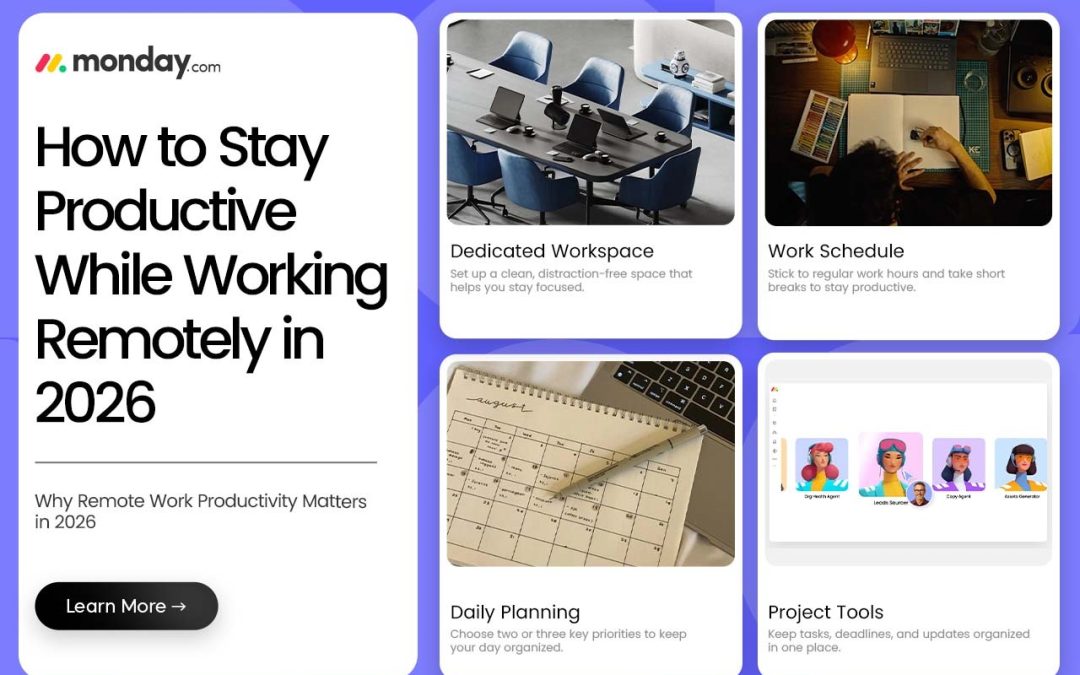
Working from home sounds great in theory, until your workday starts losing to household chores, phone notifications, and the “just one more break” trap. By 2026, remote work is basically just work for a huge chunk of people. But staying focused still takes real effort. If you’re trying to stay productive while working remotely, it’s less about willpower and more about building a routine that keeps you on track, something a tool like Monday can actually help with once your task list starts getting messy.
Why Remote Work Productivity Matters in 2026
Remote work hands you a ton of flexibility, but that same flexibility can bite you if you’re not paying attention. No clear schedule means small tasks quietly stack up, deadlines creep closer than you thought, and next thing you know you’re working past dinner just to catch up.
Good remote work productivity isn’t about chaining yourself to your laptop for ten hours. It’s really just knowing what actually matters today, putting your focus there, and knowing when to close the laptop and walk away. A handful of small habits can make your workday feel way less chaotic and help you get more done without that constant “I’m always busy but never finished” feeling.
6 Ways to Stay Productive While Working Remotely
Here are the 6 ways that help you manage remote work productivity
1. Create a Dedicated Workspace
Try to work from the same spot every day, even if a full home office isn’t in the cards. Just a clean desk with the stuff you actually need can make it so much easier to mentally clock into work mode. Keep your phone out of arm’s reach when you need real focus, and honestly, just avoid working from spots you already know will pull your attention away.
2. Start Your Day With a Clear Plan
Before you open your inbox or hop on a call, take a few minutes to figure out what genuinely needs your attention today. Pick two or three things that actually matter instead of writing out some massive to-do list you already know won’t get touched.
This is where Monday comes in handy; it’s an easy way to keep your priorities, deadlines, and daily tasks in one place instead of scattered across sticky notes and half-remembered Slack messages.
3. Follow a Consistent Work Schedule
One of the simplest remote work tips there is: give your day some structure. Start and stop around the same time as often as you can manage. And seriously, don’t skip breaks. Step away from the screen, grab some water, stretch a little, take a short walk. Working nonstop doesn’t actually make for a more productive day; sometimes it’s the opposite.
4. Use Project Management Tools
Working remotely means tasks and updates get buried in emails and chat threads way too easily. Having one place to see everything makes a genuine difference.
Monday lets teams organize tasks, figure out who’s responsible for what, track deadlines, and actually see how a project’s moving, without anyone having to ask “hey, where are we on this?” for the tenth time.
5. Limit Digital Distractions
Social media, random texts, news alerts, endless notifications-, all of it chips away at your focus faster than you’d think. Turn off whatever isn’t essential while you’re actually trying to work. Try blocking off short stretches where you focus on just one thing, phone and inbox both untouched. Small habit, but it genuinely does a lot for work-from-home productivity.
6. Stay Connected With Your Team
Remote doesn’t have to mean isolated. Regular communication cuts down on misunderstandings and keeps everyone pulling in the same direction. Save meetings for stuff that actually needs a real back-and-forth, and use quick written updates for the simpler things. Monday helps here too; o, teams can check task progress and updates without needing yet another status call.
How to Manage Remote Work Tasks More Effectively
A big part of figuring out how to stay productive while working remotely is just breaking big projects down into smaller, more manageable pieces. Instead of staring at one giant project, split it into chunks with deadlines that actually make sense.
Monday makes it pretty easy to track those pieces, see who owns what, and know what’s done versus what’s still hanging out there. It makes the whole workload feel a lot less overwhelming and keeps things from quietly slipping through the cracks.
Remote Work Productivity Mistakes to Avoid
To stay productive while working remotely, you should avoid the following mistakes.
- Diving into work with no real plan
- Trying to multitask absolutely everything
- Checking notifications every five minutes
- Skipping breaks altogether
- Sitting through meetings that honestly didn’t need to happen
- Working late because nothing got prioritized right
- Not communicating enough with your team
The point was never to make every single minute “productive.” It’s about making the hours you do work actually count.
Simple Daily Routine for Remote Workers
A basic routine helps you stay productive while working remotely
- Morning: Look over your priorities, map out the day.
- Midday: Knock out your main tasks, then take an actual, real break.
- Afternoon: Deal with the smaller stuff, meetings, quick tasks, team check-ins.
- End of day: See what actually got done, line up tomorrow’s priorities.
Running this through Monday makes it a lot easier to keep up as your workload grows.
FAQs
How can I stay productive while working remotely?
Set up a dedicated workspace, plan your priorities each day, keep a consistent schedule, cut back on distractions, and actually take breaks.
What is the biggest productivity challenge in remote work?
Distractions, messy time management, communication gaps, and just struggling to separate work life from home life-, pretty much all of the above.
How can project management tools help remote workers?
They keep your tasks, deadlines, responsibilities, and progress in one spot instead of scattered across five different apps.
Final Thoughts
Learning to stay productive while working remotely was never about cramming work into every spare minute. A decent routine, fewer distractions, real breaks, and solid communication go a long way. Use something like Monday to keep your tasks organized, but at the end of the day, the goal’s simple: get the important stuff done, and still have a life once you close the laptop.
by Jobuza Team | Sep 22, 2026 | BLOG
Networking used to mean conferences, office small talk, and awkward business card exchanges. These days, you can meet genuinely useful people through LinkedIn, email, online communities, webinars, and virtual events without ever leaving your desk. If you’re trying to build your professional network online, the point isn’t racking up hundreds of connections — it’s building real relationships, and tools like Brevo make the email side of that a lot easier to manage as your contact list grows.
Why Online Professional Networking Matters in 2026
Work just looks different now. Remote jobs, digital businesses, online communities — this is normal life for most professionals at this point. Your next big opportunity might come from a random comment on LinkedIn or a five-minute chat during a webinar Q&A.
A solid online network can help you spot job openings, find mentors, keep up with your industry, meet potential clients, and swap ideas with people who actually get what you do.
How to Build Your Professional Network Online
If you want to build your professional network online, don’t overthink it — start small and focus on connections that actually mean something.
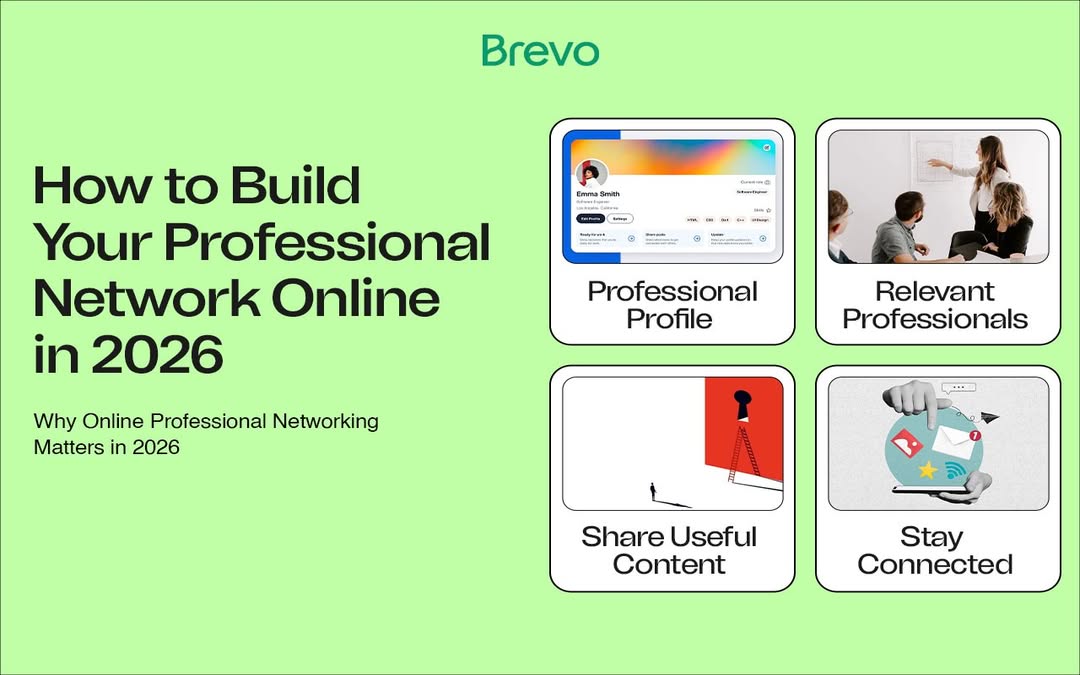
- Create a Strong Professional Profile
Your profile is usually the first thing people see, so treat it that way. Keep your LinkedIn, portfolio, or personal website current — skills, experience, projects, wins, all of it.
Use a decent photo and write a short, clear description of what you do and what kind of opportunities you’re open to. Don’t overthink this part either.
- Connect With Relevant Professionals
Skip the “connect with everyone” approach; it doesn’t really work. Instead, look for recruiters, people in your industry, founders, potential clients, mentors, or anyone working in a field you care about.
And when you send a request, add a short note. Say why you’re reaching out. Nobody likes the copy-paste intro, and honestly, it shows.
- Share Useful Content
You don’t have to post constantly to stay visible. Share things that are actually worth sharing, a lesson from a project, an industry insight, something you just learned, a small update on what you’re working on. Do this consistently enough, and people start noticing. Sometimes that’s all it takes to start a real conversation.
- Use Email to Stay Connected
Social platforms are great for making the first connection, but email is what actually keeps a relationship alive. Met someone at a webinar or online event? Send a quick, friendly follow-up nothing fancy, just enough to keep the door open. A tool like Brevo can help here too, especially once you’re juggling more contacts than you can keep track of in your head.
- Send Valuable Updates and Newsletters
Newsletters are an easy way to stay on people’s radar. Share resources, industry news, or a few useful tips now and then, just don’t let it turn into noise. Brevo makes this a lot easier to manage; you can put together email campaigns and keep your updates organized instead of sending things out ad hoc.
- Follow Up Consistently
One good conversation isn’t a relationship; it’s a start. Check in occasionally, congratulate someone on a win, share something relevant if it comes up. Once your network starts growing past a certain point, a tool like Brevo genuinely helps you keep your outreach from turning into chaos.
Online Networking Mistakes to Avoid
When you’re trying to build your professional network online, it’s easy to slip into a few bad habits without realizing it.
- Sending generic messages: A copy-paste request is easy to spot and easy to ignore. Personalize it.
- Asking for favors too soon: Give things time before asking for a referral or a job. Let the relationship breathe first.
- Over-promoting yourself: Nobody wants their feed clogged with sales pitches. Lead with value instead.
- Ignoring follow-ups: Good contacts fade fast if you let conversations just… disappear.
- Sending irrelevant emails: If you’re managing outreach through Brevo or a similar platform, make sure what you’re sending is actually useful to the person receiving it, not just useful to you.
Simple Networking Routine for Beginners
To build your professional network online, you really don’t need hours a day for this. Spend 10–15 minutes engaging with a few posts, connect with a couple of new people each week, and follow up with folks you’ve already met. As things pick up, Brevo can take some of the newsletter and email-management load off your plate so you can focus on the actual relationships.
FAQs
How do I build my professional network online?
Build a solid profile, connect with people who actually matter to your goals, join relevant communities, share useful content, and stay in touch consistently.
How can email help with professional networking?
It’s mainly for follow-ups — after meetings, sharing something useful, or just keeping a relationship warm over time.
How often should I follow up with professional contacts?
Whenever you actually have something worth saying. Don’t force it just to “stay in touch” — that usually backfires.
Final Thoughts
To build your professional network online in 2026 really comes down to one thing: caring more about the relationships than the numbers. Stay active, offer real value, follow up when it makes sense, and let a tool like Brevo handle the email side of things so you can focus on the people.

by Jobuza Team | Sep 22, 2026 | BLOG
Between flights, back-to-back meetings, and deadlines that don’t care what time zone you’re in, a business trip can spiral into chaos fast. The real fix is simple in concept, if not always in practice: business trip planning works best when your work calendar and your travel calendar live in the same place, not two separate worlds fighting for your attention. That means thinking through flights, accommodation, meetings, and focused work time all at once. Platforms like Expedia take a lot of the friction out of booking, so you can spend your energy on the work itself instead of the logistics around it.
Best way to plan a Business Trip Without Missing Work Deadlines
Worried about missing work deadlines during your trip? Here are the best ways that make your trip easy without missing work deadlines :
- Start Planning Early
Good business trip planning really starts the moment the trip is confirmed — lock in your dates, destination, meetings, and deadlines right away. Take a quick pass through your task list and flag anything urgent that has to be wrapped up before you leave, then get the essentials booked early. That said, don’t plan so tightly that there’s no room to breathe — last-minute changes have a way of showing up right when you least expect them.
- Build a Work and Travel Schedule
Instead of keeping your flights, meetings, deadlines, and work blocks on separate lists, pull them all into one calendar. It’s tempting to pack every hour full, but resist that urge and leave buffer time between meetings and travel. When it comes to lining up flights and where you’re staying, Expedia makes it a lot easier to coordinate both around what your workload actually looks like.
- Choose Flights and Hotels Carefully
This step is where business trip planning tends to make or break the whole trip. Try to pick flight times that don’t conflict with your important meetings, and choose a hotel that’s actually close to the office, conference, or meeting spot — not just the cheapest option nearby. Reliable Wi-Fi and a decent place to work matter more than people give them credit for, and it’s worth double-checking cancellation and change policies before you commit. Pulling up travel and accommodation options side by side on Expedia can save you from a booking that seems convenient until it isn’t.
- Complete Important Work Before Leaving
Do what you can to wrap up urgent projects and assignments before departure day. Get your presentations, reports, and documents ready ahead of time, and share anything your colleagues might need while you’re out. It also helps to make a short list of what can genuinely wait until you’re back.
- Set Realistic Deadlines During the Trip
A travel day rarely functions like a normal workday, and this is exactly where solid business trip planning earns its keep. Between flights, transit, meetings, and plain old fatigue, your actual working hours shrink fast. Break bigger tasks into smaller, more manageable pieces, and give yourself extra breathing room ahead of anything with a hard deadline.
- Prepare for Remote Work
Before anything else goes in your bag, pack your laptop, charger, adapter, and headphones. Download the documents you’ll need in advance so you’re not relying on hotel Wi-Fi at the last second, and keep backup copies of anything essential. If there’s a meeting that really matters, test your connection before it starts, not during.
- Prepare for Travel Delays
No amount of business trip planning eliminates delays, but you can soften the blow. Give yourself extra time between flights and meetings so one delay doesn’t set off a chain reaction. Keep your work files in cloud storage rather than tied to a single device, and have a backup way to get where you’re going. If plans shift on short notice, adjusting your arrangements through Expedia tends to be a lot quicker than starting from scratch.
- Keep Your Team Updated
Let your team know your travel schedule and when you’ll actually be reachable. Flag any important deadlines so nothing quietly slips while you’re in transit, and line up backup support for anything urgent that can’t wait for you to land. A shared calendar or project-management tool goes a long way toward keeping everyone on the same page without constant check-ins.
Business Trip Planning Checklist
Booking everything through one place, like Expedia, makes running through this list a lot less painful:
- Flights booked — timed around your key meetings, not just the cheapest fare
- Hotel confirmed — close to where you need to be, with solid Wi-Fi
- Meetings scheduled — locked in with enough buffer between them
- Deadlines reviewed — urgent items flagged and front-loaded before you leave
- Documents prepared — presentations, reports, and files shared with your team
- Work equipment packed — laptop, charger, adapter, and headphones
- Team informed — your schedule and availability shared ahead of time
- Backup plan ready — a fallback for delays, connectivity issues, or urgent tasks
Final Thoughts
Good work travel planning is really what makes it possible to balance real professional responsibilities with the logistics of being on the road. Plan early, keep your schedule honest about what’s actually achievable, and don’t stack too much into your travel days. Stick to a few solid business travel tips like these, and a well-organized trip can stay genuinely productive — without a single deadline slipping through the cracks.
FAQs
- How far in advance should I plan a business trip?
Two to four weeks out tends to work best for most business trip planning, giving flights, hotels, and your work schedule enough time to fall into place.
- How can I manage work deadlines while traveling?
Front-load the urgent stuff before you leave, break what’s left into smaller pieces, and build in buffer time around meetings and travel.
- What should I consider when booking a business trip?
Flight timing around your meetings, hotel location and Wi-Fi quality, and how flexible the cancellation policy actually is.
- How can I stay productive during business travel?
Pack your work essentials, back up your files to the cloud, and aim for realistic, smaller goals instead of expecting a full workday.
- What should I pack for a business trip?
Your laptop, charger, adapter, headphones, key documents, and whatever you need for meetings or presentations.

by Jobuza Team | Sep 22, 2026 | BLOG
A career in gaming today is about much more than just coding. The industry has grown into a huge part of the entertainment world, with opportunities in game development, design, art, esports, content creation, marketing, and business. If you’ve always loved gaming and want to turn that passion into a career, 2026 offers plenty of ways to get started. Platforms like GAMIVO also show how the gaming world has expanded beyond traditional game studios.
Why Choose a Career in Gaming in 2026?
The numbers don’t lie. Mobile gaming keeps growing, cloud gaming is finally becoming mainstream (no more waiting for downloads or upgrading your rig every year), and esports viewership keeps climbing right alongside traditional sports. All of this growth means studios, publishers, and platforms need more people, not fewer.
What makes a career in gaming especially appealing right now is the flexibility. Plenty of roles, from game testing to content creation, can be done remotely or freelance. You’re no longer required to move to a big studio city just to get your foot in the door.
Top Gaming Jobs to Explore
There’s no single way to build a career in gaming. Whether you enjoy coding, creating visuals, testing games, or building a gaming community, there’s a role that can match your interests and skills.
- Game developers: use programs like C++, C#, Unity, or Unreal Engine to create and code the actual game. This is the technical aspect of gaming.
- Game Designer: From designing levels and characters to crafting narratives and gaming mechanics, game designers concentrate on how a game feels and plays.
- Game Artist & Animator: This could be a fantastic fit if you’re more interested in visuals. Using programs like Blender, Maya, or Adobe software, artists and animators produce environments, characters, animations, and other visual components.
- QA Tester: Before a game is released to players, QA testers test it for bugs, glitches, and other issues. Although it may seem like a dream job, evaluating the same features over and over again requires a lot of patience.
- Esports & Content Careers: Gaming also offers plenty of opportunities outside game development, including streaming, commentary, gaming journalism, social media, and community management.
Skills You Need
Here are the best skills you need to build a career in gaming.
- Technical: Programming, game engines, 3D modeling, QA know-how, whatever fits your role. Honestly, the fastest way to get good at this stuff is just messing around in Unity, Unreal Engine, or Blender until it clicks.
- Creative: This is the storytelling and design side, coming up with characters, levels, mechanics, ideas that are actually fun. Problem-solving matters a ton here too, since a lot of design is just fixing things that don’t feel right yet.
- Soft Skills: People forget this part, but communication and teamwork are huge. Games are seldom made solo. Being adaptable helps too, because tools and trends change constantly in this industry.
How to Start a Gaming Career
Pick something you actually like, build skills bit by bit, and get your hands dirty with real projects.
- Pick Your Path: Coding, design, art, QA, esports, content- just pick one to start. Trying to do everything at once usually just slows you down.
- Learn the Right Skills: Courses and tutorials help, sure, but nothing beats just practicing. Work on small projects as you go so you’re actually using what you’re learning.
- Build a Portfolio: This matters more than people expect. Games, art, designs, whatever proves you can actually do the thing. A good portfolio can honestly open more doors than a degree.
- Gain Experience: Internships, freelance work, game jams, entry-level gigs- take whatever gets your foot in the door. This is also where you’ll meet people who end up mattering later.
Opportunities Beyond Game Development
The gaming career opportunities don’t stop at studios; esports management, marketing, journalism, localization, and hardware are all growing fields. Even marketplaces like GAMIVO run entire teams in marketing, support, and business development, proving the job market extends well past game design and coding.
Tips for Beginners
- Start small; your first project doesn’t need to be great; it just needs to exist.
- Keep learning new tools and keep an eye on where the industry’s heading.
- Network for real, not just when you need a favor from someone.
- Keep your portfolio updated as you improve; old work doesn’t do you any favors.
- Study the business side too; platforms like GAMIVO that gamers already use to buy game keys are a good example of how the industry runs commercially, not just creatively.
FAQs
Is gaming a good career in 2026?
Yes, gaming offers career opportunities in development, design, esports, content creation, testing, marketing, and more.
What skills are needed to work in gaming?
Technical, creative, problem-solving, communication, and teamwork skills are useful for different gaming roles.
Can I start a gaming career without a degree?
Yes, a strong portfolio, practical projects, relevant skills, and experience can help you enter several gaming roles without a degree.
What is the easiest gaming job to start with?
Entry-level roles such as game testing, community support, and content creation may be suitable for beginners, depending on their skills.
How do I start a career in gaming with no experience?
Choose a gaming field, learn the required skills, create projects, and build a portfolio to demonstrate your abilities.
Final word
A career in gaming in 2026 isn’t limited to coding, development, design, art, QA, esports, and content; all offer real paths in. The gaming jobs 2026 has to offer are more varied than most people realize, and the game industry careers opening up mean the hardest part isn’t finding a way in; it’s picking your door. And whether you’re job-hunting or just gaming on the side, sites like GAMIVO are worth exploring as you get familiar with how the industry actually runs.
by Jobuza Team | Sep 22, 2026 | BLOG, Central Govt Job, Latest Jobs
JKSSB Recruitment 2026: The Jammu and Kashmir Services Selection Board (JKSSB) has released the recruitment notification for 2,863 Class-IV (MTS) and Sanitation Worker posts under the UT, Divisional and District Cadres in various departments of Jammu & Kashmir.
According to the notification, the online application process will begin on October 5, 2026. Eligible candidates can submit their applications through the official JKSSB website. The last date to apply is November 3, 2026.
Candidates are advised to read the detailed notification carefully before applying and ensure that they meet the prescribed educational qualification, age limit and other eligibility conditions.
JKSSB Recruitment 2026: Overview
The JKSSB recruitment drive has been announced for Class-IV (MTS) and Sanitation Worker posts across different cadres. Candidates can check the key details below.
| Particulars |
Details |
| Recruitment Body |
Jammu and Kashmir Services Selection Board (JKSSB) |
| Posts |
Class-IV (MTS), Sanitation Worker |
| Total Vacancies |
2,863 |
| Application Mode |
Online |
| Notification Release Date |
September 1, 2026 |
| Application Start Date |
October 5, 2026 |
| Last Date to Apply |
November 3, 2026 |
| Official Website |
jkssb.nic.in |
JKSSB Recruitment 2026 Notification PDF
JKSSB has released the detailed recruitment advertisement containing information about the vacancies, eligibility criteria, application process, fee, age limit and other important conditions.
Candidates should go through the complete notification before submitting the online application.
JKSSB Recruitment 2026 Vacancy Details
A total of 2,863 vacancies will be filled through this recruitment drive. The vacancies are divided between Class-IV (MTS) and Sanitation Worker posts.
| Post Name |
Number of Vacancies |
| Class-IV (MTS) |
2,697 |
| Sanitation Worker |
166 |
| Total |
2,863 |
Cadre-wise and Category-wise Vacancies
The vacancies have been distributed across the UT, Jammu Divisional, Kashmir Divisional and District Cadres.
| Cadre |
OM |
SC |
ST1 |
ST2 |
OBC |
ALC/IB |
RBA |
EWS |
Total |
| UT Cadre |
44 |
9 |
10 |
10 |
8 |
5 |
10 |
9 |
105 |
| Divisional Cadre Jammu |
439 |
92 |
110 |
109 |
86 |
43 |
109 |
105 |
1,093 |
| Divisional Cadre Kashmir |
362 |
73 |
91 |
90 |
71 |
36 |
88 |
86 |
897 |
| All District Cadre |
333 |
72 |
82 |
77 |
56 |
31 |
64 |
53 |
768 |
| Total |
1,178 |
246 |
293 |
286 |
221 |
115 |
271 |
253 |
2,863 |
JKSSB Recruitment 2026 Important Dates
Candidates should keep the following dates in mind while applying for the JKSSB vacancies.
| Event |
Date |
| Notification released |
September 1, 2026 |
| Online application begins |
October 5, 2026 |
| Last date to apply |
November 3, 2026 |
The application link is expected to be activated on the official website from October 5, 2026.
JKSSB Recruitment 2026 Application Fee
Candidates applying for the JKSSB vacancies are required to pay the application fee according to their category.
| Category |
Application Fee |
| UR/OBC |
Rs. 600 |
| SC/ST-1/ST-2/EWS/PwBD |
Rs. 500 |
The application fee can be paid through the online application process as prescribed by JKSSB.
JKSSB Recruitment 2026 Eligibility Criteria
Candidates must fulfil the prescribed educational qualification and age requirements for the post they wish to apply for.
Educational Qualification
The minimum and maximum educational qualifications prescribed for the posts are as follows:
| Post |
Educational Qualification |
| Class-IV (MTS) |
Minimum Matriculation and maximum 10+2 |
| Sanitation Worker |
Minimum 8th pass and maximum 10+2 |
Candidates should refer to the official notification for the complete eligibility conditions and any post-specific requirements.
JKSSB Recruitment 2026 Age Limit
The age limit varies according to the category of the candidate. The prescribed age range is 40 to 43 years, depending on the category.
Candidates should check the official notification for the applicable age limit and relaxation provisions before applying.
How to Apply for JKSSB Recruitment 2026
Eligible candidates can submit their applications online through the official JKSSB website. The application process will begin on October 5, 2026.
Candidates can follow these steps:
- Visit the official JKSSB website.
- Go to the recruitment or application section.
- Find the notification for Class-IV (MTS) and Sanitation Worker posts.
- Read the recruitment notification carefully.
- Complete the registration process.
- Fill in the required personal and educational details.
- Upload the necessary documents in the prescribed format.
- Pay the application fee according to your category.
- Check the application form carefully before submitting it.
- Submit the application and save a copy for future reference.
JKSSB Recruitment 2026: Important Points
Candidates should ensure that all the information entered in the application form is correct and matches their original documents. Applications should be submitted before the prescribed deadline.
Candidates should also keep a copy of the submitted application form and fee payment receipt for future reference. For complete information about eligibility, vacancies, selection process and other conditions, candidates should rely on the official JKSSB notification.
JKSSB Recruitment 2026 Direct Link
The online application link for JKSSB Recruitment 2026 will be activated on October 5, 2026. Eligible candidates can apply through the official website before the prescribed deadline.
Official Website: JKSSB