by Jobuza Team | Mar 10, 2026 | BLOG, Latest Jobs, UPSC Jobs
The Uttar Pradesh Subordinate Services Selection Commission (UPSSSC) has released the official notification for Pharmacist Recruitment 2026 on its website. Through this recruitment drive, the commission will fill 560 Pharmacist vacancies under the Directorate of Medical and Health Services, Uttar Pradesh.
According to the official advertisement titled Pharmacist Chief (Pra0A0P-2025)/02, the online application process started on March 9, 2026. Interested and eligible candidates can apply online until March 29, 2026 through the official UPSSSC website.
This recruitment is a good opportunity for candidates who have completed a diploma in pharmacy and are looking for a government job in the healthcare sector.
UPSSSC Pharmacist Recruitment 2026: Vacancy Details
A total of 560 posts have been announced. The category-wise distribution is as follows:
-
Unreserved (General): 224 posts
-
Scheduled Caste (SC): 118 posts
-
Other Backward Classes (OBC): 151 posts
-
Economically Weaker Section (EWS): 56 posts
-
Scheduled Tribe (ST): 11 posts
Candidates should carefully select the correct category while filling out the application form.
Important Dates
Applicants should remember the following important dates:
-
Application start date: March 9, 2026
-
Last date to apply: March 29, 2026
It is advisable to submit the application well before the deadline to avoid last-minute issues.
Age Limit
To apply for the Pharmacist posts, candidates must meet the following age criteria:
-
Minimum age: 18 years
-
Maximum age: 40 years
Age relaxation will be provided to candidates belonging to reserved categories according to government rules.
Salary Details
Candidates selected for the Pharmacist posts will be placed under the Level-05 pay scale.
-
Minimum pay: ₹5,200
-
Maximum pay: ₹20,200
-
Grade Pay: ₹2,800
In addition to the basic salary, employees may also receive other allowances as per government rules.
Application Fee
The application fee is ₹25 for all categories of candidates.
Educational Qualification and Eligibility
Candidates applying for the UPSSSC Pharmacist posts must meet the following eligibility requirements:
-
Must have a Diploma in Pharmacy from a recognised university or institute
-
Must be registered with the State Pharmacy Council of Uttar Pradesh
-
Must have a valid UPSSSC Preliminary Eligibility Test (PET) 2025 scorecard
Only candidates who qualify based on their PET 2025 score will be eligible to appear for the main written examination.
Selection Process
The selection of candidates will be based on the main written examination conducted by the Uttar Pradesh Subordinate Services Selection Commission.
Candidates who meet the eligibility criteria and have a valid PET score will be shortlisted for the exam.
How to Apply for UPSSSC Pharmacist Recruitment 2026
Candidates can follow these steps to apply online:
-
Visit the official website of Uttar Pradesh Subordinate Services Selection Commission.
-
Go to the Live Advertisement section.
-
Click on the Pharmacist recruitment advertisement.
-
Log in using your PET 2025 registration number.
-
Verify the personal and category details automatically fetched from PET records.
-
Enter your educational qualification details carefully.
-
Submit the verification code displayed on the screen.
-
Review your photograph and signature fetched from PET records.
-
Pay the application fee online.
-
Submit the application form and keep a copy for future reference.
Candidates are advised to carefully read the official notification before applying and complete the application process within the given timeline.
Check More – Latest Government Job Updates
by Jobuza Team | Mar 9, 2026 | BLOG, Trending News
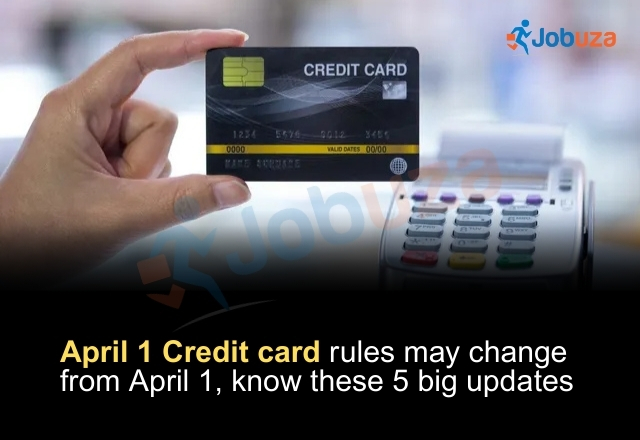
Credit cards have become an essential part of everyday life. From shopping and travel bookings to online bill payments and emergency expenses, millions of people rely on them for convenience and quick transactions. As credit card usage continues to grow, financial authorities are also looking to improve transparency in transactions.
Under the draft Income Tax Rules 2026, the government has proposed several changes related to credit card usage and reporting. These rules are expected to strengthen financial monitoring and simplify certain documentation processes. Although the rules are currently in draft form, they may come into effect from April 1, 2026, after final approval. Understanding these proposed changes in advance can help credit card users stay prepared.
1. Reporting of Large Credit Card Payments
One of the key proposals focuses on monitoring large credit card payments. According to the draft rules, banks may be required to report annual digital credit card payments of ₹10 lakh or more to the Income Tax Department.
In addition, if a person pays ₹1 lakh or more in cash toward a credit card bill, that transaction may also be reported. The purpose of this rule is to improve transparency and ensure that high-value financial activities are properly tracked.
2. Credit Card Statements May Help in PAN Applications
The draft rules also propose allowing credit card statements to be used as proof of address while applying for a PAN card. If implemented, statements from the last three months could be accepted as a valid address document.
This change could make the PAN application process easier, especially for individuals who may not have multiple address proof documents readily available.
3. Credit Cards May Be Allowed for Tax and GST Payments
Another proposed change is the recognition of credit cards as an official electronic payment method for tax and GST payments. At present, taxpayers usually rely on net banking or debit cards to make such payments.
If the proposal is approved, taxpayers will have an additional payment option. However, it is important to note that banks may charge processing or convenience fees for credit card transactions, so users should check the charges before choosing this payment method.
4. Rules Related to Company Credit Cards
The draft rules also address the use of company-issued credit cards. If a company provides a credit card to an employee and the company pays the bill, the expense may be considered taxable in some situations.
However, if the expenses are strictly related to official work and proper records are maintained, the company may be able to claim them as tax-deductible business expenses. This means companies and employees should maintain clear documentation of business-related transactions.
5. PAN May Become Mandatory for New Credit Cards
Another important proposal is to make PAN details mandatory when applying for a new credit card. This measure is intended to improve financial transparency and make it easier for authorities to track high-value transactions.
By linking credit cards with PAN, the tax department will be able to monitor financial activities more efficiently and reduce the chances of undisclosed income.
Final Word
It is important to remember that these changes are still part of the draft Income Tax Rules 2026 and have not yet been officially implemented. The final decision will be made after the government releases the approved rules.
However, being aware of these potential changes can help credit card users understand how future regulations may affect their financial activities. Staying informed and maintaining proper transaction records will help avoid complications once the rules are finalized.
Disclaimer: This content has been adapted and edited for clarity and readability based on information originally reported by NDTV India. The original content belongs to its respective authors and platform.
Click here for more – Trending News
by Jobuza Team | Mar 6, 2026 | BLOG, Trending News
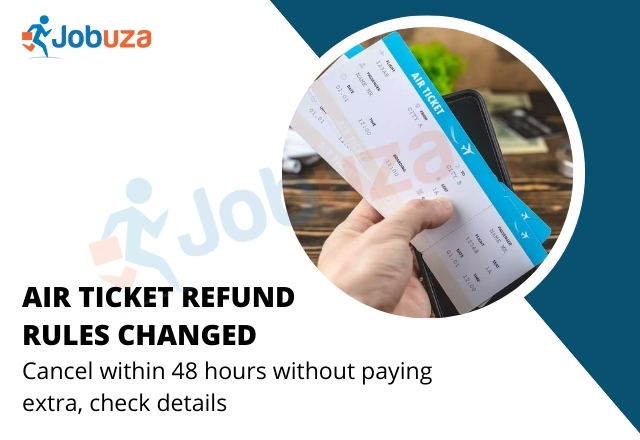
In a major relief for air travellers, the Directorate General of Civil Aviation (DGCA) has revised the air ticket refund rules in India. Under the updated policy, passengers can now cancel or modify their flight tickets within 48 hours of booking without paying additional charges, provided certain conditions are met.
According to the aviation regulator, these revised guidelines will come into effect from March 26, 2026. The new rules aim to make the refund process more transparent and passenger-friendly while ensuring airlines follow clear guidelines.
Below are the key refund and cancellation rules that passengers should know.
Refund Rules for Tickets Booked Using Credit Card
For passengers who book air tickets using a credit card, airlines are required to process the refund within seven days of cancellation. The refunded amount must be credited directly to the same credit card account used for the booking.
This rule ensures faster refunds and prevents unnecessary delays for passengers who choose digital payment methods.
Refund Rules for Tickets Purchased Through Cash
If a ticket is purchased through cash payment, the refund must be provided immediately at the airline office from where the ticket was bought.
This rule is intended to ensure that passengers who make offline purchases do not face delays in receiving their refunds.
Refund Rules for Tickets Booked Through Travel Agents
Many passengers book flights through travel agents or online travel portals. In such cases, the responsibility of issuing the refund still lies with the airline because travel agents act as the airline’s authorized representatives.
Under the revised rules, airlines must ensure that the refund process is completed within 14 working days when a ticket is cancelled.
Refund of Airport and Government Charges
The new rules also clarify that airlines must refund all statutory taxes and airport charges if a ticket is cancelled or not used.
This includes:
-
User Development Fee (UDF)
-
Airport Development Fee (ADF)
-
Passenger Service Fee (PSF)
Importantly, these charges must be refunded even if the basic airfare is non-refundable, including tickets purchased under promotional or special fares.
48-Hour “Look-In Option” for Free Cancellation
One of the most important changes introduced by the regulator is the 48-hour “look-in option.”
Under this provision, passengers can cancel or modify their ticket within 48 hours of booking without paying any additional cancellation charges.
However, if the passenger changes the flight to a different one, they may have to pay the difference in fare if the new flight costs more.
Conditions for the 48-Hour Rule
This facility is available only under certain conditions:
-
The departure date of the domestic flight must be at least 7 days away from the booking date.
-
For international flights, the departure must be at least 15 days away.
-
The ticket must be booked directly through the airline’s official website.
If more than 48 hours have passed after booking, normal cancellation charges will apply.
Credit Shell Refund Option
Airlines sometimes keep cancelled ticket amounts in a credit shell, allowing passengers to use the amount later for future travel.
Under the revised rules, this option will now be entirely up to the passenger. Airlines cannot automatically place the refund in a credit shell unless the passenger agrees to it.
Limit on Cancellation Charges
The aviation regulator has also placed a clear limit on cancellation charges.
Airlines or their agents cannot charge cancellation fees that exceed the basic airfare plus the fuel surcharge. This rule helps prevent excessive cancellation penalties.
However, any service charges taken by travel agents may still apply, provided they were clearly disclosed to the passenger at the time of booking.
Airlines Must Clearly Display Refund Policies
To ensure transparency, the regulator has directed airlines to clearly display the refund amount that passengers will receive after cancellation.
This information must be provided:
Additionally, cancellation charges must be clearly shown during the booking process so passengers understand the terms before purchasing a ticket.
Final Thoughts
The updated refund policy introduced by the Directorate General of Civil Aviation is designed to make air travel more passenger-friendly. The introduction of a 48-hour free cancellation window, faster refunds, and stricter transparency rules will help travelers avoid unnecessary financial losses when plans change.
Passengers planning to book flights after March 26, 2026 should carefully review these updated rules to take full advantage of the new benefits.
Click here for more – Trending News
by Jobuza Team | Mar 3, 2026 | BLOG, Trending News
Traveling abroad is now becoming faster and more secure for Indian citizens. Under Passport Seva Programme 2.0, the Government of India has started issuing chip-enabled e-Passports. This upgrade is part of the Digital India initiative and aims to make international travel smoother, safer, and more efficient.
With advanced biometric security and a simple online application system, the new e-Passport reduces long queues at immigration and strengthens identity protection.
What is an e-Passport?
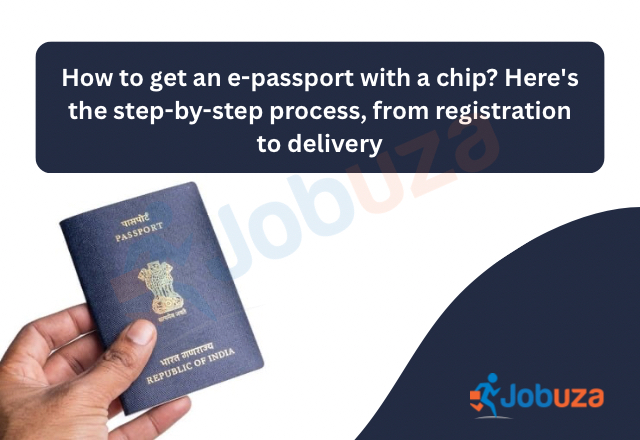
An e-Passport, also known as a biometric passport, looks similar to the traditional blue passport. However, it contains an embedded electronic chip that securely stores the passport holder’s personal and biometric details.
The chip is integrated into the cover of the passport and includes:
-
Your digital photograph
-
Fingerprint data (biometrics)
-
Personal information such as name, date of birth, and passport number
You can identify an e-Passport by a small golden chip symbol printed at the bottom of the front cover.
How Does the e-Passport Work?
The e-Passport uses Radio Frequency Identification (RFID) technology. At immigration counters equipped with e-Passport readers, the chip is scanned electronically. The system verifies your identity by matching the stored biometric data with your physical presence.
The data inside the chip is encrypted and digitally signed, making it extremely difficult to tamper with. This significantly reduces the chances of identity fraud, forgery, or data theft.
Because of automated verification, immigration clearance becomes much faster compared to traditional manual checks.
Benefits of the e-Passport
Here are the major advantages of the new chip-based passport:
-
Faster immigration clearance at international airports
-
Enhanced biometric security
-
Reduced risk of passport duplication or forgery
-
Globally recognized digital travel document
-
More secure storage of personal data
As more countries upgrade to smart border systems, e-Passports will make international travel more seamless for Indian citizens.
Documents Required for e-Passport Application
The document requirements for an e-Passport are the same as a regular passport. You need:
-
Aadhaar Card, PAN Card, or Voter ID
-
Address proof such as Electricity Bill, Water Bill, or Bank Passbook
-
10th class marksheet or Birth Certificate (for date of birth proof)
-
Old passport (in case of renewal or re-issue)
Make sure to carry both original documents and self-attested photocopies during your appointment at the Passport Seva Kendra.
Step-by-Step Process to Apply for an e-Passport
The entire process is simple and online. Follow these steps:
Step 1: Register Online
Visit the official Passport Seva website and create a new account using your basic details.
Step 2: Fill the Application Form
After logging in, select “Apply for Fresh Passport” or “Re-issue Passport” and carefully fill out the application form.
Step 3: Pay the Fee and Book Appointment
Pay the application fee online and schedule an appointment at your nearest Passport Seva Kendra (PSK).
Step 4: Visit Passport Seva Kendra
On your appointment date, visit the center for biometric data collection, photograph capture, and document verification.
Step 5: Police Verification
Your details will be sent for police verification at your registered address.
Step 6: Passport Delivery
Once verification is successfully completed, your e-Passport will be printed and dispatched to your home address via speed post.
Is the e-Passport Mandatory?
Currently, e-Passports are being issued in phases. If you apply for a new passport or re-issue, you may receive a chip-enabled passport depending on availability in your region. Existing passports remain valid until their expiry date.
Final Thoughts
The introduction of e-Passports in India marks a significant step toward digital governance and secure global travel. With encrypted biometric data, faster immigration processing, and a completely online application system, the new passport ensures convenience and enhanced security for travelers.
If you are planning international travel in the coming years, applying for an e-Passport is a smart and future-ready decision.
Click here for more – Trending News
by Jobuza Team | Mar 2, 2026 | BLOG, Trending News
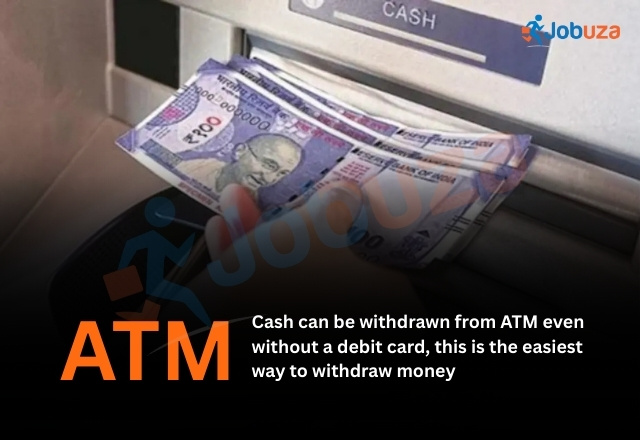
In today’s digital banking environment, accessing cash no longer depends entirely on carrying a debit card. If you forget your card at home or need money urgently, you can still withdraw cash safely using Aadhaar-based services or UPI-enabled ATMs. These modern facilities are designed to make banking more accessible, especially in situations where traditional ATM access is not possible.
Cash Withdrawal Without ATM Card Using Aadhaar
One of the simplest ways to withdraw money without a debit card is through the Aadhaar Enabled Payment System (AePS). This service allows customers to access their bank account using Aadhaar authentication instead of a physical card.
To use this facility, visit a nearby Business Correspondent (BC) or micro ATM service point authorized by your bank. These agents operate handheld or micro ATM devices that provide basic banking services in local areas.
Steps to Withdraw Cash Using Aadhaar
-
Visit an authorized micro ATM service provider.
-
Select the cash withdrawal option on the device.
-
Enter your Aadhaar number linked to your bank account.
-
Provide biometric verification through fingerprint authentication.
-
Once verification is successful, the cash is handed over immediately.
The daily withdrawal limit depends on your bank’s policies. Limits vary across banks based on security guidelines. Always collect the printed receipt after the transaction for future reference.
Cardless ATM Withdrawal Using UPI QR Code
Another convenient method to withdraw cash without a debit card is through UPI-enabled ATMs. Many banks in India now provide QR-based withdrawal facilities that allow customers to authenticate transactions directly from their smartphones.
This system works through UPI applications developed under the framework of the National Payments Corporation of India.
Steps to Withdraw Cash Using UPI at ATM
-
Visit an ATM that supports cardless cash withdrawal.
-
Choose the cardless withdrawal or UPI cash option on the screen.
-
Scan the QR code displayed on the ATM using any UPI app.
-
Enter the withdrawal amount and confirm the transaction.
-
Authorize the payment using your UPI PIN.
-
The ATM dispenses cash after successful authentication.
This method eliminates the need to carry a debit card while maintaining secure verification through your mobile device.
Important Points to Remember
Cash withdrawal limits without a debit card vary by bank and method.
Biometric authentication must match Aadhaar records for AePS transactions.
UPI withdrawals require an active UPI ID and registered mobile number.
Always verify transaction details and keep the receipt for records.
Conclusion
Cardless cash withdrawal is a practical solution for modern banking users. Whether through Aadhaar authentication at micro ATMs or QR-based UPI withdrawal at select ATMs, customers can access their money quickly and securely without a debit card. These services improve financial accessibility and reduce dependency on physical banking tools.
Click here for more – Trending News

by Jobuza Team | Feb 27, 2026 | BLOG, Latest Jobs
The Jharkhand Public Service Commission has announced the JPSC Lecturer Recruitment 2026 to fill 355 vacancies in Government Polytechnics and Government Women’s Polytechnics across Jharkhand. This recruitment offers a strong opportunity for candidates with engineering, science, and humanities backgrounds who want a Group-B Gazetted government position.
The official notification was released on February 13, 2026. The online application window is open from February 20 to March 12, 2026 at the official website jpsc.gov.in.
JPSC Lecturer Recruitment 2026 Overview
Organisation: Jharkhand Public Service Commission
Post Name: Lecturer (Government Polytechnic / Women’s Polytechnic)
Total Vacancies: 355 (349 Regular + 6 Backlog)
Application Mode: Online
Notification Release Date: February 13, 2026
Application Start Date: February 20, 2026
Last Date to Apply: March 12, 2026
Selection Process: Academic Record, GATE Score or Written Test, Interview
Job Category: Group-B Gazetted
Official Website: jpsc.gov.in
Candidates must complete One-Time Registration (OTR) before submitting the online application form.
JPSC Lecturer Vacancy 2026: Discipline-wise Posts
Vacancies are distributed across multiple technical and academic departments. Computer Science Engineering has the highest number of posts.
Computer Science & Engineering – 66
Electrical Engineering – 45
Mechanical Engineering – 43
Civil Engineering – 40
Mathematics – 30
Chemistry – 21
Physics – 14
English – 18
Electronics & Communication – 18
Other Departments (Mining, Metallurgy and more) – 54
JPSC Lecturer Eligibility Criteria 2026
Candidates must meet all educational and age requirements before applying.
Educational Qualification
Engineering and Technology (Level 9A):
Applicants must hold a B.E., B.Tech, or B.S. degree in the relevant discipline with First Class or equivalent.
Science and Humanities (Level 10):
Candidates must have a Master’s degree with First Class in the concerned subject. They must also qualify NET conducted by UGC or CSIR, or an equivalent test such as SLET or SET.
Age Limit (As on August 1, 2025)
Minimum Age: 21 Years
Maximum Age for General Category: 40 Years
Age relaxation is provided as per Jharkhand Government rules:
SC/ST candidates – up to 45 years
OBC candidates – up to 42 or 43 years
JPSC Lecturer Selection Process 2026
The selection procedure evaluates both academic performance and professional competence. Candidates are shortlisted based on:
• Academic record and qualifications
• GATE score or written examination
• Personal interview
Final selection is made after document verification and merit evaluation.
Why This Recruitment Matters
This recruitment provides a stable teaching career in government technical institutions with strong pay structure, career growth, and job security. Candidates with strong academic backgrounds in engineering, science, or humanities disciplines should consider applying within the deadline.