by Jobuza Team | Feb 19, 2026 | BLOG, Latest Jobs
The All India Institute of Medical Sciences, New Delhi has officially released the AIIMS NORCET 10 Notification 2026 for the Nursing Officer Recruitment Common Eligibility Test. Candidates who wish to work as Nursing Officers in AIIMS institutions across India can now apply online through the official examination website.
The recruitment process will be conducted in two stages, including a preliminary examination followed by the mains examination. As per the tentative schedule released by the institute, the Stage-I examination is expected to be held on 11 April 2026. Eligible candidates are advised to complete their online application within the prescribed timeline.
This recruitment drive offers a significant opportunity for nursing professionals seeking a stable government career in the healthcare sector.
AIIMS NORCET 10 Recruitment 2026 Overview
AIIMS will conduct a national-level computer-based examination to recruit Nursing Officers for multiple AIIMS institutions. Below are the key highlights of the recruitment process.
Exam Authority: All India Institute of Medical Sciences, New Delhi
Exam Name: Nursing Officer Recruitment Common Eligibility Test NORCET-10
Post Name: Nursing Officer
Total Vacancies: 3000 (Tentative)
Salary Level: Pay Level-7
Exam Date: 11 April 2026 (Tentative)
Exam Mode: Online Computer-Based Test
Application Mode: Online
Official Website: www.aiimsexams.ac.in
AIIMS NORCET 10 Eligibility Criteria
Candidates must ensure they meet the required educational qualifications and registration conditions before applying.
Educational Qualification
Applicants must possess one of the following qualifications from a recognized institution approved by the Indian Nursing Council or State Nursing Council.
Bachelor of Science in Nursing
Post-Basic B.Sc. Nursing
Diploma in General Nursing and Midwifery
Registration Requirement
Candidates must be registered as Nurse and Midwife with the State Nursing Council or Indian Nursing Council.
Applicants are advised to check the official notification for detailed eligibility conditions and category-wise requirements.
AIIMS NORCET 10 Selection Process
The selection process will be conducted in two stages.
Stage 1 Preliminary Examination
This stage is a qualifying examination used to shortlist candidates for the next stage.
Stage 2 Mains Examination
Candidates who qualify the preliminary stage will appear for the mains examination, which determines the final selection.
Final appointment will be based on performance in the mains examination and fulfillment of eligibility conditions.
How to Apply for AIIMS NORCET 10 Recruitment 2026
Candidates must submit their applications online through the official examination portal by following the steps below.
Visit the official AIIMS examination website
Click on the NORCET-10 online registration link
Complete new registration using basic details
Fill the application form carefully
Upload required documents
Pay the application fee
Submit the form and download confirmation
Applicants should keep a printed copy of the submitted form for future reference.
Salary Structure for Nursing Officer
Selected candidates will be appointed under Pay Level-7 as per the government pay matrix. In addition to the basic salary, candidates will receive applicable allowances such as Dearness Allowance, House Rent Allowance, and other benefits as per AIIMS rules.
Why AIIMS NORCET 10 Is a Major Opportunity
AIIMS recruitment is considered one of the most prestigious career opportunities for nursing professionals in India. The selection process ensures placement in top government medical institutions with job stability, career growth, and attractive salary benefits. Candidates preparing for government nursing jobs should not miss this opportunity.
by Jobuza Team | Feb 18, 2026 | BLOG, Defence Jobs, Latest Jobs
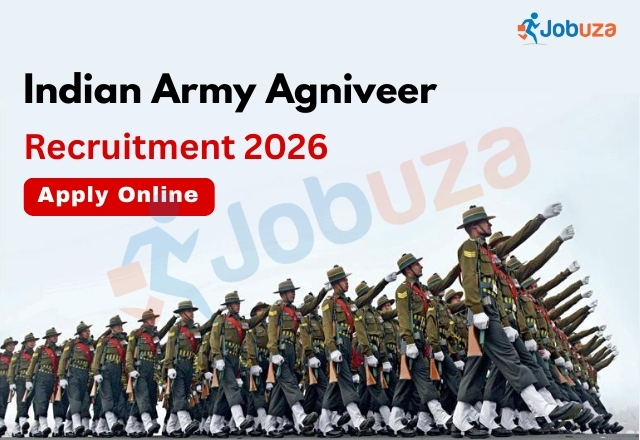
The online registration for Agniveer Recruitment 2026 has started on February 13. Eligible candidates can apply through the official website of the Indian Army until April 01, 2026. The recruitment is being conducted under the Agnipath Scheme to select candidates for multiple roles across the country.
This recruitment drive aims to fill approximately 25,000 vacancies in categories such as General Duty, Technical, Clerk, Store Keeper and Tradesman. Candidates are advised to read the official notification carefully before submitting the application form.
Indian Army Agniveer 2026: Key Highlights
Recruitment Scheme: Agnipath
Conducting Authority: Indian Army
Total Vacancies: Approximately 25,000
Application Start Date: February 13, 2026
Last Date to Apply: April 01, 2026
Service Tenure: 4 Years
Who Can Apply
Unmarried male and female candidates aged between 17.5 and 21 years are eligible to apply. Selected candidates will serve in the Indian Army for four years. Based on organisational requirements, up to 25 percent of Agniveers may be offered permanent service after completion of tenure.
Category-wise Educational Qualification
Eligibility requirements vary depending on the post applied for.
Agniveer General Duty
Class 10 pass with at least 45 percent aggregate marks and 33 percent in each subject.
Agniveer Technical
10+2 pass in Science with Physics, Chemistry, Mathematics and English with minimum 50 percent aggregate and 40 percent in each subject.
Agniveer Clerk or Store Keeper Technical
10+2 pass in any stream with 60 percent aggregate and at least 50 percent in each subject. English and Maths or Accounts or Bookkeeping are mandatory.
Agniveer Tradesman
For 10th pass category: Class 10 simple pass with 33 percent in each subject.
For 8th pass category: Class 8 simple pass with 33 percent in each subject.
Selection Process
The recruitment process includes multiple stages to assess candidates’ fitness and eligibility.
Online Common Entrance Examination
Physical Fitness Test
Physical Measurement Test
Medical Examination
Final Merit List
Salary and Benefits
Selected candidates will receive an in-hand salary of approximately ₹21,000 in the first year, with annual increments during the four-year service period. At the end of service, Agniveers will receive a Seva Nidhi package of around ₹10.04 lakh.
Application Fee and Payment Mode
Candidates must pay an examination fee of ₹250 plus applicable bank charges. The fee can be paid through debit card, credit card, internet banking or UPI via the designated payment portal.
How to Apply Online
Candidates can complete the application process through the official recruitment portal by following these steps:
Visit the official website
Click on the Agniveer Apply or Login option
Register as a new user or log in with existing credentials
Fill in personal and educational details
Upload required documents
Pay the application fee and submit the form
Download and print the submitted application for future reference
Final Note for Applicants
This recruitment offers a nationwide opportunity for young candidates to serve in the Indian Army and gain structured training, salary benefits and career exposure. Applicants should complete the registration well before the deadline and stay updated with official announcements regarding the exam schedule and admit card release.

by Jobuza Team | Feb 18, 2026 | BLOG, Trending News
The Goa government has announced a major recruitment drive for Group C positions across multiple departments. A total of 722 vacancies have been notified for posts such as Police Constable, Armed Police Constable, Warden (Male), Round Forester, Platoon Commander and Assistant Superintendent (Male).
The recruitment process is being conducted by Goa Staff Selection Commission. Interested candidates can submit their online applications on or before March 13, 2026. The detailed advertisement will be available on the official website from February 20, 2026.
Goa Police Recruitment 2026 Overview
This recruitment aims to fill various operational and administrative positions in government departments across Goa. Candidates who meet the eligibility requirements can apply online through the official portal.
Organization: Goa Staff Selection Commission
Advertisement Number: 2 of Year 2026
Total Vacancies: 722
Application Start Date: February 20, 2026
Last Date to Apply: March 13, 2026
Official Website: gssc.goa.gov.in
Posts Included in the Recruitment
The notification covers multiple posts across departments. Major positions include:
Police Constable
Police Constable (Armed Police)
Warden (Male)
Round Forester
Platoon Commander
Assistant Superintendent (Male)
Other Group C government posts
Candidates are advised to check the detailed notification for post-wise eligibility and requirements.
Goa Police Notification 2026 PDF Details
The indicative advertisement is available in PDF format on the official website. The detailed notification will contain important information such as eligibility criteria, selection process, exam details, syllabus, and application guidelines.
Applicants should read the official notification carefully before submitting the online form to ensure they meet all requirements.
Important Dates to Remember
Notification Release: Announced
Detailed Advertisement Release: February 20, 2026
Online Application Start Date: February 20, 2026
Last Date to Apply Online: March 13, 2026
Application Process
Candidates must apply online through the official recruitment portal. The application process generally includes registration, filling in personal and educational details, uploading required documents, and submitting the final application form.
Only online applications submitted before the deadline will be accepted.
Why This Recruitment Matters
With 722 vacancies across key government departments, this recruitment drive offers a significant employment opportunity for candidates seeking stable government jobs in Goa. Positions in police and forest services also provide career growth, job security and structured pay scales.
Final Note for Applicants
Candidates should regularly check the official website for updates regarding eligibility, exam schedule and selection process. Submitting the application well before the deadline is recommended to avoid last-minute technical issues.

by Jobuza Team | Feb 18, 2026 | BLOG, Trending News
The Draft Income Tax Rules, 2026 propose a higher tax-free limit on employer-provided meals. If approved, the exemption on meal coupons, food cards, and subsidised office meals will increase from ₹50 per meal to ₹200 per meal. The change is designed to reduce tax on small workplace benefits and improve take-home value for employees.
What Has Changed
Earlier, meals provided by an employer up to ₹50 per meal were not treated as taxable income. Many companies offer two meals per working day through canteens or prepaid food cards. Under the proposed rule, the tax-free limit will rise to ₹200 per meal, allowing a much larger portion of this benefit to remain exempt.
Employees receiving meal benefits through providers such as Pluxee or Zaggle are likely to see the most direct impact once the rules are notified.
How Much Can You Save Annually
The increase may look small per meal, but the yearly impact is significant.
₹200 per meal × 2 meals per day × 22 working days per month
= ₹8,800 per month
= ₹1,05,600 per year
If the proposal becomes law, salaried employees who receive regular meal benefits could reduce their taxable income by more than ₹1.05 lakh annually.
Who Benefits the Most
Employees working in organisations that provide subsidised canteen meals or structured meal voucher programs will benefit the most. Companies may update salary structures to include the higher exemption once the government issues final notifications.
Old vs New Tax Regime
Earlier, meal vouchers were treated as tax-exempt perquisites within prescribed limits. The draft rules mainly revise how these benefits are valued. Whether the exemption will apply fully under the new tax regime will depend on the final amendments and official notifications issued after approval.
What to Expect Next
The proposal is still in draft form. Employees should watch for government announcements and HR updates from their companies. If implemented, the revised meal voucher exemption will become a simple and effective way to improve annual tax savings without changing overall salary.
by Jobuza Team | Feb 17, 2026 | BLOG, Trending News
The Government of India has introduced a major update to passport regulations effective after February 15, 2026. The revised framework focuses on faster processing, simplified documentation, and stronger digital verification. The changes are intended to reduce paperwork, curb fraud, and improve service delivery across the country.
Officials have advised citizens planning to apply for or renew passports to review the updated requirements carefully to avoid delays or rejection.
Simplified Documentation and Digital Verification
Under the new framework, documentation rules have been streamlined to reduce duplication and limit physical submissions.
Aadhaar and other government-issued identity documents will be prioritised as primary proof of identity and address. Applicants will be able to upload documents digitally, reducing the need for repeated visits to passport offices.
The number of supporting certificates required for processing has been reduced to simplify compliance. However, authorities will strictly reject incomplete or inaccurately uploaded applications, making careful submission essential.
Faster Police Verification Process
Police verification has historically been one of the most time-consuming stages of passport issuance. The updated system introduces digital coordination between departments to accelerate background checks.
Authorities will use secure online data-sharing to complete verification more quickly, in many cases within days rather than weeks. In selected cases, passports may be issued before physical verification is completed, with post-issue checks conducted later.
The reforms are being implemented under the supervision of the Ministry of External Affairs, which maintains that faster processing will not compromise security standards.
Fully Online Application and Tracking
The upgraded passport portal will play a central role in the new process. Applicants will be able to complete the entire procedure online, including form submission and document upload.
Appointment booking will be simplified and accessible without intermediaries. Applicants will also receive real-time tracking updates and automated status notifications throughout the processing cycle.
These measures are expected to reduce congestion at Passport Seva Kendra locations and improve overall transparency.
Updated Rules for Minor Applicants
The revised regulations also simplify passport applications for children. Authorities will now more readily accept digital birth certificates and school identity cards as valid supporting documents.
Parental consent requirements have been streamlined to reduce delays in processing minor applications.
Expansion of Passport Service Centres
To improve access nationwide, the government plans to expand passport service centres, particularly in smaller towns and rural regions. The expansion aims to reduce travel time for applicants and improve service availability beyond major cities.
What Applicants Should Do Now
The 2026 passport reforms are designed to balance speed, convenience, and security. Applicants should prepare digital copies of documents in advance, ensure accurate submission of information, and monitor official updates before applying under the new system.
by Jobuza Team | Feb 17, 2026 | BLOG, Trending News
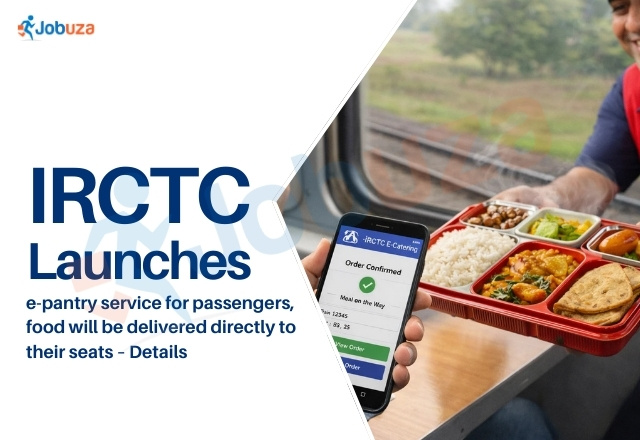
The IRCTC has introduced a new e-pantry service to make onboard dining more convenient for rail passengers. The service allows travelers to pre-order meals before their journey and receive them directly at their seats after the train departs. It is currently available on 25 trains and is designed especially for routes where meals are not included in the ticket fare or where onboard pantry facilities are not available.
How the E-Pantry Service Works
Passengers can order food while booking tickets online or after completing their reservation. The facility is available only to travelers with confirmed or RAC tickets.
After placing an order, passengers receive a confirmation message along with a Meal Verification Code (MVC) via SMS or email. During the journey, the food vendor delivers the order only after verifying this code, ensuring secure and accurate delivery at the passenger’s berth.
Travelers can pre-order standard meals as well as packaged drinking water such as Rail Neer.
Refund Facility for Undelivered Orders
The service includes a consumer protection feature. If a passenger does not receive the ordered meal, they can request a refund through the designated process. This policy is intended to build trust and ensure service reliability as the facility expands across more routes.
Pilot Launch and Expansion
According to a report by India Today, the e-pantry system was initially introduced as a pilot project on one of India’s longest-distance trains. Following its trial phase, the service has now been extended to 25 trains across the network.
The initiative particularly benefits passengers traveling on long-distance routes without pantry cars, offering them access to pre-booked, verified meals without leaving their seats.
Why the Service Matters for Passengers
The e-pantry service reflects a broader effort by Indian Railways to modernize passenger services and improve travel comfort. By allowing advance meal booking and secure seat delivery, the system reduces uncertainty around food availability and minimizes the need for platform purchases during stops.
As the service expands, it is expected to enhance travel convenience for millions of passengers, especially on long-haul routes where meal options have traditionally been limited.