by Jobuza Team | Feb 14, 2025 | BLOG, Trending News
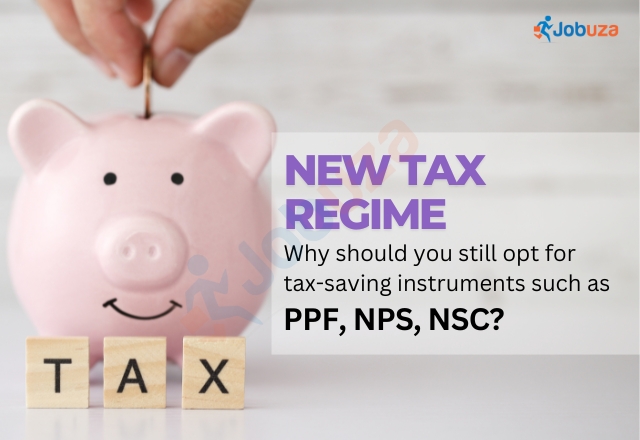
Is It Time to Rethink Traditional Tax-Saving Investments Under the New Tax Regime?
The financial landscape for taxpayers has changed significantly with the introduction of the new tax regime in FY 2023-24. Since this new system is now the default, many investors are questioning whether traditional tax-saving instruments like the Public Provident Fund (PPF), National Savings Certificate (NSC), post office savings schemes, and the National Pension System (NPS) still hold relevance.
Are Traditional Tax-Saving Investments Losing Their Edge?
Under the new tax regime, major deductions available under Sections 80C, 80D, and 80CCD(1) have been removed. As a result, these previously essential tax-saving tools no longer provide the same level of incentive. But does this mean they have lost their value altogether?
Experts hold differing views. While the tax benefits may be gone, PPF, NSC, and NPS still play a crucial role in financial planning. Their relevance now depends more on factors like risk appetite, retirement planning, and portfolio diversification rather than just tax savings.
A Safe Haven for Conservative Investors
According to Swapnil Aggarwal, Director of VSRK Capital, traditional savings schemes like PPF and NSC have become less attractive from a tax-saving perspective. However, they still serve as excellent options for conservative investors seeking stability and guaranteed returns.
“The removal of tax rebates under sections 80C, 80D, and 80CCD(1) has reduced the charm of these schemes. However, they remain valuable for risk-averse investors looking for safe, steady growth. This shift presents an opportunity for investors to rethink their portfolios and consider high-growth alternatives like equity investments,” says Aggarwal.
He emphasizes that rather than focusing solely on tax savings, investors should adopt a diversified strategy that aligns with long-term financial goals. Equity-based investments, for example, offer higher returns and can contribute significantly to wealth creation over time.
More Than Just Tax Savings
Manoj Trivedi, Director of Strategy at Maxiom Wealth, believes these financial instruments still have a role to play. He highlights PPF’s high post-tax returns and safety, making it a solid choice for long-term financial planning, especially for retirement.
“PPF provides a secure, high post-tax return, making it a strong retirement planning tool. Similarly, life insurance remains essential for financial security. So, while tax benefits may be reduced, these instruments still serve important financial purposes,” says Trivedi.
Flexibility and Personalization in Investment Choices
Sandeep Agrawal, Director and Founder of Teamlease Regtech, sees a positive side to the new tax regime: greater investment flexibility. Without the obligation to invest in tax-saving schemes, individuals can now make choices based on their financial goals rather than just tax benefits.
“The new tax regime allows investors to focus on their personal financial objectives, risk tolerance, and liquidity needs. Previously, deductions under 80C, 80D, and 80CCD(1) directed investments toward tax-saving schemes. Now, investors can explore options with better returns and greater flexibility,” Agrawal explains.
This change encourages a more strategic approach to wealth generation, shifting the focus from tax-saving motives to overall financial growth.
Can the Old Tax Regime Still Be an Option?
For those still inclined towards tax-saving investments, the old tax regime remains an option. Sudhir Kaushik, Co-Founder & CEO of Taxspanner (a subsidiary of Zaggle), suggests that taxpayers looking for long-term wealth creation can still benefit from tax-saving investments like Equity-Linked Savings Schemes (ELSS), NPS, and Unit Linked Insurance Plans (ULIPs) under the old regime.
“With the right planning, taxpayers can use the old tax regime to maximize savings and build wealth. ELSS, NPS, and ULIPs continue to offer tax advantages and strong returns, making them viable options for those focused on tax-efficient investing,” says Kaushik.
The Bottom Line: A Shift in Investment Strategy
The transition to the new tax regime provides an opportunity for investors to reassess their financial strategies. While traditional tax-saving instruments may no longer be as attractive for tax benefits, they still hold value for long-term security and stability. Investors should focus on aligning their investments with their financial goals, risk tolerance, and liquidity needs rather than solely seeking tax advantages.
In today’s evolving financial landscape, diversification remains key. Whether choosing safe options like PPF and NSC or exploring high-growth opportunities like equities, a well-balanced approach can lead to sustained wealth creation over time.
click here for more updates
by Jobuza Team | Feb 13, 2025 | BLOG, Trending News
Government Increases Surveillance on High-Value Transactions to Prevent Tax Evasion
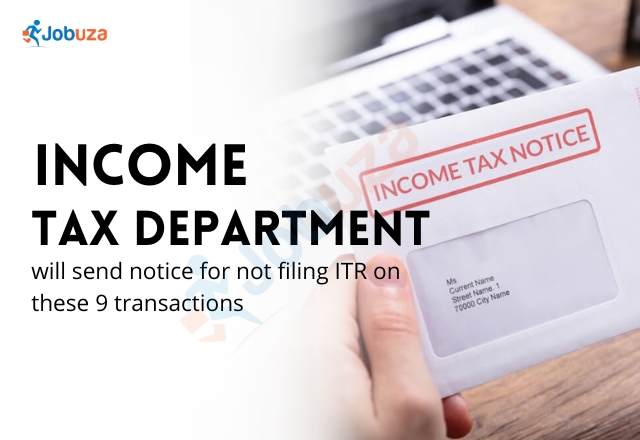
The government is tightening its grip on tax evasion by enhancing monitoring of high-value financial transactions. Leveraging advanced data analytics and multiple agencies, authorities are identifying individuals who conduct large transactions but fail to meet their tax obligations. If your financial activities exceed your reported income, you are at a higher risk of receiving a notice from the Income Tax Department.
New Rules for High-Value Transactions by the Income Tax Department
To ensure compliance and curb tax evasion, the Income Tax Department has adopted a stricter approach. Individuals who fail to file their Income Tax Returns (ITR) or underreport income are now under intense scrutiny. By integrating data from various agencies, authorities are closely tracking significant financial activities to detect tax discrepancies.
Strict Monitoring of Large Financial Transactions
The Central Board of Direct Taxes (CBDT) has issued new directives to self-reporting entities (SROs) such as banks, post offices, cooperative societies, fintech companies, and mutual fund houses. These institutions must submit detailed reports on high-value transactions recorded during each financial year to the Income Tax Department by May 31.
This initiative aims to enhance financial transparency and ensure that individuals conducting large transactions fulfill their tax obligations. Taxpayers must ensure their financial records align with tax filings to avoid scrutiny or penalties.
High-Value Transactions Under Tax Department Surveillance
The Income Tax Department tracks high-value transactions using Form 61A (Statement of Financial Transactions – SFT) and Form 61B (Reportable Account). Below are key transactions that attract scrutiny:
1. Purchase of Bank Drafts, Pay Orders, and Prepaid RBI Instruments
- If an individual purchases a bank draft, pay order, or other prepaid instruments worth Rs 10 lakh or more in cash, banks and cooperative societies must report it via Form 61A.
2. Large Cash Deposits in Savings Accounts
- Cash deposits of Rs 10 lakh or more in a savings account must be reported by banks, cooperative banks, or post offices.
3. Cash Deposits or Withdrawals from Current Accounts
- If an individual deposits or withdraws Rs 50 lakh or more from a current account, banks or cooperative banks must report it.
4. Buying or Selling Property
- Any property transaction worth Rs 30 lakh or more must be reported by the property registrar or sub-registrar.
5. Investments in Shares, Mutual Funds, Bonds, and Debentures
- If an individual invests Rs 10 lakh or more in shares, mutual funds, debentures, or bonds in cash, the company or mutual fund trustee must notify the Income Tax Department.
6. Paying Credit Card Bills in Cash
- If a person pays Rs 1 lakh or more in cash towards a credit card bill, the bank or cooperative society must report it.
7. High-Value Credit Card Payments
- If a person pays a credit card bill of Rs 10 lakh or more through any method other than cash, the bank or cooperative society must report the transaction.
8. Foreign Exchange Transactions
- If a person spends Rs 10 lakh or more purchasing foreign currency, loading forex cards, or making foreign transactions via debit/credit cards or traveler’s cheques, the transaction must be reported under FEMA regulations.
9. Cash Deposits in Fixed or Recurring Deposits
- If a person deposits Rs 10 lakh or more in cash in a fixed deposit (FD) or recurring deposit (RD) account, the bank, cooperative bank, Nidhi Company, or non-banking financial institution (NBFC) must inform the Income Tax Department.
Why This Matters
The government utilizes these reports to detect tax evasion and undisclosed income. If your financial activities do not align with your reported income, you could receive a tax notice. To stay compliant:
- Maintain proper records of high-value transactions.
- Ensure your ITR accurately reflects your earnings and expenditures.
- Keep track of financial transactions that might trigger tax scrutiny.
By understanding these regulations, you can manage your finances better and avoid tax-related penalties. Stay informed and ensure financial transparency to avoid legal issues!
Final Thoughts
With increasing surveillance on high-value transactions, taxpayers must be vigilant in maintaining accurate financial records and complying with tax regulations. Filing ITR correctly and reporting transactions transparently will help you avoid unnecessary scrutiny from tax authorities.
Stay updated with tax laws and ensure your financial activities align with compliance requirements to enjoy a hassle-free financial future!
click here for more latest updates

by Jobuza Team | Feb 11, 2025 | BLOG, Trending News
WhatsApp Testing Bill Payments in India: A Major Step for WhatsApp Pay
WhatsApp is taking a big step in expanding its financial services in India by testing a new bill payments feature. This update will allow users to pay for essential services like electricity, water, mobile recharges, rent, and more—all directly within the app.
According to reports from Android Authority, this feature will be integrated into WhatsApp Pay, the platform’s Unified Payments Interface (UPI)-based payment system. Until now, WhatsApp Pay was mainly used for peer-to-peer transfers and business payments. However, this upgrade could transform it into a more comprehensive digital payments solution.
WhatsApp Pay Expanding in India
Recently, WhatsApp Pay received approval from the National Payments Corporation of India (NPCI) to extend its UPI services to all users in the country. Previously, its usage was capped at 100 million users, but with this restriction lifted, WhatsApp now has a significant opportunity to scale its digital payments business.
Despite this expansion, WhatsApp Pay currently has 51.1 million active users—just 10% of WhatsApp’s total user base in India. This indicates substantial room for growth if the company can attract more users to its payment services.
Competing in India’s Crowded Digital Payments Market
India’s digital payments space is highly competitive, with major players like PhonePe and Google Pay dominating the industry. As of November 2024, PhonePe held a massive 47.8% market share, followed by Google Pay with 37%. Other platforms, including Paytm, Navi, Cred, and Amazon Pay, are also striving for a share of the market.
WhatsApp, with its vast user base, aims to strengthen its position by integrating bill payments directly into chats. This seamless transition from messaging to payments could encourage more users to adopt WhatsApp Pay for everyday transactions.
With India’s fintech industry growing rapidly, this update could position WhatsApp Pay as a strong contender in the market. By making digital payments more convenient, WhatsApp is looking to bridge the gap and compete with established players, potentially reshaping how users manage their bills and transactions within a single app.
click here for more latest trends news: https://jobuza.com/category/trending-news/

by Jobuza Team | Feb 7, 2025 | Latest Jobs, Technical/IT Jobs
AAI Recruitment 2025: Apply Online for 307 Junior Executive & Non-Executive Posts
The Airports Authority of India (AAI) has officially released the AAI Recruitment 2025 notification for Junior Executive (JE) and Non-Executive positions. Interested candidates can now apply online through the official website, aai.aero. The online application process for Junior Executive posts begins on February 4, 2025, and will close on March 5, 2025. For Non-Executive posts, applications will be accepted from February 17 to March 18, 2025.
This recruitment drive offers a competitive salary package, with selected candidates receiving a CTC of Rs. 13 lakhs per annum. Read on for detailed information regarding eligibility criteria, the application process, salary structure, and the selection procedure.
AAI Recruitment 2025: Notification Details
AAI is inviting applications for 307 vacancies in various departments. Here’s a quick overview of the recruitment:
AAI Recruitment 2025 Highlights
| Conducting Body |
Airports Authority of India (AAI) |
| Post Name |
Junior Executive & Non-Executive |
| Total Vacancies |
307 |
| Category |
Government Jobs |
| Application Dates |
JE: Feb 4 – Mar 5, 2025 |
| Non-Executive: Feb 17 – Mar 18, 2025 |
| Official Website |
aai.aero |
AAI Vacancy 2025: Post-Wise Breakdown
This recruitment drive aims to fill 307 vacancies, distributed as follows:
| Post Name |
Vacancies |
| Junior Executive (Fire Service) |
13 |
| Junior Executive (Human Resource) |
66 |
| Junior Executive (Official Language) |
4 |
| Senior Assistant (Official Language) |
4 |
| Senior Assistant (Accounts) |
21 |
| Senior Assistant (Electronics) |
47 |
| Junior Assistant (Fire Service) |
152 |
How to Apply for AAI Recruitment 2025?
Follow these steps to successfully submit your application for AAI JE & Non-Executive Recruitment 2025:
- Visit the official website – aai.aero.
- Find the recruitment notification for Junior Executive or Non-Executive posts.
- Register & fill out the application form with the required details.
- Upload necessary documents, such as educational certificates, ID proof, and a recent photograph.
- Pay the application fee (as per category) using online payment modes.
- Review & submit the form, then take a printout for future reference.
AAI Recruitment 2025: Application Fee
Candidates need to pay the application fee as per their category:
| Category |
Application Fee |
| General/OBC |
Rs. 1000/- |
| SC/ST/PWD/Female |
Exempted |
| AAI Apprentices (1-year training) |
Exempted |
Why Apply for AAI Recruitment 2025?
✅ Government Job Stability – Secure your future with a reputed government organization. ✅ Attractive Salary Package – Earn up to Rs. 13 LPA. ✅ Diverse Opportunities – Various posts available across multiple domains. ✅ Growth & Career Advancement – Opportunity to work in a prestigious aviation sector.
Don’t miss out on this golden opportunity! Apply now and take a step towards a rewarding career with Airports Authority of India.
🔗 Apply Online: Click Here (Live as per schedule)
For more updates on AAI JE & Non-Executive Recruitment 2025, stay tuned!
click here for more new latest jobs: https://jobuza.com/category/latest-jobs/

by Jobuza Team | Feb 6, 2025 | Latest Jobs, Technical/IT Jobs
IOCL Recruitment 2025: Apply for 456 Apprentice Positions
Indian Oil Corporation Limited (IOCL) is inviting applications for Trade, Technician, and Graduate Apprentice positions across multiple states. Interested candidates can apply online through the official IOCL website before February 13, 2025. Applications submitted after the deadline will not be considered, so ensure you complete the process on time.
IOCL Recruitment 2025 Notification
The official notification for IOCL apprentice recruitment is now available. Candidates can download the full advertisement in PDF format from the IOCL website for detailed information on eligibility, vacancies, and the selection process.
Important Dates
The online application process has already begun. Below are the key dates to remember:
- Start Date for Online Applications: January 24, 2025
- Last Date to Apply: February 13, 2025
Applicants are advised to complete the submission before the deadline to avoid last-minute technical issues.
Vacancy Details
A total of 456 apprentice positions are available across various technical and non-technical roles in the following states:
- Delhi
- Haryana
- Punjab
- Chandigarh
- Himachal Pradesh
- Jammu & Kashmir
- Uttar Pradesh
- Rajasthan
- Uttarakhand
Eligibility Criteria
Candidates must meet the following educational qualifications based on their desired position:
- Trade Apprentice: Class 10 with ITI certification in the relevant trade.
- Technician Apprentice: Full-time three-year diploma in the applicable field.
- Graduate Apprentice: Full-time regular degree (BBA, BA, BCom, BSc) with a minimum of 50% marks.
Selection Process
IOCL follows a merit-based selection process without a written test or interview. The selection criteria include:
- Candidates must be registered on the NAPS/NATS portal.
- A merit list will be prepared based on marks obtained in the required qualification.
- In case of a tie, preference will be given to the older candidate (based on date of birth).
- If the date of birth is the same, the candidate with higher marks in Class 10 will be considered.
- Medical fitness as per IOCL’s “Pre-engagement Medical Examination” guidelines is mandatory.
Candidates who clear document verification and medical examination will receive an offer letter for Apprenticeship Training.
How to Apply
The application process is online. Follow these steps to submit your application:
- Register on the NAPS/NATS portal based on your qualification.
- Visit the IOCL website and complete the online application form.
- Upload all required documents in a single PDF file (maximum size: 5 MB).
- Ensure submission before February 13, 2025 to avoid disqualification.
Important: Multiple submissions will not be accepted, and incomplete applications will be rejected.
Documents Required
All applicants must upload a single PDF file containing the following documents in the specified order:
- Matriculation certificate and mark sheet (for date of birth verification)
- Mark sheets and certificate/degree for required qualification (ITI/Diploma/Graduation)
- CGPA to percentage conversion formula (from university/institution, if applicable)
- Caste certificate in the prescribed central government format (if applicable)
- Caste validity certificate (for Maharashtra candidates)
- PwBD certificate (if applicable) in the prescribed format
- EWS certificate (if applicable) in the prescribed format
- PAN card or Aadhaar card
- Recent passport-sized photograph
- Signature in blue ink
Note: All documents must be uploaded through the official IOCL website. Applications sent via email or hard copies will not be accepted.
Incomplete Applications
Applications that are incomplete or missing required documents will be rejected. Ensure that all documents are uploaded correctly to avoid disqualification.
Location Preference
Candidates can indicate their preferred location, but the final posting will be decided by IOCL, and changes will not be allowed.
For detailed information, visit the official IOCL website and complete your application before the deadline.
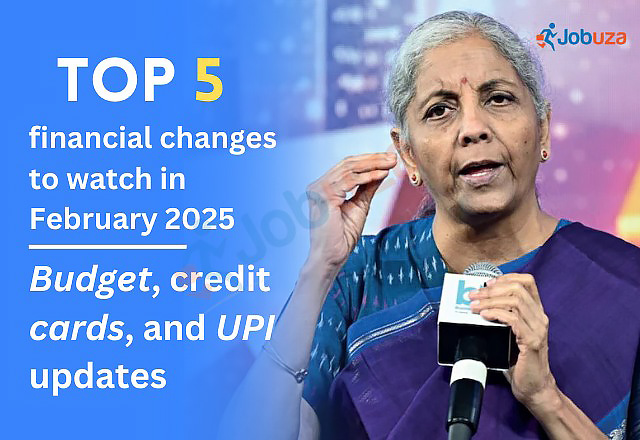
by Jobuza Team | Feb 5, 2025 | BLOG, Trending News
Key Financial Updates for February 2025: Budget Announcements, Banking Changes, and UPI Rules
financial updates: As February 2025 begins, several crucial financial changes are set to impact taxpayers, banking customers, and digital payment users. From tax relief in the Union Budget to new rules for UPI transactions and credit card updates, staying informed is essential for managing finances effectively.
Union Budget 2025: Higher Tax-Free Income Limit
In a major relief for salaried individuals, Finance Minister Nirmala Sitharaman has announced an increase in the tax-free income limit under the new tax regime. The exemption threshold has been raised from ₹7 lakh to ₹12 lakh. With a standard deduction of ₹75,000, salaried employees can now earn up to ₹12.75 lakh without paying income tax. However, capital gains remain taxable under the existing short-term and long-term tax rates.
RBI Monetary Policy: Potential Repo Rate Cut
The Reserve Bank of India’s Monetary Policy Committee (MPC) is scheduled to meet between February 5 and 7, 2025. Speculation is high about a possible reduction in the repo rate. If implemented, this could lead to lower loan EMIs and impact fixed deposit interest rates. Borrowers and depositors should stay updated on the official announcement.
UPI Transaction ID Changes: No Special Characters Allowed
Effective February 1, 2025, all UPI transaction IDs must consist strictly of alphanumeric characters. According to the latest guidelines from the National Payments Corporation of India (NPCI), any transaction IDs containing special characters will be rejected. This change aims to enhance transparency and uniformity in digital transactions.
IDFC FIRST Credit Card Updates: New Fees and Billing Cycle Changes
From February 20, 2025, IDFC FIRST Bank credit cardholders should take note of the following updates:
- Revised Billing Cycle – Some customers may experience a change in their statement generation date. It is advisable to check the updated schedule.
- New Charges on Education Payments – Payments made through platforms like CRED and Paytm for educational purposes will now incur additional fees.
- Increased Card Replacement Fee – The cost of replacing a lost or damaged card has been increased to ₹199 plus applicable taxes.
- New Joining and Annual Fees – A charge of ₹499 plus taxes will apply to new cardholders.
Kotak Mahindra Bank 811 Account: Updated Fees and Limits
Kotak Mahindra Bank has introduced changes to its Kotak811 savings account charges, effective February 1, 2025:
- Cash Deposit Fees – Deposits exceeding ₹10,000 per month will now attract a fee of ₹5 per ₹1,000, with a minimum charge of ₹50.
- ATM Withdrawal Limits – Certain withdrawal limits have been revised. Customers should check with the bank for specifics.
- Lowered Standing Instruction Failure Fee – The penalty for failed standing instructions has been reduced from ₹200 to ₹100.
What These Changes Mean for Consumers
With these financial updates, taxpayers and banking customers should review how these changes impact their financial planning. It is advisable to check official sources, such as government websites and bank portals, for detailed information and clarifications.
Staying informed and adapting to new policies can help in making better financial decisions and avoiding unnecessary penalties or charges.