by Jobuza Team | Jan 5, 2026 | BLOG, PAN/Aadhar Card Updates, Trending News
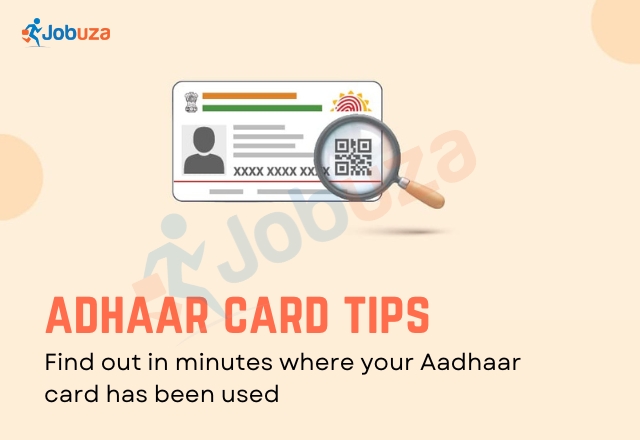
Today, the Aadhaar card is no longer limited to being just an identity document. It has become a digital identity that is linked to almost every important service in our daily lives. From opening bank accounts and getting mobile SIM cards to receiving pensions, rations, and benefits under government schemes, Aadhaar is used everywhere.
However, an important question arises — do you know where and for what purpose your Aadhaar card has been used so far? If your answer is no, there is no need to worry. You can now easily check your Aadhaar usage details in just a few minutes.
Why Tracking Aadhaar Usage Is Important
In recent times, cases of Aadhaar-related fraud have increased rapidly. Many people are unaware that their Aadhaar number is being misused without their knowledge. Fake SIM cards are issued, loans are taken fraudulently, and government benefits are misused in someone else’s name.
By regularly checking your Aadhaar authentication history, you can detect such misuse at an early stage and prevent financial loss, legal trouble, and identity theft. This makes Aadhaar usage tracking extremely important in today’s digital environment.
Tracking Aadhaar Usage Is Now Easier Than Ever
Earlier, users had to visit the UIDAI website or use the mAadhaar app to access Aadhaar details, which many people found complicated. To simplify this process, the government has now introduced a new Aadhaar app.
With this app, you can easily check when, where, and for what purpose your Aadhaar was used, directly from your mobile phone while sitting at home.
How to Check Aadhaar Authentication History
To view your Aadhaar usage history, start by downloading the new Aadhaar app on your smartphone. After installing the app, log in using your Aadhaar number and the mobile number registered with Aadhaar.
Once logged in, go to the “Authentication History” or “Auth History” section. Here, you will find a complete list showing the date, time, and location of every Aadhaar authentication. This information helps you verify whether the usage was genuine or suspicious.
What to Do If You Notice Any Misuse
If you find any Aadhaar usage entry that you do not recognize or that seems suspicious, do not ignore it. Immediately report the issue to the UIDAI helpline. You can also file a complaint through the cybercrime helpline or contact your nearest police station.
Timely reporting can protect you from fraudulent loans, cyber fraud, and unnecessary legal complications.
Stay Alert and Stay Safe
In the digital age, even a small mistake can result in major losses. Fraudsters continuously look for new ways to misuse Aadhaar details. That is why checking your Aadhaar authentication history regularly is a smart and responsible habit.
The new Aadhaar app makes this process simple and quick. Staying informed and alert is the best way to protect your digital identity.
Disclaimer
This content has been sourced and edited from TV9. While modifications have been made for clarity and readability, the original content belongs to its respective authors and website. We do not claim ownership of the original content.
Read More PAN/Aadhar Card Updates
by Jobuza Team | Dec 31, 2025 | BLOG, Trending News
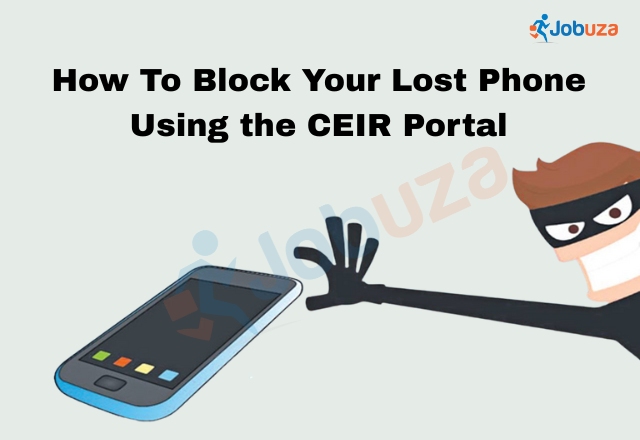
Losing a mobile phone or realising that it has been stolen can be stressful and overwhelming. Apart from the cost of the device, there is always the fear of personal data being misused. To address this issue, the Central Equipment Identity Register (CEIR) Portal, operated by the Department of Telecommunications (DoT), allows users in India to block their lost or stolen mobile phones and prevent unauthorised usage.
What You Need Before Blocking Your Phone
Before starting the blocking process, keep the following details ready to avoid delays:
You will need the IMEI number of your mobile phone. This can be found by dialling *#06#, checking the device box, or referring to the purchase invoice.
A police complaint or FIR registered for the lost or stolen mobile phone is mandatory.
You will also need a valid identity proof, such as Aadhaar card or PAN card.
Keep access to the mobile number previously used in the device, or at least one of them, as it will be required to receive an OTP for verification.
Step-by-Step Process to Block Your Phone via the CEIR Portal
Visit the official CEIR website at ceir.gov.in, or access it through the Sanchar Saathi Portal.
On the homepage, select the option that says “Block Stolen/Lost Mobile”.
Fill in the required details carefully, including the mobile number(s) linked to the device and the IMEI number(s) of the lost or stolen phone.
Enter the brand and model of the mobile phone. Upload the purchase invoice if the system asks for it.
Provide details such as the date and place of loss or theft, along with the police station name, complaint number, and upload a copy of the police complaint.
Next, enter your personal details, including your name, address, email ID, and identity proof number.
Enter a mobile number that will receive the OTP. Click on Get OTP, verify it, and submit the form.
Once submitted, a Request ID will be generated. Save this ID, as it will be required to track the status of your request.
After submission, the CEIR system will block the IMEI of your device, making the phone unusable on all Indian telecom networks.
What Happens After You Submit the Request
You can track the status of your request on the CEIR portal using the Request ID or complaint number.
If your phone is recovered later, you can apply for unblocking the device through the same portal by submitting the un-block request form.
It is important to note that the CEIR Portal does not track or locate your phone. Its purpose is to disable the device from being used on mobile networks and prevent misuse.
Why Blocking Your Phone Through CEIR Is Important
Blocking a lost or stolen phone through the CEIR Portal helps protect your personal data and prevents unauthorised use of the device. It also assists law enforcement by ensuring that the handset becomes inactive and traceable if someone tries to use it on Indian telecom networks.
With a simple online process, the CEIR Portal gives users a reliable way to regain control and secure their information during a difficult situation.

by Jobuza Team | Dec 29, 2025 | BLOG, Trending News
PPF Investment Plan: The Public Provident Fund (PPF) is one of the most reliable long-term investment options available to Indian investors. It offers completely tax-free returns and is backed by the Government of India, making it a preferred choice for those looking for stability and security in their investment portfolio.
PPF is especially suitable for risk-averse investors who want guaranteed returns without exposure to market fluctuations. Due to its long-term nature and assured interest, it is widely used for retirement planning and wealth creation.
Why PPF Is Considered a Strong Long-Term Investment
PPF comes with a lock-in period of 15 years, which encourages disciplined savings. After completing the initial maturity period, investors have the flexibility to extend the account in blocks of five years. This feature allows investors to continue earning interest and grow their corpus over a longer duration, making PPF ideal for long-term financial planning.
The interest rate on PPF is revised by the government every quarter. At present, the PPF interest rate stands at 7.1 percent per annum. While this rate may appear lower compared to market-linked investment options, the biggest advantage of PPF lies in its tax efficiency. The investment, interest earned, and maturity amount are all exempt from tax under current rules.
PPF Investment Limits and Contribution Rules
An investor can open a PPF account with a minimum annual contribution of Rs 500. The maximum amount that can be invested in a financial year is capped at Rs 1.5 lakh. Contributions can be made either in a lump sum or in installments, as per the investor’s convenience.
PPF Returns After 15 Years
If an investor contributes the maximum allowed amount of Rs 1.5 lakh every year for 15 years, the total investment comes to Rs 22.5 lakh.
At the current interest rate of 7.1 percent, the maturity value after 15 years will be approximately Rs 40,68,209. This includes interest earnings of more than Rs 18 lakh, making PPF a strong option for steady wealth creation.
How Extending PPF Can Help Build a Bigger Corpus
One of the key benefits of PPF is the option to extend the account beyond the initial 15-year lock-in period. By continuing investments, investors can significantly increase their returns over time.
If an individual invests Rs 1.5 lakh every year for 20 years, the total investment amount will be Rs 30 lakh.
-
Interest earned during this period: Rs 36,58,288
-
Maturity value after 20 years: Rs 66,58,288
This clearly shows how the power of compounding works in favor of long-term investors.
Can PPF Help You Build Rs 1 Crore?
PPF Investment Plan: Yes, it is possible to build a corpus of Rs 1 crore through PPF with patience and consistent investments. If an investor continues contributing Rs 1.5 lakh annually for 25 years, the total investment amount will be Rs 37.5 lakh.
Over this period:
-
Total investment: Rs 37,50,000
-
Interest earned: Rs 65,58,015
-
Maturity value: Rs 1,03,08,015
These calculations show that disciplined investing in PPF for 25 years can help investors achieve a crore-plus corpus, entirely tax-free.
Final Thoughts
PPF may not offer aggressive returns, but it stands out as a safe, tax-efficient, and government-backed investment option. For investors who value capital protection, steady growth, and long-term financial security, PPF remains one of the best choices for retirement planning and wealth accumulation.
by Jobuza Team | Dec 24, 2025 | BLOG, Trending News
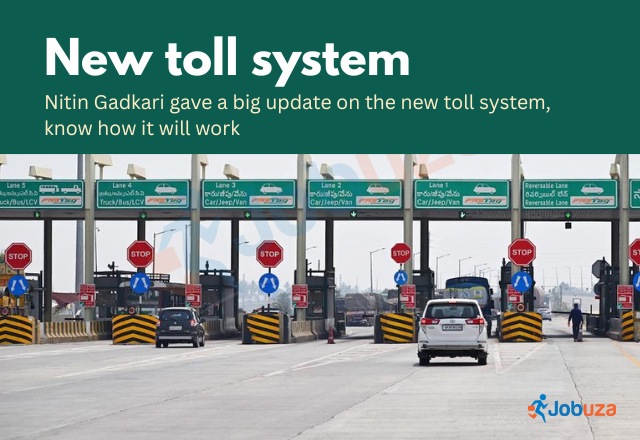
The Indian government is preparing to introduce a new AI-based toll collection system that will completely change the way tolls are collected on national highways. Union Road Transport and Highways Minister Nitin Gadkari has confirmed that this advanced toll system will be implemented by the end of 2026.
Unlike the current FASTag system, the new toll system will not require any chip, sticker, or device to be installed inside vehicles. Instead, it will rely on artificial intelligence and satellite-based technology to collect toll charges automatically.
AI and Satellite Technology to Replace Traditional Toll Booths
Speaking in the Rajya Sabha during Question Hour, Nitin Gadkari said the upcoming toll collection system will be based on satellite and AI technology. One of the biggest advantages of this system is that vehicles will no longer need to stop at toll plazas.
Under the new system, vehicles will be able to pass through toll points at speeds of up to 80 kilometres per hour. This will significantly reduce traffic congestion, waiting time, and fuel consumption on highways.
Government Revenue and Fuel Savings to Increase
The minister highlighted the financial benefits of the AI-based toll system. According to him, the new system will help save fuel worth around ₹1,500 crore every year. In addition, it is expected to increase government revenue by nearly ₹6,000 crore.
This system will be completely different from both FASTag and GPS-based toll collection methods currently in use or under consideration.
How the AI-Based Toll System Will Work
The AI toll system will operate on the Multi-Lane Free Flow (MLFF) model. Under this model, there will be no physical toll booths on highways.
Instead, a metal structure known as a gantry will be installed at entry and exit points of toll sections. These gantries will be equipped with high-resolution cameras and advanced sensors. The cameras will automatically capture vehicle number plates and use AI-based vision technology to identify them.
Once the vehicle enters and exits a toll section, the system will calculate the distance travelled and automatically deduct the toll amount. The entire process will be fully automated, and drivers will not need to slow down or stop anywhere.
Difference Between FASTag, GPS-Based Toll, and AI-Based Toll System
The existing FASTag system uses RFID technology and requires a sticker to be placed on the vehicle’s windscreen. Vehicles usually need to slow down or briefly stop at toll plazas for scanning.
GPS or GNSS-based toll systems depend on satellite tracking and require an on-board unit device to be installed inside the vehicle.
In contrast, the AI-based MLFF toll system will work only through cameras and artificial intelligence. No sticker, chip, or tracking device will be needed. The vehicle’s number plate will be sufficient for toll collection, making the system more convenient and efficient.
What Will Happen to the Existing FASTag System?
Currently, toll collection in India is done through FASTag, which is linked to a prepaid wallet or bank account. If the FASTag balance is insufficient, the tag is blacklisted, and drivers are forced to pay toll charges manually.
With the introduction of the AI-based toll system, FASTag will eventually be phased out once the new system is fully implemented nationwide. However, until the transition is complete, FASTag will continue to operate as usual.
AI-Based Toll System Also Useful for Non-GPS Vehicles
One major advantage of the AI-based system is that it does not depend on GPS devices inside vehicles. This makes it suitable even for vehicles that do not have satellite tracking equipment.
By relying on external cameras and number plate recognition, the AI toll system ensures accurate toll collection without placing any burden on vehicle owners.
A Major Step Towards Smarter Highways
The introduction of the AI-based toll collection system marks a major step toward modernising India’s highway infrastructure. With faster travel, reduced congestion, lower fuel consumption, and higher transparency, the new toll system is expected to benefit both commuters and the government.
As the implementation deadline approaches, this new technology could soon redefine road travel across the country.
by Jobuza Team | Dec 24, 2025 | BLOG, PAN/Aadhar Card Updates, Trending News
Today, the Aadhaar card is no longer limited to being just an identity proof. It has become an essential part of our digital identity. From opening bank accounts and getting mobile SIM cards to receiving pensions, ration benefits, and accessing government schemes, Aadhaar is used almost everywhere. However, an important question remains: do you know where and for what purpose your Aadhaar card has been used so far?
If you are unsure, there is no need to worry. The government now provides an easy way to track Aadhaar usage and stay protected from misuse.
Why Tracking Aadhaar Usage Is Important
In recent years, Aadhaar-related fraud cases have increased significantly. Many people become victims without even realizing it. In some cases, fake SIM cards are issued using someone else’s Aadhaar details. In others, fraudulent loans are taken or government benefits are wrongly claimed.
By checking your Aadhaar authentication history on time, you can detect such misuse early and prevent financial loss, legal trouble, and identity theft. This is why monitoring Aadhaar usage has become extremely important for every Aadhaar holder.
Aadhaar Usage Tracking Is Now Easier Than Ever
Earlier, checking Aadhaar usage required visiting the UIDAI website or using the mAadhaar app, which many users found confusing. To simplify the process, the government has now introduced a new Aadhaar app.
With this new app, you can easily check when, where, and for what purpose your Aadhaar was used, all from your mobile phone at home. The interface is user-friendly and designed to help even first-time users.
How to Check Aadhaar Authentication History
To view your complete Aadhaar usage history, start by downloading the new Aadhaar app on your smartphone. After installation, log in using your Aadhaar number and the mobile number registered with UIDAI.
Once logged in, look for the option called “Authentication History” or “Auth History.” Clicking on this option will show a detailed list of Aadhaar usage records. You will be able to see the date, time, and location of each authentication. This helps you identify whether the usage was genuine or suspicious.
What to Do If You Notice Aadhaar Misuse
If you find any Aadhaar usage entry that you do not recognize, do not ignore it. Immediately report the issue to the UIDAI helpline. You should also consider filing a complaint with the cybercrime helpline or your nearest police station.
Taking timely action can protect you from fraudulent loans, cyber fraud, and future legal complications. The sooner you report misuse, the better your chances of preventing further damage.
Stay Alert and Stay Safe
In today’s digital world, even small negligence can lead to serious consequences. Fraudsters are constantly finding new ways to misuse Aadhaar information. This makes it essential to regularly check your Aadhaar authentication history.
The new Aadhaar app makes this process quick and simple. Staying informed and alert is the best way to protect your identity and personal data.
Read More PAN/Aadhar Card Updates

by Jobuza Team | Dec 23, 2025 | BLOG, Trending News
Passengers to Pay Extra for Excess Luggage on Trains: Railway Minister Ashwini Vaishnav
Railway Minister Ashwini Vaishnav informed the Lok Sabha that passengers travelling by train will be charged if they carry luggage beyond the prescribed free allowance. The clarification was given while responding to a question raised by MP Vemireddy Prabhakar Reddy, who asked whether Indian Railways plans to introduce baggage rules similar to those followed at airports.
The minister stated that Indian Railways already has clear, class-wise limits on the amount of luggage passengers are allowed to carry inside train coaches. These limits include both free allowance and the maximum quantity permitted.
Class-Wise Free Luggage Allowance and Maximum Limits
According to the information shared by the Railway Minister:
Passengers travelling in Second Class are allowed to carry up to 35 kg of luggage free of cost, while a maximum of 70 kg can be carried after paying extra charges.
For Sleeper Class passengers, the free luggage allowance is 40 kg, and the maximum permissible limit is 80 kg.
Passengers travelling in AC Three-Tier and Chair Car coaches are allowed 40 kg of luggage, which is both the free allowance and the maximum limit. No additional luggage is permitted beyond this limit.
In First Class and AC Two-Tier, passengers can carry 50 kg of luggage free of cost, with a maximum limit of 100 kg on payment of extra charges.
Passengers travelling in AC First Class are allowed to carry 70 kg of luggage free of cost, and up to 150 kg can be carried by paying the applicable charges.
The Railway Minister clarified that the maximum luggage limit includes the free allowance. He added that passengers carrying luggage beyond the free limit but within the maximum limit will have to pay 1.5 times the prescribed luggage rate.
Size Rules for Personal Luggage
Vaishnav also explained the size restrictions for personal baggage carried inside coaches. Trunks, suitcases, and boxes with dimensions up to 100 cm x 60 cm x 25 cm (length x width x height) are allowed as personal luggage.
If any one of these dimensions exceeds the prescribed size, such luggage will not be allowed inside the coach and must be booked separately in the brake van or parcel van.
The Railway Minister’s clarification highlights that passengers should check luggage limits and rules before travelling to avoid inconvenience and additional charges.