by Jobuza Team | Dec 9, 2025 | BLOG, Trending News
In today’s digital world, Google has become our first choice for every question. Whether it is a small doubt or a complicated question, we quickly type it into the search bar and expect instant answers. But recent reports have warned that not all searches are innocent. Some online searches can be dangerous, especially for Indian users, and can even invite legal action.
A public notice published in major national newspapers recently highlighted that certain search terms are treated as threats to national security. If you are someone who searches out of curiosity, it is important to understand which Google searches can put you in trouble.
Types of Google Searches You Must Avoid
Here are the categories of searches that can lead to serious legal consequences according to recent reports.
1. Searches related to making weapons or explosives
Queries like “how to make a bomb” or similar instructions are monitored closely by national security agencies. Even searching for weapon-making guides can be treated as an attempt to gain illegal knowledge. Such searches raise red flags and can lead to investigation.
2. Child pornography or sexually exploitative content involving minors
This is one of the most serious offenses worldwide. Searching, viewing, or attempting to access child pornography is illegal in almost every country. Even accidental clicks or curiosity-driven searches can result in inquiry under child protection laws.
3. Hacking tools, cybercrime tutorials, or illegal software
Searching for ways to hack accounts, break into systems, or download tools used for cybercrime is treated as preparation for criminal activity. In India, such searches fall under cybercrime laws and can lead to legal action.
4. Pirated movies, illegal downloads, and free streaming sites
Queries like “free movie download” or searches for pirated streaming websites violate copyright laws. Even if you do not download anything, accessing or attempting to access pirated content can bring legal consequences under intellectual property law.
Reports also mention searches related to illegal drugs, dark web access, and instructions for committing any criminal acts. With advanced monitoring systems, agencies can track search patterns, IP addresses, and online activity. This makes it easier for authorities to identify suspicious behavior.
Why Some Searches Can Get You in Trouble
Search engines provide unlimited access to information, and that is both helpful and risky. You can learn about history, science, culture, skills, or hobbies instantly. But the same search system can also record your activity.
With modern artificial intelligence, digital surveillance, and cyber monitoring tools used by governments, almost all online activity can be reviewed. This includes your search history, browsing patterns, and social media behavior.
If a search appears suspicious or relates to harmful or illegal activities, authorities may investigate, even if you did not intend to commit a crime. In India, strict cybercrime, anti-terror, copyright, and child protection laws make such searches highly risky.
How to Google Safely
The rule is simple: Think before you type.
Do not search for anything that involves weapons, harm, illegal acts, or abusive content. Avoid clicking on or viewing:
-
Sexual content involving minors
-
Hacking tools, cybercrime software, or websites that promote illegal activity
-
Pirated movie sites, illegal downloads, or file-sharing platforms
Use the internet responsibly. For learning or entertainment, rely on trusted educational websites, legal streaming platforms, verified sources, and reliable forums.
Every country has different laws, and what seems harmless in one place may be criminal in another. With increasing cyber monitoring and strict digital laws in 2025, even a curiosity-driven Google search can bring serious consequences.
The internet offers knowledge, convenience, and limitless information. But it also demands responsibility. A single careless search can turn into legal trouble. Use the internet wisely, search safely, and always choose ethical and legal online behavior. A moment of curiosity is never worth risking your freedom.

by Jobuza Team | Dec 8, 2025 | Trending News
Indian Railways is preparing to introduce a major change in the Tatkal ticket system, and this new rule will directly impact passengers. Many people are curious to know what this rule is and how it will change the booking process.
For years, getting a Tatkal ticket from the counter was considered easier compared to online booking. But soon, this will no longer be the case. Indian Railways is bringing in an OTP-based system for all Tatkal counter tickets, making the process more secure and transparent.
The biggest reason behind this change is misuse. Railways received several complaints about passengers using fake mobile numbers, taking help from middlemen, and booking tickets unfairly. To stop these practices, the Railways has decided to make OTP verification mandatory. With this system, only genuine passengers will be able to secure Tatkal tickets.
The Railways had already tested Aadhaar-based and OTP-based verification for online bookings earlier. In July 2025, Aadhaar verification for online Tatkal tickets was introduced. Later, in October 2025, OTP verification was added for general online reservations. Passengers quickly adjusted, and the new process helped make online booking more transparent and secure.
From November 17, 2025, Railways also began a pilot project for OTP verification on counter Tatkal tickets. This started with a few selected trains and was later expanded to 52 trains. Under this system, passengers write their mobile number on the reservation form at the counter. An OTP is sent to that number, and the ticket is issued only when the passenger shares the correct OTP with the booking clerk. If the OTP does not match, the ticket is not generated.
This rule is expected to roll out across all trains very soon. The main aim of this system is to keep Tatkal ticketing fair, safe, and free from misuse. With OTP verification, the role of middlemen will reduce, and the use of fake numbers or fake identities will come to an end. Most importantly, it will ensure that tickets go to real passengers who genuinely need them.
This new rule marks a strong step by the Railways toward secure and transparent ticketing, giving passengers a more reliable and trustworthy booking experience.

by Jobuza Team | Dec 4, 2025 | BLOG, Trending News
December has turned into a critical month for taxpayers, bank customers, and government pensioners. Several mandatory financial tasks must be completed within this month to avoid penalties, blocked transactions, or even suspended pension benefits. From income tax filings to Aadhaar–PAN linking, multiple important deadlines are approaching fast. Delaying any of these could lead to unnecessary financial trouble.
ITR Filing Deadline for Audit Cases Extended
The Central Board of Direct Taxes has extended the income tax return filing deadline for taxpayers who are required to undergo a tax audit. Businesses and professionals can now file their returns for Assessment Year 2025–26 till December 10. This extension offers relief to those facing delays due to audits and documentation issues.
Deadline for Belated and Revised ITRs
Taxpayers who either missed filing their FY25 income tax return or want to correct errors in their already filed return must submit their belated or revised return by December 31. If this deadline is missed, the following penalties may apply:
A late fee of up to Rs 5,000. If total income is below Rs 5 lakh, the late fee is limited to Rs 1,000.
Interest will continue to be charged on unpaid tax until the return is filed.
After December 31, taxpayers will only be able to use the ITR-U or Updated Return option. This facility allows corrections for up to two years but comes with an extra tax burden of 25 percent to 50 percent of the total tax and interest payable.
Aadhaar–PAN Linking Deadline
Individuals who received their Aadhaar card on or before October 1, 2024, must link it with their PAN by December 31, 2025. If PAN is not linked with Aadhaar, it will become inoperative. This can directly affect income tax filing, major financial transactions, investments, and routine banking services. Keeping PAN active is necessary for uninterrupted financial access.
Important Compliance Changes That Ended in November
Some key financial deadlines were already completed in November, and missing them may impact certain users:
The State Bank of India permanently discontinued its mCASH facility on November 30. Customers must now use UPI, IMPS, NEFT, or RTGS for fund transfers.
Government pensioners were required to submit their annual life certificate by November 30. Failure to do so may result in temporary suspension of pension payments until verification is completed.
Central government employees who wanted to shift from the National Pension System to the Unified Pension Scheme had to exercise their option by November 30. Those who switched can return to NPS later, but only once.
Why December Is Financially Important
December is the final low-cost compliance window before stricter penalties and higher charges come into effect. Completing these tasks on time ensures smooth financial operations, including tax filing, pension credits, banking services, and investment activities. Timely action now can help avoid legal issues, financial losses, and last-minute stress.
by Jobuza Team | Dec 2, 2025 | BLOG, Trending News
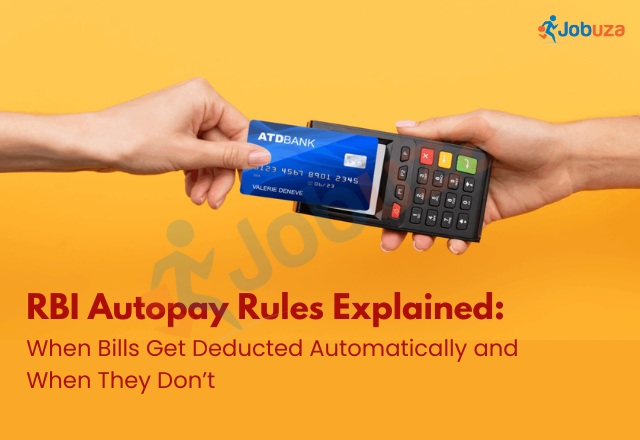
Missing due dates for mobile, OTT, electricity, or insurance bills can lead to late fees, service disruption, and unnecessary stress. This is where the Autopay or E-Mandate feature becomes highly useful. With Autopay, your bills are deducted automatically on the due date without requiring any manual action.
However, this automatic payment facility works strictly under the guidelines issued by the Reserve Bank of India (RBI). These rules ensure both convenience and security for users. Let’s understand how Autopay works, its benefits, and the most important rules every user should know.
What Is Autopay and How Does It Work?
Autopay is a system that allows your bank to automatically deduct recurring payments from your account on a fixed schedule. You can activate it through your bank’s website, mobile app, or directly on a merchant platform such as OTT services, electricity boards, or insurance portals.
Autopay is commonly used for:
Once enabled, the payment is deducted automatically every month without the need for manual approval.
Types of Autopay Mandates
RBI allows two types of Autopay mandates:
Fixed Mandate:
The amount remains the same every billing cycle, such as a fixed OTT subscription fee.
Variable Mandate:
The amount changes every month, as seen in electricity, water, or gas bills.
After successful registration, Autopay usually becomes active within seven working days. If your bill is due during this period, you must make the payment manually for that cycle.
Charges and Balance Requirements
If Autopay is linked to your debit card or bank account, you must ensure sufficient balance is available on the due date. If the payment fails due to low balance, the bank may charge a penalty. This charge is usually around 2 percent of the transaction amount or a minimum of ₹500, whichever is higher.
RBI’s Rules for Autopay Transactions
The current Autopay framework introduced by RBI from October 1, 2021, focuses strongly on customer security and fraud prevention. According to these rules:
-
For transactions up to ₹15,000, no OTP is required.
-
For transactions above ₹15,000, OTP confirmation is mandatory.
-
For insurance premiums and mutual fund investments, the transaction limit goes up to ₹1 lakh.
-
For credit card bill payments, Standing Instructions apply only up to ₹1 lakh. Any amount above this requires OTP approval every time.
When Is Additional Factor Authentication Required?
Additional Factor Authentication (AFA) is required in these situations:
-
While setting up a new recurring transaction above ₹15,000.
-
Every time a deduction exceeds ₹15,000.
-
No transaction can be completed without the customer’s approval.
Banks also send a pre-transaction alert at least 24 hours before every Autopay deduction. This alert includes an option to cancel or pause the payment if required, giving full control to the customer.
Information Required for E-Mandate Registration
To activate Autopay, users generally need to provide:
-
Consumer ID or account number
-
Maximum payment limit (for variable bills)
-
Mobile number and email ID for alerts
Only RBI-approved merchants and payment platforms are allowed to offer E-Mandate services.
What Happens If Your Card Is Lost or Blocked?
If your debit or credit card is lost, stolen, or blocked, all linked Autopay mandates stop automatically. You will need to delete the old mandate and register again using your new card.
In such cases, the bank is not responsible for delayed or missed payments. It remains the customer’s responsibility to ensure bills are paid on time.
Key Takeaways
Autopay is a powerful tool that helps manage regular expenses without missing deadlines.
Transactions up to ₹15,000 do not need OTP, while higher amounts require verification.
Insurance and mutual fund transactions are allowed up to ₹1 lakh under Autopay.
Pre-transaction alerts ensure transparency and customer control.
Lost or blocked cards automatically deactivate linked mandates.
Final Word
RBI’s Autopay rules are designed to create a perfect balance between ease of use and financial security. While Autopay saves users from the stress of forgotten due dates, it also ensures that every transaction is safe, authorized, and transparent. If you manage multiple subscriptions or monthly bills, Autopay can be a smart digital solution when used responsibly and within RBI’s approved limits.
by Jobuza Team | Nov 26, 2025 | BLOG, Trending News
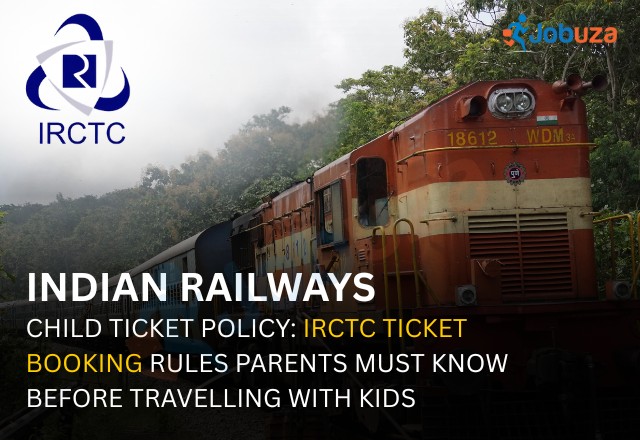
As Indian Railways has started advance ticket bookings for Christmas and New Year holidays, a large number of families are planning trips with their children to popular tourist destinations. With schools closed for winter vacations, train travel remains the most affordable and convenient option for parents.
However, before booking tickets, it is very important for parents to understand the child ticket rules clearly. Many people are still confused about whether a ticket is required for small children and when full fare is applicable.
Indian Railways Child Ticket Policy Explained
According to the official rules, children below five years of age are allowed to travel for free. However, the free travel rule comes with an important condition. If parents demand a separate seat or berth for the child, full adult fare must be paid even if the child is under five years old.
Therefore, parents must fully understand the child fare policy before finalising their journey plans.
Indian Railways Child Ticket Age Limit and Fare Rules
Here is a simple breakdown of Indian Railways child ticket rules based on age:
Children Below 5 Years
Children under five years can travel completely free of cost. No separate seat or berth is provided. If parents want a separate seat or berth for comfort, full adult fare will be charged.
Children Aged 5 to Below 12 Years
If no separate berth or seat is required, child fare is applicable.
If a separate seat or berth is required, full adult fare must be paid.
Children Aged 12 Years and Above
Children aged 12 years and above are treated as adults and must pay the full adult ticket fare without any exemption.
Official Railway Circular on Child Ticket Rules
As per the official circular issued by the Ministry of Railways on March 6, 2020, children below five years are allowed free travel only if they do not occupy a separate seat or berth. If parents voluntarily ask for a separate seat or berth, adult fare becomes mandatory.
IRCTC Child Ticket Booking Guidelines
While booking tickets through IRCTC, parents must ensure that the correct age of the child is entered. If a separate seat or berth is required, the child must be added as a full passenger during the booking process. Incorrect age details can lead to penalties during ticket checking.
Why Parents Should Follow Child Fare Rules Carefully
Many passengers face fines during travel because they assume that all children can travel for free. Railway ticket examiners strictly verify age at the time of journey. If a child is found occupying a seat without a proper ticket, a heavy penalty can be imposed along with recovery of full fare.
Conclusion
Indian Railways provides free travel to small children below five years of age, but only when no separate seat or berth is taken. As soon as a separate seat is required, full adult fare applies. For children between five and twelve years, both options are available based on seat requirement, while children above twelve must always pay full fare.
Before booking your holiday tickets, it is advised to carefully check the child’s age, seating needs, and fare rules to avoid last-minute issues and unnecessary penalties.
by Jobuza Team | Nov 25, 2025 | BLOG, PAN/Aadhar Card Updates, Trending News
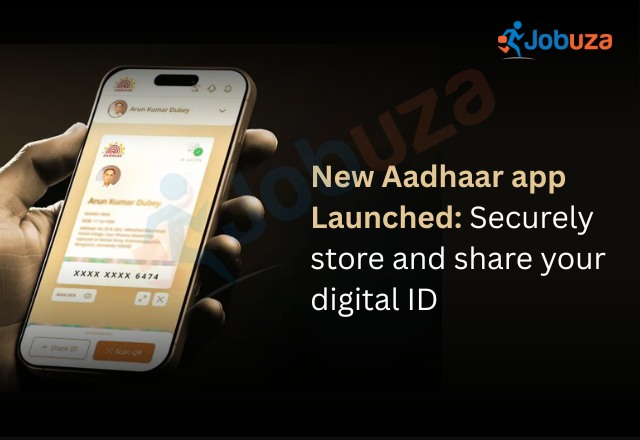
The UIDAI has launched a new Aadhaar app on November 9, designed to make storing and sharing your Aadhaar card easier and more secure. Available on both Google Play and the App Store, the app works alongside the mAadhaar app and provides a simple way to keep a digital copy of your Aadhaar for quick verification and paperless transactions. With this app, you no longer need to carry physical photocopies or cards during services that require identity proof.
Features of the New Aadhaar App
The new Aadhaar app complements the existing mAadhaar app but does not replace it. While it does not include features such as downloading a digital card, ordering a PVC Aadhaar, or verifying your email and mobile number, it focuses on secure storage and easy sharing of your Aadhaar details.
The app offers a clean, user-friendly interface with a quick two-step process to access your Aadhaar information. It enhances convenience by allowing citizens to carry and share Aadhaar details directly from their phones, similar to options like PDF downloads or Digilocker.
One of the key highlights is the ability to store up to five Aadhaar profiles on the same device, as long as they are linked to the same mobile number. This makes it ideal for families who want to manage multiple Aadhaar cards in one place.
The app also supports biometric locking, allowing users to protect their Aadhaar data until they decide to unlock it. Profile information automatically updates after any successful change. You can securely share verifiable details and QR codes, and even scan Aadhaar QR codes for faster and smoother verification.
How to Set Up the New Aadhaar App
To start using the new Aadhaar app, download and install it from the Google Play Store or Apple App Store. Choose your preferred language and enter your 12-digit Aadhaar number. Send an SMS from your registered mobile number when prompted. After entering the OTP, complete face authentication and set a six-digit password. Your Aadhaar card will then appear in the app, where you can mask your number, share details, or enable biometric lock.
You can repeat the same process to add up to four more Aadhaar profiles on the same device, making the app a convenient option for managing multiple Aadhaar cards securely.
Click here for more – PAN/Aadhar Card Updates