by Jobuza Team | Jun 15, 2026 | BLOG, Trending News
Indian Railways has one of the largest railway networks in the world, connecting millions of passengers every day. To make train travel easier and more convenient, Indian Railways has introduced several digital platforms for ticket booking, train tracking, complaints, and other passenger services.
For online train ticket booking, passengers have mainly relied on the IRCTC Rail Connect app for many years. However, Indian Railways has now launched a new all-in-one application called RailOne, which combines multiple railway services on a single platform.
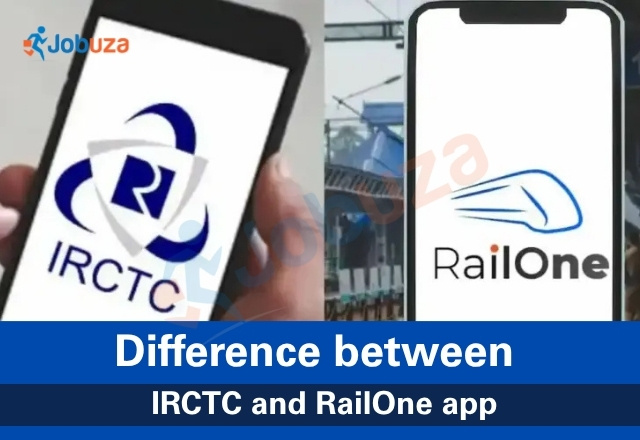
After the launch of RailOne, many passengers are confused about the difference between IRCTC and RailOne. Both apps provide railway-related services, but their features and uses are different.
Let’s understand the major differences between the IRCTC app and the RailOne app and find out which application is more useful for passengers.
What Is the IRCTC App?
The IRCTC Rail Connect app is the official railway ticket booking application developed by the Indian Railway Catering and Tourism Corporation (IRCTC), which operates under the Ministry of Railways.
The app has been available for several years and is trusted by millions of passengers across India.
Passengers can use the IRCTC app for:
- Booking reserved train tickets
- Booking Tatkal tickets
- Checking PNR status
- Cancelling tickets and applying for refunds
- Ordering food during train journeys
IRCTC remains one of the most popular railway applications, especially for passengers who mainly travel through reserved classes such as Sleeper and AC coaches.
What Is the RailOne App?
The RailOne app is a new digital platform launched by Indian Railways to bring multiple railway services together in one application.
The app was launched on July 1, 2025, by Railway Minister Ashwini Vaishnaw and was developed by the Centre for Railway Information Systems (CRIS).
RailOne is known as the “Super App” of Indian Railways because it combines services that were previously available through different applications.
Before RailOne, passengers had to use separate apps for different services:
- IRCTC for reserved ticket booking
- UTS for unreserved ticket booking
- NTES for train tracking
- Rail Madad for complaints
- Food on Track for food ordering
With RailOne, these services are now available through a single platform.
The app has gained significant popularity among passengers and has recorded millions of downloads since its launch.
IRCTC vs RailOne App: Key Differences
| Feature |
IRCTC App |
RailOne App |
| Reserved Ticket Booking |
Available |
Available |
| Tatkal Ticket Booking |
Available |
Available |
| Unreserved Ticket Booking |
Not Available |
Available |
| Platform Ticket Booking |
Not Available |
Available |
| Live Train Tracking |
Not Available |
Available |
| Food Ordering |
Available |
Available |
| Complaint Services |
Not Available |
Available |
| Porter Booking |
Not Available |
Available |
| Taxi Services |
Not Available |
Available |
| Single Login for Multiple Services |
Not Available |
Available |
| R-Wallet Facility |
Not Available |
Available |
| Multilingual Support |
Limited |
Available |
Major Differences Between IRCTC and RailOne
1. IRCTC Is Mainly for Reserved Ticket Booking
The biggest difference between both applications is their primary purpose.
The IRCTC app is mainly designed for reserved train ticket booking. Passengers can book Sleeper, AC, and Tatkal tickets easily through this platform.
However, IRCTC does not provide services like general ticket booking, platform ticket booking, or live train tracking.
RailOne, on the other hand, allows passengers to access reserved tickets, unreserved tickets, and several other railway services from one application.
2. RailOne Combines Multiple Railway Services
Before the launch of RailOne, passengers needed multiple applications for different railway services.
For example:
- IRCTC was used for reserved ticket booking
- UTS was used for general ticket booking
- NTES was used for live train status
- Rail Madad was used for complaints
- Food on Track was used for food services
RailOne has brought these services together, making it easier for passengers to manage their complete railway journey from one app.
3. Better Digital Experience and Faster Access
RailOne has been developed on a modern digital platform designed to handle a large number of users.
The app aims to provide a smoother experience, especially during high-demand periods such as Tatkal ticket booking.
The upgraded technology helps improve speed, reduce dependency on multiple apps, and provide better service accessibility.
4. Easy Login Facility
Passengers do not need to create a completely new account for RailOne.
Users can log in using their existing railway credentials, making the transition from older railway applications easier.
5. R-Wallet and Discount Benefits
RailOne provides additional benefits through its digital wallet facility.
Passengers can use the R-Wallet for payments and may receive benefits such as discounts on eligible unreserved ticket bookings.
This facility is not available through the traditional IRCTC app.
Which App Should You Use?
Use IRCTC App If:
- You mainly book reserved train tickets
- You frequently book Sleeper or AC class tickets
- You are already comfortable with the IRCTC interface
- You only need basic ticket booking services
Use RailOne App If:
- You want all railway services in one application
- You regularly travel and need general tickets
- You want live train tracking and complaint services
- You need platform ticket booking
- You prefer managing multiple railway services from a single app
IRCTC vs RailOne: Which Is Better?
Both applications have different purposes. IRCTC remains a reliable platform for reserved train ticket booking, while RailOne provides a wider range of railway services through a single application.
For passengers who only need reserved ticket booking, IRCTC continues to be a useful option. However, those who want complete railway services, including ticket booking, tracking, complaints, and other facilities, may find RailOne more convenient.
The introduction of RailOne does not completely replace the need for IRCTC, but it provides passengers with a more integrated digital railway experience.
Final Words
The launch of RailOne marks a major step towards making Indian Railways services more digital and passenger-friendly.
While IRCTC has been the trusted platform for online ticket booking for many years, RailOne brings several additional services under one roof.
Passengers can choose between both apps depending on their requirements. If your main requirement is reserved ticket booking, IRCTC is sufficient. But if you want multiple railway services in one place, RailOne can be a more convenient choice.
With continuous digital improvements, Indian Railways is moving towards a faster, smarter, and easier travel experience for millions of passengers.
by Jobuza Team | Jun 12, 2026 | BLOG, Trending News
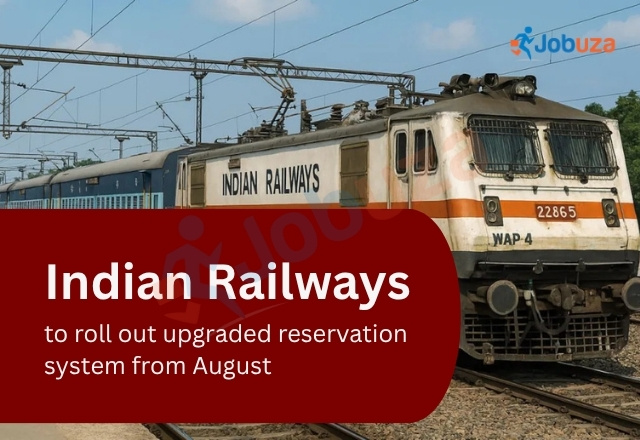
Indian Railways is set to introduce a major upgrade to its Passenger Reservation System (PRS) from August. This will be one of the biggest technological changes in the railway ticket booking system in several decades.
The upgraded reservation platform will gradually replace the existing system that has been operating since 1986. The new system has been designed to improve ticket booking speed, increase handling capacity, and provide a smoother experience for millions of railway passengers.
Railway Minister Ashwini Vaishnaw recently reviewed the progress of the project at Rail Bhawan and directed officials to ensure that passengers do not face any inconvenience during the transition process.
The review meeting was also attended by Ministers of State for Railways V. Somanna and Ravneet Singh Bittu.
Indian Railways to Upgrade 40-Year-Old Reservation System
The current Passenger Reservation System was introduced in 1986 and has undergone several limited improvements over the years. However, with the increasing number of passengers and rising demand for online ticket booking, Indian Railways decided to develop a completely modern reservation platform.
The new PRS has been built using advanced technology and will offer improved performance, faster processing, and greater capacity compared to the existing system.
Indian Railways started internet-based ticket booking services in 2002. Since then, online reservations have become the preferred choice for passengers.
Currently, around 88 percent of railway ticket bookings are completed through digital platforms, highlighting the growing importance of a modern reservation system.
New System Aims to Improve Passenger Experience
The upgraded Passenger Reservation System is expected to make several aspects of railway ticket booking more efficient.
Passengers can expect:
- Faster ticket booking process
- Better system performance during peak demand
- Improved digital services
- Higher capacity for handling bookings
- More reliable reservation experience
The upgrade will help Indian Railways manage the increasing number of passengers who depend on online services for train reservations.
RailOne App Becomes Popular Among Passengers
The new reservation system upgrade is part of Indian Railways’ larger digital transformation initiative.
The RailOne app, launched in July 2025, has gained significant popularity among passengers and has crossed 3.5 crore downloads within a year.
The app provides multiple railway services through a single platform. Passengers can use it for:
- Train ticket booking and cancellation
- Checking train running status
- Viewing platform and coach details
- Raising complaints
- Accessing other railway-related services
According to Indian Railways, around 9.29 lakh tickets are booked daily through the RailOne app. This includes approximately 7.2 lakh unreserved tickets and 2.09 lakh reserved tickets.
AI-Based Feature Helps Predict Waiting List Confirmation
Another major digital improvement introduced by Indian Railways is the use of Artificial Intelligence (AI) for waitlist prediction.
The AI-based tool helps passengers estimate the possibility of their waitlisted ticket getting confirmed before travelling.
According to railway officials, the accuracy of waitlist prediction has improved significantly from 53 percent to 94 percent.
This feature allows passengers to make better travel decisions and plan their journeys with more confidence.
Indian Railways Moving Towards Smarter Digital Services
The upcoming Passenger Reservation System upgrade reflects Indian Railways’ focus on adopting modern technology to improve passenger services.
With faster booking, improved digital platforms, and AI-based features, the new system is expected to make train travel planning more convenient and efficient.
As the upgraded reservation system begins its rollout from August, Indian Railways aims to provide a faster, smarter, and more reliable ticket booking experience for passengers across India.
Frequently Asked Questions
When will the new Indian Railways reservation system start?
The upgraded Passenger Reservation System will begin its rollout from August.
What is the current railway reservation system?
The existing Passenger Reservation System was introduced in 1986 and is now being replaced with a modern upgraded platform.
Why is Indian Railways upgrading the reservation system?
The upgrade aims to improve ticket booking speed, increase system capacity, and provide a better passenger experience.
How many railway tickets are booked online?
Around 88 percent of railway ticket bookings are currently completed through digital platforms.
What is the RailOne app used for?
The RailOne app allows passengers to book tickets, cancel reservations, check train status, access coach information, and use other railway services.
How does AI help railway passengers?
AI-based waitlist prediction helps passengers estimate the chances of confirmation for their waitlisted tickets.
How accurate is the AI waitlist prediction system?
The prediction accuracy has improved from 53 percent to 94 percent, according to Indian Railways.
by Jobuza Team | Jun 12, 2026 | BLOG, Trending News
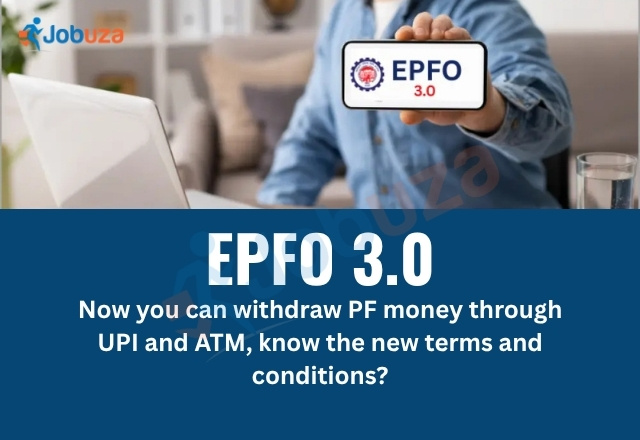
The Employees’ Provident Fund Organisation (EPFO) is preparing to introduce a major digital upgrade through EPFO 3.0. The new initiative aims to make provident fund services faster, more convenient, and accessible through modern digital platforms.
One of the most talked-about features under EPFO 3.0 is the ability to withdraw PF money using UPI and UPI-enabled ATM services. The move is expected to simplify fund access for millions of EPF subscribers across the country and reduce the time required for processing withdrawals.
Here is everything you need to know about the upcoming EPFO 3.0 features, withdrawal limits, eligibility conditions, and additional digital services.
What Is EPFO 3.0?
EPFO 3.0 is the next phase of digital transformation being introduced by the Employees’ Provident Fund Organisation. The initiative focuses on improving user experience, reducing paperwork, speeding up claim processing, and enabling easier access to EPF services through digital channels.
The upgraded system is expected to provide members with greater control over their provident fund accounts while making transactions more seamless and transparent.
When Will EPFO 3.0 Be Launched?
Union Labour Minister Mansukh Mandaviya announced that testing of the EPFO 3.0 platform had been completed and that implementation would begin soon.
Although an official rollout date has not yet been announced, the government has indicated that the new features are expected to be introduced in phases after final approvals and system integration.
EPF subscribers are advised to keep checking official EPFO announcements for the latest updates.
How Much PF Money Can Be Withdrawn Through UPI?
Under the proposed EPFO 3.0 framework, subscribers may be allowed to withdraw between 50 percent and 75 percent of their available EPF balance using UPI or UPI-enabled ATM services.
The exact withdrawal amount will depend on applicable EPF rules, eligibility conditions, and account status at the time of withdrawal.
Members should note that withdrawal limits may vary depending on the purpose of withdrawal and regulatory guidelines issued by EPFO.
How Will UPI-Based PF Withdrawal Work?
The new system is expected to allow subscribers to access their EPF balance directly through a linked UPI platform.
Members will be able to check their available PF balance and initiate a transfer from their EPF account to their registered bank account.
To complete the transaction, users will need to authenticate the transfer using their linked UPI PIN. Once the money is successfully credited to the bank account, it can be used for digital payments, transfers, purchases, or cash withdrawals through regular bank ATMs.
The objective is to reduce dependency on lengthy claim procedures and make fund access faster for eligible members.
Will UPI Withdrawals Affect EPF Pension Benefits?
No. The proposed UPI withdrawal facility will apply only to the Provident Fund component of the EPF account.
The pension contribution accumulated under the Employees’ Pension Scheme (EPS) will remain unaffected. This means members will continue to retain their pension benefits according to existing EPFO regulations.
Therefore, using the UPI withdrawal facility will not impact retirement pension entitlements.
Face Authentication for Faster Services
Another important feature being introduced under EPFO 3.0 is Face Authentication Technology (FAT).
Using facial authentication through the UMANG application, members will be able to activate both new and existing Universal Account Numbers (UAN) without visiting physical offices.
This feature is expected to simplify identity verification and make EPF services more accessible for users across the country.
Easier Access to Passbooks and Online Claims
EPFO 3.0 aims to improve self-service options for subscribers.
Members will be able to access their EPF passbooks more easily, update incomplete information, and submit claims online through a simplified digital process.
These improvements are expected to reduce processing delays and minimize the need for manual intervention.
EPFO Services Coming to WhatsApp
EPFO is also working on introducing WhatsApp-based services for subscribers.
Under the proposed system, members will be able to access important account information such as:
- PF account balance
- Recent transactions
- Claim status updates
- Account-related services
EPFO is expected to issue a dedicated WhatsApp number for this service. Members may simply send a message from their registered mobile number to receive account-related information quickly and conveniently.
The service is expected to provide round-the-clock access to basic EPF information.
Benefits of EPFO 3.0 for Subscribers
The new EPFO platform is expected to offer several advantages to members.
Faster access to provident fund money, simplified claim procedures, improved digital verification, enhanced transparency, and easier account management are among the key benefits.
The integration of UPI, facial authentication, UMANG services, and WhatsApp support reflects EPFO’s effort to modernize retirement savings management for millions of employees.
Final Thoughts
EPFO 3.0 represents a significant step toward digitizing provident fund services in India. Features such as UPI-based withdrawals, ATM access, facial authentication, online claim management, and WhatsApp support are expected to make EPF services faster and more user-friendly.
While the official rollout date is still awaited, subscribers can expect a more convenient and digitally connected experience once the new system becomes operational.
Keeping UAN, Aadhaar, bank account details, and mobile numbers updated will help members take full advantage of these upcoming services when they are launched.
Frequently Asked Questions
What is EPFO 3.0?
EPFO 3.0 is the next-generation digital upgrade being introduced by the Employees’ Provident Fund Organisation to improve EPF services and user experience.
Can PF money be withdrawn through UPI?
Yes, EPFO plans to introduce a facility that will allow eligible subscribers to transfer PF funds through UPI-based services.
How much PF balance can be withdrawn?
Subscribers may be able to withdraw between 50 percent and 75 percent of their available EPF balance, subject to applicable conditions.
Will UPI-based withdrawals affect pension benefits?
No. The facility will apply only to the provident fund portion of the account and will not impact pension contributions under EPS.
What is Face Authentication Technology in EPFO 3.0?
Face Authentication Technology allows members to verify their identity and activate UAN services using facial recognition through the UMANG app.
Will EPFO provide services through WhatsApp?
Yes. EPFO is planning to introduce WhatsApp-based account services, including balance checks, transaction history, and claim status updates.
Has the rollout date been announced?
No official launch date has been announced yet, although testing has reportedly been completed.
What should members do before EPFO 3.0 launches?
Members should ensure that their UAN, Aadhaar, bank account details, and registered mobile number are updated to avoid any issues when the new services become available.

by Jobuza Team | Jun 11, 2026 | BLOG, Trending News
Retirement planning is something many people postpone while focusing on current financial responsibilities such as household expenses, children’s education, and daily living costs. However, building a reliable source of income for your later years is one of the most important financial decisions you can make.
To encourage long-term savings and provide financial security after retirement, the Government of India introduced the Atal Pension Yojana (APY). The scheme is designed to help individuals create a steady pension income and reduce financial uncertainty during retirement.
What Is Atal Pension Yojana?
Atal Pension Yojana is a government-backed pension scheme that aims to provide a guaranteed monthly pension after the age of 60. It is particularly beneficial for people working in the unorganised sector who may not have access to employer-sponsored retirement benefits.
Under this scheme, subscribers make regular monthly contributions during their working years. In return, they receive a fixed pension amount after retirement based on the pension plan they choose at the time of enrollment.
How Does the Scheme Work?
The amount you contribute to the Atal Pension Yojana depends on two important factors: your age at the time of joining and the pension amount you want to receive after retirement.
The scheme offers five pension options:
- ₹1,000 per month
- ₹2,000 per month
- ₹3,000 per month
- ₹4,000 per month
- ₹5,000 per month
Subscribers are required to contribute for a minimum period of 20 years. Once they reach the age of 60, they begin receiving the guaranteed monthly pension selected under the scheme.
Joining at a younger age allows individuals to contribute smaller monthly amounts while building a larger retirement corpus over time.
Eligibility Criteria for Atal Pension Yojana
To enroll in the Atal Pension Yojana, applicants must meet the following conditions:
- Must be an Indian citizen
- Age should be between 18 and 40 years
- Must have an active savings bank account
- Should not be an income taxpayer
Individuals below 18 years or above 40 years are not eligible to join the scheme. Since contributions continue until the age of 60, enrolling early provides greater flexibility and lower monthly contribution requirements.
Pension Benefits Under APY
One of the biggest advantages of Atal Pension Yojana is the assurance of a fixed monthly pension after retirement.
The highest pension available under the scheme is ₹5,000 per month, which amounts to ₹60,000 annually. This guaranteed income can help retirees manage essential living expenses and maintain financial independence.
Married couples can also maximize benefits by enrolling separately. If both spouses choose the highest pension option, they can receive a combined pension of up to ₹10,000 per month or ₹1.2 lakh annually after retirement.
This additional income can play a significant role in covering household expenses and improving financial stability during retirement years.
How to Apply for Atal Pension Yojana
The application process for APY is simple and can be completed through most banks in India.
To apply, visit the bank branch where you hold a savings account and request the Atal Pension Yojana application form. Fill in the required personal details, choose your preferred pension amount, and submit the completed form.
After successful enrollment, the monthly contribution amount is automatically deducted from your savings account, ensuring timely payments without any manual effort.
Key Benefits of Atal Pension Yojana
Atal Pension Yojana offers several advantages for individuals looking to build a secure retirement plan.
The scheme provides a government-backed guaranteed pension, making it a reliable option for long-term financial planning. Monthly contributions are affordable, allowing people from different income groups to participate comfortably.
The enrollment process is simple and accessible through banks across the country. The scheme also offers financial protection for spouses and nominees, ensuring continued support for family members.
Most importantly, APY encourages disciplined saving habits, helping individuals gradually build a retirement fund without placing a significant burden on their monthly budget.
Why Early Enrollment Matters
One of the most effective ways to maximize the benefits of Atal Pension Yojana is to join as early as possible. Younger subscribers enjoy lower monthly contribution requirements while gaining more time to build retirement savings.
Starting early not only reduces financial pressure but also helps create a stronger foundation for long-term financial security.
Final Thoughts
Atal Pension Yojana is a practical and affordable retirement planning solution for millions of Indians, especially those working in the unorganised sector. The scheme offers guaranteed pension benefits, simple enrollment, and long-term financial security backed by the Government of India.
If you are between 18 and 40 years of age and meet the eligibility requirements, enrolling in APY can be a valuable step toward creating a stable and dependable income after retirement. Planning today can help ensure greater financial independence and peace of mind in the future.
Frequently Asked Questions
What is the maximum pension available under Atal Pension Yojana?
The maximum guaranteed pension available under APY is ₹5,000 per month after the subscriber reaches 60 years of age.
Who can join Atal Pension Yojana?
Any Indian citizen between 18 and 40 years of age with an active savings bank account can apply, subject to the scheme’s eligibility conditions.
How long do I need to contribute to APY?
Subscribers must contribute for at least 20 years and continue contributions until reaching the age of 60.
Can both husband and wife join APY?
Yes. Both spouses can enroll separately and receive individual pension benefits after retirement.
Is the pension amount guaranteed?
Yes. The pension amount selected at the time of enrollment is guaranteed by the Government of India under the scheme’s guidelines.
How are contributions paid?
Monthly contributions are automatically deducted from the subscriber’s linked savings bank account.
Why should I join APY at a young age?
Joining early helps reduce monthly contribution requirements and allows more time to build retirement savings.
Is APY suitable for self-employed individuals?
Yes. The scheme is particularly beneficial for self-employed individuals, small business owners, daily wage earners, and workers in the unorganised sector who may not have access to formal pension plans.
by Jobuza Team | Jun 11, 2026 | BLOG, Trending News
India’s digital transformation has made accessing government services easier than ever. Today, citizens can use mobile applications to manage important documents, make secure payments, access public services, and complete essential tasks without visiting government offices.
Despite the growing availability of these digital tools, many people are still unaware of the benefits they offer. From storing official documents digitally to making instant bank transfers and accessing hundreds of government services, these apps can save time, reduce paperwork, and simplify daily life.
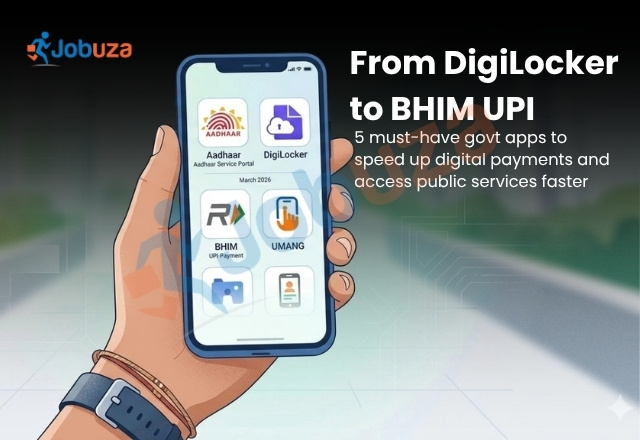
Here are five government-backed applications that can make your everyday activities more convenient and efficient.
DigiLocker
DigiLocker is a secure digital document wallet developed by the Government of India. It allows users to store and access important documents such as Aadhaar cards, driving licences, vehicle registration certificates, educational certificates, and more.
Documents issued through DigiLocker are legally valid and can be used for verification purposes whenever required. This eliminates the need to carry physical copies of important documents.
UMANG
UMANG, which stands for Unified Mobile Application for New-age Governance, provides access to more than 1,000 government services through a single platform.
Users can access services related to EPFO, PAN, Aadhaar, gas booking, utility bill payments, pension services, and much more. Instead of downloading multiple government apps, citizens can access a wide range of services from one convenient application.
mParivahan
mParivahan is a useful application for vehicle owners and drivers. It provides digital access to vehicle registration certificates (RC) and driving licences.
The app also helps users verify vehicle details, check registration information, and access various transport-related services. Digital documents available through mParivahan are accepted by traffic authorities across India.
Digi Yatra
Digi Yatra is designed to improve the airport travel experience. It uses facial recognition technology to enable paperless airport entry and boarding.
Passengers can move through airport checkpoints more quickly without repeatedly showing physical identity documents. The app helps reduce waiting times and makes air travel more convenient.
BHIM UPI
BHIM UPI is one of India’s most popular digital payment applications. Developed by the National Payments Corporation of India (NPCI), it enables secure and instant bank-to-bank money transfers.
Users can send and receive money, pay bills, scan QR codes, and complete transactions directly from their bank accounts. The platform is simple, secure, and widely accepted across the country.
Why These Apps Matter
Using these government applications can significantly reduce paperwork and improve access to essential services. Whether you need to manage documents, make payments, travel, or access government schemes, these apps offer a faster and more efficient experience.
They also promote transparency, reduce dependency on physical documents, and help citizens complete tasks from the comfort of their homes.
Download Apps Only from Trusted Sources
While downloading any government application, users should remain cautious. Cybercriminals often circulate fake APK files, suspicious links, and fraudulent messages that may appear genuine.
To stay safe, always download applications from official government websites, the Google Play Store, or the Apple App Store. Avoid installing apps from unknown sources or clicking on unverified links shared through social media or messaging platforms.
Downloading apps from trusted sources helps protect your personal information and reduces the risk of fraud, identity theft, and financial loss.
Final Thoughts
Government-backed digital applications are transforming the way citizens interact with public services. Apps such as DigiLocker, UMANG, mParivahan, Digi Yatra, and BHIM UPI offer secure, reliable, and convenient solutions for everyday needs.
By using these apps effectively, you can save time, reduce paperwork, access services more quickly, and enjoy a smoother digital experience. As India continues its journey towards digital governance, these applications have become essential tools for modern living.
Frequently Asked Questions
What is DigiLocker used for?
DigiLocker allows users to securely store and access official documents such as Aadhaar cards, driving licences, educational certificates, and vehicle registration documents.
Why should I install UMANG?
UMANG provides access to hundreds of government services, including EPFO, PAN, utility payments, gas booking, pension services, and more, all from one platform.
What services does mParivahan offer?
mParivahan provides digital driving licences, vehicle registration certificates, vehicle verification services, and transport-related information.
How does Digi Yatra help travellers?
Digi Yatra enables paperless airport entry and boarding through facial recognition technology, helping passengers move through airports more quickly.
Is BHIM UPI safe for digital payments?
Yes, BHIM UPI offers secure bank-to-bank transfers, QR code payments, bill payments, and other digital transactions using India’s UPI network.
Where should I download these apps?
Always download government applications from official websites, the Google Play Store, or the Apple App Store.
Can these apps reduce paperwork?
Yes, these applications support digital documentation and online verification, significantly reducing the need for physical paperwork.
Do these apps completely eliminate fraud risks?
No. While they are secure platforms, users should still avoid suspicious links, fake APK files, and phishing attempts.
Are DigiLocker documents legally valid?
Yes, documents issued and verified through DigiLocker are legally recognized and accepted by various government departments and institutions.
Can these apps help with personal finance management?
Yes, especially BHIM UPI, which simplifies payments, fund transfers, and transaction management while supporting better financial organization.
by Jobuza Team | Jun 8, 2026 | BLOG, Trending News
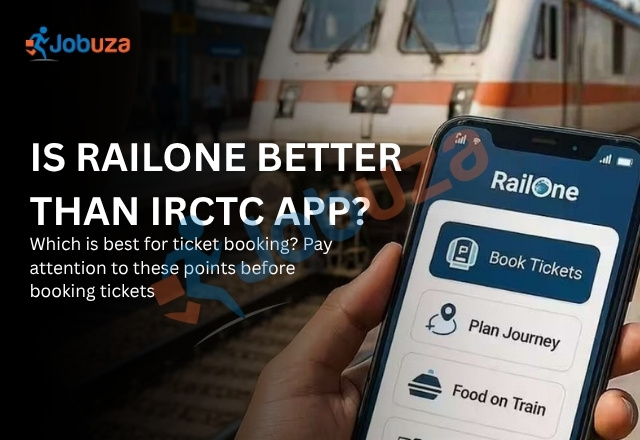
For years, the IRCTC app has been the preferred choice for millions of Indian railway passengers when booking train tickets. Whether it is a reserved seat, Tatkal booking, or checking train schedules, IRCTC has remained the primary platform for railway reservations.
However, Indian Railways has now introduced RailOne, a new all-in-one application that is quickly attracting attention. Developed by the Centre for Railway Information Systems (CRIS), RailOne combines multiple railway services into a single platform, making it easier for passengers to manage their travel needs from one app.
As more users begin exploring RailOne, many are asking the same question: Which app is better for ticket booking, RailOne or IRCTC?
What Is RailOne?
RailOne is a comprehensive railway application designed to bring several railway-related services together in one place.
Previously, passengers often needed different apps for different services. IRCTC was used for reserved ticket bookings, UTS was required for unreserved and platform tickets, while Rail Madad was used for complaints and passenger assistance.
RailOne aims to eliminate this inconvenience by providing all these services through a single application.
RailOne vs IRCTC: Understanding the Biggest Difference
The biggest difference between RailOne and IRCTC lies in the range of services they offer.
IRCTC Focuses Primarily on Reserved Ticket Booking
The IRCTC Rail Connect app is specifically designed for railway reservations. It remains the most trusted platform for booking:
- Confirmed train tickets
- Tatkal tickets
- Premium Tatkal tickets
- Railway tourism services
- Catering and travel-related services
Millions of passengers use the platform daily, making it the most established railway booking app in India.
RailOne Offers Multiple Railway Services in One App
RailOne goes beyond reserved ticket booking and combines several railway services into a single platform.
Passengers can use RailOne for:
- Reserved train ticket booking
- General ticket booking
- Platform ticket booking
- Local train ticket booking
- Live train tracking
- PNR status checking
- Food ordering during travel
- Passenger complaint registration
This integrated approach is one of the biggest reasons behind RailOne’s growing popularity.
Key Features That Make RailOne Popular
RailOne offers several features designed to improve the user experience.
Single Sign-In Convenience
Passengers no longer need separate accounts for different railway services. One login provides access to multiple features across the platform.
Saved Passenger Profiles
The app allows users to save passenger details in advance. This reduces the time required during ticket booking and makes the process more convenient.
Faster User Experience
Many early users have reported that RailOne offers a smooth and responsive interface, particularly for general and platform ticket bookings.
Multiple Services Under One Platform
From checking train locations to ordering meals while travelling, RailOne combines several commonly used railway services in a single application.
Which App Is Better for Ticket Booking?
The answer depends largely on your travel requirements.
Choose IRCTC If
IRCTC remains the better option if your primary goal is:
- Booking confirmed reserved tickets
- Securing Tatkal tickets
- Managing long-distance train travel
- Using a platform with a long track record and high reliability
The app continues to be the most trusted reservation platform for Indian Railways passengers.
Choose RailOne If
RailOne may be a better choice if you:
- Frequently travel by train
- Need both reserved and unreserved ticket booking options
- Want platform ticket booking in the same app
- Prefer live train tracking and additional railway services
- Want a single app for most railway-related activities
Its all-in-one approach makes it especially useful for regular commuters and daily travellers.
Are There Any Limitations of RailOne?
While RailOne has received positive feedback for its convenience and features, some users have reported occasional payment gateway issues and technical glitches.
Since the platform is relatively new, such challenges are expected during the early stages. As updates continue, the overall user experience is likely to improve further.
RailOne vs IRCTC: Final Verdict
Both RailOne and IRCTC serve different purposes and offer unique advantages.
IRCTC continues to be the most reliable choice for reserved and Tatkal ticket bookings, making it the preferred platform for long-distance railway travel.
RailOne, on the other hand, brings together multiple railway services under one roof, offering a more comprehensive experience for passengers who frequently use Indian Railways.
If your priority is simple and reliable reservation booking, IRCTC remains an excellent choice. If you want an all-in-one railway app that handles everything from ticket booking to train tracking and passenger support, RailOne is worth considering.