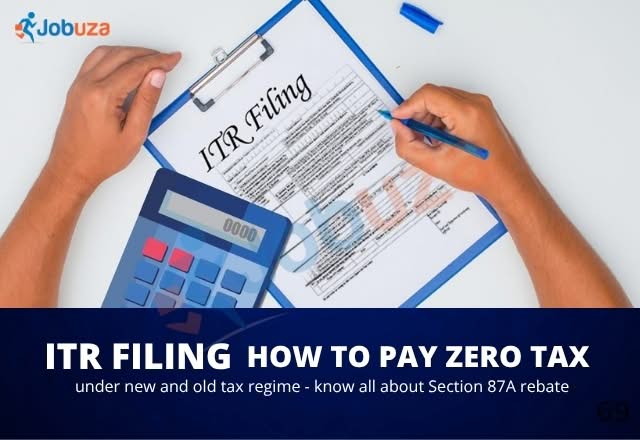
Filing your Income Tax Return (ITR) for FY 2025-26 requires proper understanding of the applicable tax slabs and benefits available under both the old and new income tax regimes.
Many salaried taxpayers often wonder whether they can legally pay zero income tax on their earnings. The answer depends on the tax regime selected, total taxable income, deductions claimed, and eligibility for tax rebates.
One of the most important benefits available to eligible taxpayers is the Section 87A rebate under the Income Tax Act, which can significantly reduce or eliminate tax liability.
What Is Section 87A Tax Rebate?
Section 87A rebate is a tax benefit provided to resident individual taxpayers whose total income falls within the specified limit.
Under this rebate, taxpayers can reduce their final tax liability after calculating tax as per applicable income tax slabs.
The process works as follows:
- Tax is calculated according to the applicable income tax rates.
- The eligible Section 87A rebate amount is deducted from the calculated tax.
- The remaining tax liability becomes zero if the rebate covers the entire tax amount.
Zero Tax Benefit Under New Income Tax Regime
Under the new income tax regime, individuals with total income up to ₹12 lakh can claim a rebate of up to ₹60,000 under Section 87A.
This means eligible taxpayers with income up to ₹12 lakh may have no tax liability after applying the rebate.
However, taxpayers should note that the basic exemption limit and zero-tax limit are different concepts.
For example, even if the basic exemption limit is lower, taxpayers may still pay zero tax due to the Section 87A rebate benefit.
Section 87A Rebate Under Old Tax Regime
Taxpayers opting for the old income tax regime can also claim Section 87A benefits.
Under the old regime:
- Individuals with taxable income up to ₹5 lakh can claim a rebate of up to ₹12,500.
- This benefit can reduce the final tax liability to zero for eligible taxpayers.
Taxpayers can choose between the old and new tax regimes depending on their income structure, deductions, and financial planning.
Marginal Relief Under New Tax Regime
Apart from the Section 87A rebate, the new tax regime also provides marginal relief for taxpayers whose income slightly exceeds ₹12 lakh.
This provision ensures that taxpayers do not face a sudden increase in tax liability just because their income crosses the rebate limit.
According to tax experts, marginal relief applies when taxable income exceeds ₹12 lakh but remains within the specified limit.
Under marginal relief, the additional tax payable is restricted to the amount by which income exceeds the ₹12 lakh threshold.
Section 87A Rebate Explained With Examples
The benefit of Section 87A can be understood through different income scenarios:
| Tax Regime | Taxable Income | Tax Before Rebate | Section 87A Benefit | Final Tax Liability |
|---|---|---|---|---|
| Old Regime | ₹5 lakh | ₹12,500 | ₹12,500 | Nil |
| New Regime | ₹12 lakh | ₹60,000 | ₹60,000 | Nil |
| New Regime | Slightly above ₹12 lakh | Calculated as per slabs | Marginal relief applicable | Reduced tax |
The final tax calculation depends on deductions, exemptions, income sources, and applicable tax rules.
Important Points About Section 87A Rebate
Taxpayers should keep the following points in mind:
- Under the new tax regime, Section 87A rebate is not available on income taxed at special rates, such as certain capital gains or lottery winnings.
- Under the old tax regime, rebate benefits are available against normal tax liability but may not apply to certain long-term capital gains covered under Section 112A.
- Only resident individual taxpayers can claim the Section 87A rebate.
- Taxpayers must calculate their total taxable income correctly before claiming the benefit.
Section 87A Changes From FY 2026-27
Section 87A of the Income Tax Act, 1961 will be replaced by Section 156 of the Income Tax Act, 2025 from 1 April 2026.
The new provision will apply from Financial Year 2026-27 and taxpayers should check updated tax rules while filing future income tax returns.
Final Takeaway
Section 87A rebate is an important tax-saving benefit for eligible taxpayers. By understanding the rules of both old and new tax regimes, taxpayers can choose the right option and reduce their tax burden legally.
Before filing ITR for FY 2025-26, taxpayers should carefully check their income, deductions, and rebate eligibility to ensure accurate tax calculation.