by Jobuza Team | Jul 1, 2025 | BLOG, Trending News
Govt Proposes Mandatory Mobile Number Verification for Apps and Banks to Tackle Digital Fraud
In a significant step to curb rising cybercrime, the Department of Telecommunications (DoT) has proposed new cybersecurity rules that could soon make mobile number verification mandatory for apps, banks, and other digital platforms across India.
The draft rules, issued on Tuesday, aim to create a Mobile Number Validation (MNV) platform that checks if a phone number truly belongs to a user. This verification would be done through a centralized, government-run system.
With over 1.16 billion mobile connections and the world’s largest digital payments market, India is a prime target for mobile-based fraud. The government’s move targets the growing misuse of mobile numbers in phishing scams, SIM swap frauds, and impersonation cases — especially as incidents of digital arrests and cybercrime have tripled between 2022 and 2024, according to recent government data.
Who Will Be Affected?
The rules would apply to what the government calls Telecommunication Identifier User Entities (TIUEs). These are any platforms that use mobile numbers or telecom identifiers to offer services or verify users — apart from licensed telecom operators.
A DoT official confirmed that this includes:
-
OTT platforms
-
Banks and fintech companies
-
Ride-hailing apps like Ola and Uber
-
Food delivery platforms like Zomato and Swiggy
-
E-commerce platforms and more
Any platform using a phone number to identify users or provide services would fall under this rule.
Mandatory Verification When Directed
While businesses can opt for voluntary verification, the rules make mobile number verification compulsory when directed by the central or state government or any authorized agency. This adds a new layer of compliance for digital service providers.
Why the New Rules?
The objective is clear: telecom cybersecurity and prevention of fraud and misuse. Fraudsters often exploit lost or stolen SIM cards and use fake mobile numbers to commit financial crimes. Despite existing KYC norms, “mule SIMs” still enable fraud.
These rules are expected to tighten control and accountability over mobile-linked services.
Concerns Over Privacy and Implementation
While the initiative could significantly reduce fraud, experts have raised red flags over user privacy and data centralization.
-
Sandeep K Shukla, professor at IIT Kanpur, said the move balances privacy with security.
-
Vikram Jeet Singh, a legal expert on internet policy, warned of unclear data access policies:
“Will it just validate a number or access more personal details? That needs clarification.”
There’s also concern about the cost implications. The draft proposes a pricing model:
-
Free for government agencies
-
₹1.50 per check for government-directed verifications
-
₹3 per check for private companies conducting voluntary validation
Singh noted that these costs could be passed on to consumers by banks and service providers.
Massive Database and Operational Challenge
The MNV system would require the government to manage a real-time database of over 1.5 billion active mobile numbers. Experts say this could be a logistical challenge of national scale.
IMEI Verification for Mobile Devices
The proposed amendments also target mobile device fraud through stricter IMEI controls:
-
Manufacturers must ensure new phones don’t reuse existing IMEIs
-
Second-hand phone sellers must verify IMEIs through a central government database before selling any device
-
Each IMEI check will cost ₹10
A central database of tampered and blacklisted devices will also be created to prevent fraud via cloned phones.
Emergency Suspension Powers
In case of security threats, authorities can temporarily suspend the use of any mobile number or telecom identifier, for both telecom operators and digital platforms under TIUE.
Open for Public Feedback
The draft rules are open for public consultation for 30 days. Stakeholders, businesses, and citizens can share feedback before the rules are finalized.
Final Thoughts
As India digitizes at a rapid pace, these proposed rules represent a major shift in how mobile numbers are used and verified. If implemented, this could enhance digital safety but also raises critical questions about privacy, cost, and operational execution.
Stay tuned as the telecom department gathers feedback — and digital India prepares for its next big compliance challenge.
by Jobuza Team | Jun 30, 2025 | BLOG, PAN/Aadhar Card Updates, Trending News
5 Big Financial Rule Changes in India from July 2025
Aadhaar to UPI: Starting July 1, 2025, several important changes will come into effect that will impact how Indians handle digital payments, tax filing, railway bookings, and other financial services. These updates aim to improve security, speed, and transparency across key systems like Aadhaar, UPI, GST, and IRCTC.
Here’s a breakdown of the five major changes you need to know:
1. Aadhaar Now Mandatory for New PAN Cards
From July 1, if you’re applying for a new PAN card, you must provide your Aadhaar number.
Earlier, you could use other ID proofs like a birth certificate, but now Aadhaar is the only accepted ID. This change, introduced by the Central Board of Direct Taxes (CBDT), is meant to reduce fraud and make taxpayer identification more accurate.
2. Tatkal Ticket Booking Requires Aadhaar and OTP
Booking Tatkal train tickets is about to get stricter.
-
From July 1, Aadhaar verification will be mandatory for all Tatkal bookings on the IRCTC website and app.
-
From July 15, OTP (One-Time Password) verification will also be required at railway counters (PRS).
To prevent ticket hoarding by agents:
These steps are meant to give common users a fair chance at booking.
3. UPI Chargebacks Will Be Easier and Faster
If a UPI transaction fails and your refund claim is denied, it used to be a slow and complicated process to get it rechecked.
From July 2025, that changes.
This is expected to reduce delays and increase trust in UPI payments — especially for small businesses and frequent users.
4. No More Edits After Filing GST Returns
From July 2025, once you file your monthly GST return, you won’t be able to edit it later.
The GSTN (Goods and Services Tax Network) announced this update on June 7. It’s aimed at improving filing accuracy and reducing misuse or fraud after submission.
So, double-check your returns carefully before filing.
5. Tighter Rules Around PAN-Aadhaar Linking
Along with the new PAN application rule, the government is also tightening existing PAN-Aadhaar linking requirements.
If your PAN is not linked with your Aadhaar, you may face penalties or lose access to financial services. The aim is to improve data security and avoid duplicate or fake identities in the system.
Final Words
These rule changes affect almost everyone — whether you’re a taxpayer, business owner, railway passenger, or just someone using UPI regularly.
Make sure you stay updated and take the necessary steps by July 2025 to avoid any last-minute issues.
by Jobuza Team | Jun 30, 2025 | BLOG, Trending News
Railways to Release Train Reservation Charts 8 Hours Before Departure from July 1
Railway Reservation Chart: New Delhi: In a move that will bring big relief to passengers, Indian Railways has decided to release reservation charts 8 hours before train departure—instead of the current 4-hour window. This new rule will come into effect from July 1, 2025.
The decision aims to make travel planning easier, especially for passengers with waitlisted tickets, giving them more time to know their status and make alternative arrangements if needed.
A senior railway official confirmed, “The new system is meant to reduce uncertainty for travellers and improve the overall experience. Technical changes are being made, and the new charting time should roll out by July 1 or soon after.”
What Will Change for Passengers?
Right now, reservation charts are prepared just 4 hours before the train leaves, which creates last-minute stress—especially for those traveling from smaller towns or far-off places.
With the new 8-hour timeline:
-
Passengers will get to know their final ticket status earlier
-
Those with waitlisted tickets will have more time to make other travel plans
-
It’s a big help for people coming from remote or suburban areas
This change is expected to reduce confusion and long waits at railway stations.
New Cap on Waitlisted Tickets
To improve berth availability, Railways has also decided to limit the number of waitlisted tickets to 25% of total berths in each class. This will help ensure better ticket confirmation rates and less overcrowding on trains.
Better Technology Coming Soon
Indian Railways is also working on a major upgrade to its Passenger Reservation System (PRS), which will be fully ready by December 2025. Here’s what’s changing:
-
Ticket booking capacity will rise to 1.5 lakh tickets per minute (currently 32,000)
-
Enquiry capacity will increase from 4 lakh to 40 lakh per minute
-
A new, user-friendly interface will support multiple languages
-
Passengers can choose preferred seats, check fare calendars, and more
-
Special options for Divyangjan (disabled), students, and patients will also be included
Tatkal Bookings to Get More Secure
Railway Reservation Chart From July 1, 2025, all Tatkal bookings on the IRCTC website and app will require OTP-based authentication. Later in the month, passengers will also be able to verify their ID using Aadhaar or other government IDs stored in DigiLocker.
Railway Minister Ashwini Vaishnaw has asked officials to make the system more secure and transparent, so passengers can trust the process.
In Summary
From July 1:
-
Reservation charts will be released 8 hours before train departure
-
Waitlisted passengers will know their status earlier
-
Waitlist cap set at 25% to improve confirmation chances
-
Tatkal bookings to include OTP-based authentication
-
A major PRS system upgrade is underway for faster, smoother bookings
These changes are part of Indian Railways’ plan to make train travel smarter, simpler, and more passenger-friendly.
by Jobuza Team | Jun 26, 2025 | BLOG, Trending News
Train Delayed or AC Not Working? Here’s How to Get a Refund from IRCTC by Filing a TDR
If you’ve recently travelled by Indian Railways and had a bad experience—like a delayed train, broken AC, or a changed route—you might be eligible for a refund. Not many people know this, but IRCTC allows passengers to file a Ticket Deposit Receipt (TDR) and claim their money back in certain situations.
So if your train was more than 3 hours late, your coach was missing, or the AC didn’t work, here’s everything you need to know about how to file a TDR and get a refund.
When Can You File a TDR?
Below are the main situations where IRCTC allows refunds through TDR, along with the deadlines:
| Reason |
When to File |
| Train delayed by 3+ hours and passenger did not travel |
Before actual departure of the train |
| AC not working |
Within 20 hours after train reaches your destination |
| Coach not attached, travelled in lower class |
Within 2 days (excluding date of certificate issue) |
| All confirmed passengers didn’t travel |
At least 4 hours before departure |
| Train diverted and you didn’t travel |
Within 72 hours of scheduled departure |
| Train diverted and didn’t touch your boarding station |
Within 72 hours of scheduled departure |
| Train diverted and didn’t touch your destination |
Within 72 hours of scheduled departure |
| Waitlisted/partially confirmed ticket, and no one travelled |
Within 72 hours after train reaches destination |
| Partially confirmed ticket, and no one travelled |
At least 30 minutes before departure |
| Fare difference due to lower class travel |
Within 2 days (excluding certificate issue date) |
| Partially used ticket |
Within 72 hours of scheduled departure |
| Reservation downgraded to lower class |
Within 3 hours of actual departure |
| Couldn’t travel due to coach damage |
Within 3 hours of actual departure |
| Train ended before destination |
Within 72 hours of scheduled arrival |
Note: Refunds are not allowed for connecting trains booked separately.
How to File a TDR on IRCTC (Step-by-Step)
-
Go to www.irctc.co.in and log in.
-
Click on ‘My Account’ → ‘My Transactions’ → ‘File TDR’.
-
Choose the PNR you want to file TDR for.
-
Select the reason for refund from the dropdown list.
-
Choose the passenger(s) and click ‘File TDR’.
-
Read the terms, click ‘Yes’ to confirm.
-
You’ll see a success message once your TDR is submitted.
Final Words
If your train journey didn’t go as planned, don’t ignore it. Filing a TDR is simple, and in many cases, you’re entitled to a refund. Just remember to file it on time, based on the reason.
So next time you face a train delay, a coach problem, or service failure—log in to IRCTC and file your TDR.
by Jobuza Team | Jun 25, 2025 | BLOG, Trending News
New ITR Rules: Up to 200% Penalty and Prosecution for False Claims or Misreporting Income
New ITR Rules: The Income Tax Department has announced strict new regulations for the 2024-25 assessment year. Taxpayers who misreport income, claim false deductions, or submit inaccurate Income Tax Returns (ITRs) could face a penalty of up to 200% of the tax due. Additionally, 24% annual interest and even prosecution under Section 276C of the Income Tax Act may apply.
This move aims to improve accuracy and transparency in tax filings. All taxpayers, regardless of income type or filing method, are expected to comply strictly with the new norms.
Taxpayer Responsibility
One of the key highlights of the new rule is that the taxpayer alone is held responsible for any errors, even if the mistake was made by a chartered accountant or tax consultant. This means:
- Double-check every entry before filing.
- Ensure all deductions and exemptions are legitimate and backed by documents.
- Do not rely blindly on third-party preparers.
Who Does This Apply To?
The rule applies across all categories:
- Salaried employees
- Freelancers
- Professionals
- Businesses
Everyone is equally liable for incorrect returns.
Common Mistakes to Avoid
Taxpayers should be cautious to avoid errors that may trigger penalties:
- Selecting the wrong ITR form
- Claiming deductions without proper proof
- Hiding secondary income sources
- Misclassifying personal expenses as business-related
Even if a revised return is filed, the penalty will still apply if the original submission had false information. Simply correcting it later does not cancel the consequences.
How to Stay Compliant
To avoid penalties and legal trouble:
- Match all income details with your Annual Information Statement (AIS)
- Keep valid proof for every deduction claimed
- Maintain organized records
- Meet all filing deadlines
Choosing the Right ITR Form
Filing with the wrong form can invalidate your return. Here is a quick overview of the forms and their correct usage:
ITR-1 (Sahaj) For resident individuals earning up to ₹50 lakh from salary, one house property, and other sources.
ITR-2 For individuals and HUFs with income over ₹50 lakh or more than one house property. Not for business income.
ITR-3 For individuals and HUFs with income from business or profession.
ITR-4 (Sugam) For resident individuals, HUFs, and firms with presumptive income up to ₹50 lakh.
ITR-5 For firms, LLPs, AOPs, and BOIs.
ITR-6 For companies not claiming exemption under Section 11.
ITR-7 For entities like charitable trusts, political parties, scientific institutions, and educational institutions.
Final Advice
Taxpayers should:
- Never file returns in haste.
- Consult a trusted tax advisor.
- Keep personal and financial data updated across all records.
Understanding the new rules and filing carefully is essential. A small error can now result in serious financial and legal consequences.
To ensure compliance, stay informed and make accuracy your top priority during this ITR season.
by Jobuza Team | Jun 24, 2025 | BLOG, Trending News
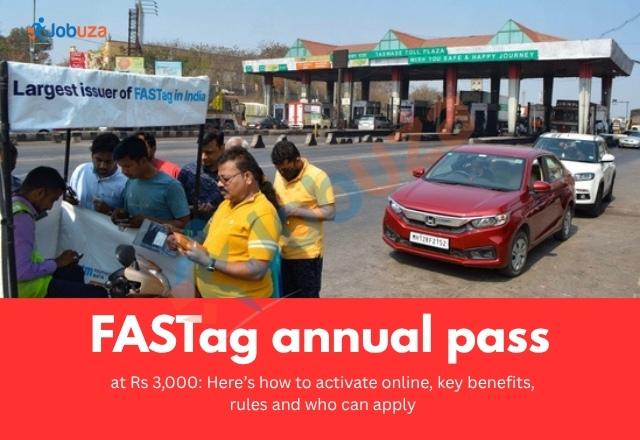
The Government of India is introducing the FASTag Annual Pass starting August 15, 2025. This new prepaid toll system is being rolled out by the National Highways Authority of India (NHAI) to make highway travel more affordable, digital, and hassle-free.
Announced by Union Minister Nitin Gadkari, the scheme offers private vehicle owners the option to pay ₹3,000 for either 200 toll-free trips or unlimited travel for one year on all National Highways (NH) and National Expressways (NE).
It aims to reduce toll plaza congestion, simplify toll payments, promote digital infrastructure, and deliver substantial savings for frequent commuters.
What Is the FASTag Annual Pass?
The FASTag Annual Pass is a prepaid toll payment plan designed for private, non-commercial vehicles such as cars, jeeps, and vans. Instead of paying tolls every time you travel, this pass lets you pay once and drive worry-free for up to a year.
With India’s rapidly growing highway network and rising intercity travel, this move supports a cashless, efficient, and eco-friendly toll collection system.
Key Benefits of the FASTag Annual Pass
-
One-time payment of ₹3,000 for 200 trips or one-year usage
-
Saves up to ₹7,000 annually for frequent travellers
-
Eliminates repeated recharges and top-ups
-
Faster travel with reduced congestion at toll plazas
-
Real-time SMS alerts for usage and balance updates
-
Supports Digital India and reduces fuel wastage at toll booths
-
Ideal for daily commuters, intercity travellers, and long-distance drivers
Who Can Apply for the FASTag Annual Pass?
Only private four-wheelers (cars, jeeps, vans) are eligible.
Eligibility Criteria:
-
FASTag must be active and properly installed on the windshield
-
It should be linked to a valid Vehicle Registration Number (VRN)
-
The tag must not be blacklisted or disputed
-
Vehicles with only chassis numbers must update to full VRNs to qualify
How to Activate the FASTag Annual Pass Online
Step-by-Step Guide:
-
Check FASTag status
Make sure your FASTag is active and linked to a valid VRN.
-
Visit official platforms
Go to the Rajmarg Yatra app or NHAI website.
-
Enter details
Submit your Vehicle Registration Number and FASTag ID.
-
Pay ₹3,000 online
Use a secure online payment method.
-
Receive confirmation
Once verified, you’ll receive an SMS confirming activation.
Important: Avoid third-party or unofficial websites to prevent fraud.
Where the FASTag Annual Pass Is Valid
You can use the pass on:
Not Valid On:
-
State highways
-
Private toll roads
-
State-run expressways
How Are Trips Counted?
For Open System Toll Plazas:
For Closed System Toll Plazas:
This ensures fair usage for both short and long-distance commuters.
What Happens After 200 Trips or One Year?
Once either limit is reached:
-
Your FASTag switches back to normal pay-per-use mode
-
No tag replacement is needed
-
You can purchase a new annual pass online instantly
Is the FASTag Annual Pass Mandatory?
No. The FASTag Annual Pass is completely voluntary.
It’s best for:
If you drive only occasionally, your regular FASTag will still work with pay-per-use mode.
FASTag Annual Pass: FAQs
What is the FASTag Annual Pass?
A prepaid toll plan for private vehicles offering 200 toll-free trips or 1 year of unlimited travel on NH and NE highways for ₹3,000.
Who is eligible?
Only non-commercial four-wheelers (cars, jeeps, vans) with active FASTag linked to a valid VRN.
How to activate?
Use the Rajmarg Yatra app or NHAI website, enter vehicle details, verify FASTag, and pay ₹3,000 online.
How long is it valid?
Until you either complete 200 trips or reach 1 year from the activation date — whichever comes first.
Where is it valid?
Only on NHAI-run toll booths. Not valid on state roads or private tollways.
Can I transfer the pass to another vehicle?
No. The pass is non-transferable and tied to a specific vehicle’s FASTag.
Final Thoughts
The FASTag Annual Pass is a revolutionary step in India’s highway travel system. By offering a simple, prepaid toll system with massive savings and convenience, it’s the perfect solution for those who travel regularly on India’s national roadways.
For smooth travel, digital payments, and better savings — activate your FASTag Annual Pass today via the Rajmarg Yatra app or the NHAI website starting August 15, 2025.