by Jobuza Team | May 5, 2026 | BLOG, Trending News
Unexpected expenses such as medical emergencies, home repairs, or sudden job loss can arise without any warning. In such situations, financial stability depends not on income alone but on how well you are prepared. This is where an emergency fund plays a crucial role. It acts as a safety net that protects you from falling into debt and helps you manage difficult situations with confidence.
Many households in India still underestimate the importance of maintaining a dedicated emergency fund. As a result, they often rely on credit cards, personal loans, or even break long-term investments to meet urgent expenses. This approach can disrupt financial goals and increase long-term stress. Understanding and building an emergency fund is therefore not optional anymore; it is an essential part of smart financial planning.
What is an Emergency Fund
An emergency fund is a reserve of money set aside specifically for unexpected financial situations. It is not meant for planned expenses like vacations, shopping, or investments. The primary purpose of this fund is to provide immediate financial support during emergencies.
Ideally, this money should be kept in a safe and easily accessible place such as a savings account or liquid instrument. Financial experts generally recommend maintaining an amount equal to three to six months of your essential monthly expenses.
6 Emergency Fund Rules Every Household Should Follow
1. Maintain 3 to 6 Months of Expenses
The first and most important rule is to build a fund that can cover at least three to six months of your basic expenses. This includes rent, groceries, utility bills, EMIs, and other essential costs. For example, if your monthly expenses are ₹25,000, your emergency fund should ideally be between ₹75,000 and ₹1,50,000. This ensures that you can manage your needs even during a temporary loss of income or unexpected financial pressure.
2. Keep It Separate from Regular Savings
Your emergency fund should always be kept separate from your daily savings or spending account. Mixing it with regular funds increases the chances of using it unnecessarily. A dedicated account helps maintain discipline and ensures the money is available only when truly needed.
3. Focus on Safety and Liquidity
An emergency fund is not an investment tool designed to generate high returns. Its main purpose is safety and quick access. Avoid putting this money into risky investments like stocks or long-term mutual funds. The priority should always be to ensure that the funds are available immediately during emergencies.
4. Start Small and Stay Consistent
Building an emergency fund does not require a large amount from the beginning. You can start with small monthly contributions, such as ₹1,000 to ₹5,000. The key is consistency. Over time, these small contributions can grow into a strong financial cushion. Developing this habit also strengthens your overall financial discipline.
5. Rebuild After Using the Fund
If you use your emergency fund during a crisis, make it a priority to refill it as soon as possible. Many people overlook this step, leaving themselves unprepared for future emergencies. Once the situation is under control, create a plan to restore the fund to its original level.
6. Review and Adjust Regularly
Your financial situation changes over time as your income and expenses increase. It is important to review your emergency fund at least once a year and adjust it accordingly. This ensures that your fund remains sufficient to cover your current lifestyle and financial responsibilities.
Conclusion
An emergency fund is one of the most important pillars of personal finance. It provides financial security, reduces dependence on debt, and allows you to handle unexpected situations without stress. By following these simple yet effective rules, you can protect your household from financial shocks and build long-term stability.
by Jobuza Team | May 4, 2026 | BLOG, Trending News
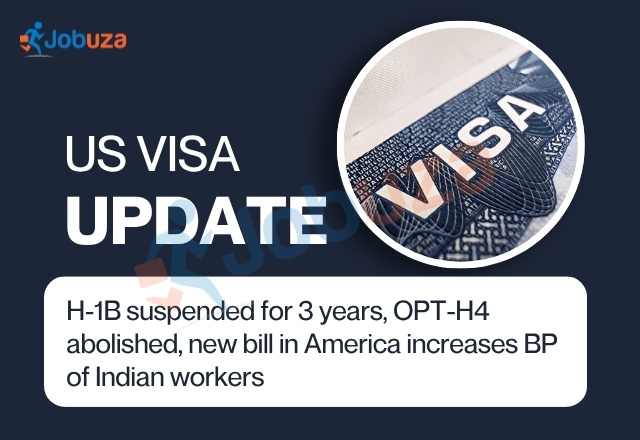
A new immigration bill introduced in the United States could significantly impact the future of Indian professionals and students planning to build their careers abroad. The proposed legislation, titled the “End H-1B Visa Abuse Act of 2026,” has been introduced in Congress by Eli Crane. The bill is already creating concern among thousands of Indian workers and international students currently in the U.S.
The proposal focuses on major changes to popular visa programs such as the H-1B visa, H-4 dependent visa, and Optional Practical Training (OPT). If implemented, these changes could make it more difficult for foreign nationals to study, work, and settle in the United States.
Three-Year Moratorium on H-1B Visa
One of the most significant provisions in the bill is a proposed three-year suspension of the H-1B visa program. This visa is widely used by Indian professionals working in sectors like IT, engineering, and finance. A temporary halt on issuing new H-1B visas could disrupt hiring plans for companies and limit opportunities for skilled foreign workers.
Proposal to Eliminate H-4 Visa
The bill also suggests the complete removal of the H-4 visa, which currently allows spouses and children of H-1B visa holders to live in the United States. This move could make it harder for professionals to relocate with their families, affecting long-term career decisions.
OPT Program Under Threat
Another major concern is the proposed elimination of the Optional Practical Training program. OPT allows international students to work in the U.S. after completing their studies, typically for 12 months, and up to 36 months for STEM graduates. This program has been a key pathway for students to transition into H-1B employment.
What the Congressman Said
According to Eli Crane, the purpose of the bill is to prioritize American workers over foreign employees. He stated that the government should focus on providing job opportunities to its own citizens rather than supporting corporate interests. He also emphasized the need for stricter visa regulations and accountability in the hiring process.
Key Changes Proposed in the Bill
The bill outlines several major reforms that could reshape the current immigration system:
The annual cap on H-1B visas may be reduced from 65,000 to 25,000.
The existing lottery-based selection system could be replaced with a salary-based model, prioritizing higher-paying roles.
Employers may be required to prove that no qualified American worker is available before hiring a foreign candidate.
Only individuals earning an annual salary of $200,000 or more may qualify for an H-1B visa.
H-1B visa holders may not be allowed to work multiple jobs or be employed through third-party agencies.
Foreign workers may be restricted from bringing their families to the United States.
Government agencies could be barred from hiring foreign workers on visa programs.
The OPT program may be completely removed.
H-1B visa holders may not be allowed to apply for permanent residency.
Strict measures could be introduced to ensure visa holders leave the country after their visa expires.
Expert Opinion on the Bill
Immigration policy expert Rosemary Jenks, who helped draft the bill, explained that limiting visa extensions would increase costs for companies. Employers would need to repeatedly hire and train new workers, which could encourage them to hire American employees instead.
Conclusion
The proposed H-1B Visa End Bill 2026 could bring significant changes to the U.S. immigration system. For Indian workers and students, this may reduce opportunities for employment and long-term settlement in the United States. While the bill is still under consideration, it highlights a shift toward stricter immigration policies and a stronger focus on domestic employment.
Candidates and professionals planning to move to the U.S. should closely monitor updates and be prepared for possible changes in visa regulations in the coming years.
by Jobuza Team | Apr 29, 2026 | BLOG, Trending News
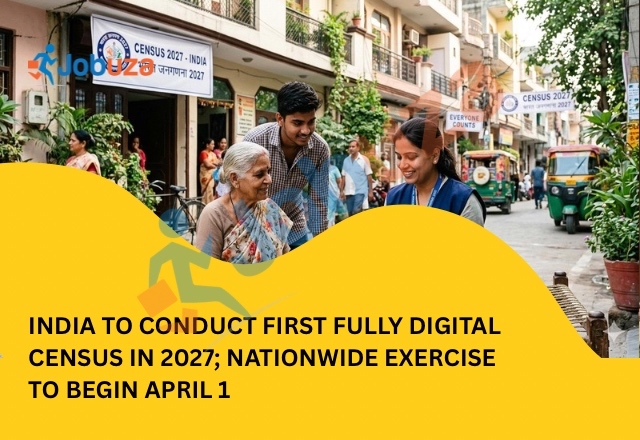
India is set to conduct its first fully digital population census, marking a major shift in how data is collected across the country. According to the Registrar General and Census Commissioner, Mritunjay Kumar Narayan, the first phase of Census 2027 will begin on April 1, 2026.
This will be India’s 16th census since its inception and the eighth after Independence. It is expected to be the largest census exercise in the world, involving more than 3 million enumerators, supervisors, and officials.
First Digital Census with Self-Enumeration Facility
For the first time, the census process will be conducted using digital tools. Enumerators will collect data through mobile applications instead of traditional paper-based methods. In addition, citizens will have the option to complete their details online through a secure self-enumeration portal.
This self-enumeration feature allows households to fill in their information at their convenience before the official visit. Once the data is submitted, a unique Self-Enumeration ID will be generated, which must be shared with the enumerator for verification.
The online portal will be available in multiple languages, making it accessible to a wider population. Authorities have also confirmed that strong security measures have been implemented to protect user data.
How the Self-Enumeration Process Works
The process is simple and designed for ease of use. Citizens can log in to the official portal using their mobile number and basic details. After identifying their location, they can fill in household information and submit it online.
Once completed, the system generates a Self-Enumeration ID. This ID is then provided to the enumerator during their visit, ensuring that the data is verified and included in the final census records.
Two-Phase Census Structure
Census 2027 will be conducted in two major phases.
The first phase, known as the House Listing and Housing Census, will take place between April and September 2026. This phase will collect data related to housing conditions, household assets, and basic amenities.
The second phase, Population Enumeration, is scheduled for February 2027. During this phase, detailed information about individuals will be collected, including demographic, socio-economic, and educational data. Caste-related data will also be gathered in this stage.
Timeline and Coverage Across India
The census will be conducted in a staggered manner across different states and Union Territories. Each region will have a specific schedule, along with a 15-day self-enumeration window before the house-listing phase begins.
Certain regions such as Andaman and Nicobar Islands, Delhi, Goa, Karnataka, Lakshadweep, Mizoram, Odisha, and Sikkim will begin early in April 2026, while other states will follow in subsequent phases.
The reference date for most of the country will be March 1, 2027. However, snow-bound regions like Ladakh and parts of Jammu and Kashmir, Himachal Pradesh, and Uttarakhand will follow an earlier reference date of October 1, 2026.
Scale, Budget and Digital Infrastructure
The government has allocated a budget of over ₹11,700 crore for this massive exercise. The census will cover all 36 states and Union Territories, including thousands of towns and nearly 6.4 lakh villages.
A strong digital ecosystem has been developed to support the process. This includes mobile applications for data collection, online portals for self-enumeration, and real-time monitoring systems to track progress.
Extensive training programs have also been conducted to ensure smooth execution. From national trainers to field-level enumerators, lakhs of personnel are being trained in multiple languages to handle the process efficiently.
Pre-Test and Preparation
Before the official rollout, a nationwide pre-test was conducted in November 2025. This trial covered around 5,000 census blocks and helped validate the digital tools, methodology, and training systems.
The successful pre-test has increased confidence in the system and ensured that the final execution will be more accurate and efficient.
Final Thoughts
Census 2027 represents a major step forward in India’s data collection system. With digital tools, self-enumeration options, and improved infrastructure, the process is expected to be faster, more accurate, and more transparent.
This transformation will not only make participation easier for citizens but also help the government generate reliable data for better policy-making and development planning in the years ahead.
by Jobuza Team | Apr 28, 2026 | BLOG, Trending News
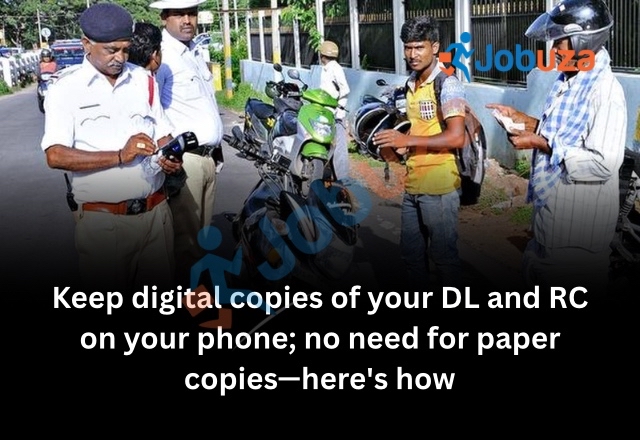
Carrying physical copies of your Driving Licence (DL) and Registration Certificate (RC) is no longer necessary. With the growing adoption of digital services in India, you can now store and access these important documents directly on your smartphone. This not only makes life easier but also ensures that your documents are always safe and available when needed.
Earlier, many people relied on paper copies of their RC and DL, which often led to problems. Documents could get lost, damaged, or simply forgotten at home. Today, government-approved apps like DigiLocker and mParivahan have made it possible to keep everything in digital format.
Why Digital DL and RC Are a Better Choice
One of the biggest advantages of storing your documents digitally is convenience. You no longer need to carry physical copies or worry about misplacing them. Your DL and RC remain securely stored on your phone and can be accessed anytime.
Another important benefit is legal validity. Digital documents issued through official platforms are fully recognized by authorities. During a traffic check, you can simply show your DL or RC from your phone, and it will be accepted without any issues.
Additionally, digital documents are always updated and verified directly from official databases. This reduces the chances of errors and ensures that the information you present is accurate.
Step-by-Step Guide to Save DL and RC on Your Phone
To get started, download either DigiLocker or mParivahan from your app store. Once installed, sign in using your registered mobile number and complete the OTP verification process.
After logging in, navigate to the section where you can add documents. Enter your Driving Licence number and your vehicle’s registration number. The app will automatically fetch your documents from the official government database.
Once the documents appear, save them within the app. This allows you to access them instantly whenever required, even during a traffic inspection.
Important Things You Should Keep in Mind
While using digital documents, make sure they are fetched directly from official sources within the app. Documents that are manually scanned and uploaded may not always be considered valid.
Officially issued digital copies are more reliable and carry higher authenticity. This is why it is always recommended to use trusted government apps rather than storing simple images or PDFs.
Final Thoughts
Switching to digital DL and RC is a smart and practical step for every vehicle owner. It saves time, reduces stress, and ensures that your documents are always safe and accessible. With legal acceptance and easy access, digital storage is quickly becoming the preferred way to manage important vehicle documents.
by Jobuza Team | Apr 27, 2026 | BLOG, Trending News
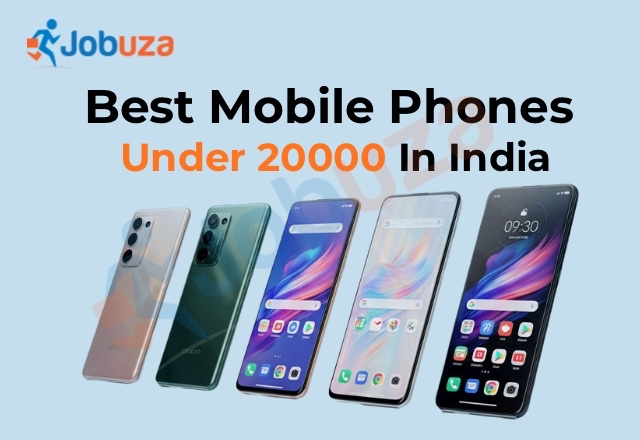
If you are planning to buy a new smartphone under ₹20,000, this price segment now offers some of the best value-for-money devices in the market. From powerful processors and large batteries to AMOLED displays and capable cameras, brands are packing premium features into budget-friendly smartphones.
This list includes some of the latest and most reliable options launched recently, making them ideal for everyday use, gaming, photography, and long battery life.
OPPO K14 5G: Big Battery with Balanced Performance
The OPPO K14 5G is designed for users who want long battery life and smooth daily performance. With a massive 7000mAh battery and fast charging support, it easily lasts more than a day on heavy usage.
It comes with a 120Hz display, making scrolling and general usage smooth. The MediaTek Dimensity 6300 processor handles day-to-day tasks well, although the display resolution is slightly lower compared to competitors.
Key Specifications
| Feature |
Details |
| Display |
6.75-inch, 120Hz |
| Processor |
MediaTek Dimensity 6300 |
| RAM |
6GB |
| Storage |
128GB |
| Battery |
7000mAh |
| Rear Camera |
50MP + 2MP |
| Front Camera |
8MP |
| OS |
Android 15 |
| Charging |
45W Fast Charging |
Poco M8 5G: Stylish Design with AMOLED Display
The Poco M8 5G offers a good balance of design, display, and performance. It features a large AMOLED display, which is rare in this price range and enhances the viewing experience.
Performance is handled by the Snapdragon 6 Gen 3 processor, making it suitable for regular usage and moderate gaming. However, the camera performance is average, and the UI includes some unwanted apps.
Key Specifications
| Feature |
Details |
| Display |
6.77-inch AMOLED |
| Processor |
Snapdragon 6 Gen 3 |
| RAM |
6GB |
| Storage |
128GB |
| Battery |
5520mAh |
| Rear Camera |
50MP + 2MP |
| Front Camera |
20MP |
| OS |
Android 15 |
Realme P4x 5G: Strong Performance with Long Battery Life
The Realme P4x 5G focuses on performance and battery. It delivers smooth daily usage and handles gaming efficiently. The 7000mAh battery is a major highlight, offering up to two days of usage.
While it claims a high refresh rate, the performance is not always consistent, and the camera quality is average.
Key Specifications
| Feature |
Details |
| Display |
6.72-inch |
| RAM |
6GB |
| Storage |
128GB |
| Battery |
7000mAh |
| Rear Camera |
50MP + 2MP |
| Front Camera |
8MP |
| OS |
Android |
Motorola Moto G67 Power 5G: Premium Feel on a Budget
The Motorola Moto G67 Power 5G stands out with its premium design and vegan leather finish. It also comes with IP64 protection, making it more durable than many competitors.
Performance is smooth, and battery life is excellent. However, the display brightness could be better, and software updates are limited.
Key Specifications
| Feature |
Details |
| Display |
6.70-inch |
| Processor |
Snapdragon 7s Gen 2 |
| RAM |
8GB |
| Storage |
128GB |
| Battery |
7000mAh |
| Rear Camera |
50MP + 8MP |
| Front Camera |
32MP |
| OS |
Android 15 |
Moto G96 5G: Reliable Performance with Premium Design
The Moto G96 5G offers a premium design with IP68 rating and curved edges. It delivers reliable performance for multitasking and gaming without heating issues.
Camera quality is good, especially in daylight, and battery life comfortably lasts a full day.
Key Specifications
| Feature |
Details |
| Display |
6.67-inch |
| Processor |
Snapdragon 7s Gen 2 |
| RAM |
8GB |
| Storage |
128GB |
| Battery |
5500mAh |
| Rear Camera |
50MP + 8MP |
| Front Camera |
32MP |
| OS |
Android 15 |
CMF by Nothing Phone 2 Pro: Clean UI and Balanced Performance
The CMF by Nothing Phone 2 Pro is ideal for users who prefer a clean and minimal software experience. It offers decent performance, good camera output, and a sleek design.
Battery life is reliable, lasting more than a day with regular usage, making it a solid all-rounder in this segment.
Key Specifications
| Feature |
Details |
| Display |
6.77-inch |
| Processor |
Dimensity 7300 Pro |
| RAM |
8GB |
| Storage |
128GB |
| Battery |
5000mAh |
| Rear Camera |
50MP + 50MP + 8MP |
| Front Camera |
16MP |
| OS |
Android 15 |
Realme P3 Pro 5G: Youth-Focused Design with Solid Performance
The Realme P3 Pro 5G targets younger users with its bold design and curved display. It offers strong performance for daily tasks and casual gaming.
While the camera performs well in daylight, low-light performance is not impressive. Battery life is decent, but expectations are slightly higher given the capacity.
Key Specifications
| Feature |
Details |
| Processor |
Snapdragon 7s Gen 3 |
| RAM |
8GB |
| Storage |
128GB |
| Battery |
6000mAh |
| Rear Camera |
50MP + 2MP |
| Front Camera |
16MP |
| OS |
Android 15 |
Final Verdict
Smartphones under ₹20,000 have become more competitive than ever. Whether you want long battery life, strong performance, or a clean software experience, there are multiple options to choose from.
If battery is your priority, models like OPPO K14 5G and Moto G67 Power stand out. For a clean UI, CMF Phone 2 Pro is a great pick. Performance-focused users can consider Realme P3 Pro or Moto G96.
Before making a final decision, always consider your usage needs such as gaming, camera, or battery life, and choose accordingly.
by Jobuza Team | Apr 23, 2026 | BLOG, Trending News
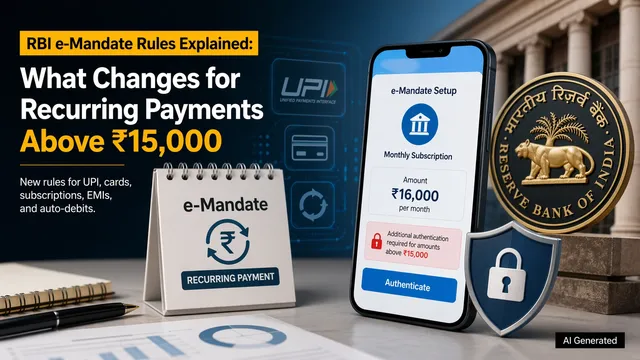
The Reserve Bank of India has introduced updated guidelines for e-mandates, bringing more clarity and control to recurring digital payments. These changes are aimed at making auto-debit transactions smoother while strengthening user protection across platforms like UPI, debit cards, credit cards, and prepaid instruments.
What Is the New Rs 15,000 Rule?
Under the revised framework, recurring payments up to Rs 15,000 can now be processed without requiring an OTP. This makes smaller payments like OTT subscriptions, mobile recharges, and utility bills faster and hassle-free.
However, for transactions above Rs 15,000, an additional authentication step such as OTP will be mandatory. This ensures better security for higher-value payments and reduces the risk of unauthorized deductions.
Important Exception You Should Know
There is a notable exception to this rule. Payments such as insurance premiums, mutual fund investments, and credit card bill payments between Rs 15,000 and Rs 1 lakh may still be processed without OTP, provided certain conditions are met. This flexibility ensures that essential financial commitments are not disrupted.
Mandatory Alerts Before and After Payment
To improve transparency and user control, RBI has made it compulsory for banks and payment platforms to send alerts:
- A pre-debit notification must be sent at least 24 hours before the payment
- This alert will include details like merchant name, transaction amount, and debit date
- Users will have the option to cancel or opt out before the payment is processed
Additionally, post-debit alerts will also be sent after every transaction, along with details on grievance redressal. This ensures users are always informed about their payments.
No Charges for Using e-Mandate
The RBI has clearly stated that no charges can be imposed on customers for setting up or using e-mandates. This makes automated payments more accessible and cost-effective for users.
Better Protection Against Fraud
The updated rules also extend RBI’s existing customer protection guidelines to recurring payments. In case of any unauthorized auto-debit, users will have limited liability, provided they report the issue within the specified time.
What This Means for Users
These changes strike a balance between convenience and security. Smaller transactions will now happen seamlessly without OTP interruptions, while larger payments will have added safeguards.
The 24-hour alert system gives users enough time to review and stop unwanted transactions, addressing one of the biggest concerns around auto-debits.
Overall, the updated e-mandate rules are a step towards a safer and more user-friendly digital payment ecosystem.