by Jobuza Team | Apr 8, 2026 | BLOG, Trending News
With the start of the new financial year on April 1, the government has officially notified the Income Tax Return (ITR) forms for Assessment Year 2026-27. This marks the beginning of the new filing season, allowing taxpayers to prepare and submit their returns in the coming weeks.
The Income Tax Department has already released key forms including ITR-1 (Sahaj), ITR-2, ITR-4 (Sugam), and ITR-6. These forms are used by different categories of taxpayers depending on their income sources, such as salaried individuals, professionals, and businesses.
When Can You Start Filing ITR for AY 2026-27
Although the forms have been notified, the actual filing process depends on the availability of utilities. The department is expected to enable offline utilities first, followed by online filing options on the official portal.
As per experts, ITR filing usually begins in April itself. Since the forms have already been released this year, the process is likely to start without delays. However, salaried taxpayers are advised to wait until they receive their Form 16 before filing their returns, as it contains essential details about salary income and tax deducted at source.
Types of ITR Forms and Their Use
Different ITR forms cater to different taxpayers. ITR-1 is generally for salaried individuals with simple income structures. ITR-2 is used by individuals and Hindu Undivided Families with capital gains or multiple income sources. ITR-4 is meant for small businesses and professionals under presumptive taxation schemes, while ITR-6 is applicable to companies.
Choosing the correct form is important to avoid errors and ensure smooth processing of returns.
Important Rules for This Year’s Tax Filing
A key point for taxpayers this year is the implementation of the Income Tax Act, 2025, which has replaced the older Income Tax Act, 1961 from April 1, 2026. However, for the current filing season, taxpayers will still follow the provisions of the 1961 Act.
This is because the returns being filed now relate to income earned during the financial year 2025-26. The new law will apply only to income earned on or after April 1, 2026. Terms like “Previous Year” and “Assessment Year” will continue to be used for now.
Deadline and Key Advice for Taxpayers
The last date to file Income Tax Returns for AY 2026-27 is July 31, 2026, for most individual taxpayers. Filing returns on time is essential to avoid penalties and ensure faster refunds.
Taxpayers should keep all necessary documents ready, including Form 16, bank statements, investment proofs, and details of other income. It is also advisable to verify all information carefully before submission to avoid errors or notices later.
Conclusion
The notification of ITR forms for AY 2026-27 signals an early and smooth start to this year’s tax filing season. With utilities expected to go live soon, taxpayers should begin preparing their documents and stay updated with official announcements. Filing returns correctly and on time will help ensure a hassle-free experience.

by Jobuza Team | Apr 7, 2026 | BLOG, Trending News
Artificial Intelligence is no longer limited to engineers or researchers. Today, AI is widely used in offices, schools, and even media organizations. From automating daily tasks to improving productivity, AI has become a part of everyday work. As a result, more people are now interested in learning how it works and how it can be used in real-life situations.
The good part is that many leading tech companies are offering free AI courses in 2026. These courses are designed for beginners as well as professionals who want to upgrade their skills without spending money on expensive programs.
Why Learning AI in 2026 is Important
With the growing use of AI across industries, having basic knowledge of artificial intelligence is becoming a valuable skill. Whether you are a student, job seeker, or working professional, learning AI can open up new career opportunities.
Free online courses make it easier to understand concepts like machine learning, generative AI, and automation without needing a technical background.
Top 8 Platforms Offering Free AI Courses
Google
Google offers beginner-friendly AI courses through its Grow with Google initiative. These courses focus on practical learning, including topics like Generative AI and how AI can be used at work. The content is easy to understand and suitable for those who are just starting.
Link: http://grow.google/ai
OpenAI
OpenAI provides learning resources through its academy platform. These materials help learners understand how modern AI systems function and how developers can build AI-powered tools and applications.
Link: http://academy.openai.com
Microsoft
Microsoft Learn is a popular platform offering a wide range of AI and machine learning courses. It includes training on AI development, cloud-based AI, and data-related technologies, making it suitable for both beginners and advanced learners.
Link: http://learn.microsoft.com/training
NVIDIA
NVIDIA provides technical training programs focused on deep learning and high-performance computing. These courses are ideal for learners who want to understand the technical side of AI systems.
Link: http://developer.nvidia.com/training
Amazon Web Services
AWS Skill Builder offers courses on artificial intelligence and machine learning in cloud environments. It helps learners understand how AI tools are developed and deployed using cloud technologies.
ink: http://skillbuilder.aws
IBM
IBM SkillsBuild is designed to help learners build career-ready skills. It offers training in artificial intelligence, data analysis, and other in-demand technologies.
Link: http://skillsbuild.org
Meta
Meta provides AI learning resources, tutorials, and documentation that explain machine learning models and AI systems. It is a good option for learners interested in real-world AI applications.
Link: http://ai.meta.com/resources
DeepLearning.AI
DeepLearning.AI offers short and practical courses on topics like generative AI, neural networks, and prompt engineering. These courses are highly useful for understanding modern AI tools.
Link: http://deeplearning.ai
Conclusion
As artificial intelligence continues to transform industries, learning AI has become more important than ever. These free courses offered by top global platforms provide an excellent starting point for anyone interested in understanding AI. With flexible learning options and high-quality content, you can begin your AI journey in 2026 without any financial burden and build skills that are highly valuable in today’s job market.

by Jobuza Team | Apr 7, 2026 | BLOG, Trending News
The Central Board of Direct Taxes (CBDT) has issued an important clarification that brings relief to investors holding old or legacy investments. According to the latest notification, income arising from the transfer of investments made before April 1, 2017 will not fall under the scope of General Anti-Avoidance Rules (GAAR).
This move is expected to remove long-standing confusion around taxation and provide certainty to investors, especially those who have held investments for the long term.
No Tax Impact Under GAAR for Old Investments
The clarification clearly states that GAAR provisions will not apply to capital gains earned from investments made on or before April 1, 2017. This effectively means that such transactions will not be scrutinized under anti-avoidance rules, even if the structure of the investment appears complex.
The decision aligns with the government’s earlier intent to protect investments made before the implementation of GAAR. It also addresses concerns raised after recent legal developments, ensuring that genuine investors are not adversely affected.
However, it is important to note that GAAR can still be applied in cases where tax avoidance arrangements are detected, even if the underlying investments were acquired before April 2017.
Amendment in Income-Tax Rules
The CBDT has amended Rule 128 of the Income-tax Rules, 2026 to incorporate this clarification. With this amendment, gains arising from older investments have been granted what is known as “grandfathering” status.
This update reinforces the principle that investments made under previous tax frameworks should not be subjected to new compliance burdens introduced later.
What is Grandfathering in Taxation
Grandfathering is a concept where existing investments or arrangements continue to be governed by the rules that were in place at the time they were made. Any new regulations apply only to future transactions.
This approach ensures stability and predictability for investors. It prevents sudden changes in tax rules from impacting decisions that were taken under a different regulatory environment. It also helps maintain trust in the financial system by protecting long-term investments from unexpected policy shifts.
Understanding GAAR and Its Purpose
GAAR was introduced to prevent tax avoidance through artificial or non-genuine arrangements. It gives tax authorities the power to ignore or reclassify transactions that are primarily designed to reduce tax liability without any real economic purpose.
Although GAAR was announced in the Union Budget 2012-13, it came into effect from April 1, 2017. Since its introduction, there have been concerns among investors about possible misuse or excessive scrutiny.
The latest clarification helps strike a balance by ensuring that genuine investments made before the implementation of GAAR are not unnecessarily questioned.
Impact on Investors
This development is particularly beneficial for long-term investors, including foreign investors and institutional stakeholders, who had invested in India before April 2017. It removes ambiguity around taxation and provides a clearer framework for future planning.
By excluding such investments from GAAR provisions, the government has reinforced investor confidence and ensured policy consistency.
Conclusion
The CBDT’s clarification on tax-free treatment under GAAR for investments made before April 1, 2017 is a significant step towards improving transparency and investor confidence. By granting grandfathering benefits, the government has ensured that past investments remain protected from new tax rules. This move will likely encourage long-term investment and bring greater stability to the tax regime in India.

by Jobuza Team | Mar 31, 2026 | BLOG, Trending News
Millions of passengers travel daily through Indian Railways, and advance ticket booking is a common practice. However, last-minute changes in travel plans are also very common. To make the system more flexible and passenger-friendly, the Railways has updated both ticket cancellation rules and boarding point change guidelines. These new rules will be implemented between April 1 and April 15, 2026.
New Ticket Cancellation Rules Explained
Under the revised policy, the refund amount now depends on how early you cancel your ticket. Passengers who cancel well in advance will get a higher refund, while last-minute cancellations will lead to bigger deductions.
If a confirmed ticket is cancelled more than 72 hours before the train’s departure, only a minimum cancellation charge will be deducted, and most of the fare will be refunded. For example, on a ticket worth ₹1,000, you will get almost the full amount back after a small deduction.
If the cancellation is made between 72 hours and 24 hours before departure, 25 percent of the fare will be deducted. In this case, ₹250 will be deducted from a ₹1,000 ticket, and ₹750 will be refunded.
For cancellations between 24 hours and 8 hours before departure, the deduction increases to 50 percent of the fare. This means ₹500 will be deducted, and the remaining ₹500 will be refunded.
If the ticket is cancelled less than 8 hours before the train’s departure, no refund will be provided. This rule is stricter and aims to discourage last-minute cancellations.
Boarding Point Change Rule: Major Relief for Passengers
One of the most important updates is related to boarding point changes. Passengers can now change their boarding station up to 30 minutes before the scheduled departure of the train.
Earlier, this change was only allowed before the reservation chart was prepared, which limited flexibility. Now, travelers can make last-minute changes easily through their mobile phone or online booking platform.
For example, if your ticket is booked from station A to station Z but you decide to board from station B due to a change in plans, you can update your boarding point up to 30 minutes before the train leaves from the original station.
How This Change Helps Passengers
This new rule is especially useful for passengers in cities with multiple railway stations. It allows them to adjust their boarding point based on convenience, traffic conditions, or sudden schedule changes without cancelling the ticket.
At the same time, stricter cancellation rules ensure that seats are not blocked unnecessarily and are made available to other passengers.
Key Takeaway
The updated rules by Indian Railways aim to strike a balance between flexibility and discipline. While passengers now have the freedom to change their boarding point at the last minute, they are also encouraged to plan cancellations in advance to avoid heavy deductions.
Overall, these changes make train travel more convenient while improving seat availability and reducing misuse of the booking system.
by Jobuza Team | Mar 31, 2026 | BLOG, Trending News
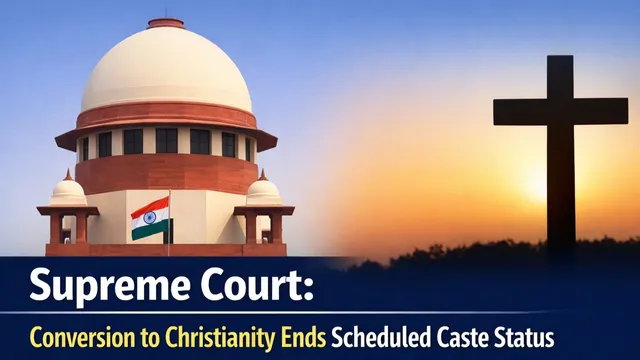
The Supreme Court of India has clarified the legal position on Scheduled Caste status in cases of religious conversion. The ruling reiterates that SC status is governed by the Constitution (Scheduled Castes) Order, 1950, and is linked to specific religions recognized under that order.
SC Status Limited to Certain Religions
According to the 1950 Order, only individuals belonging to Hinduism, Sikhism, and Buddhism are eligible to be notified as members of Scheduled Castes. The court emphasized that this condition flows directly from Clause 3 of the Order. If a person converts to a religion not covered under this framework, their eligibility for SC status does not continue under the law.
Background of the Case
The matter before the court involved an individual from Andhra Pradesh who had converted to Christianity and was working as a pastor. He filed a case under the SC/ST Act alleging assault. The accused challenged the maintainability of the case on the ground that, after conversion, the complainant could not claim protection available to Scheduled Castes under the law.
High Court Findings Upheld
The Andhra Pradesh High Court had earlier set aside the case, noting that once a person converts to Christianity, the original SC status does not remain applicable for the purposes of legal protection under the Act. The High Court also observed that holding an earlier caste certificate is not sufficient if the individual is actively practicing a different religion.
The Supreme Court upheld this view, pointing to the petitioner’s long-standing practice of Christianity as evidence of conversion and confirming that the protections under the SC/ST Act were not applicable in such circumstances.
Legal Implications of the Ruling
The judgment clarifies that eligibility for protections under the Scheduled Castes and Scheduled Tribes (Prevention of Atrocities) Act depends on continued qualification as a member of a Scheduled Caste under the 1950 Order. If that qualification is not met due to conversion, the specific legal safeguards provided by the Act are not available.
What This Means for Reservation Benefits
Reservation in education and government employment tied to Scheduled Caste status is also governed by the same legal framework. As a result, eligibility depends on meeting the criteria laid down in the 1950 Order. Where a person does not fall within that definition, the associated reservation benefits do not apply.
Key Takeaway
The ruling does not introduce a new policy but reinforces the existing constitutional position. SC status and related protections are defined by law and are applicable only within the scope set by the Constitution (Scheduled Castes) Order, 1950.
by Jobuza Team | Mar 30, 2026 | BLOG, Trending News
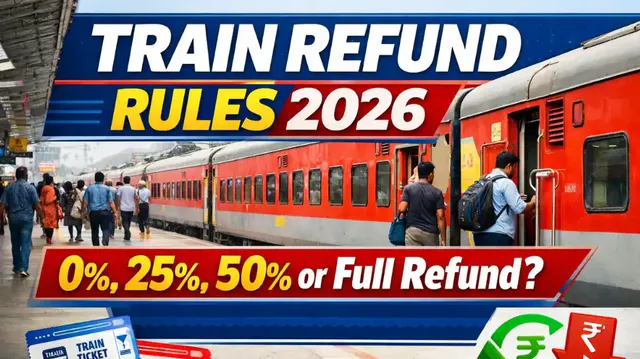
The Indian Railways has introduced major changes to its ticket cancellation policy, bringing a new structure for refunds and more flexibility for passengers. The revised rules, which will be implemented between April 1 and April 15, 2026, aim to simplify the system, reduce misuse, and improve overall convenience for travelers.
Revised Cancellation Charges Explained
Under the updated system, the amount of refund a passenger receives now depends on how early the ticket is cancelled. Those who cancel well in advance will continue to benefit the most, while last-minute cancellations will attract higher penalties.
Passengers cancelling tickets more than 72 hours before departure will receive the maximum refund, with only a basic cancellation charge deducted per person. However, if the cancellation is made between 72 hours and 24 hours before departure, 25 percent of the ticket fare will be deducted, subject to a minimum charge.
The penalty increases further for late cancellations. If a ticket is cancelled between 24 hours and 8 hours before departure, 50 percent of the fare will be deducted. For cancellations made less than 8 hours before departure, no refund will be provided. This stricter approach is intended to discourage last-minute cancellations and improve seat availability for other passengers.
New Flexibility in Boarding Point Change
Along with revised cancellation rules, Indian Railways has also made an important update regarding boarding points. Passengers can now change their boarding station up to 30 minutes before the scheduled departure of the train.
Earlier, this change was only allowed before the preparation of the reservation chart. The new rule provides greater flexibility, especially in large cities where multiple railway stations are available. Travelers can now choose a more convenient boarding point even at the last minute, making the journey more manageable.
Why These Changes Were Introduced
The decision to revise the rules comes in response to increasing misuse of the ticket booking system. According to Railway Minister Ashwini Vaishnaw, some agents and touts were booking multiple tickets and later cancelling unsold ones close to departure time to recover most of the money.
By tightening refund rules and increasing penalties for late cancellations, Indian Railways aims to prevent such practices. This will help ensure that tickets are available to genuine passengers and reduce artificial shortages.
Comparison with Previous Rules
Earlier, cancellation charges were based on shorter time windows and fixed rates depending on the class of travel. For example, passengers cancelling tickets more than 48 hours before departure paid a flat fee, while those cancelling within 48 to 12 hours faced a 25 percent deduction. Cancellations made within 12 to 4 hours resulted in a 50 percent deduction.
No refund was allowed if tickets were not cancelled or if a TDR was not filed within four hours of departure. Waitlisted tickets, however, had minimal charges and were often refunded automatically if not confirmed.
The new rules extend the time window to 72 hours for maximum refunds and introduce stricter penalties closer to departure time.
What This Means for Travelers
For passengers, the updated policy encourages better planning. Cancelling tickets earlier will ensure higher refunds, while last-minute changes could lead to significant losses. At the same time, the extended boarding point change window offers added convenience, especially for those traveling from cities with multiple stations.
Overall, the revised rules by Indian Railways are designed to create a more transparent and efficient booking system. By balancing flexibility with stricter penalties, the new policy aims to benefit genuine passengers while reducing misuse of the system.