by Jobuza Team | Oct 28, 2025 | BLOG, Trending News
RBI’s Latest Announcements: The Reserve Bank of India (RBI) has announced a series of major updates that will reshape the country’s banking landscape. These reforms aim to make banking more inclusive, flexible, and customer-friendly for both businesses and individuals.
RBI to Resume Licensing of Urban Co-operative Banks
After almost two decades, the RBI is set to reopen the process of granting licenses to urban co-operative banks (UCBs). This move comes nearly 20 years after the process was paused in 2004. The decision will allow new co-operative banks to open, particularly in smaller towns and semi-urban areas, improving access to formal banking services for underserved communities. A consultation paper on this process is expected soon.
Greater Flexibility for Current and Overdraft Accounts
The RBI has introduced more flexibility for banks in managing current and overdraft (OD) accounts. This update will particularly benefit businesses, shopkeepers, and traders who rely on these accounts for daily transactions and cash flow. By easing restrictions, the central bank aims to support smoother financial operations and promote ease of doing business across sectors.
Repo Rate Remains Unchanged, GDP Forecast Raised
In its latest monetary policy review, the RBI decided to keep the repo rate steady at 5.50%. At the same time, it raised India’s GDP growth forecast for FY26 to 6.8%. The move signals confidence in India’s economic outlook while maintaining stability in borrowing costs.
Extended Timeframe for Export Payments
Exporters have received a major relief from the RBI. The central bank has extended the deadline for bringing export proceeds back to India from one month to three months. This change gives exporters more time and flexibility to manage international payments and settlements, reducing pressure on businesses involved in global trade.
Simplified Rules for Foreign Borrowing
RBI is also simplifying regulations related to External Commercial Borrowing (ECB) under the Foreign Exchange Management Act (FEMA). These loans, which Indian companies raise from international markets, will now come under a more practical and flexible framework. This move is expected to help companies access global capital more efficiently in a dynamic economic environment.
Stronger Complaint System for Rural Customers
In a major step toward inclusive banking, the RBI has expanded the Ombudsman Scheme to cover customers of rural co-operative banks. This means that people in villages and remote areas will now be able to register complaints and seek redressal for poor banking services under the same framework as urban customers.
A Step Toward Modern and Inclusive Banking
The RBI’s latest announcements mark a strong push toward modernizing India’s banking system. By balancing growth, flexibility, and protection for customers, these reforms ensure that both urban and rural India benefit equally. The changes reflect the central bank’s commitment to building a more transparent, efficient, and accessible financial ecosystem for all.
by Jobuza Team | Oct 6, 2025 | BLOG, Trending News
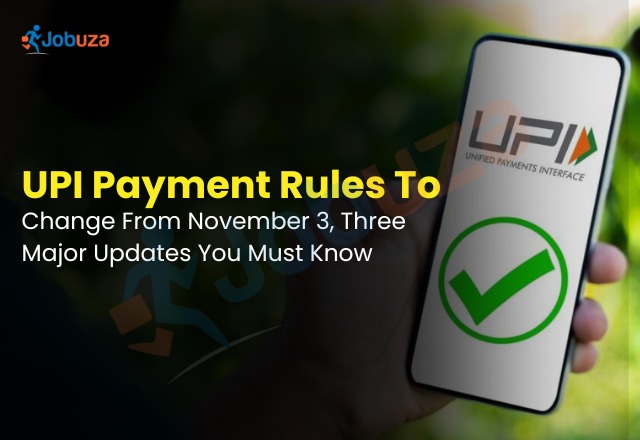
New Delhi: From November 3, 2025, the National Payments Corporation of India (NPCI) will roll out new rules for UPI settlements. The move comes as digital payments continue to rise across India, and the changes are aimed at making the system more efficient, transparent, and user-friendly.
Current UPI Settlement System
Right now, UPI transactions are cleared through 10 daily RTGS settlement cycles. These cycles include both successful transactions (authorised payments) and disputed ones (failed or challenged). Since both are settled together, it sometimes leads to delays and confusion.
What Will Change From November 3
NPCI is introducing a revised structure to handle transactions more effectively. The three major changes are:
-
Only authorised transactions in first 10 cycles: From cycle 1 to 10, only successful payments will be processed. Disputed transactions will be excluded.
-
Separate cycles for disputes: Two new cycles—cycle 11 and cycle 12—will be dedicated entirely to dispute settlements. This ensures disputes are handled independently without slowing down regular transactions.
-
New identifiers for disputes: NPCI will introduce DC1 and DC2 identifiers (DC = Dispute Cycle) in the file naming system. This will help banks and payment partners easily recognise dispute-related settlements.
No Change in Settlement Timings
It’s important to note that there will be no change in cut-over timings, RTGS posting schedule, reconciliation reports, or GST reports. The main difference lies only in how authorised and disputed settlements are separated for better efficiency.
Update on Paytm UPI Autopay
In addition to these changes, NPCI has extended the deadline for closing old @paytm UPI ID Autopay mandates. Initially, the cut-off was earlier, but now users and merchants have time until October 31, 2025 to complete the transition.
What It Means for UPI Users
With these updates, users can expect faster settlements, fewer delays, and quicker dispute resolution. As UPI continues to be the backbone of India’s digital payment ecosystem, these rule changes are another step towards improving security, reliability, and overall user experience.
by Jobuza Team | Sep 23, 2025 | BLOG, PAN/Aadhar Card Updates, Trending News
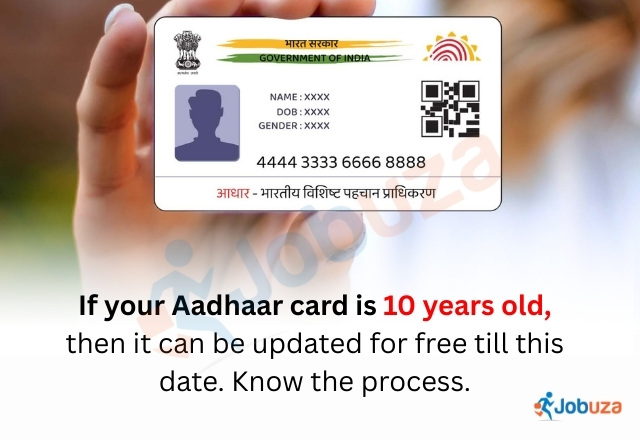
Free Aadhaar Update: Get Your 10-Year-Old Aadhaar Card Updated Online
Aadhaar card is not just an identity card anymore—it has become one of the most important documents in India. From government schemes to private services, Aadhaar is required almost everywhere. Many times, people need to correct or update details such as their name, address, or other information. If your Aadhaar card is more than 10 years old, the Unique Identification Authority of India (UIDAI) is giving you a golden opportunity to update it free of cost.
Free Aadhaar Update Facility
UIDAI has announced that Aadhaar cardholders can update their documents online without paying any fee. This free facility is available till 14 June 2026. During this period, you can upload identity and address proof on the official MyAadhaar portal and update your Aadhaar card at no cost.
However, this facility is valid only for online updates. If you visit an Aadhaar Seva Kendra, a fee of ₹50 will be charged for demographic updates, and ₹100 will be charged for biometric updates such as fingerprint or iris scan. Children must also update their Aadhaar details once at the age of five and again at fifteen.
Step-by-Step Process to Update Aadhaar Card Online
Updating your Aadhaar card from home is quick and easy. Follow these steps:
-
Visit the official UIDAI portal: myaadhaar.uidai.gov.in
-
Select the “Document Update” option.
-
Enter your Aadhaar number and log in with the OTP received on your registered mobile number.
-
Check your Aadhaar details carefully.
-
Upload scanned copies of valid documents for identity and address proof.
-
Submit the request.
Once submitted, you will receive a 14-digit Update Request Number (URN). You can use this URN to track the status of your update online.
Why Updating Aadhaar Is Important
Keeping your Aadhaar details up to date ensures that you do not face any issues while availing government schemes, banking services, or other facilities linked to Aadhaar. An updated Aadhaar card helps avoid mismatches in documentation and reduces the risk of errors in official records.
Click here for more – PAN/Aadhar Card Updates
by Jobuza Team | Sep 17, 2025 | BLOG, PAN/Aadhar Card Updates, Trending News
Download Aadhaar Card via WhatsApp – Easy Guide
Aadhaar card is one of the most important ID documents in India. From banks to mobile SIMs, it is required almost everywhere. Now, with the country moving towards digital services, you can download your Aadhaar directly on WhatsApp.
The Unique Identification Authority of India (UIDAI) has launched a new facility where you can get a safe, password-protected copy of your Aadhaar through the government’s official MyGov Helpdesk chatbot.
Why Use WhatsApp to Download Aadhaar?
This service is quick, secure, and convenient. You don’t need extra apps or repeated visits to Aadhaar centers. Your Aadhaar is delivered as a password-protected PDF, which makes it safe to use and share when needed.
Things You Need Before You Start
To download Aadhaar on WhatsApp, make sure you have:
-
A mobile number linked with Aadhaar
-
A DigiLocker account (can be created instantly if you don’t have one)
-
The official MyGov Helpdesk WhatsApp number: +91-9013151515
Step-by-Step Process to Download Aadhaar on WhatsApp
-
Save +91-9013151515 as MyGov Helpdesk on your phone.
-
Open WhatsApp and send “Hi” to the number.
-
Select DigiLocker Services from the menu.
-
Confirm if you already have a DigiLocker account.
-
Enter your Aadhaar number.
-
You will receive an OTP on your registered mobile number. Enter it in the chat.
-
After verification, your DigiLocker documents will appear.
-
Select Aadhaar from the list.
-
Your Aadhaar card will be delivered in PDF format directly on WhatsApp.
Is It Safe?
Yes. The service is provided by UIDAI through the government’s official chatbot. The Aadhaar file you receive is password-protected, so your information remains secure.
Conclusion
Downloading Aadhaar on WhatsApp is one of the easiest ways to keep your ID handy. With just your registered mobile number, DigiLocker account, and the MyGov Helpdesk number, you can access your Aadhaar anytime without depending on any other app or service.
Click here for more – PAN/Aadhar Card Updates

by Jobuza Team | Sep 15, 2025 | BLOG, Trending News
UPI Transaction Limit Increased: Now Pay Up to ₹10 Lakh in a Day
The National Payments Corporation of India (NPCI) has made a major change in UPI rules. From September 15, 2025, the daily UPI transaction limit has been increased to ₹10 lakh for selected categories. This update comes as UPI continues to dominate online payments across India.
Current UPI Limit vs New Limit
Usually, the UPI limit is ₹1 lakh per day for most transactions. But with the new update, NPCI has allowed higher limits for payments like taxes, insurance, EMIs, investments, and more.
Why Did NPCI Increase the UPI Limit?
The last date for paying income tax is September 15, 2025. Many taxpayers and businesses found the old UPI limit too low for large payments. To make the process easier, NPCI raised the limit on tax-related transactions. This change will also help professionals, businesses, and regular users who want to make big payments via UPI.
Transactions Covered Under the New Limit
The revised limit applies only to P2M (Person to Merchant) transactions. This means you can use the higher limit when paying verified merchants like insurance companies, stock brokers, tax portals, and banks.
However, for P2P (Person to Person) transfers, the limit will remain ₹1 lakh per day.
Here’s a breakdown of the new UPI limits:
1. Tax Payment (MCC 9311)
-
₹5 lakh per transaction
-
₹10 lakh per 24 hours
2. Insurance and Capital Market
3. Loan EMI and B2B Collections
-
₹5 lakh per transaction
-
₹10 lakh per day
4. Credit Card Bill Payment
5. Foreign Exchange (FX Retail)
6. Digital Accounts and Fixed Deposits (FDs)
Will All Banks Implement the New Limit?
NPCI has instructed all banks, apps, and payment service providers to apply these changes. However, individual banks can set their own internal limits. This means that while most banks will start implementing the new rules from September 15, 2025, some may take more time.
What About IPO Payments?
For IPO applications made through UPI, the transaction limit will remain ₹5 lakh per application. The increased ₹10 lakh daily limit will not apply in this case.
Who Will Benefit the Most?
This change will directly benefit:
-
Business owners and professionals making high-value tax or insurance payments
-
Investors making stock market transactions
-
Customers paying large EMIs, credit card bills, or deposits through UPI
By removing the old restrictions, NPCI has made UPI more convenient for both businesses and individuals.
by Jobuza Team | Sep 12, 2025 | BLOG, PAN/Aadhar Card Updates, Trending News
Aadhaar Card Update: How to Correct Wrong Name Online in Just 5 Minutes
The Unique Identification Authority of India (UIDAI) has made the Aadhaar Card update process much simpler. Now you can easily correct or change your name sitting at home without visiting any Aadhaar Seva Kendra. Everything can be done online through the official UIDAI website.
Why Correcting Aadhaar Card Details is Important
Aadhaar Card is one of the most important identity documents in India. From opening a bank account to getting a mobile SIM, filing income tax returns, or availing government schemes, Aadhaar is mandatory everywhere. However, if your name is misspelled or you need to update it due to other reasons, it can cause problems. That is why it is essential to correct your Aadhaar details at the earliest.
Update Aadhaar Card Name Online from Home
UIDAI has made the process very convenient. Instead of standing in long queues, you can complete the name correction process online with just a few documents and a stable internet connection.
Documents Required for Aadhaar Name Change
To change your name in Aadhaar, you must upload a valid supporting document approved by UIDAI. Some of the acceptable documents include:
Make sure the document you upload clearly shows the correct name.
Step-by-Step Process to Change Name in Aadhaar Online
Step 1: Visit the official UIDAI website at https://uidai.gov.in. Under the “My Aadhaar” section, select the option for Update Aadhaar Online.
Step 2: Log in using your Aadhaar number and the OTP sent to your registered mobile number. Choose the Name Update option. Enter your new name exactly as per your documents and upload the scanned copy of the supporting document.
Step 3: Re-check all details carefully before submitting. Once you submit the request, you will receive a URN (Update Request Number). You can use this URN to track the status of your Aadhaar update online.
How Long Does the Aadhaar Name Update Take?
As per UIDAI, a name update request usually takes 7 to 10 days to process. In some cases, it may take longer due to verification. Once the update is approved, you will receive an SMS notification, and you can download the updated Aadhaar card online.
Important Things to Keep in Mind
-
The Aadhaar name update can be done online only twice in a lifetime.
-
Ensure the new name matches exactly with the name on your uploaded document.
-
The scanned copy of the document should be clear and easy to read.
-
After the update is approved, you can download the e-Aadhaar card from the UIDAI website.
Click here for more – PAN/Aadhar Card Updates